When I first started my loc journey, one question kept me awake at night: “Am I going to ruin these the second I wash them?” I’d heard so much conflicting advice that it made my head spin! Some swore you never shampooed dreadlocks. Others washed theirs like loose hair and were left wondering why their locs were smelling a little funky.
Well, friend, here is the happy truth. And the real answer is somewhere in the middle. And when it clicks, washing your locs will be one of the most satisfying parts of your whole routine.
So let’s get the story straight. Not only is washing your hair in dreadlocks safe, but it’s also absolutely essential. It’s all about how you do it. Get it right, and your locs stay fresh, tight, and strong. Get it wrong, and you are inviting buildup, odor, and a soft, mushy mess that no one wants.“
Why This Topic Actually Matters
Your scalp is living skin and produces oil, sweat, and dead cells every single day. Locs trap all that inside tightly bound hair. Skip your washes or buy the wrong products, and residue settles deep inside each loc where rinsing barely reaches.
It’s not only the smell. According to the American Academy of Dermatology, a clean scalp is a healthy scalp and helps promote healthy hair growth as well as help prevent dandruff and irritation. Learn more about caring for your scalp from the AAD here.
Healthy locs truly start at the root!
What Happens When You Shampoo Dreads
Here’s the real deal on what happens when shampoo meets your locs.
The Good Side
Wash your dreads to remove sweat, dirt, product buildup, and excess oil. A clean scalp breathes better, encouraging stronger growth right at the root. Once I finally started washing my locs the right way, my scalp stopped itching, and my new growth started locking up so much faster.
A good wash also helps keep your locs smelling fresh and neutral, instead of that damp, musty smell locs get when moisture is trapped for too long.
The Risky Side
The danger was never in the shampoo. It’s not the right shampoo. Creamy, conditioning, or moisturizing formulas leave a waxy film behind. That film gets into your locs, collects over time, and causes the dreaded buildup of residue that weakens locs and creates funky smells.
Mature locs are like little sponges. They’re holding what you put in. That is why the choice of product is so important.
The Benefits of a Proper Locs Washing Routine
A regular maintenance schedule for your dreadlocks does a lot more than simply keep you clean. Here’s what you get:
- Faster locking: It’s much easier to tighten and mat clean hair than greasy, slippery hair.
- Less buildup: Wash regularly with a residue-free shampoo so gunk doesn’t settle in.
- Healthier scalp: Removing dead skin and oil helps relieve itching and flaking.
- Stronger locs: Buildup weighs locs down and weakens them over time, but clean locs are tight and strong.
- Better smell: Nobody wants stinky locs, and a wash will fix that in a hurry!
What Causes Buildup In Dreads
If your locs are feeling heavy, looking a little gray, or smelling off, it’s usually buildup. The main causes are:
- Coating shampoos that condition the hair, which do not rinse off.
- Heavy waxes and oils that never come out all the way.
- Mineral deposits from hard water cling to your hair.
- Not rinsing enough, leaving soap inside the loc.
- Not cleaning often enough to allow sweat and dead skin to build up.
I learned this one the hard way after early slathering on a thick beeswax product. My locs became dull and sticky, and it took months of clarifying washes to repair the damage. Lesson learned.
Solutions and Best Practices
Ready for the part that really makes your locs happy? Here is the washing method that works.
Choose the Right Shampoo
Skip anything with “moisturizing,” “creamy,” or “2-in-1” in the name. Instead, reach for a residue-free or clarifying shampoo for dreads. They are designed to wash clean and rinse free, leaving no residue.
Look for short ingredient lists. Sulfate-free is gentler, but the key phrase you really want is residue-free.
Wash on a Schedule
The majority of loc wearers do fine washing once a week. Twice a week is fine if you sweat a lot or work out a lot. Very new locs require a little gentler touch in the early stage, but they still need to be cleaned.
The Step-by-Step Method
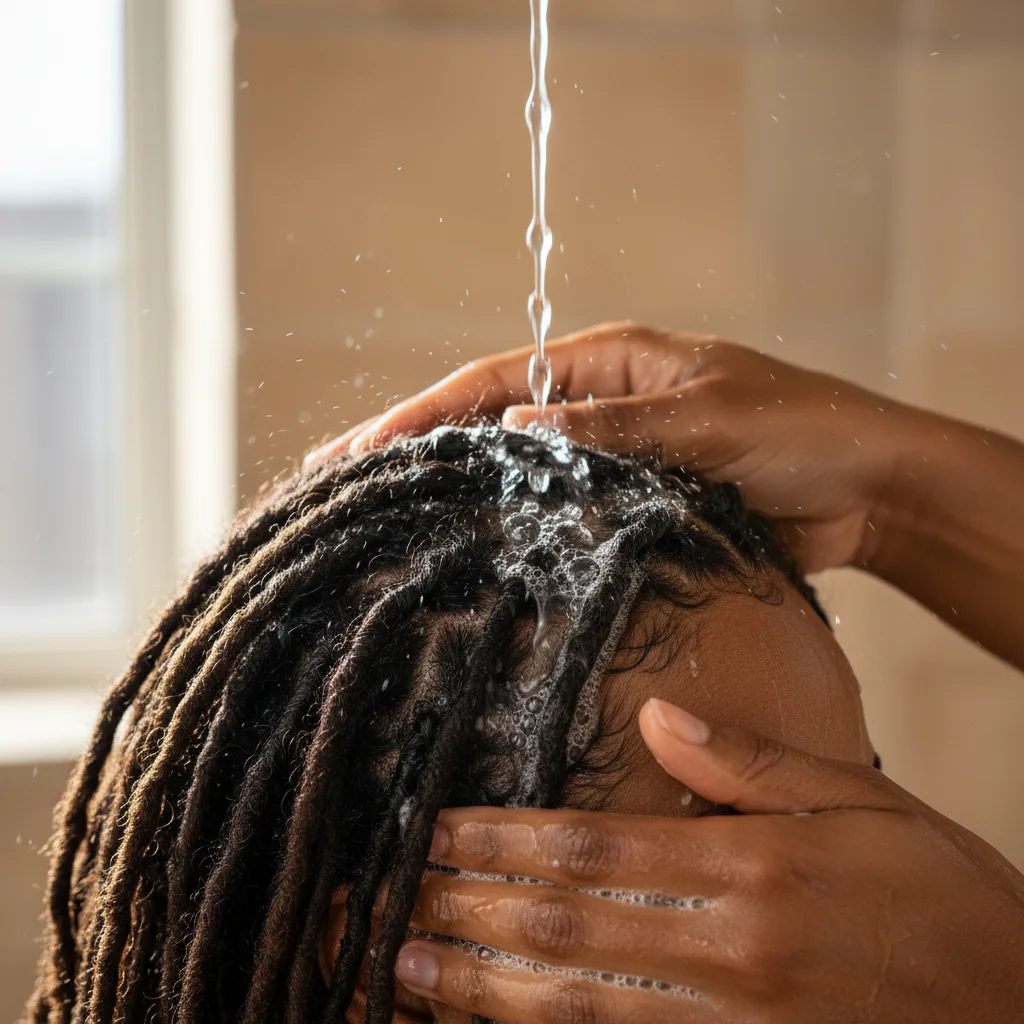
- Start by rinsing with warm water to loosen surface dirt.
- Just dilute your shampoo in a bottle with water or apply it directly to the scalp.
- Concentrate on the scalp, and massage with fingertips. You rinse, and the shampoo drips down and cleans the locks.
- Rinse long, longer than you think you have to. Squeeze each loc until the water runs clear.
- Let dry completely. This step is huge, so take your time!
Dry Your Locs Fully
The first is trapped moisture, the number one cause of loc smell and even mildew. Pat dry with a towel to remove excess water and air dry or blow dry on low heat. Please, do not go to bed with wet locs.
Common Mistakes to Avoid
I have run into some of these myself, so learn from my mistakes:
- Use conditioner like normal hair. The conditioner leaves a residue, separates the hairs, and slows the locking process.
- Not washing to “protect” your locs. Dirty locs don’t mean stronger. They mean dirty.
- stocking up on wax. One of the hardest things to get out of locs is wax buildup.
- Shortening the rinse. Leftover soap dries inside and builds up.
- Bed-wetting. This leads to odor and weakens the loc structure.
- Scrubbing too aggressively. Be gentle with the newer locs so they don’t come undone.
Expert Tips for Cleaner, Healthier Locs
A handful of extra pointers that made a real difference for me:
- Try a monthly rinse with apple cider vinegar to naturally remove buildup. Mix a few tablespoons with water and pour over your locs and rinse well.
- If your locs feel heavy, do a deep clarifying soak every couple of months. A baking soda and ACV soak is a miracle worker for stubborn residue.
- Take care of your water. A shower filter can reduce mineral buildup if you have hard water.
- After washing, just lightly moisturize your scalp with a light oil like jojoba, not before. A little goes a long way!
- Check the scalp for signs of trouble. Dermatitis may be a sign of persistent itching, flaking, or redness. When home care is not enough, a dermatologist can help, and the American Academy of Dermatology has good advice.
Consistency always trumps intensity. A simple weekly routine is always better for your locs than a deep clean every once in a while.
Frequently Asked Questions
1. Can I shampoo brand-new dreads?
Yeah. Just be gentle. Most people wait a few weeks before the first wash so that the locs can settle and then wash carefully so that the new sections don’t unravel. Always use a shampoo that leaves no residue.
2. How often do I wash my dreads?
“Most people find once a week works. Twice a week is okay if you are very active or live in a warm climate. The aim is a clean scalp without drying it out.
3. What shampoo do I use on my dreadlocks?
A non-residue or clarifying shampoo. Avoid creamy conditioning or 2-in-1 formulas that leave a waxy film inside your locs.
4. Why Are My Dreads Smelling After Washing?
It’s usually moisture that’s trapped. Locs that don’t dry all the way can smell musty. After each wash, wring out excess water and dry them thoroughly.
5. Does washing my hair loosen my dreadlocks?
Not if you wash right. Concentrate on the scalp, avoid harsh scrubbing of the locs themselves, and your dreads will remain intact and actually lock tighter.
6. Is regular shampoo safe for my locs?
Yes, you can, but always read the label. Since almost every day shampoos contain conditioning agents that cause buildup, stick with residue-free options for best results.
7. How can I remove buildup from my dreadlocks?
Try an apple cider vinegar rinse or a baking soda and ACV soak. For heavy buildup, do clarifying washes over time, then switch to a residue-free routine to prevent it from creeping back.
Final Thoughts
Shampooing is not the bad guy. Honestly, it’s one of the best things you can do for your locs and your scalp health. The key is to select products that are free of residues, wash regularly, rinse thoroughly, and dry thoroughly.
Give your locs some consistency, and they will reward you with strength, shine, and that fresh, clean feeling. Your future self with tighter and healthier locs will thank you!
Health Disclaimer: The information in this article is for educational purposes only and is not intended as medical advice. If you experience persistent scalp irritation, hair loss, flaking, or other concerning symptoms, please consult a licensed dermatologist or health care provider.