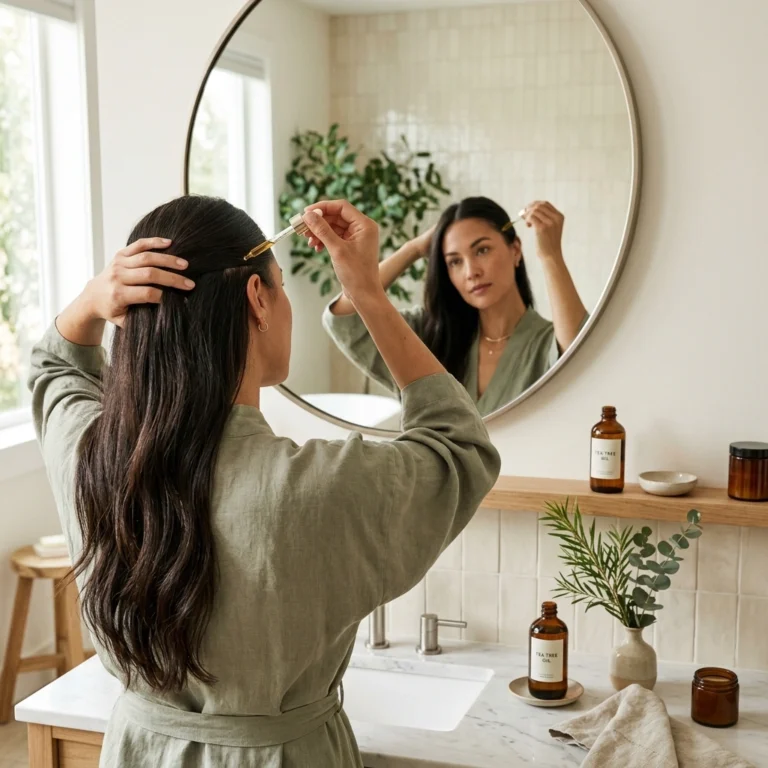
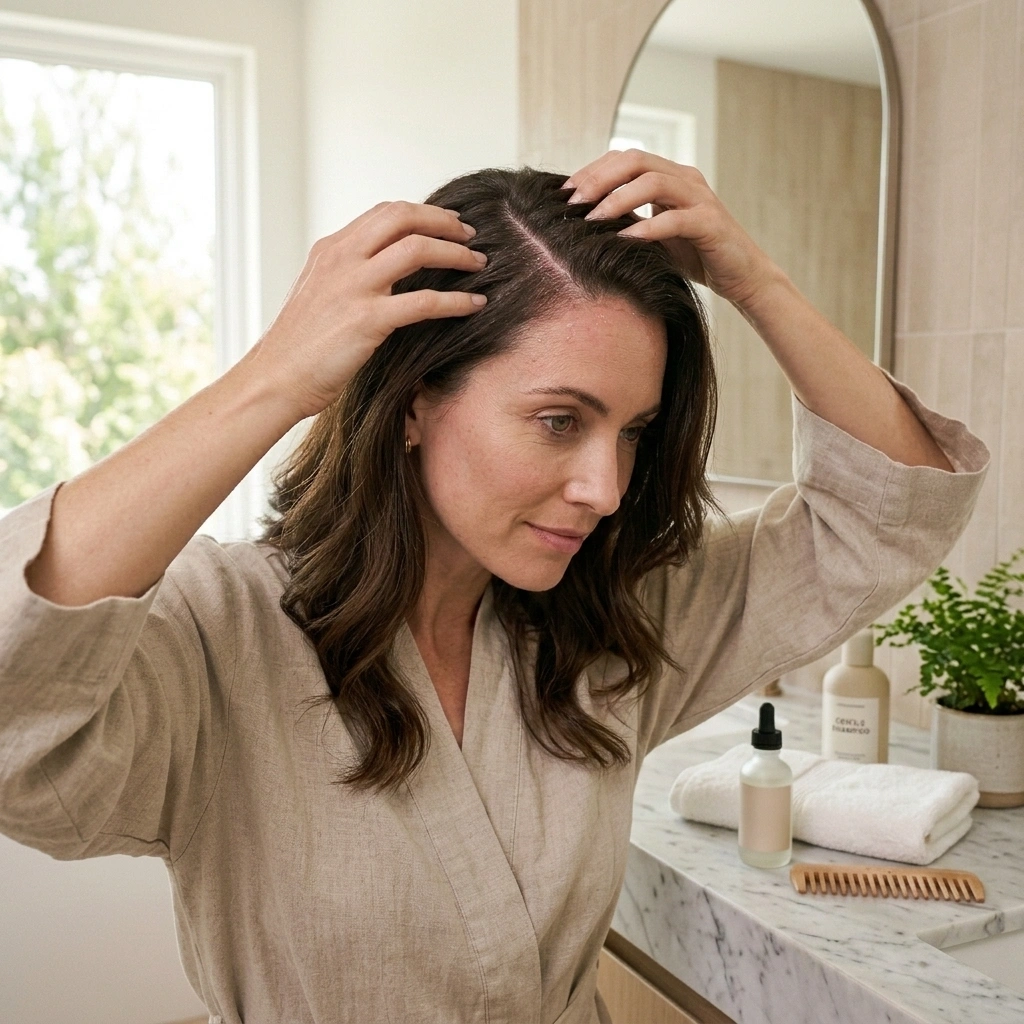
It is such a pleasure to run your fingers through clean and comfortable hair. But when the skin underneath is itchy, greasy, sore, or covered in stubborn flakes, even a simple wash day can be a struggle.
A common inflammatory skin ailment that typically affects the scalp is seborrhoeic dermatitis. This can lead to white or yellow flakes, greasy scales, itching, burning and patches of inflamed skin. It’s not contagious, it’s not an indicator of poor hygiene, and it often returns after it seems to have gone. Usually this is manageable, but to keep it under control requires more than just grabbing whatever brand of dandruff shampoo is on sale.
The best success is usually with a good medicated shampoo, proper application, gentle scalp care, and a maintenance program. If it’s more persistent or inflamed, you may need prescription treatment.
The Quick Answer: What Helps Most?
The best place to start for the majority of teens and adults with mild to moderate scalp seborrhoeic dermatitis is with a medicated shampoo that has an antifungal or recognised anti-dandruff substance.
The routine is as important as the product:
- Use the shampoo on the scalp, not just the hair.
- Leave on for the number of hours on the label or as recommended by a clinician.
- Use it regularly during an active flare-up.
- Once symptoms improve, use less frequently for maintenance.
- If the scalp remains inflamed, painful, or otherwise unchanged after several weeks, consult a physician.
The American Academy of Dermatology says a mild to moderate case of scalp seborrheic dermatitis can be treated with an anti-dandruff shampoo. It also emphasizes that the product needs to remain on the scalp for a certain amount of time for its active ingredient to be effective.
How This Guide Was Researched
For over 5 years, I have been researching hair health, scalp care, and popular hair loss treatments for Hair Care Growth. I want to mine recycled product claims for useful evidence.
I have compared for this guide:
- American Academy of Dermatology treatment and self-care tips
- Cleveland Clinic and Mayo Clinic clinical information
- NHS advice on ongoing symptoms of dandruff
- Topical antifungal agents
- Recent peer-reviewed reviews of ketoconazole and seborrheic dermatitis.
- Roflumilast foam: US prescribing information.
This is a research-based guide. It does not claim that I have personally treated patients or that one routine works for every scalp. Where evidence is limited, or treatment depends on individual factors, that is stated clearly.
What Is Scalp Seborrheic Dermatitis?
Seborrheic dermatitis is an inflammatory condition that tends to recur and is commonly found in parts of the body with a high density of oil-producing glands. These areas include the scalp, eyebrows, sides of nose, ears, beard area, eyelids, and upper chest.
Researchers have not pinpointed one cause. Current evidence suggests interaction between:
- Malassezia yeast (a fungus normally found on human skin)
- Scalp oil (Sebum)
- Skin immune response
- Individual vulnerability
- Changes in skin barrier and scalp microbiome
Malassezia is not a contagious form of fungal infection. Possessing Malassezia does not mean that a person has a contagious form of fungal infection. This yeast exists on the skin of almost everyone. Apparently, the problem lies in the reaction of the skin of a susceptible person to the yeast and its metabolic byproducts, and the oily environment in which it lives. (Cleveland Clinic)
Common symptoms
Scalp seborrheic dermatitis can cause:
- White, grey or yellowish scales
- Dry or fatty crust
- Burning or itching
- Oily scalp with attached flakes
- Annoyed areas on the hairline
- Scaling on or in the ears
- Symptoms get better then come back
It doesn’t look the same on every skin tone. On lighter skin, you may notice pink or red areas of inflammation. On darker skin, they can be pink, purple, brown, lighter than the surrounding skin, or sometimes white. (American Academy of Dermatology: Signs and symptoms)
Is it just dandruff?
Dandruff is often seen as the mild, scalp-limited end of the spectrum of seborrheic dermatitis. More obvious inflammation, greasy scale, burning, and involvement around the ears, eyebrows, or nose can point toward seborrheic dermatitis.
You can not confirm a diagnosis with flakes alone. Dry scalp, psoriasis, eczema, allergic contact dermatitis, product irritation, and scalp infections can all appear the same.
For a more in-depth comparison, read Dry Scalp vs. Dandruff: Know the Difference. This article will not repeat the entire comparison but focus on the treatment of seborrheic dermatitis.
What Helps Seborrheic Dermatitis Most? The Four-Part Strategy

A useful scalp-care plan does four jobs.
1. Control yeast and excess scale
Antifungal shampoos reduce the Malassezia component of the condition. Other shampoos loosen scale or slow down excessive skin-cell sloughing.
When compared to inactive treatment, topical antifungal medications like ciclopirox and ketoconazole may be beneficial in treating seborrhoeic dermatitis, according to a Cochrane review of randomised studies. The review also noted the certainty and quality of evidence varied between studies, so “antifungal” does not mean all products work the same for everyone. (PubMed Central (PMC))
2. Calm inflammation
Once that is cleared up, an antifungal shampoo may help with some of the redness and itching. But if the scalp is very inflamed, a short course of a prescription anti-inflammatory product may be called for.
Here self-treatment has its limits. Stronger shampoo can worsen the burning, swollen scalp by repeated washing but not reduce the inflammation.
3. Keep a barrier on the scalp
Seborrheic dermatitis-prone skin is easily irritated. Flares can be caused by hot water, vigorous scratching, fragranced products, harsh chemicals, and alcohol-heavy styling products.
Gentle treatment is not a luxury cosmetic. That’s part of the treatment process.
4. Stop the next flare-up
Seborrheic dermatitis is likely to recur. Most people find that once the scalp is looking better, they can use their effective medicated shampoo less often as a maintenance program, rather than stop using it altogether.
This is not a promise of a permanent cure but of control. Treatment goals include helping to prevent further flare-ups and reducing rash, scale, itching, and swelling, says the AAD.
Medicated Shampoo Ingredients Compared
It doesn’t matter what the label on the front of the shampoo bottle says; it’s what’s on the back that matters. Two bottles of “dandruff control” may not be the same.
Typical over-the-counter shampoo ingredients include pyrithione zinc, selenium sulfide, ketoconazole, coal tar, and salicylic acid, according to the Mayo Clinic. Prescription treatment options could be higher concentrations of ketoconazole or ciclopirox.
| Active ingredient | Main role | May be most useful when | Important limitations |
|---|---|---|---|
| Ketoconazole | Antifungal treatment that reduces Malassezia | Flakes are recurring, greasy, itchy, or poorly controlled by ordinary shampoo | Can dry or irritate the scalp and hair; strength and prescription status vary |
| Ciclopirox | Prescription antifungal with anti-inflammatory activity | Nonprescription options have not provided enough control | Requires a prescription in the U.S.; approved ages and schedules depend on the product |
| Selenium sulfide | Helps control yeast and excessive skin-cell shedding | The scalp is oily with visible dandruff or scale | May dry the hair or discolor some light, bleached, tinted, or chemically treated hair |
| Pyrithione zinc | Anti-dandruff ingredient with antimicrobial activity | Symptoms are mild or a gentler maintenance option is needed | Availability and permitted uses differ by country |
| Salicylic acid | Loosens and removes thick scale | Scale is firmly attached and prevents other products reaching the scalp | Can be drying; it does not replace yeast-directed or anti-inflammatory treatment when those are needed |
| Coal tar | Slows excessive scaling and may reduce itch | Scaling remains stubborn despite a basic routine | Strong smell and possible discoloration make it less practical for some people |
What ingredient should you try first?
There is no one shampoo that is best for everyone, but this decision pathway can make the choice less random.
If the main problem is greasy scales and itching:
A yeast-directed component such as ketoconazole or selenium sulfide is a logical place to begin.
If the scale is chunky and is firmly attached:
Salicylic acid is an ingredient that helps loosen scales, so it may help, but it’s usually a supporting step rather than the entire treatment.
If a nonprescription shampoo has not been helpful:
The clinician may prescribe ketoconazole, ciclopirox, or an anti-inflammatory agent.
If the scalp is sore, swollen, bleeding or hair is falling out in patches:
Don’t try out shampoos. Have yourself medically examined.
First choose a main active ingredient. When you change a lot of products at once, it’s hard to know what helped, what irritated.
How to Use Medicated Shampoo Correctly
A good shampoo may be a failure if used as an ordinary cosmetic cleanser. The medicine must get to the skin.
Step 1: Read the entire label
Before jumping in the shower, check:
- Frequency of use of the product
- How long to leave it on your head.
- Minimum age approved
- Avoid eye contact
- Directions for colored or chemically treated hair
- Whether it can be combined with other therapies
Don’t think that the longer the contact time, the better the result. Follow the time indicated.
Step 2: Part thick or dense hair
Work in a few sections so the shampoo is applied to the scalp rather than to the hair sitting on top. This is especially good for curly, coily, thick, and braided hair.
A nozzle bottle can make application to the scalp easier, but does not change the recommended amount or frequency.
Step 3: Saturate your scalp
Use comfortably warm water, rather than very hot water. Hot water can irritate and dry up skin that is prone to flare-ups.
Step 4: Massage the product into your scalp
Concentrate the shampoo at the roots and the affected areas. It’s for the scalp, not every hair.
Use finger pads. Don’t gouge in with your nails.
Step 5: Let the active ingredient do its thing
Let the shampoo sit on the hair for the time recommended on the label. The AAD emphasizes that medicated shampoo needs to remain on the scalp long enough to work. (American Academy of Dermatology Association)
You can spend those minutes washing the rest of your body, instead of scrubbing your scalp over and over again.
Step 6: Rinse well
Residue may increase irritation. Rinse each division well until the water runs clear and the roots are free of coating.
Step 7: Condition according to your hair’s needs
If you have a tendency to get greasy roots quickly, use the conditioner on the mid-lengths and ends only. Curly, coily, bleached, or chemically processed hair may need more conditioning to offset the drying effect of medicated shampoo.
Step 8: Dry gently
Pat or squeeze the hair with a soft towel. Do not rub the scalp aggressively.
How Often Should You Wash?
Frequency depends on active ingredient, product directions, severity of symptom, hair texture.
You can use dandruff shampoo 2-3 times weekly for straight or wavy hair to get a flare-up under control, the AAD says. If you have curly or coiled hair, you might want to use it once a week to help battle excessive dryness. After symptoms are controlled, maintenance weekly is common. These are general trends and are not to be used in place of directions on a specific product.
According to Mayo Clinic, the frequency of using medicated shampoo should also be adjusted depending on the grooming practices and symptoms. It also warns that ketoconazole can increase the likelihood of dryness and breakage in hair that is tightly coiled or chemically treated, making conditioning and a customized regimen especially important.
A sample routine for straight or wavy hair
In a flare:
- Usually, apply the medicated shampoo several times a week as directed on the label.
- For extra cleansing, use only a gentle regular shampoo.
- Don’t apply conditioner on an oily or inflamed scalp.
- Just don’t add a scalp scrub at the same time.
Better one:
- Reduce medicated shampoo to maintenance frequency for control of symptoms.
- If you see the itching or scaling you know so well starting to come back, then start the treatment again immediately.
A sample routine for curly or coily hair
When flare-up occurs:
- Cut hair before washing.
- Use medicated shampoo directly on the part lines.
- Leave the treatment on the scalp.
- Rinse & condition thoroughly in the lengths.
- If your scalp is inflamed or painful, don’t wear tight protective styles.
After improved:
- Keep a less frequent maintenance schedule if recommended.
- Pick styles that give access to the scalp.
- Don’t use dry shampoo as a long-term alternative to washing an active scalp condition.
A sample routine for colored or chemically treated hair
- Discoloration warnings: see label.
- If your scalp is cracked, burning, or inflamed, avoid chemical processing.
- Conditioner treatment on weakened hair.
- If you have any scalp disorders, consult a dermatologist or stylist who has experience with them before mixing medicated treatment with bleaching, relaxing, or permanent coloring.
Tar and selenium sulfide shampoos may alter some light, bleached or tinted hair colors. (American Academy of Dermatology)
Should You Rotate Dandruff Shampoos?

Sometimes one product is not strong enough, or one active ingredient takes care of yeast, and another takes care of stubborn scale.
Rotation may be sensible if:
- A shampoo that used to work is no longer controlling the symptoms.
- A dermatologist recommends using two mechanisms in alternation.
- It requires antifungal treatment and sometimes scale removal.
- One shampoo is too drying for everyday use.
Don’t use multiple strong shampoos in one shower. This can leave you drier and crankier.
Change one part of the routine at a time and take brief notes on:
- Active components
- Washing frequency
- Time of contact
- itch
- Scale visible
- Redness/burning
- Hair breakage & dryness
Both the AAD and the Mayo Clinic suggest rotating or alternating appropriate shampoos if you find a particular product is losing effectiveness.
How to Remove Scale Without Injuring the Scalp
When the scale looks thick, the instinct is to scrape off all the visible flakes. Forcible removal can damage the skin and prolong the inflammation.
Rather:
- Thoroughly wet the scalp.
- Use the medicated product or scale-loosening product selected.
- Let the product soften the scale.
- Massage lightly with fingertips.
- Flush only what comes off easily.
For stubborn scale, Mayo Clinic recommends that you may need to use a pre-wash oil to help loosen the scale before washing. If using that method, a simple mineral oil is preferable to a fragranced essential oil blend. Wash it out well. Remember that softening scale does not cure the inflammation itself. (Mayo Clinic) Do not:
- Scrape with fingernails.
- Fine-toothed comb on irritated skin
- Salt or sugar scrubs (abrasive)
- Picking your head till you bleed
- Salicylic acid + physical exfoliator
- Exfoliating a sore, weeping scalp
For general exfoliation technique, once the flare is under control, see How to Exfoliate Your Scalp Without Causing Irritation.
Home Remedies: Helpful Support or Distraction?
Natural doesn’t mean mild and soothing doesn’t mean treating the condition.
Oils for hair
Oil may temporarily soften scale but is not a recognised alternative to antifungal or anti-inflammatory therapy. Too much oil can also leave a residue that makes it difficult to clean the scalp thoroughly.
Use oil, where suitable, as a mild scale softener, not as a promised cure.
Tea tree oil
Some anti-dandruff products contain diluted tea tree oil, but the evidence is not strong enough to put it above established treatments. Additionally, allergic contact dermatitis may be brought on by tea tree oil.
Never use pure essential oil on an already inflamed scalp. Alternative therapies have not been shown to be beneficial, and tea tree oil can cause an allergic reaction, according to the Mayo Clinic.
Aloe vera
Aloe gel may cool the skin, but there is scant evidence that it controls seborrhoeic dermatitis of the scalp. If it doesn’t sting or create a rash, think of it as an optional soothing product.
If symptoms persist, don’t hesitate to use medicated shampoo or professional treatment.
Diet & Nutritional Supplements
There’s no standard supplement proven to cure scalp seborrhoeic dermatitis. Although treating a known nutritional deficiency may improve your overall health, taking supplements such as biotin, zinc, or others without a documented need does not meet the core treatment goals outlined in clinical guidance.
What Progress Should You Expect?
“Washing it a time or two doesn’t always help seborrhoeic dermatitis. More accurate is to compare the scalp weekly.
Track:
- Severity of itch
- Amount on visible scale
- greasy
- Burning or soreness
- Spread on scalp
- Sleep disorder
- Breakage or loss of hair
- How quickly do symptoms return after washing
A good point for practical re-assessment is around four weeks. The NHS advises seeking medical help when dandruff symptoms remain after a month of anti-dandruff shampoo, while the AAD advises contacting a dermatologist if prescription ciclopirox has not produced improvement after its four-week course. That doesn’t mean every product has to be used for exactly four weeks. Directions for use. It is a month-long checkpoint that just stops endless self-treatment of the wrong diagnosis.
When Shampoo Is Not Enough
Shampooing the hair works mainly on the scalp. If the inflammation takes a long time, you may need a medicine that stays on the skin.
Your doctor might recommend:
Prescription strength anti-fungals
Ketoconazole and ciclopirox are commonly prescribed. They are available as shampoos, foams, gels, creams and solutions.
The correct formulation depends on the area involved, age of the person, hair texture and previous response.
Short-term use of topical corticosteroids
A corticosteroid solution, foam, oil or shampoo can be prescribed to calm a strongly inflamed flare.
These medications can work fast, but they are not casual, long-term scalp products. Prolonged or unsupervised use may cause adverse effects, including skin thinning and changes in skin color. Mayo Clinic recommends prescription corticosteroids only until symptoms are gone and as directed by your clinician.
Nonsteroidal anti-inflammatory treatment
A prescription nonsteroidal phosphodiesterase-4 inhibitor called Roflumilast 0.3% foam has been approved in the US to treat seborrhoeic dermatitis in adults and children nine years of age and up.
The updated prescribing information in the United States in June 2026 recommends applying once daily to affected areas of dry skin or scalp. It also contains safety information and contraindications for a prescriber to consider. (DailyMed: Prescribing information Roflumilast topical foam)
This newer option could be particularly beneficial for patients needing anti-inflammatory therapy who wish to discuss a nonsteroidal approach with their dermatologist. No excuse to neglect your scalp or self-medicate with someone else’s medicine.
Seborrheic Dermatitis in Babies and Children
Cradle cap is the name for seborrhoeic dermatitis in babies. It usually appears as greasy or thick scales on the scalp, and often resolves over time.
You can’t just get baby dandruff routines.
For mild cradle cap:
- Baby shampoo (mild). Wash.
- Wash only sparingly.
- Use a soft baby brush or cloth.
- Remove only those scales that come up easily.
- Do not scratch, scrape, or pick.
- Ask a pediatric clinician before using medicated shampoo.
The AAD advises using baby shampoo and gentle scale removal rather than an adult dandruff shampoo for cradle cap.
Contact a pediatrician when:
- The rash is spreading rapidly.
- The baby seems uncomfortable or unwell.
- Skin is bleeding, oozing, swollen or has a foul smell.
- The rash interferes with feeding or sleep.
- Soft hands are no help.
- You don’t know whether it’s cradle cap, eczema or infection.
For older children and teenagers, check the approved age on every medicated product. Products intended for an adult family member may not be suitable for a child.
Can Seborrheic Dermatitis Cause Hair Loss?
Seborrhoeic dermatitis usually does not cause permanent hair loss. Areas of scratching, inflammation and repeated forceful scale removal can result in temporary shedding or breakage around the affected areas.
Mayo Clinic says the condition does not cause permanent hair loss, but Cleveland Clinic says scratching could contribute to shedding in inflamed areas.
Not all shedding is due to seborrhoeic dermatitis. If you have any of the following, get an exam:
- Well-defined bald patches.
- Hair broken off at the scalp
- Shining skin or scars
- Bumps filled with pus
- Very soft
- Fast-growing shedding
- Hair loss that continues even after the scalp has cleared up
Those signs could mean another or different scalp condition.
Common Flare Triggers
Triggers are very individual, so there is not a list of things to avoid that will work for everyone. Some common triggers reported are:
- Stressful.
- Dry or cold weather
- Hot showers
- Sweat on the head
- Strong detergents
- Irritating or perfumed products.
- Alcohol-based hair products
- Exposure to chemicals
- Maintenance therapy irregular
- Itching and picking
The AAD advises gentle cleansing, thorough rinsing, alcohol-free products, stress management, and identifying individual triggers.
A simple flare diary
For 4 weeks, keep track of:
- Active ingredient of shampoo
- Dates to wash
- Time in touch
- New product’s
- Variability in the weather
- Work out and perspire
- Stress & Sleep
- Coiffure style
- Severity of itch and scaling
It can’t diagnose the condition, but it can help detect trends and provide a dermatologist with more useful information.
Prevention Checklist
Use this checklist when the scalp is improved:
- Follow the maintenance schedule to avoid the symptoms worsening.
- Address early itching and scaling before a severe flare-up develops.
- Use a medicated shampoo on your scalp and not just your hair.
- Follow the contact time of the product.
- Wash well.
- Don’t scratch. Don’t pick.
- Use warm water.
- Avoid products with heavy fragrance and alcohol.
- Keep hats, brushes and combs, and pillow cases clean.
- Frequency: Varies with hair type and moisture content.
- If what you know fails, ask for help.
There is no routine that will ensure that seborrhoeic dermatitis won’t return. Prevention means reducing the frequency and severity of flares, not blaming yourself when one occurs.
Common Myths
Myth: Seborrhoeic dermatitis is a symptom of a dirty scalp
Seborrhoeic dermatitis is not a sign of poor hygiene; it is an inflammatory condition. It’s not dirt, but if you don’t wash regularly, oil and scale can be more visible.
Myth: It can be spread to other people
Seborrhoeic dermatitis is not a contagious condition.
Myth: Oil is required for all flaky scalps
Some flaky scalps are dry, but seborrhoeic dermatitis is usually in oily areas. Heavy oil is not necessarily the answer.
Myth: Scrubbing more will eliminate the condition
Scrubbing can increase the inflammation and also remove visible flakes, but only temporarily.
Myth: Strongest shampoo acts fastest
It could irritate and dry out the hair, especially if it’s a very strong product, or if it’s used often. “The best product is one that works on the condition and can be used correctly and consistently.
Myth: Once your scalp clears, you’re done with treatment forever
Seborrheic dermatitis is usually recurring. Very often it is the maintenance treatment that makes a successful routine work.
When to See a Dermatologist
If you need a professional assessment, you are a professional assessment when:
- After a month or so of correct use of anti-dandruff shampoo, the symptoms persist.
- scalp is very painful, swollen, or itchy.
- Bleeding, oozing, crusting, or pus from the skin.
- Flaky patches may also appear on the face or body.
- It just keeps recurring right after treatment.
- You’re losing chunks of hair.
- Thick plaques of the scalp may be psoriasis.
- A product causes a serious burn or a widespread rash.
- Symptoms interfere with sleep, school, work or mental health.
- Your immune system is weak.
- The person concerned is an infant or young child, and the diagnosis is uncertain.
The NHS says you should have a medical assessment if symptoms persist after a month of using anti-dandruff shampoo or if the scalp is very itchy, red or swollen. Cleveland Clinic also recommends care for pain, swelling, drainage, no improvement with over-the-counter treatment, or a big impact on everyday life. (nhs.uk)
Frequently Asked Questions
What is the best medicated shampoo for seborrhoeic dermatitis of the scalp?
There is not a best shampoo. It is a well-supported antifungal. Non-prescription options are usually selenium sulphide and pyrithione zinc. Thick scale may be treated with salicylic acid, but salicylic acid alone may not be sufficient.
Pick by active ingredient, not by claims on package.
How frequently should medicated shampoo be used?
Use as directed on product label or as directed by clinician. If you have straight or wavy hair, it can be used during a flare, two or three times a week. If your hair is curlier or tightly coiled, you might want to space your washes out further to help prevent dryness.
How long do you leave the shampoo on your head?
Follow the contact time on the product label. Do not rinse immediately, but don’t think leaving it on much longer will work better.
Can I condition?
Yup. A conditioner can help protect your hair from drying out, especially if you are using medicated shampoos. Use it mainly on the hair lengths unless the product is meant for scalp use.
Do I have to wash my hair every day?
Not necessarily. The right frequency will depend on scalp oiliness, hair texture and styling routines, symptoms, and the active. Some people need to cleanse frequently. Some people get dry and break on the same schedule.
Can I just scrape the flakes off?
No. Loosen scales gently during washing. Picking and scratching can cause the skin to break, increase inflammation, and increase the risk of infection.
Is seborrhoeic dermatitis a fungal disease?
Not in the manner of contagious ringworm. Malassezia yeast is a normal inhabitant of the skin. Seborrhoeic dermatitis appears to be related to an abnormal inflammatory response to this yeast, scalp oil, and factors related to the skin barrier.
Can it be cured by oiling the scalp?
No. Oil may soften attached scale, but it is not a proven cure, and is not a substitute for antifungal or anti-inflammatory treatment.
Can stress cause aflare-up?
One of the most often mentioned triggers is stress. Some flares may be reduced, though not cured, by sleep, exercise and other stress management habits.
Is there a permanent cure for seborrhoeic dermatitis?
Cradle cap often goes away as the baby grows up. Seborrhoeic dermatitis can recur in teens and adults, and may require occasional or ongoing maintenance.
Can kids use adult dandruff shampoo?
Never think they won’t. Ask a paediatrician or pharmacist about the age approved for the product. Adult dandruff shampoo is not indicated for regular cradle-cap treatment in infants.
Should family members use medicated shampoo?
Seborrhoeic dermatitis is not contagious, so it is not likely to be transmitted by sharing a bottle. However, it is important that each individual use a product suitable to his or her age, diagnosis, hair type and medical history.
Final Takeaway
Usually, the most effective seborrhoeic dermatitis scalp care isn’t the most complicated routine.
Learn the basics:
- Select a medicated shampoo by active ingredient.
- Massage into scalp.
- Indicate the recommended contact time.
- Be kind to irritated skin.
- Proper conditioning will help with dry or Textured Hair.
- Continue maintenance after flare improvement.
- If symptoms are severe or do not improve, get medical help.
A comfortable scalp often comes from consistency rather than constantly changing products. Log what you’re using, how often you’re using it, and how your scalp is reacting for a four-week period.
Next step: Check out the active ingredient in your shampoo today. If you’ve been selecting products based on the promise of what’s on the front label, use the comparison table above to develop a more targeted routine—and make an appointment with a dermatologist if any of the warning signs outlined in this guide apply to you.
Medical disclaimer: This article provides general educational information and is not a diagnosis or personal treatment plan. Product strengths, approved ages, directions, and availability differ. Ask a dermatologist, pediatrician, physician, or pharmacist before treating a child, using prescription medication, combining active ingredients, or treating a painful, infected, or severely inflamed scalp.