You look in the mirror, brush your hair, and there they are: tiny white flakes resting on your favorite dark shirt. Most people immediately panic and rush to the store to buy the strongest dandruff shampoo they can find. But after weeks of scrubbing, the flakes are still there, and your head feels itchier than ever. Why? Because you might not actually have dandruff at all.
Many people confuse a dry scalp with dandruff. While they share the same annoying symptoms—flaking and itching—they are two completely different conditions with completely different causes. Treating one like the other is a recipe for frustration and can actually make your symptoms worse.
Figuring out exactly what is happening at the roots of your hair is the first step to finally finding relief. In this guide, we will break down the exact differences between a dry scalp and dandruff. We will explore what causes them, how you can test your scalp at home, and the best ways to bring your skin back to a healthy, balanced state.
What is a Dry Scalp?
Just like the skin on your arms, legs, or face, the skin on your head needs moisture to stay healthy. When it loses too much hydration, it becomes irritated, tight, and begins to peel off in small, dry flakes. A dry scalp is simply a lack of moisture. It is an environmental and physical reaction, not a fungal issue.
Common Causes of Dry Scalp
Moisture loss can happen for a variety of everyday reasons. If you are struggling with a dry scalp, one of these factors might be the culprit:
- Weather changes: Cold, dry winter air pulls moisture directly out of your skin, while indoor central heating makes the situation even worse.
- Over-washing your hair: Washing your hair every single day strips away the natural oils (sebum) that your scalp produces to protect and hydrate itself.
- Harsh hair products: Shampoos loaded with strong sulfates, artificial fragrances, and drying alcohols can severely irritate delicate skin.
- Hot showers: While a hot shower feels amazing, scalding water is notorious for stripping away natural oils and damaging the skin barrier.
- Underlying skin conditions: Conditions like contact dermatitis or eczema can cause severe dryness. You can learn more about general skin barrier issues through the National Institute of Arthritis and Musculoskeletal and Skin Diseases (NIAMS).
Identifying the Symptoms of Dry Scalp
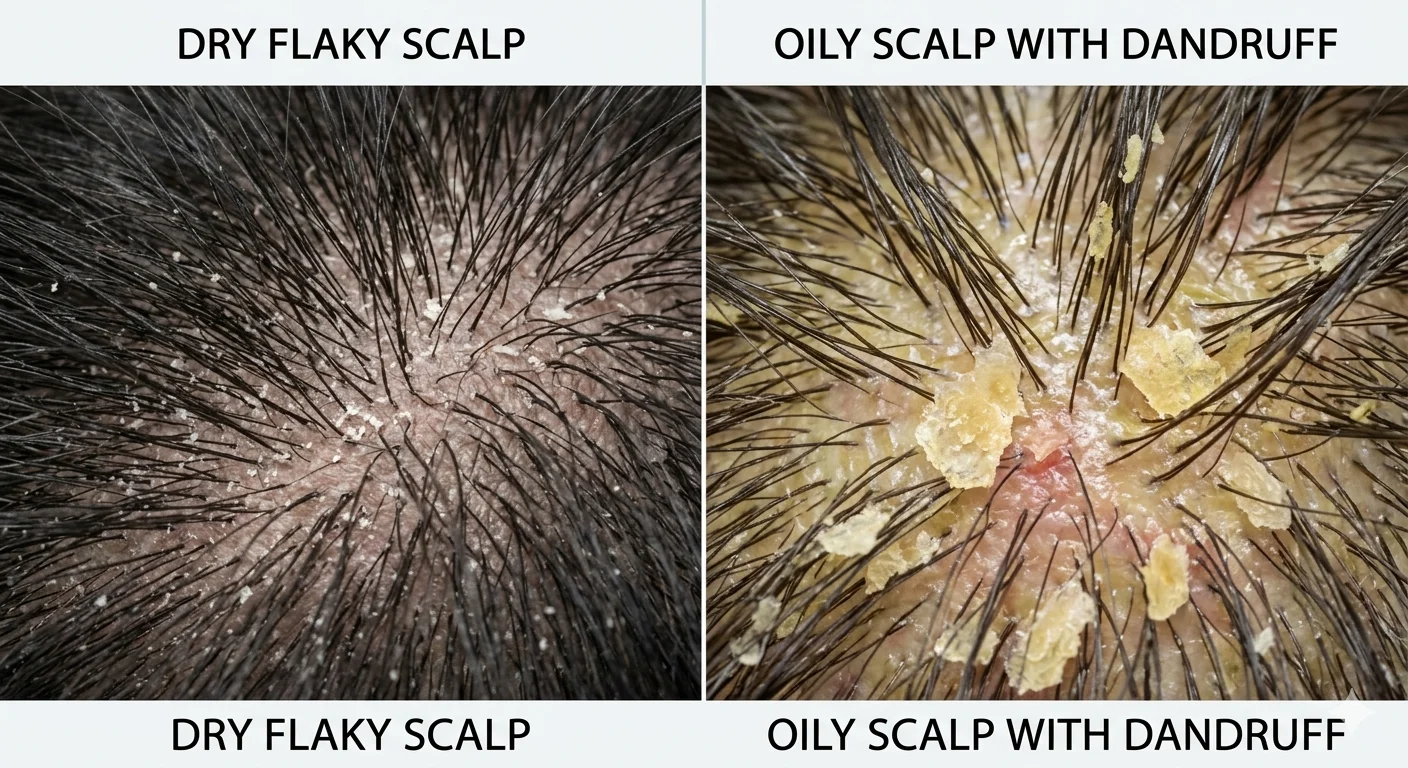
The flakes caused by a dry scalp look very specific. They are usually incredibly small, dry, and stark white. They fall easily from your hair when you brush it or shake your head. Alongside the flakes, you will likely notice that the skin on your scalp feels tight, tight, and dry to the touch, and you might also have dry skin on other parts of your body.
What is Dandruff?
While a dry scalp happens because you do not have enough oil, dandruff usually happens because you have too much oil. Dandruff is a medical condition known clinically as seborrheic dermatitis (in its milder form). It is directly related to a naturally occurring fungus on your scalp.
The Root Causes of Dandruff
We all have a yeast-like fungus called Malassezia living on our scalps. For most of us, it lives there peacefully without causing any trouble. This fungus feeds on the natural oils (sebum) your hair follicles produce.
However, for some people, the immune system overreacts to this fungus. When Malassezia feeds on the oils, it produces a byproduct called oleic acid. If you are sensitive to oleic acid, your scalp becomes inflamed. To defend itself, the skin on your scalp goes into overdrive, rapidly producing new skin cells and shedding the old ones at an alarming rate. According to the U.S. National Library of Medicine, this rapid cell turnover is what creates the large flakes we associate with dandruff.
Other contributing factors to dandruff include:
- Hormonal fluctuations that increase oil production.
- High levels of stress, which can suppress your immune system and trigger flare-ups.
- Not washing your hair enough, allowing oil and dead skin cells to build up and feeding the fungus.
Key Signs You Have Dandruff
Dandruff flakes are noticeably different from dry scalp flakes. They are much larger, thicker, and often have a yellowish tint. Because they are mixed with excess scalp oil, they look and feel greasy. Instead of falling easily onto your shoulders, dandruff flakes tend to stick to your hair strands and clump together on your scalp. Your scalp will feel oily rather than tight, and the itching can be incredibly intense, often accompanied by red, irritated patches of skin.
How to Tell the Difference: The Home Test
If you are still not sure which condition you are dealing with, you can do a quick physical check at home to narrow it down.
The Visual Flake Test:
Next time you feel an itch, gently scratch your scalp and look closely at the flakes that come off.
- If the flakes are tiny, white, and powdery, you likely have a dry scalp.
- If the flakes are large, slightly yellow, and feel oily or sticky when you rub them between your fingers, you are likely dealing with dandruff.
The Moisture Test:
Before you wash your hair, massage a light, hydrating oil (like jojoba or sweet almond oil) into a small section of your scalp. Leave it on for a few hours. If the flaking stops and the skin feels better, you simply need moisture—it is a dry scalp. If the oil makes the itching worse or the flakes get stickier, you are feeding the fungus, which strongly points to dandruff.
Effective Treatments for Dry Scalp
If your scalp is just thirsty, the goal is to restore its natural moisture barrier gently. You want to soothe the irritation and stop stripping away your natural oils.
Switch to a gentle, hydrating shampoo.
Throw out any shampoos that contain heavy sulfates. Look for gentle, moisturizing cleansers formulated with ingredients like aloe vera, glycerin, or oat extract. These ingredients draw moisture into the skin without irritating.
Wash less frequently
Try stretching the time between your wash days. If you normally wash every day, switch to every other day. This gives your scalp enough time to produce and distribute its natural protective oils.
Use lukewarm water
Turn down the temperature in the shower. Washing your hair with lukewarm water cleans effectively without melting away the essential lipids your scalp needs to stay hydrated.
Try a soothing scalp treatment.
Once a week, treat your scalp to a deep hydration mask. Ingredients like hyaluronic acid or squalane are excellent for calming a dry, tight scalp.
Managing and Treating Dandruff
Because dandruff is a fungal and inflammatory issue, adding more oil or heavy moisturizers will only make it worse. You need specific active ingredients designed to slow down cell turnover and control the yeast.
Use a targeted anti-dandruff shampoo.
Over-the-counter dandruff shampoos are highly effective, but you have to look for the right active ingredients. Seek out products containing:
- Zinc pyrithione: Reduces the fungus on the scalp.
- Salicylic acid: Helps scrub away and dissolve the heavy buildup of sticky skin cells.
- Ketoconazole: A powerful antifungal agent that stops Malassezia in its tracks.
- Selenium sulfide: Slows down the rapid production of skin cells and fights fungus.
Wash more frequently
Unlike a dry scalp, a dandruff-prone scalp benefits from frequent washing. Washing regularly removes the excess oil that feeds the fungus. If you are having a flare-up, you might need to wash your hair daily with a medicated shampoo until the symptoms subside.
Give the product time to work.
When using a dandruff shampoo, do not just wash it out immediately. Massage it into your scalp and leave it sitting there for at least three to five minutes. The active ingredients need time to penetrate the skin and do their job.
When to See a Professional
While both a dry scalp and standard dandruff can usually be managed with a good home routine, there are times when you should skip the drugstore and see a board-certified dermatologist.
You should book an appointment if:
- You have tried over-the-counter treatments for several weeks with zero improvement.
- Your scalp is excessively red, swollen, or warm to the touch.
- You notice fluid, pus, or severe crusting on your scalp.
- The itching is so severe that it keeps you awake at night or distracts you during the day.
- You are experiencing sudden, noticeable hair loss along with the flaking.
These symptoms could point to more complex conditions like scalp psoriasis or severe seborrheic dermatitis, which require prescription-strength treatments.
Conclusion
Dealing with an itchy, flaky scalp is never fun, but understanding the root cause is the only way to fix it. Remember the golden rule: tiny, white, powdery flakes mean your scalp is thirsty and needs gentle hydration. Large, yellow, greasy flakes mean your scalp is producing too much oil, and you need an active ingredient to balance the natural fungus.
Take a close look at your hair today, adjust your shower routine accordingly, and give your scalp the specific care it actually needs. A healthy head of hair always starts with a healthy, balanced scalp.
Ready to build the perfect routine for your unique hair needs? Bookmark Hair Care Growth for more simple, science-backed guides, and share this article with a friend who might be fighting a losing battle against those stubborn white flakes!
Frequently Asked Questions (FAQs)
Can you have both a dry scalp and dandruff at the same time?
It is highly unlikely, as one is caused by a lack of oil and the other by an excess of oil and fungus.
Does scratching my head make dandruff or dry scalp worse?
Yes, scratching damages the delicate skin barrier, introduces bacteria, and can lead to severe inflammation or even minor infections.
Will drinking more water help cure my dry scalp?
While staying hydrated is great for your overall health, a dry scalp is mostly treated topically by protecting the skin barrier and retaining natural surface oils.
Written by Mian Hussain.