
How to Know What Type of Hair you have
We’ve all skilled the disappointment of buying a surprisingly endorsed shampoo or styling cream, handiest to scrub our hair and come to be with a frizzy, heavy, or dry mess. You might wonder why a product works miracles for your best friend but leaves your hair looking completely lifeless.
The truth is, lovely hair doesn’t appear in a magic bottle. It comes from knowledge precisely what your hair is made from and what it especially needs to thrive. Caring on your hair is a lot like being concerned for a plant or maybe a pet: you have to take note of its particular characteristics and look at the way it reacts to different things environments, and feed it exactly what it craves.
When you finally figure out your hair type, everything changes. You stop wasting money on the wrong products, and your daily routine becomes incredibly simple. In this manual, we will move over the exact steps to understand your hair’s texture, porosity, density, and elasticity. By the end, you will know exactly how to listen to your hair and give it the care it deserves.
Why Knowing Your Hair Type Changes Everything
For years, lots of us classified our hair certainly via looking at it within the replicate. If it looked flat, we called it fine. If it looked frizzy, we called it dry. But hair is a complex biological structure.
According to resources from the U.S. According to the National Library of Medicine’s data on hair and scalp health, hair behavior is decided by using genetics, follicle form, and the structural integrity of the hair shaft. Trying to pressure your hair to act like someone else’s is a losing war.
To recognise your hair profile, you ought to take into account four essential pillars: texture, porosity, density, and elasticity. None of those factors exist in isolation; they all engage to determine how your hair reacts to humidity, warmth, and styling products.
Analysing hair texture: it’s all approximately the shape.
When we talk about hair texture, we are specifically talking about the natural shape or pattern of your hair strands. This shape is determined by the shape of the follicle that grows inside the scalp. An asymmetrical follicle produces curly hair, while a perfectly round follicle produces straight hair.
The Four Main Texture Categories
Hair texture is generally broken down into four main types. Determining in which you fall on this scale is step one in deciding on the proper style.
- Type 1 (Straight): This hair has no herbal curls or waves. Because the strand is completely straight, the natural oils from your scalp can easily travel all the way down to the ends. This means straight hair is incredibly shiny but often prone to looking greasy very quickly.
- Type 2 (Wavy): Wavy hair forms a loose “S” shape. It usually lies flat near the roots and gets wavier toward the ends. It is liable to frizz, but it holds hairstyles perfectly.
- Type 3 (Curly): Curly hair forms distinct ringlets or tight “S” curves. Because the hair twists and curls, it’s extra tough for the scalp’s oils to attain the ends, making this type of hair evidently at risk of dryness.
- Type 4 (Coily): Coily hair features very tight zig-zags or corkscrews. It is rather fragile and highly susceptible to excessive dryness. This hair type experiences the most shrinkage when it dries and requires immense amounts of moisture to stay healthy.
How to Find Your True Texture
To figure out your true texture, you need to look at your hair in its most natural state. The next time you wash your hair, do not use any styling merchandise, leave-in conditioner, or heat equipment. Let it air dry completely bare. The sample that forms naturally is the actual texture of your hair.
Hair Porosity: The Secret to Hydration
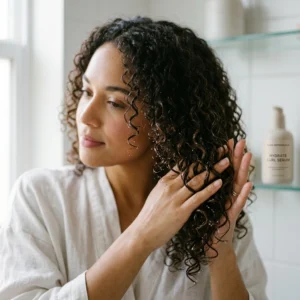
If you get rid of simplest one key takeaway from this guide, let or not it’s this: recognise your hair’s porosity. Porosity is the hair’s capability to soak up and hold moisture. It’s decided through the circumstance of the cuticle, the outer layer that covers the hair shaft. For a deep dive into how the hair shaft structure works, you can review this clinical overview from the National Institutes of Health.
The Three Levels of Porosity
- Low Porosity: The cuticles are tightly closed and lie completely flat. Water and merchandise have tremendous problem penetrating the hair, regularly closing at the surface and causing buildup. However, once moisture gets in, it stays in.
- Medium porosity: The cuticles are slightly raised, allowing simply the right quantity of moisture to go into and be retained. This is the easiest porosity level to manage.
- High porosity: The cuticles are extensively separated, raised, or broken. The hair absorbs water immediately, however without a barrier, it loses moisture just as fast, leading to chronic dryness and frizz.
The Easy Water Test
You can easily check your porosity at home. Take a clean, dry strand of hair that has naturally fallen out (make sure there are no products on it). Place it in a clean glass of water at room temperature.
Watch it for about three minutes. If it floats on the surface, it has low porosity. If it sinks slowly and stays in the middle, it has medium porosity. If it sinks like a stone to the lowest, it has excessive porosity.
Hair Density vs. Hair Thickness
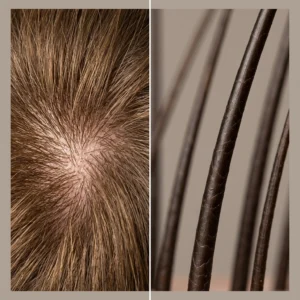
These two terms are constantly confused, but they mean very different things. You need to understand both to know how much product to use and how to cut or style your hair.
Density: How Much Hair Do You Have?
Density refers to the sheer number of individual hair strands growing on your head.
- Low density: You can easily see your scalp when your hair is dry and resting naturally.
- Medium density: You can only see your scalp when you move your hair or part it.
- High density: It is very difficult to see your scalp, even when you part your hair.
If you have low density, you want to avoid heavy creams that weigh your hair down and make your scalp more visible. If you have high density, you usually need to section your hair when applying products to ensure everything gets covered.
Thickness: The Size of Your Strands
Thickness refers to the physical width of a single hair strand.
- Fine hair: The strand is incredibly thin. You can slightly observe it if you roll it between your palms. It gets weighed down easily.
- Medium hair: Feels top to touch and holds its style well without breaking without problems.
- Thick hair: The strand is very extensive and feels like a thick thread. It desires lots of moisture to stay gentle and potential.
Hair Elasticity: The Stretch Test
Elasticity is a measure of your hair’s internal health and protein structure. Healthy hair has a natural stretch to it, meaning it can stretch out and bounce back without snapping.
Why Elasticity Matters
When your hair lacks elasticity, it becomes highly prone to breakage. This usually happens because of a lack of moisture, excessive use of hot tools, or chemical damage from bleach and dye.
How to Check Your Hair’s Elasticity
The next time your hair is wet, take a single strand and hold it between your fingers. Gently pull it to stretch it out.
- If it stretches easily and bounces back to its original length when you let go, your elasticity is great. Your moisture and protein levels are balanced.
- If it stretches but does not bounce back (it looks gummy or mushy), your hair has too much moisture and desperately needs a strengthening protein treatment.
- If it snaps immediately with almost no stretch, your hair is extremely dry and lacks moisture. You need to focus on deep hydration masks.
Building a Routine Based on Your Unique Profile
Now that you have gathered all the data about your hair, you can finally put it to work. Think of this as putting together a puzzle.
If you have fine, low-porosity, wavy hair, you know your strands are delicate and naturally reject moisture. You need lightweight, water-based products, and you should use a warm towel when deep conditioning to help open up those stubborn cuticles. Heavy butters will just turn your hair into a greasy mess.
If you have coarse, high-porosity, coily hair, your strands are thirsty and lose moisture fast. You need rich, heavy creams and sealing oils like castor or shea butter to lock the hydration inside the strand before it evaporates.
The Importance of Scalp Care
While you are focusing on the hair strands, do not forget where they come from. A healthy scalp is the foundation of healthy hair growth. Keep your scalp clean, avoid applying heavy styling products directly to your roots, and pay attention to how your skin feels. If your scalp feels tight or flaky, you need to adjust your washing frequency and find a gentler cleanser.
Conclusion
Understanding your hair type is a deeply personal journey. It takes a little bit of patience and observation, but the payoff is massive. When you know your texture, porosity, density, and elasticity, you hold the instruction manual to your own hair. You can confidently walk down the hair care aisle, read the ingredients, and know exactly what will work for you.
Start testing your hair this week. Do the glass of water test, check your strand thickness, and see how your hair stretches. Listen to what your hair is telling you, and adjust your routine to support its natural structure.
If you found this guide helpful, we would love to help you continue your healthy hair journey! Bookmark HairCareGrowth.com for more simple, science-backed tips, and share this post with a friend who is trying to figure out their own perfect routine.
Frequently Asked Questions (FAQs)
Can my hair type change as I get older?
Yes, hormonal changes, aging, and certain medications can permanently alter your hair texture, density, and even strand thickness over time.
How often should I test my hair porosity and elasticity?
It is a good idea to test your hair every few months, especially if you regularly use heat tools, color your hair, or switch up your daily environment.