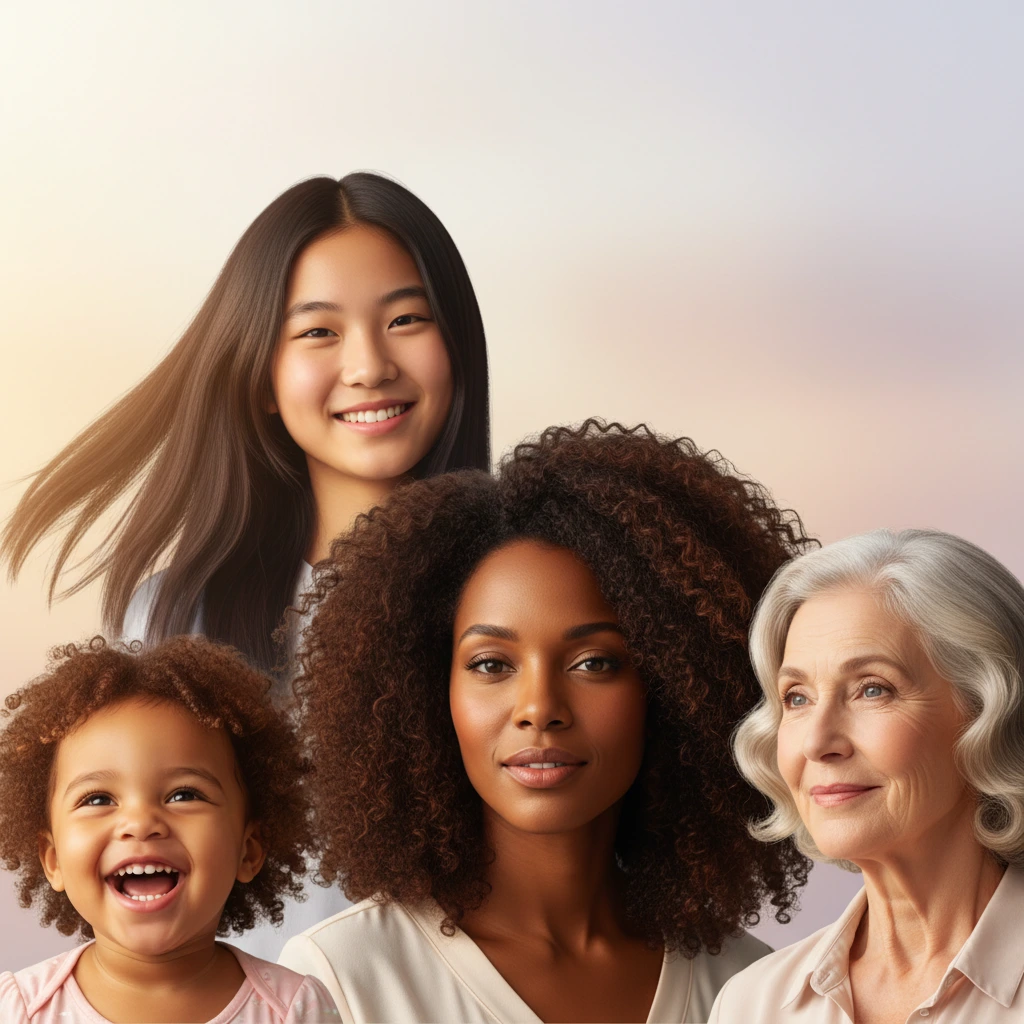
The personality of hair is not the same for the whole life.
A baby’s hair may be soft and downy, or flaky on the scalp. School children may wake up to find knots that seem to have formed overnight. For teens, it’s usually greasy roots, and for adults, it’s dryness, graying, a change in texture, or a part that appears wider than it used to be.
That doesn’t mean everyone the same age needs the same shampoo. Age is only part of the answer. Other factors such as hair texture, health, scalp condition, hormones, styling habits, medications, and climate can all be equally important.
The best hair care routine begins with observation. Greasy scalp by the end of the day or tight after washing? Are the ends smooth or rough or brittle? Is the hair actually shedding from the root, or is it snapping halfway down the strand?
You can learn more from those details than just your driver’s license’s birthday.
The straightforward response is that the ideal hair care regimen, regardless of age, is one that maintains a comfortable level of cleanliness on the scalp, provides sufficient conditioning for the hair fibre, reduces unnecessary heat and tension, and adapts to the changing demands of the hair. Mature hair typically benefits from more hydration and less harsh styling, children typically require easy and gentle care, and teens frequently require better oil and buildup control.
Hair Care by Age at a Glance
| Life stage | What you may notice | Main hair care priority | Changes that deserve attention |
|---|---|---|---|
| Babies and toddlers | Fine hair, temporary shedding, cradle cap, easy tangling | Gentle cleansing and scalp comfort | Oozing, severe redness, sores, or expanding bald patches |
| Children ages 4–12 | Knots, sweat, swimming buildup, increasing independence | Teach simple washing and detangling habits | Scaly bald patches, broken hairs, severe itching, or scalp pain |
| Teenagers | Oilier roots, dandruff, sweat, heavy product use, styling damage | Scalp cleansing and damage prevention | Sudden patches, intense shedding, sores, or persistent inflammation |
| Adults in their 20s | Heat, bleach, extensions, tight styles, irregular routines | Prevent cumulative damage | Progressive thinning, hairline recession, or prolonged shedding |
| Adults in their 30s | Stress-related shedding, postpartum changes, early graying | Flexible routines and early recognition of change | A widening part, bald patches, or shedding that does not improve |
| Adults in their 40s | Texture changes, dryness, graying, possible perimenopausal changes | Moisture, strength, and scalp monitoring | Burning, tenderness, eyebrow loss, or rapidly decreasing density |
| Adults in their 50s | Menopausal changes, finer strands, dryness, lower density | Gentle care and lightweight volume | Rapid thinning or a visibly changing hairline |
| Adults in their 60s and beyond | Fragility, increased scalp visibility, coarse gray hair, dryness | Comfort, simplicity, and low-manipulation styling | Sores, infection, smooth bald areas, pain, or sudden shedding |
This table is a start, not a diagnosis. For example, a healthy 65-year-old with oily, thick hair may need to cleanse more frequently than a 25-year-old with a dry scalp and tightly coiled hair.
Why Hair and Scalp Needs Change With Age
Aging hair is not just greying. It’s a change in the scalp, the oil glands, the hair fiber, the pigment-producing cells, the follicles, the hormones, and years of accumulated weathering.
Scalp Oil Production Changes Over the Life Span
So, sebum is the natural oil produced by glands connected to hair follicles. It helps lubricate the scalp and hair, but is not produced steadily throughout life.
Hormones affect the activity of the oil glands. It is generally low during much of childhood, increases around puberty, and can decline later in life. This age-related pattern, and the strong influence of androgens on oil production, are described in a recent scientific review on sebaceous-gland biology. PubMed Central ( PMC )
It helps explain why a child can go several days without oily roots, a teen can feel greasy the morning after washing, and an older adult can suddenly find a longtime shampoo too drying.
The takeaway is simple: don’t continue with the same cleansing routine simply because it used to work.
The Hair Fiber Accumulates Wear
The visible strand is not a living tissue. When it comes out of the follicle, it can’t heal itself biologically.
Conditioners, masks, silicones, oils and bond-building products can provide temporary improvements in smoothness, flexibility and manageability. They cannot apply a severely damaged fiber to virgin hair.
Years of brushing, sun, colour, heat, chemical treatments, friction and tight hairstyles eventually damage the cuticle’s protective layer. This is why long or mature hair can feel coarser to the ends, even with a healthy scalp.
Want to learn more about how heat, friction and breakage can damage your cuticles? Read our guide on preventing hair damage before it starts.
Hair Follicles Also Age
In Europe, a 2026 expert consensus defined hair aging as a multifactorial process of the follicle and the fiber. Features identified by experts were graying, decreased density, miniaturization, fragility, and structural weathering. They also noted that without proper assessment, it can be difficult to differentiate normal physiological aging from pattern hair loss and other disorders. (See the consensus in PubMed) (Springer)
That’s a difference. Years of aging can result in a little less volume, but rapid thinning should not be dismissed as “just getting older”.
Hormones and Major Life Events Can Shift the Hair Cycle
Puberty, pregnancy, childbirth, perimenopause, menopause, illness, surgery, rapid weight change, severe stress, and certain medications can all affect the growth cycle of hairs.
For instance:
- Oil production is normal in adolescence.
- Post-birth, the decrease in estrogen can lead to temporary postpartum shedding.
- Diffuse shedding, called telogen effluvium, can be triggered by physical or emotional stress and often becomes noticeable a few months after the trigger.
- Menopausal hormonal changes may affect the density, strand diameter, texture and growth patterns.
Cleveland Clinic says telogen effluvium is often triggered by a physical, hormonal, or emotional stressor and is often temporary once the trigger is removed.
What the Latest Hair-Aging Research Means for Your Routine
The most recent expert consensus on hair aging has an important practical implication: no single “anti-aging” product can reverse all of the age-related changes.
There are 3 different targets in the aging of hair:
- The scalp: This can be dry, more sensitive, or a medical condition.
- The follicle. It may produce a finer or shorter strand.
- The current hair fibre: damaged, porous, chemically treated, or more fragile.
A conditioner may make the fiber feel softer but not diagnose a shrinking follicle. A volumizing shampoo can make hair look fuller, but it can’t tell you why a part is widening. A scalp serum can soothe, but it can’t substitute for care when a scalp is painful or inflamed.
That’s why good hair care for the age group begins with determining which part of the system has changed.
Five Hair Care Principles That Matter at Every Age
Before thinking about the age groups, it is useful to put down five lifetime rules.
1. Wash the Scalp, Not Only the Hair
Shampoo’s main function is to remove impurities, oil, perspiration, dead skin, and other materials from the scalp.
Gently massage the scalp with fingertips. Rinse, and the lather will run down the lengths. This technique is recommended by the American Academy of Dermatology to avoid excessive drying and friction along the hair fiber.
2. Condition As Fiber Needs
Conditioner helps in handling and reduces friction. Focus on mid-lengths and ends unless the product is meant for the scalp.
Fine hair may need a light rinse-out formula. Thick, curly or coily hair, bleached or mature hair may need a richer conditioning or a leave-in product.
3. Consider pain a signal to stop
Hairstyles such as braids, ponytails, buns, extensions, locs and head coverings should not be painful, create bumps, headaches or noticeable pulling.
Repeated tension can lead to traction alopecia. Chronic pulling can harm the hairline and even result in permanent loss, according to the American Academy of Dermatology.
How do hairstyles impact hair health? Our detailed guide explains how tension, weight, frequency and hair condition all interact.
4. Use Least Effective Heat.
It isn’t always hotter that’s better.
To get the desired results, use the lowest setting. Keep your tools moving and use a heat protectant when appropriate. Do Not Keep Ironing In The Same Place. Do Not Use High Heat On Previously Bleached, Weak Or Thinning Hair
5. Adapt to Change Rather Than Follow Trends
The product needs to address a real problem that you experience.
Ask before you purchase something new:
Oily, dry, itchy, flaky, or feeling good?
Are my locks fine, coarse, curly, straight, processed, or fragile?
Dryness, buildup, breakage, or true hair loss?
What began the problem? Was it a new product, illness, medication, diet, or life event?
Our guide to choosing the right hair care products can help you correlate those answers to products.
Hair Care for Babies and Toddlers Ages 0–3
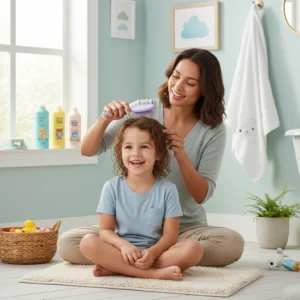
In the first few years, it isn’t about style perfection. It’s all about keeping the scalp comfortable and working with fine hair so that there’s minimal tugging.
Hair Care Routine for Babies and Toddlers: A Simple Approach
For the majority of infants and young children:
- Use warm water to moisten your scalp and hair.
- Use a tiny bit of mild, age-appropriate cleanser.
- Use your fingertips to gently massage.
- Rinse well.
- Instead of giving the hair a hard rub, pat it dry.
- If needed, use a soft brush or wide-tooth comb.
The American Academy of Dermatology advises careful handling and gentle baby shampoo because an infant’s skin and scalp are delicate.
Even a baby with very little hair still needs a gentle scalp cleaning, but this doesn’t automatically mean he needs to be shampooed every day.
What to Do About Cradle Cap
Cradle cap can appear as greasy or dry-looking scales on a baby’s head. This is common and often is not due to poor hygiene.
You may try to wash and soften the scales a little. Do not scrape, pick, or otherwise force them up. The AAD recommends that people use a fragrance-free baby shampoo and consult a professional when routine washing does not keep the condition under control.
Never use adult dandruff products, concentrated essential oils, acids, or harsh medicated products on an infant unless recommended by a health care professional.
Detangling Toddler Hair Without Tears
Hair with some slip is easier to untangle.
For longer hair and curly/coily hair:
- Part hair into small sections.
- Use an age-appropriate conditioner or detangler.
- Hold the hair above the knot to minimize pulling on the scalp.
- Start at the ends.
- Go up little by little.
- Stop if the child is in pain.
Loose styles tend to be more comfortable than tiny, tight ponytails or braids. Use smooth accessories, with no exposed metal or rough seams.
When a Baby or Toddler Needs Medical Advice
Discuss with a pediatrician or dermatologist the following:
- Bleeding or oozing
- Prominent swelling
- Pustules
- Severe or prolonged redness
- Round areas of hair loss
- Severe scaling of damaged hair
- A rash spreading off the scalp
- Sore scalp symptoms
Hair Care for Children Ages 4–12
This is the ideal time to add hair care to the list of normal life skills, like brushing teeth.
The idea is not to have a child perform a complex routine. To teach them to clean, rinse, detangle, and speak up if something hurts.
Teach Shampooing Step by Step
According to the American Academy of Dermatology, parents should instruct their children to moisten their entire scalp and hair, apply shampoo to their hands first, gently massage it into their scalp, and then completely rinse.
A simple instruction such as “scalp first, ends second” is easier for a child to remember than a long list of rules.
Check hair after rinse. If you feel a slippery residue or still itch, it could be that you did not rinse out the shampoo or conditioner well enough.
How Often Should Children Wash Their Hair?
No schedule fits all.
How often a child needs shampoo depends on a variety of factors, including the child’s age, hair texture, oiliness, activity level and styling habits, the AAD says.
If a child requires more frequent cleansing.
- Excessive sweating when playing sports
- Swims often.
- Straight hair that becomes oily quickly
- Use Products
- Long-term use of headgear
Kids with dry, curly, or coily hair may not need to shampoo as often, but regular cleaning of the scalp is needed. Washing less often should not mean leaving sweat, flakes, odor, or heavy buildup untreated.
Make Detangling Easier
One of the fastest ways to make detangling a battle is to rush it.
Dare me.
- Work on damp or conditioned hair if that is suitable to the texture.
- Section hair into workable pieces.
- First break up the big knots with your fingers.
- Start from the ends and work your way to the roots and detangle.
- Keep a hand above the knot to relieve the pulling on the scalp.
- Use a tool that bends or glides, not one that tears through resistance.
If you have curly or coily hair, dry brushing can break your hair unnecessarily and ruin your curl pattern. Detangling with water, conditioner, or some other source of slip is usually more comfortable.
Hair Care for School, Sports, and Swimming
Select hairstyles that are held in place, but not too tight.
Post swim:
- Rinse hair immediately.
- If you still smell or taste chlorine or salt, rinse off.
- Use conditioner if hair feels coarse afterwards.
- Never tightly style wet hair.
Wash helmets, headbands, hats, pillowcases, hair accessories regularly. Tools and accessories should also be rinsed if coated with oil or hair or styling product.
Help Children Feel Good About Their Natural Hair
But hair care is also an emotional thing.
Don’t call a child’s hair “bad,” “wild,” or “unmanageable.” The words may become part of the child’s view of his appearance.
Rather, tell what the hair needs:
- We detangle. Your curls need more water.
- Because your hair’s so thick, we’re doing it in sections.
- Soccer makes your scalp sweaty, so today is a wash day.
The aim is to train skill without rendering hair texture a problem to be solved.
Hair Care for Teenagers Ages 13–19

Teenage hair can be fickle. Hormonal activity may lead to more oil production on the scalp and new challenges such as sports, stress, dandruff, styling products, bleaching, and hot tools.
Increased oily skin and scalp during adolescence can be explained by puberty-related signaling that increases sebaceous gland activity. (See research in PubMed Central ) (NCBI)
The Three-Product Starter Routine
A shelf full of products isn’t necessary for a lot of teens. A practical start routine:
- Scalp shampoo
- A good conditioner for the lengths
- 1 styling/protecting product
There should be more products coming in and addressing a real problem.
For instance:
- For definite dandruff: a dandruff shampoo.
- Heavy buildup clarifying shampoo
- Leave-in conditioner for dry or tangled hair
- Heat protectant for hot tools, everyday use
- A curl styler for hold and definition
This keeps the routine easy enough to follow consistently.
Managing Oily Roots
An oily scalp is not a sign of laziness or poor hygiene. It may simply need more frequent cleansing.
Wash when the scalp becomes oily, sweaty, itchy, or coated with product. Focus shampoo on the roots and avoid loading heavy oils, butters, or conditioner directly onto an already greasy scalp.
Dry shampoo may help the hair look fresher between washes, but it does not remove sweat, skin cells, or accumulated residue. It should not permanently replace cleansing.
Dandruff Is Not Always a Dry-Scalp Problem
Dandruff can occur on an oily scalp. There could be more than a lack of moisture.
The AAD advises finding a shampoo with the correct active ingredient and using it as directed. Some formulas can dry the length, so if you have curly or coily hair, it may require treatment on the scalp.
Persistent flaking may also be due to eczema, psoriasis, contact dermatitis, fungal infection, or another scalp condition. If normal dandruff treatment does not work, see a doctor.
Reduce Damage From Heat, Bleach, and Trends
Sometimes teens are trying out their first hair changes. The problem is not experimenting. There are several harmful practices that are piling up and are
A useful “damage budget” is to limit the number of major stressors to be used simultaneously.
As an example:
- Bleached hair, daily flat ironing, and tight extensions are a high-stress combination.
- Soft on temporary color and low heat.
- The safer installation is a loose protective style on well-conditioned hair vs a heavy, painful installation.
- More damaging than heatless styling is running a hot tool repeatedly over the same spot.
Don’t think that pain is part of the process. Loosen a tight style right away.
Hair Care for Teen Athletes
Sweat, helmets, caps, and headbands can help keep oil and moisture away from the scalp.
Helpful habits are:
- Rinse and wash off as necessary after excessive perspiration
- Let a wet head dry; don’t cover it.
- Clean headbands and helmets
- Don’t wear a tight ponytail under all your gear.
- Where ties and clips live, spin
- Gently detangle after swimming.
Take Teenage Hair Loss Seriously
The teenager can develop temporary shedding, pattern hair loss, alopecia areata, traction alopecia, scalp infection, or other conditions.
Book a consult on:
- Bald patches, round or irregular
- Chronic Over-shedding
- Broken hairs in scaly areas
- Receding hairline loss
- Yanking or twisting compulsively
- Pain, burning, sores or pus
- Hair changes with fatigue, major weight change, or other symptoms
Hair Care in Your 20s: Build a Strong Baseline
Your 20s are a time to experiment: color, bleach, extensions, straighteners, curlers, braids, festival looks, gym routines, travel, and bad sleep.
Hair can take a lot in the first place. The same stress, repeated for months or years, makes damage more apparent.
Decide What Is Worth the Damage
You don’t have to avoid all chemical services or hot tools. Prioritise the results that are most important, and take the least strain on the rest.
If you like lightened hair:
- Book some time between appointments.
- Do not overlap the bleach on previously lightened hair.
- Flat iron use less often
- Use conditioner regularly.
- Repeatedly split or snagged trims should be discarded.
If you are into extensions:
- Make the installation cozy.
- Don’t overdo weights.
- Wash your scalp well.
- Do not reapply over thinning or irritated areas.
- Allow healing of damaged edges.
Create a Baseline for Future Comparison
Photograph Clearly
- The basic part
- The two temples.
- Front hairline.
- The crown.
Shoot in similar lighting and angles. Repeat every three to six months only if you’re concerned about thinning.
Looking in the mirror several times a day is not as helpful as a photo, because lighting and styling can make misleading differences.
Do Not Use Supplements as Insurance
Just because you are in a stressful decade doesn’t mean that hair supplements are going to help.
Deficiencies can be linked to hair problems, but eating a lot of them when not needed can be dangerous and may not help growth. Assumptions are not as good as a good, balanced diet and the proper medical tests.
If you want more nutritional advice, see our article on diet choices for stronger, longer hair.
A Practical Routine for Your 20s
- Cleanse according to oil, sweat, buildup, and texture.
- After shampooing.
- When styling, use heat protection.
- High tension hairstyles rotation.
- When your hair is wet, never sleep with it pulled back tightly.
- Don’t camouflage it with oils – treat the dandruff or irritation.
- If you see your hairline, part, or density starting to change, get it checked out.
Hair Care in Your 30s: Make the Routine Work With Real Life

Demands of your career, parenting, pregnancy, postpartum recovery, stress, illness, and less predictable schedules may all impact your hair care during your 30s.
A good routine in this decade need not be complicated. It is replicable.
Use a Minimum Effective Dose
Busy weeks, focus on:
- Deep Scalp Cleanse
- Length conditioned
- Smoothing detangling
- Protection for the hair during styling.
- Preventing extended stress
Speciality treatments, oils, masks, and scalp devices are optional. Not the basics.
Recognise Postpartum Shedding
Increased oestrogen levels during pregnancy keep more hair follicles in the development stage. Many of those hairs move into a resting period before shedding as oestrogen levels decline following birth.
The Cleveland Clinic states that hormone changes, not breastfeeding or neglecting your hair, are what cause postpartum hair loss, which typically occurs a few months after giving birth.
Gentle care can help reduce breakage but will not stop hormonally driven shedding altogether.
We have a full guide to postpartum hair loss and recovery, complete with a more detailed timeline.
Stress, Illness, and Rapid Weight Change Matter
Diffuse shedding may appear months later:
- A grave disease
- Fever high
- Surgical procedure
- Extreme emotional stress
- Quick weight loss
- Restrictive diets
- Starting or stopping some medicines
Don’t blame the new shampoo that you began to use the same week you saw shedding.
Make a timeline of health changes, medications, diet changes, and stressful events for the past 3-4 months that you can discuss with a healthcare professional.
Watch for Early Pattern Thinning
Hair loss can begin earlier than most people think.
Possible symptoms
- A wider center part
- Crown cover reduced.
- Hair loss
- Less dense hair where it used to be thick
- Ponytail circumference smaller over time
It’s different from shedding temporarily, and they can occur at the same time. Early assessment provides a better opportunity to determine the cause and discuss evidence-based options.
Hair Care in Your 40s: Adapt to Changing Texture
Hair in the 40s may not respond to the same routine that worked 10 years earlier.
Some say their roots aren’t that oily. Others may find more dryness, more graying, a change in curl pattern, less density, or a more visible scalp around the part.
Perimenopause May Affect the Hair
Hormonal changes during the menopausal transition may affect the follicle and hair cycle. The 2025 review found links with lower density, lower fiber caliber, and texture changes. The experience varies greatly from one person to another. (PubMed)
Genetics, health, stress, nutrition, and styling history still have a role to play. Some changes you experience in your 40s are not due to hormones.
Adjust Moisture Without Overloading the Roots
When the lengths are dry, but the roots are fine:
- Gently shampoo the scalp.
- Put conditioner under ears.
- Use a small amount of leave-in product on the ends.
- Do not apply thick masks or oils directly on the roots.
- Use volumising products lightly around the roots.
It’s intended to add flexibility, but not flat or coated hair.
Gray Hair Needs Conditioning, Not Fear
Hair turns gray as the follicles slow down their production of pigment. Genetics play a big role in graying, and it does not mean the hair is dirty, unhealthy, or “dead”.
Graying usually begins in your 30s or 40s, the AAD explains, but it can vary widely.
Changes in fibre, scalp oil, styling history and the way unpigmented strands reflect light can make gray hair feel different.
Helpful care involves:
- Normal conditioning
- Turn the heat down
- Sun overexposure protection
- Use toning products only occasionally when there is unwanted yellowing
- Not using purple or super clarifying shampoo all the time
Purple shampoo is a color-correction product, not an essential mature-hair treatment.
Reconsider Repeated Color Services
Root touch-ups tend to be more frequent, especially with grey hair coverage.
Ask your stylist:
- Rootless Apps
- Gray mixing
- Highs & Lows
- Semi-permanent colour.
- Gradual transition to natural gray
If you repeat the process of applying permanent color to previously processed lengths, you will be left with dryness and breakage, without any more root coverage.
Hair Care in Your 50s: Protect Density and Flexibility

Some people notice their hair is less thick, the strands are finer, their hair is drier, the scalp is more visible, or the way their hair holds a style changes during and after menopause.
Such changes can be slow. Rapid or severe thinning has not yet been evaluated.
Cleansing not no cleansing Gentle cleansing
But having a dry scalp doesn’t mean you have to go long without washing.
Oil, sweat, skin cells, and styling products still accumulate. Choose a cleanser that you like to use on your scalp. Frequency: Adjust to the actual buildup.
If your roots get oily but the length of your hair is dry, shampoo only your roots and put conditioner on the ends.
Create Volume Without Creating Breakage
Fine or Thinning Hair:
- Choose a cut that is of unique shape.
- Use a light mousse or root lift products.
- Dry in medium machine.
- [3] time to time change
- Don’t oil roots; keep it light.
- Use rollers and gentle setting, not aggressive backcombing.
- Think cosmetic fibers, powders, scarves, or toppers as desired.
Cosmetic camouflage can enhance the way you look and feel about yourself, but it won’t fix the problem of thinning.
Distinguish Hair Aging From Hair Loss
According to Mayo Clinic, hair loss can be due to heredity, hormonal changes, medical conditions, medications, and aging.
Do not expect that a widening part, receding hairline, or loss of eyebrow hair is a given.
When to Seek Professional Help
- Fast shrinking density
- I was getting increasingly frustrated
- The frontal hairline moves backward
- You may have a sore or tender scalp.
- Eyebrows get thinner
- You will see shiny or smooth spots
- Shedding following a new medication or health change.
Hair Care in Your 60s and Beyond: Prioritize Comfort and Simplicity

Old hair can be fine, dry, brittle, and hard to manage. The scalp is more exposed and more vulnerable to aggressive brushing, chemicals, or fragranced products.
The best routine is often short, comfortable, and easy to repeat.
A Basic Regimen for Aging Hair
- Cleanse your scalp as necessary.
- Wash and condition the lengths.
- Detangle gently with a comfortable tool.
- Cook over low or medium heat.
- Go for loose, light hairstyles.
- Keep exposed scalp protected from bright sun rays.
- Check regularly for sores, redness, or unusual growths.
Age does not mean less washing of hair. Frequency should still be a reflection of oil, sweat, texture, mobility and scalp condition.
Make Hair Care More Accessible
Arthritis, limited shoulder movement, reduced vision, fatigue and balance problems can make a once easy routine difficult.
Useful adaptations include
- Pump bottles.
- Lightweight hair dryers
- Bigger handled brushes
- Seated section untangles
- Low maintenance hair styles
- Shower chairs as indicated by the medical condition
- Help from a trusted family member, stylist, or caregiver
A hard-to-do ideal routine is worse than a manageable routine.
Guidance for Caregivers
When you do someone else’s hair:
- Ask how they usually wear it.
- Be respectful of cultural and personal preferences.
- Describe what you are doing.
- Work knots slowly.
- Stop at any point that something hurts.
- Don’t cut matted hair without talking.
- Examine behind ears and on the back of the scalp for irritation.
- Hold on to your independence as much as you can.
Hair care is a person. Support should not diminish the person’s dignity or choices.
Coloring Fragile Mature Hair
Most people can safely color hair grey, but tolerance can vary.
Use product instructions for patch and strand tests. Do not dye an inflamed or injured scalp. Stop and rinse immediately if a product causes severe burning, swelling, or breathing problems, and seek medical attention for signs of a serious allergic reaction.
If your skin is itchy, dry, or inflamed after coloring, it may be contact dermatitis, which can sometimes be caused by para-phenylenediamine in darker permanent dyes (AAD). (See American Academy of Dermatology’s advice on itchy scalp)
Hair Type Can Matter More Than Age
Age changes the routine but texture determines how to deal with those changes.
| Hair type or condition | Main challenge | Useful approach |
|---|---|---|
| Fine or straight hair | Oiliness, flat roots, easy product buildup | Cleanse as needed and use lightweight conditioner mainly on the ends |
| Wavy hair | Frizz, inconsistent curl pattern, heaviness | Balance moisture with light hold and avoid rough dry brushing |
| Curly hair | Tangling, dryness, shrinkage, breakage | Detangle with slip, use sectional care, and reduce friction |
| Coily hair | Moisture loss, knots, fragile bends, tension damage | Condition consistently, manipulate gently, and keep protective styles loose |
| Gray or white hair | Dryness, texture shifts, yellowing | Condition regularly and use toning products only when needed |
| Bleached or chemically treated hair | High porosity and structural weakness | Reduce heat and overlapping chemical services |
| Thinning hair | Reduced coverage and increased visibility | Use lightweight products and obtain a diagnosis for progressive loss |
For a complete routine for textured hair, see our guide to curly hair care.
A Life-Event Reset: When Your Old Routine Suddenly Stops Working
Age isn’t always the most important hair-care category. What just happened?
Once your routine is reviewed:
- Teenager
- Pregnancy or labour
- Starting or stopping hormone medicine
- Menopause or perimenopause
- A horrible disease
- Operation
- Fast weight loss
- A very strict diet
- A huge emotional event
- Initiating a new prescription
- Change to new climate
- Chemical straightening or bleaching
- Starting tight or heavy hairdos
Ask 3 questions:
- The scalp: has it changed?
- Did the strands alter?
- “Is the shedding more or different?
Only change what addresses the answer. Don’t change every product at once, or you won’t know what’s helping or irritating the scalp.
Normal Age-Related Change or a Warning Sign?
This chart is not to be used as a diagnostic aid for hair loss but it may help readers to decide when home care is a good option and when it is safer to consult a professional.
| What you notice | What it may mean | Reasonable next step |
|---|---|---|
| Gradual graying without scalp symptoms | Common pigment change | Adjust cosmetic care only if desired |
| Dry ends after years of heat or coloring | Fiber weathering or chemical damage | Increase conditioning and reduce stress |
| Oily scalp beginning around puberty | Hormonal increase in sebum | Cleanse according to oil and activity |
| Diffuse shedding a few months after illness, stress, or childbirth | Possible telogen effluvium | Use gentle care and discuss persistent shedding with a clinician |
| Slowly widening center part | Possible pattern hair loss | Schedule a dermatology assessment |
| Round, smooth bald patch | Possible alopecia areata or another condition | Seek medical evaluation |
| Scaly patch with broken hairs | Possible scalp infection | Arrange prompt medical care |
| Thinning at the hairline where styles pull | Possible traction alopecia | Stop tension and seek help if loss is visible |
| Burning, tenderness, redness, or sores | Inflammation, infection, or scarring condition | Seek prompt professional evaluation |
| Eyebrow loss or smooth, shiny scalp | Possible scarring form of hair loss | See a dermatologist promptly |
The AAD says signs like burning, tenderness, redness, swelling, sores, and scaly bald patches can indicate significant scalp disease or infection.
Home Hair Care vs. Professional Care
Home Care Is Suitable For
- Subtle dryness
- Standard entanglement
- Sometimes frizzy
- Controllable buildup
- Heat-damaged ends
- Getting gray slowly
- Good shampoo for easy mild dandruff
- Stop breakage and damaging habits
Arrange a Routine Appointment For
- Progressive thinning:
- A widening element
- Persistent itching or dandruff
- Moulting without relief
- Suspected reactions to hair products
- Medication or Major health event changes
- A hairline becoming thinner after repeated tight styling
Seek Prompt Medical Care For
- Burning or painful hair loss
- Pus, open sores, or great swelling.
- Fast-growing bald patches
- SCALY BALD AREAS IN CHILD
- Smooth, shiny patches where follicles are missing
- Eyebrow or eyelash hair loss
- Symptoms of a serious allergic reaction to hair dye
The dermatologist will look at the timeline, family history, medications, hair-styling habits, diet, and any other symptoms. Examination, blood work, dermoscopy, fungal testing, or a biopsy may be considered depending on the circumstances. Finding the reason is the first step to an effective treatment, not experimenting with different products. (American Academy of Dermatology)
Common Hair Care Myths Across the Generations
Myth 1: All the shampoos are age specific.
Something labeled “teen,” “youth,” or “mature” doesn’t mean it’s the right product for the person using it.
Select shampoo based on oiliness, sensitivity, buildup, texture, chemical processing & condition of the scalp. The marketing category is less important than the formula and its reaction on the scalp.
Myth 2: Cutting Hair Speeds Up Growth
Haircuts eliminate damaged ends. They do not change the biological rate of growth in the follicle.
Trimming can help preserve length by preventing split, weathered ends from breaking higher up the strand. Good. No faster growth of the follicle.
Myth 3: Grey hair is stronger by nature
A coarse-feeling strand is not necessarily a stronger strand.
Gray hair can be wiry to the touch, but it can also be dry, porous, and prone to breakage. Judge its condition by flexibility, smoothness, and breakage rather than color.
Myth 4: Oil will cure a dry or flaky scalp
Oil can soften dry skin or reduce friction along the hair fiber. It may not work for all causes of itching or flakes.
Eczema, psoriasis, fungal infection, contact dermatitis, and dandruff all require different approaches. “Some people can also build up heavy oil.
Myth 5: Everyone grows more hair with biotin
Biotin is essential, but deficiency is rare in people on a varied diet. Any extra biotin will not make someone who is not biotin deficient grow any faster.
High-dose supplements may also affect some laboratory tests. Supplements: Before taking supplements, especially prior to blood tests or if you are pregnant, speak with a healthcare provider.
Myth 6: Protective Styles Have to be Tight
If a style is causing pain, headache, bumps, or visible pulling, it is not protecting the follicles.
Daily manipulation should be kept to a minimum and not add too much weight or tension to your hair.
Myth 7: Hair loss is normal with aging
With age, there may be some gradual change. Look out for sudden, patchy, painful, inflamed, or rapidly progressing loss.
When correctly detected, many reasons of hair loss are manageable or treatable.
A 10-Minute Hair Check for Any Age.
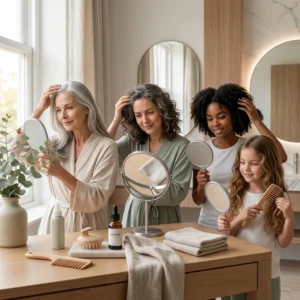
Each month, spend 10 minutes examining your scalp and hair under bright light.
Scalp Inspection
Search for: Search this site:
- Red.
- Specks
- Bumps
- Peptic ulcers
- tender spots
- Smooth bald spots
- A larger part
- Hairline receding
Check the Strands
Search for:
- Split-ends
- Dotty white fiber.
- Short broken bits
- Over-tangling
- Sticky or rough texture
- Repeated ties or clips deterioration
Check the Routine
Ask:
- A do that hurts?
- Is my heat bill higher than last month?
- Do I have an oily or dry scalp?
- Did I launch a new product?
- Have I been sick or stressed lately?
- Is it falling out, breaking off, or both?
Make One Change
Choose one realistic change:
- Turn the heat down
- Loosen the hairstyle
- A better wash for your scalp
- Finish with Conditioner
- Don’t use a product that irritates you
- Book a dermatologist appointment
It is easier to see what works by changing one variable at a time.
Frequently Asked Questions
At what ages do people wash their hair how often?
Wash according to age, oiliness, sweat, product use, hair texture, and comfort level of scalp.
The oily straight-haired teen may have to wash it frequently. Dry, tightly curled hair may wash less frequently and have a clean and comfortable scalp for a child or adult.
Is it OK for kids to use adult shampoo?
Some older children can tolerate a mild adult shampoo, but adult formulas may be more fragranced, irritating, drying, or uncomfortable around the eyes.
Choose a product according to the child’s scalp, hair texture, sensitivity and ability to keep shampoo out of the eyes. Don’t use medicated or strongly clarifying products loosely on young children.
Why does the hair of a teenager become so oily?
In puberty, there is an increase in androgen activity, which can stimulate the sebaceous glands. Sweat, helmets, hair styling products, and frequent touching of the hair can make oiliness more apparent.
It generally works better to wash your hair regularly with an appropriate shampoo, rather than pile dry shampoo on top of the buildup of a few days.
Does hair naturally thin with age?
Hair density and fiber diameter may change with age, but noticeable thinning may also come from hereditary pattern hair loss, hormonal changes, illness, nutritional deficiency, medication, traction, or inflammatory scalp disease.
A changing part or hairline needs to be checked, not taken for granted.
What is the best hair care routine after age 50?
A good routine will typically include: a comfortable scalp cleanse, consistent conditioning, low to medium heat, gentle detangling, light styling products, and low-tension hairstyles.
Routine evaluation should also include progressive thinning or scalp symptoms.
What do old people use for really dry hair?
Use a gentle cleanser, condition after you wash, add a little leave-in conditioner to dry ends, cut down on high heat, and be gentle with knots.”
Don’t use heavy oils on an irritated scalp until you have identified the cause of the irritation.
Does grey hair revert to the original color?
In the vast majority of people, genetics and changes to the pigment-producing cells are the primary reasons for age-related graying. There is no cosmetic product proven at this time to permanently restore the original color of ordinary genetic gray hair.
Other symptoms or nutritional issues may prompt a health care provider to investigate early graying.
Do You Need Hair Vitamins at Every Age?
No. Supplements are best used to supplement an actual deficiency or to address a particular medical need.
A supplement choice based on food, blood testing, health history, and professional guidance is more reliable than a supplement choice based on age or marketing claims.
Why do you lose more hair on wash day?
The already shedding hair can get caught in the other hair until it is washed and detangled. A less frequently washed person may find more strands at a time.
It’s not so much the one dramatic-looking wash day. It’s a change in your normal routine.
When is hair loss abnormal?
Get advice if the hair loss is sudden, lasts for a long time, is associated with bald patches, is accompanied by scalp symptoms, or is clearly reducing the overall density.
Schedule an assessment also if shedding occurs after a change in medication, a serious illness, rapid weight loss, or other health symptoms.
Evidence Summary
| Evidence-based finding | What it means in daily life |
|---|---|
| Hair aging affects both follicles and existing fibers | Moisturizing products may help dryness, but thinning needs separate assessment |
| Scalp oil commonly increases around puberty | Teenagers may need more frequent cleansing than they did as children |
| Postpartum hormonal changes can trigger temporary shedding | Gentle care reduces breakage but cannot fully prevent hormonal shedding |
| Menopausal changes may affect density, diameter, and texture | A routine may need more moisture, less heat, and closer scalp monitoring |
| Repeated tight styling can cause traction alopecia | Painful styles should be loosened rather than tolerated |
| Hair loss has many possible causes | Correct diagnosis matters more than buying the most popular growth product |
| Gentle cleansing and conditioning reduce avoidable damage | Basic technique often matters more than an expensive product collection |
Final Thoughts: Let Your Hair Routine Grow With You
Healthy hair care has nothing to do with keeping your hair a certain age. It’s about paying attention as it changes needs.
A baby’s tender scalp. In a child, it is necessary to teach the patient. A teen wants a simple routine that controls oil, but doesn’t encourage over-application of products. Young adults are better off avoiding cumulative damage. Older adults may need more moisture, less heat, and earlier investigation of thinning.
At every stage the same principles are useful:
- Keep scalp clean and comfy.
- Hair fiber-dependent condition.
- Gently detangle.
- No biggie.
- Use heat and chemicals thoughtfully.
- Note density, texture, and comfort to the scalp.
If you have any of these warning signs, seek professional help.
First, select the age category that applies to you or your family member. Then identify one scalp concern and one strand concern. One scalp concern: One strand concern: Try one practical change and see what happens for the next two weeks.
For your next step, use our guide to choosing the right hair care products to build a routine that matches what your hair needs today—not what worked five or ten years ago.
Medical disclaimer: This article is for general education and cosmetic hair care guidance. It cannot diagnose the cause of hair loss, scalp pain, itching, inflammation, or changes in hair growth. Speak with a qualified healthcare professional or board-certified dermatologist about persistent, sudden, painful, patchy, or otherwise concerning changes.