Dry Hair is frustrating in a way that is difficult to explain until you’ve gone through it. You shampoo your Hair, condition, and by the end of the day it is still rough and dull. You run your fingers through it and find the coarse, almost brittle texture instead of softness. You pick up a strand, and it looks flat, frizzy, or just… worn out.
You’re certainly not alone. Dry Hair is one of the most common hair problems, and it is also one of the most misunderstood. Any pharmacy will have dozens of bottles promising moisturized, silky hair as you go down the aisle. Most of them overpromise and underdeliver.
The thing about dry Hair is it isn’t one thing. It could be your water, your habits, your environment, or the very structure of your strands. And since the root cause is different, the fix is different.
This guide cuts through the noise. We’ve broken down nine product categories that genuinely help — grounded in hair science and ingredient research. You’ll learn how each one works, what to look for on the label, and where some hair types need a slightly different approach.
What Causes Dry Hair?
Before you start shelling out on products, it’s helpful to know what’s really going on inside your Hair. Dryness is a sign that moisture is evaporating from the hair shaft more quickly than it is being replenished.
The cuticle is the outer layer of your Hair and is made of tiny overlapping scales. These scales are flat and tight, conserving moisture. When raised, damaged, or worn away, moisture escapes and you are left with that familiar rough texture, dullness, frizz, and snap when you try to comb through it.
Why Is My Hair So Dry?
- Overwashing: If you shampoo too often, you strip the scalp of its natural oil (sebum) before it has a chance to travel down the strand and do its job.
- Heat styling –Flat irons, curling wands, and blow dryers pull water out of the shaft quickly. If you go over already dry Hair with a hot iron, you can feel the difference; it comes out even stiffer.
- Chemical processing Bleaching and coloring lifts the cuticle and reduces proteins in the strand, causing the hair shaft to swell. The more rounds of colour, the less natural suppleness the Hair has.
- Like skin, UV sunlight breaks down melanin and hair proteins. The National Institutes of Health have documented UV-related loss of protein and lipids in the Hair.
- Hard water: Hard water contains calcium and magnesium, which coat the strand with deposits that make it feel stiff, resistant to conditioning, and almost waxy. A study published in the International Journal of Trichology found measurable differences in hair strength for users of hard and soft water.
- Low humidity or cold climates — The dry air robs the moisture right out of your strands, especially in winter when indoor heating makes it worse.
- Chlorine and saltwater — Both remove the protective lipid layer from the cuticle and leave Hair feeling rough and tangled.
- Curly and coily textures — The spiral shape of curly Hair makes it physically difficult for scalp sebum to travel down to the ends. If you have naturally curly Hair, your ends are almost always the driest part — not because something’s wrong, but because of how the strand is shaped.
- Aging — Sebaceous gland activity naturally slows down over time, which means less natural oil output and drier Hair overall.
- Wrong Hair Care Routine – Using the wrong products, or missing key steps, all add up. Skipping conditioner regularly is one of the quickest ways to get straw-like Hair, for example.
The American Academy of Dermatology notes that most cases of dry, brittle Hair are the result of external habits, rather than internal health problems. That’s actually good news — it means the right tweaks can really help.
How to Determine Whether Your Hair Is Dry
This is what dry Hair really feels and looks like any given day:
- If you run your hand through your hair, it feels rough or coarse, even immediately after washing.
- Shine – little or no shine. Looks dull, not healthy.
- It tangles all the time, almost as if the strands are grabbing each other.
- Hold a section up to the light, and you’ll see the split ends.
- More breakage than usual — you notice it on your brush, on your shirt, on the floor. Frizz that seems to get worse with any humidity.
- When dry, a stiff straw-like texture.
- A flat, lifeless look that products don’t seem to fix, at least not for long
If several of those sound familiar, keep reading.
How These Product Categories Were Chosen
This is not a list of trending products or anything sponsored. Each of these categories has been chosen to serve a specific need in the care of dry Hair – gentle cleansing, delivering moisture, retaining moisture, or physical protection.
Criteria for Selection
- Clinically or scientifically supported ingredients — Not just marketing speak.
- Moisture Function Products that hydrate, seal or protect – not just temporarily coat…
- Cross-hair type relevance—good for many types of textures and concerns
- Affordable formulas – Different price ranges available
- Purposeful formulas – No harsh additives working against your goal
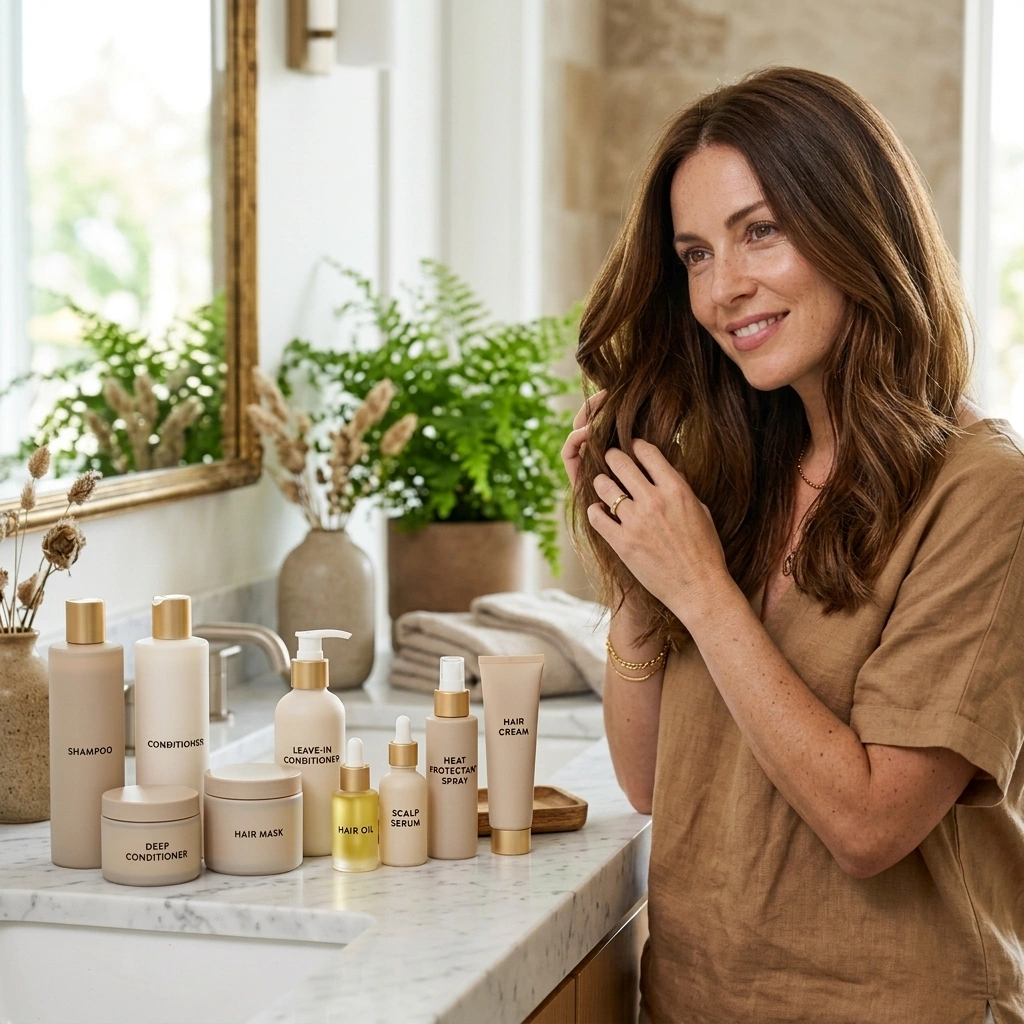
9 Hair Care Products for Dry Hair That Really Help
1. Moisturizing Shampoo
What it does, in fact
Shampoo has one job: to clean, but when your Hair is already dry, how it cleans is everything. Traditional sulfate-laden shampoos contain harsh surfactants that help lift dirt effectively, but also strip away that thin lipid layer that protects your strands. What was the result? When you run your fingers through hair in the shower, it feels squeaky, but when it’s dry, it feels coarse and dry.
Moisturizing shampoos use milder surfactants, often derived from coconut or sugar, that clear away buildup without completely stripping the scalp of its natural oils. The cleanse feels a bit different (not so squeaky clean), but your Hair is much more moisturized after it. For dry Hair, that trade-off is totally worth it.
Ingredients to look for
- Glycerin – A humectant, which draws water to the Hair
- Aloe vera — Lightweight, soothing, and adds surface moisture.
- Cocamidopropyl betaine — A mild, coconut-derived cleansing agent common in gentler formulas
- Argan oil or shea butter — Fatty acids that condition while you cleanse
- Panthenol (Pro-Vitamin B5) — Penetrates into the shaft and improves flexibility.
What to restrict
- While not harmful to everyone, sodium lauryl sulfate (SLS) can be extremely stripping for dry or sensitive scalps. SLES, or sodium laureth sulfate, is typically less harmful.
- High concentrations of short-chain alcohols can rapidly evaporate and carry water with them.
Best for: Daily dryness, color-treated hair, frizz-prone hair, and those who wash frequently.
2. Hydrating Conditioner
Why you should say yes
You have to use conditioner on dry Hair. The cuticle is raised temporarily after shampooing — your Hair is at its weakest, rough to the touch and likely to tangle. Conditioner smooths those cuticle scales back down, deposits moisturizing ingredients onto the strand, and almost immediately changes how the Hair feels and behaves.
Good to know mechanism. Most conditioners work through cationic (positively charged) ingredients that are naturally attracted to the slightly negative charge of your Hair, helping conditioning agents bond to the strand rather than just rinsing off.
Key ingredients to seek out
- Stearyl and cetyl alcohols are fatty alcohols that do not dry. They soften and add slip — the kind that lets a comb glide through without snagging.
- Ceramides are lipids that strengthen the layer of cuticle. Cleveland Clinic research on ceramides explains how they support structural
- integrity in skin — the same principle applies to Hair.
- Panthenol — Improves moisture retention and reduces breakage over time.
- Jojoba oil closely resembles the makeup of sebum from the scalp.
- Shea butter — Rich in fatty acids; leaves Hair noticeably softer
How often to use: Every single wash. For dry Hair, this is not optional.
3. Deep Conditioning Hair Mask
Why masks are better than regular conditioner
A rinse-out conditioner is left in the Hair for two to three minutes. That’s enough for surface smoothing – your Hair feels nicer, moves more easily – but it doesn’t give active ingredients time to penetrate. Deep conditioning masks contain more emollients and proteins, and are left on for 10 to 30 minutes. This extra time allows it to work deeper into the cortex, filling in structural gaps that regular conditioner cannot reach.
Consider the difference between a quick rinse of a dry sponge and really letting it soak.
Ingredients that really matter
- Avocado oil – Loaded with oleic acid that can penetrate the hair shaft and not just sit on top
- Babassu Oil — Lightweight yet deeply moisturizing; a great choice for fine to medium Hair that falls flat easily
- Hydrolyzed keratin – Temporarily fills surface damage and reduces breakage
- Amino acids: the building blocks of hair proteins that strengthen damaged or overprocessed areas
- Honey is a naturally occurring humectant that attracts water and has some modest antibacterial properties for the scalp.
Frequency: Weekly for most people. For extremely dry, bleached, or heat-damaged hair, use twice weekly.
A little practical note though: if your Hair is low porosity and feels coated or doesn’t absorb products well, try applying your mask to damp Hair after a minute under warm water. The gentle heat opens the cuticle a bit and allows better penetration.
4. Leave-In Conditioner
What it does between the washes
Leave-in conditioner is just what it sounds like—a lighter formula that remains in your Hair after you rinse out your regular conditioner. It leaves lasting moisture and protection on your Hair without the weight of a rinse-out product. For dry Hair, it’s the glue that binds it all together in between wash days.
Otherwise, hair that feels soft stepping out of the shower can feel dry and coarse again in a matter of hours, especially in low humidity.
Tangible benefits
- Stays soft as your Hair dries and all day long
- Dramatically easier detangling – the kind where your comb glides through without that tug-and-snap feeling
- Reduces frizz and friction as Hair dries
- Builds a light buffer against the dryness of the environment.
Best for: Curly, thick, long Hair, heat-styled Hair, and anyone whose Hair gets dry after a day or two of washing.
Using it well
Apply to damp (not dripping) Hair – this is more important than many realise. Damp Hair is open and ready to absorb. Before the product can work, it is diluted by soaking wet hair. If you have fine or oily Hair, work the product from mid-lengths to ends, avoiding the roots. Use less product than you think the first time. Too much leave-in can build up and weigh Hair down.
5. Hair Oil
Dispelling a popular myth
One thing to clear up: Hair oil doesn’t actually moisturize your Hair. “Water does that. Moisture is sealed in by oil. It creates a barrier over the hair shaft that slows the rate of evaporation. That’s why the order is important. Hydrate first (leave-in, conditioner, water), then put the oil on top to seal it in.
Oil on dry hair locks in… dryness. Massage into damp or freshly conditioned hair, and you’re locking in all that good moisture.
Research via the NIH confirms that coconut oil is uniquely able to penetrate the hair shaft because of its high lauric acid content and linear molecular structure — something most other oils can’t do. That means it can actually reduce protein loss from washing, before and after, making it one of the more evidence-backed options available.
Best and popular oils and their uses
- Coconut oil — Sinks into the shaft; best used before washing or thick, coarse, or coily Hair that can take the weight
- Argan oil — Lightweight; adds shine and smooths frizz without weighing Hair down or making it feel greasy
- Jojoba oil – Feels very much like sebum. Conditioning without clogging.
- Marula oil — High in oleic acid; fast absorbing; very good on dry ends
- Sweet Almond Oil – Gentle and softening. Good for overnight treatment.
Best applied to damp Hair after washing, prior to heat styling, or as an overnight pre-wash treatment.
6. Heat Protectant Spray
Why heat and dry Hair are harmful together
In addition to having a rough cuticle, low moisture reserves, and possibly weakened internal proteins due to previous damage, dry Hair is already structurally compromised. All of that is accelerated by adding heat on top. Temperatures exceeding 230°C (446°F) can permanently change the protein structure of the strand, and water inside the shaft evaporates quickly.
Nothing totally prevents heat damage, but a heat protectant significantly lessens it. It distributes heat more evenly, forms a thermal barrier between your Hair and the tool, and has conditioning chemicals that prevent moisture loss when styling.
What distinguishes an effective protector from a subpar one
- Conditioning polymers: Create a uniform, smooth protective layer on the strand
- Dimethicone and cyclomethicone are silicones that add a slick feel and disperse heat.
- Lightweight plant oils: Condition hair without making it heavier.
- Glycerin or panthenol: Preserve moisture even in intense heat
How to use it correctly: Distribute the spray evenly throughout damp Hair by combing through it. Before using any tools, let it absorb for about 30 seconds. A light, uniform coat is more effective than a thick one.
7. Scalp Moisturizing Serum
Why your scalp gets its own attention
Most people don’t give much thought to their scalp, but that’s where it all begins. The Hair follicles live in the scalp, and the health of that environment – blood flow, moisture levels, sebum production, microbial balance – directly dictates the quality of Hair that grows from it.
A dry, tight scalp often makes itself known through that tight, itchy feeling after washing, or flakiness that appears in patches, especially in winter. If you have persistent or severe scalp problems, the Cleveland Clinic’s dermatology resources and the AAD’s guidance are good starting points before reaching for any product.
If you are just generally dry for the season, or have a little tightness, a targeted serum for the scalp can actually help.
Ingredients to help how
- Hyaluronic acid – A powerful humectant that can hold 1,000 times its weight in water, deeply hydrates the surface of the scalp.
- Niacinamide — Supports the natural barrier of the scalp and has anti-inflammatory properties.
- Aloe vera — Soothes irritation and provides light hydration at the surface.
- Oat extract — Well researched and gently soothing for reactive or sensitive scalps
Best for: Dry scalp, seasonal dryness (especially winter), and that uncomfortable tight or itchy feeling after washing.
8. Hair Repair Serum
What “repair” really means — and what it doesn’t
We all know. Hair is composed of dead cells. Once the strand has grown out of the follicle, it can’t biologically repair itself as your skin can. A small cut on your hand heals. A split end doesn’t mend itself.
A repair serum works by temporarily reconstructing the appearance and behavior of damaged Hair — smoothing down raised cuticles, filling in gaps on the surface, and reducing friction that causes tangles and breakage. That might sound like a smaller win, but when you’re dealing with Hair that breaks easily, looks dull, or frizzes no matter what you do, the difference is real and visible.
Good products.
- Ceramides — Improve the lipid layer of the cuticle, which helps strands slide past one another
- Amino Acids — Bind temporarily to weakened areas of the strand and help fill structural gaps.
- Silicones (such as dimethicone) — Create a smooth coating to minimize friction and impart that reflective shine to the Hair.
- Plant proteins (rice or wheat protein) – External strengthening and film-forming layer of protection
Great for: Bleached or heavily colored Hair, heat-damaged strands, chronic split ends, and stubborn frizz that won’t lie flat.
9. Silk or Satin Pillowcase
Working while you’re sleeping product
This one will blow people away, but the logic behind it is sound. Cotton is a coarse, absorbent cloth. And every time you turn over in your sleep, which the average person does dozens of times a night, your Hair catches on it and rubs against it. The cuticle becomes roughened, tangled, and broken by the friction. Cotton also sucks moisture right out of your strands while you’re sleeping.
Silk and satin have a low-friction smooth surface. Hair slides, not catches. The result is visibly fewer tangles in the morning, less frizz, and less breakage from mechanical sources building up night after night.
This isn’t a beauty anecdote. An article in the International Journal of Cosmetic Science reviewing hair friction and mechanical damage supports the role of friction reduction in reducing hair breakage.
The night contrast
- Fewer tangles & knots in the am.
- Less roughening of cuticle by repeated friction
- Decreased water loss from the surface of Hair in sleep
- Breakage decreases with time
One of the most effective, least effort tweaks you can make, especially for curly Hair, is to swap your pillowcase for a satin one (or a satin bonnet or wrap).
If You Can Only Buy Three Products
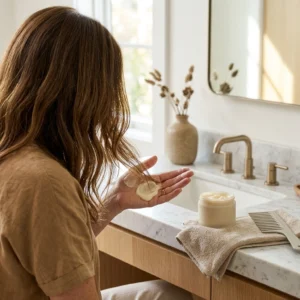
You don’t have to have all nine. If you’re working within a budget or building a routine from scratch, these three give the best return:
- Moisturizing shampoo — Gentle cleansing preserves your baseline moisture
- Moisturizing Conditioner – Softens hair and smooths the cuticle with each wash
- Leave-in conditioner or hair oil — Prevents that moisture from escaping in between wash days
This is the basis for everything else. Add a mask, a serum, or a protectant as your budget and specific needs allow.
Understanding Dry Hair Ingredients
Rather than learning the names of products, it’s more useful to know the four types of ingredients that matter most for dry Hair. Each of them has a distinct function, and they function best when stacked in the proper order.
Humectants — They Draw Moisture
- Glycerin
- Hyaluronic acid
- Panthenol
- Honey
Humectants pull water from the surrounding air into your hair strand. They perform admirably in moist environments. In very dry or cold climates, they can occasionally draw moisture out of the Hair if there’s not enough in the air — so pair them with a sealing to retain what they’ve drawn in, use oil or occlusive.
Emollients — They Soften and Smooth
- Shea butter
- Argan oil
- Jojoba oil
- Coconut oil
The smooth feel you receive after conditioning is caused by emollients filling the tiny spaces along a rough or damaged cuticle. They also reduce friction between strands, which cuts down on tangling and breakage over time.
Occlusives — They Lock Moisture In
- Dimethicone
- Heavier plant butters
- Natural waxes
Occlusives form a physical seal on the Hair’s surface that slows moisture from evaporating out. They’re the “lock” step — most effective after you’ve already added hydration.
Proteins — They Strengthen
- Hydrolyzed keratin
- Silk protein
- Wheat protein, rice protein
Proteins temporarily bond to the shaft and fill in structural weak spots, reducing breakage. The key word is balance. Hair that feels mushy, stretchy, or limp under tension often needs protein. Hair that already gets plenty — especially fine or low-porosity strands — can become stiff and brittle with too much. If your Hair starts feeling crunchy after a protein-heavy treatment, ease off.
Ingredients That Make Dryness Worse
Just as important as knowing what to reach for is knowing what to avoid.
|
Ingredient |
Why It Matters |
|---|---|
|
Sodium dodecyl sulphate (SDS) |
Aggressive surfactant stripper of natural oils for some hair types |
|
Short-chain alcohols (isopropyl, SD alcohol) |
Rapidly evaporate and remove moisture along with them. |
|
Heavy synthetic fragrances |
May irritate a dry, sensitive scalp |
|
Too much protein (for some hair) |
Makes brittle crunchy hair feel fine or low porosity hair |
|
Excess use of clarifying agents |
Sometimes useful; too much wears protective layers |
When reading labels, the ingredients are arranged by concentration in descending order. A drying alcohol or harsh sulfate is a major component of the formula if it is included in the first five ingredients. Ingredients low on a long list exist in trace amounts and have far less impact.
A Simple Routine That Works

They only function if you use them frequently and in the right order.
On Wash Day
- Use a moisturizing shampoo, lather at the scalp, and let it rinse through the lengths
- Follow with hydrating conditioner. Give it a minimum of two to three minutes.
- Deep Conditioning Mask – Once a week, use instead of (or after) conditioner – 10 to 20 minutes
- Use leave-in conditioner on damp hair from the midlengths to the ends.
- Use a tiny bit of hair oil to seal.
- Before doing any heat styling, try air drying or using heat protectant.
Wash days in between
- Use a little hair oil on dry ends when they begin to feel rough
- Refresh with a lightweight leave-in spray if Hair feels stiff or frizzy
- Use a wide-tooth comb or a detangling brush made for dry hair instead of vigorously brushing.
- Protect your Hair at night with a satin or silk pillowcase, bonnet, or hair wrap
Product Recommendations by Hair Type
|
Hair Type |
Cleanser |
Conditioning |
Oil Weight |
Bonus Step |
|---|---|---|---|---|
|
Fine and dry |
Gentle, low-weight shampoo |
Lightweight conditioner + leave-in spray |
Light (argan, jojoba) |
Avoid heavy butters |
|
Thick and dry |
Rich moisturizing shampoo |
Dense conditioner + weekly mask |
Rich (castor, olive, avocado) |
Hair butter on ends |
|
Curly / coily |
Sulfate-free cleanser or co-wash |
Generous leave-in conditioner |
Medium to heavy |
Curl cream + satin pillowcase |
|
Color-treated |
Sulfate-free (or mild sulfate) |
Protein-balanced mask |
Lightweight |
UV protective spray |
Fine dry Hair needs moisture, but not weight. Heavy butter, thick creams will make it flat and limp just like water would. Go for mist-style leave-ins and only a drop or two of a light oil like argan or jojoba.
Thick dry Hair yearns for richness. Heavy conditioners, deep masks, and heavier oils are not out of place here – this is what the Hair can really absorb and benefit from.
Curly and coily Hair requires intentional, layered moisture because the natural spiral shape prevents oils from easily traveling to the ends. Work through the leave-in conditioner by sections and finish with oil on top. The LOC method (leave-in, oil, cream) is popular for a reason – it works.
Color-treated Hair is more porous after processing and loses protein and moisture more readily. A gentle or sulfate-free cleanser helps protect the color and the strand in unison. Protein treatments help to rebuild structure, but watch for overuse — too much protein on already processed Hair can backfire.
Common Myths Worth Clearing Up
Your hair will grow more quickly if you cut it.
Cutting the hair follicle has no effect on the rate of growth whatsoever. Trimming will prevent split ends from traveling up the shaft and causing further damage. Healthier ends mean hair that will last better over time.
Oil is moisture.
Oil and water are not the same thing, with the same jobs. Oil seals; water hydrates. First you need something water-based and then oil on top to keep it in. Going directly to oil without the water step simply slathers dry Hair with a thin coating of grease.
You should wash daily for clean, healthy Hair.
Most dry hair types do not produce enough sebum to keep up with daily washing. Most people with dry Hair find every two to four days works best.
Drugstore products are worse than salon brands.
It is the quality and concentration of the ingredient that matters, not the price or where you purchase it. Some genuinely excellent moisturizing formulas are available at pharmacies for a fraction of what salon brands charge.
Protein always helps damaged Hair.
Only when the Hair really needs it. Proteins can be overdone. If your Hair feels hard and crunchy, rather than soft and pliable, you’ve probably gone past the right balance.
Common Mistakes That Keep Hair Dry
- Washing too often – washes the scalp out before it has a chance to replenish its natural oils
- Hot Water – aggressively opens the cuticle; moisture is lost quickly; lukewarm is gentler
- Skipping conditioner — No workaround here when your Hair is dry
- Overusing heat tools — Cumulative damage builds faster than most people realize
- Too many products at once — Buildup blocks moisture from reaching the shaft and leaves Hair feeling coated rather than soft
- Scalp neglect – The health of the scalp affects the quality and texture of Hair growing from it
- Rough brushing, particularly when it’s wet—wet hair is more brittle.
- Skipping trims: Unchecked split ends eventually become more brittle as they go upward.
Frequently Asked Questions
What is the best product for very dry Hair?
There is no one size fits all here, but a deep conditioning mask once a week with a sealing oil used daily tends to be the most effective relief. Start with the three-product foundation first — shampoo, conditioner, leave-in — then build in the mask.
Which is better – hair oil or leave-in conditioner?
They have different jobs. Leave-in conditioner provides moisture and easier detangling. Locks in moisture. Used together, leave-in first, oil second, they get better results than either product alone.
How often should I do a deep condition?
Most people once a week. For very dry, bleached, or heat-damaged hair, use twice a week. Pull back your hair if it feels coated or heavy instead of soft.
Can Dry Hair Heal Itself?
Yes, if you are patient and persistent. The Mayo Clinic notes that reducing heat exposure, gentle handling, and the right products can visibly improve hair health over time. Existing damage on grown-out Hair can only be managed, not reversed — but new growth will be healthier if the routine supports it.
Are sulfates bad for dry Hair?
Not by default. Some people can stand mild sulfates. Others, especially those with colour-treated, curly or especially dry Hair, see a real improvement when they make the switch. Give it a go and feel your Hair a few days after washing it.
Can hard water cause dry skin?
Yes. The mineral deposits from hard water coat the strand and make it resistant to conditioning — the Hair feels stiff and dull no matter what you apply to it. A periodic chelating or clarifying shampoo will remove that buildup. A more long-term, worthwhile option is a hard water shower filter.
Are expensive products really worth the money?
What counts is the formula, not the price. Therefore, the first five to seven elements are what will truly inform you how a product will work. There are many good moisturizing products that are fairly inexpensive.
Which product shows the fastest results?
Leave-in conditioners tend to deliver the most immediate results – softer feel, easier combing, less frizz – usually with the first use. It’s a good early indicator that a routine really works.”
Year-Round Habits That Make the Biggest Difference
Products produce good results, but habits keep them going. They are valid whatever the season or the type of Hair:
- Seasonally Adjusted – Humidity is lower in winter, and richer products are normally required. Summer may call for lighter formulas and UV protection.
- Reduce heat. Air dry when you have time. Set your tools at the lowest effective setting.
- Protect Hair from the Sun: Wear a hat, scarf, or use a UV-protective spray to help reduce the protein and moisture loss that sunlight causes.
- Use lukewarm water for washing — Hot water always lifts the cuticle aggressively and causes faster moisture loss.
- Condition every wash, every time – This is the one daily habit that makes the biggest difference to dry Hair.
- Sleep on silk or satin – Or wear a bonnet or hair wrap. A little less friction each night adds up to real results in weeks.
- Trim every 8 to 12 weeks – eliminates split ends before they creep up and weaken the strand.
- Support Hair from the inside too — Adequate protein, healthy fats, iron, zinc, and B vitamins all play a role in hair structure and scalp health. The AAD covers the link between nutrition and hair health in more detail if you want to explore the research.
Conclusion
Rarely is dry Hair the result of a single cause — and rarely will it respond to a single product. What it does answer to is a smart, layered approach: cleanse gently, restore moisture, seal it in, and protect your Hair from the things that dry it right back out.
It’s not the priciest bottle or the most elaborate routine. It’s really understanding what your hair needs, for its texture, its porosity, for what it’s been through, and addressing that directly with the right ingredients.
Judge any new routine in four to six weeks. Hair doesn’t change quickly. It takes a while to break. This dryness that has accumulated over months is not going to go away in a week. But with consistent care and the right products, you’ll start to feel the shift: strands that move more freely, less snap when you comb through, a softness that actually lasts, and Hair that finally cooperates instead of fighting you.
Ready to go? Pick up the three essentials — a moisturizing shampoo, a hydrating conditioner, and a leave-in or oil — and build from there. For deeper breakdowns, routine guides by hair type, and ingredient-focused product reviews, visit haircaregrowth.com and find the approach that actually fits your Hair.
Medical Disclaimer: This post is for general information & educational purposes only. It is not intended to be a substitute for professional medical advice, diagnosis, or treatment. If you have sudden hair loss, persistent scalp pain, flaking, or any skin condition affecting your scalp, please see a board-certified dermatologist. If you need help finding a dermatologist, the American Academy of Dermatology offers a free Find a Dermatologist tool.
Written by Mian Hussain.