If your hair is shedding more than normal or breaking off in your detangling process, a bottle of “hair vitamins” may look like an easy fix. The front of the box may tell you it will give you longer, thicker, and stronger hair. However, the ingredient panel often includes a long list of nutrients and amounts that are difficult to interpret.
The truth is more boring, but much more useful. The best vitamin for your hair is the one you’re deficient in.
Iron, vitamin D, zinc, vitamin B12, folate, biotin and a range of other nutrients are involved in processes that aid normal hair production. Treating a genuine deficit could eliminate an obstacle to healthy development. Taking more of a nutrient than you need is far less likely to help — and excess amounts of some nutrients can contribute to health problems or even increased hair shedding.
This article will explain which nutrients are important, how to differentiate between breakage and shedding, when testing might be necessary, and how to make a safer choice before purchasing a supplement.
The Quick Answer: What Are the Best Vitamins for Hair Growth?
Nutrients most commonly checked in a workup for nutrition-related hair concerns include:
- Iron for those with iron deficiency or iron-deficiency anemia.
- Vitamin D if you are found to be deficient on a blood test.
- Zinc when dietary intake, absorption, or lab findings indicate deficiency.
- Vitamin B12 and folate if you are at risk of anemia, dietary restrictions, medications, or absorption problems.
- Biotin for true biotin deficiency (which is rare).
- Vitamin C, as part of a well-rounded diet and to aid absorption of plant-based iron.
- Vitamins A and E in adequate dietary amounts, but not in unnecessary megadoses.
- Protein, because the hair shaft is primarily composed of protein. Not a vitamin.
According to the American Academy of Dermatology, supplements such as biotin, iron, or zinc are often only necessary if a deficiency is discovered during testing. It also says that the first step in successful treatment of hair loss is to determine the cause, and not to assume that all cases are nutritional.
How This Guide Was Researched
This article is a comparison of:
- American Academy of Dermatology advice on hair-loss diagnosis and supplements.
- Fact sheets for specific vitamins and minerals are available from the NIH Office of Dietary Supplements.
- FDA safety data about interference in laboratory tests and biotin.
- Peer-reviewed reviews of micronutrients and hair loss
- A thorough evaluation of dietary treatments for hair loss. JAMA Dermatol, 2023.
- A 2026 systematic review and meta-analysis of commercial oral hair supplements.
We’re not here to rank supplement brands or guarantee results for you. It aims to explain what current research can, and cannot, tell us about vitamins and hair.
Hair Growth and Stronger Strands Are Different Goals
Select a vitamin with a specific goal in mind of what you want to improve.
Scalp Hair grows from under the scalp.
Hair grows in a follicle. The follicle requires normal cell activity, blood supply, hormonal signals, immune function, energy, protein, and micronutrients.
If a nutritional deficiency is severe enough to disrupt these systems, the growth cycle may be affected. While correcting the deficiency may help the body return to normal function, it will not automatically treat other causes such as hereditary pattern hair loss, alopecia areata, traction alopecia or an inflammatory scalp disorder.
Hair strength concerns the visible fiber.
Once the hair has grown out of the scalp, the visible strand is exposed to washing, brushing, the sun, heat, bleach, coloring, tension, and friction.
If your hair breaks in the middle, splits or grows unevenly, the primary reason is damage to the hair fiber itself, not a deficiency in vitamins. Damaged hair is fragile and more likely to break, according to the AAD, which suggests washing gently, conditioning often, using less heat, and applying less tension to prevent further damage.
You can’t reattach a strand that’s already split with a supplement. Nutrition is important to build hair to grow in the future. Conditioning, gentle detangling, protective styling, and trimming are important to manage existing damage.
Hair-Growth Vitamins at a Glance
| Nutrient | Realistic role | Who may need closer assessment | Food sources | Main caution |
|---|---|---|---|---|
| Iron | Supports hemoglobin and oxygen transport | People with heavy menstrual bleeding, blood loss, pregnancy, restricted diets, or anemia symptoms | Meat, lentils, beans, tofu, fortified cereals | Excess iron can be toxic |
| Vitamin D | Supports normal cellular and immune functions; vitamin D receptors participate in follicle biology | People with limited sun exposure, malabsorption, darker skin, obesity, or a known low level | Fatty fish, egg yolks, fortified milk, fortified plant drinks | High doses can cause toxicity |
| Zinc | Supports DNA production, protein production, cell division, and tissue repair | People with malabsorption, very restrictive diets, or confirmed deficiency | Meat, shellfish, dairy, beans, seeds | Excess zinc can reduce copper absorption |
| Biotin | Supports normal energy metabolism | Mainly people with rare deficiency risks | Cooked eggs, salmon, nuts, seeds, sweet potatoes | Evidence is weak in people without deficiency; can distort lab tests |
| Vitamin B12 | Supports DNA production and healthy blood and nerve cells | Vegans, older adults, and people with absorption problems | Fish, meat, eggs, dairy, fortified foods | Hair loss alone does not diagnose B12 deficiency |
| Folate | Supports DNA production and cell division | People with poor intake, malabsorption, or increased medical needs | Beans, leafy greens, citrus, fortified grains | High folic acid intake can mask some signs of B12 deficiency |
| Vitamin C | Supports collagen production and improves non-heme iron absorption | People with highly limited fruit and vegetable intake | Citrus, berries, peppers, broccoli, tomatoes | It is not a proven stand-alone hair-growth treatment |
| Vitamins A and E | Support normal cellular and antioxidant functions | Most people can obtain enough through food | Vegetables, eggs, dairy, nuts, seeds, oils | High supplemental doses may be harmful |
| Selenium | Required in small amounts for normal body functions | Deficiency is uncommon in many U.S. diets | Seafood, eggs, meat, grains | Excess selenium can cause hair and nail loss |
Which Nutrient Fits Your Situation?

Hair appearance cannot be used to diagnose a vitamin deficiency. But your health history can provide a clue to a doctor as to what possibilities are worth investigating.
| What you notice or have experienced | Possible area to discuss | Sensible next step |
|---|---|---|
| Diffuse shedding plus heavy menstrual periods, fatigue, weakness, or frequent blood donation | Iron status | Find out if iron tests and a complete blood count are necessary. |
| A vegan diet, long-term digestive problems, numbness, tingling, or unexplained anemia | Vitamin B12 and possibly iron | Discuss dietary intake, medications, and testing |
| Limited outdoor exposure, malabsorption, or a previous low vitamin D result | Vitamin D | Ask whether a serum 25-hydroxyvitamin D test is appropriate |
| A highly restrictive diet, rapid weight loss, or low protein intake | Multiple nutrient and energy gaps | Review overall intake with a clinician or registered dietitian |
| Short broken hairs, split ends, and roughness after heat or chemical processing | Hair-fiber damage | Improve conditioning and reduce damaging practices |
| Smooth bald patches, scalp pain, redness, burning, scaling, or shiny scar-like areas | A medical or inflammatory hair disorder | Arrange a dermatology assessment rather than self-treating |
| Gradual widening of the part or a receding hairline | Pattern hair loss | Seek diagnosis and discuss evidence-based treatments |
| Shedding after childbirth, fever, surgery, severe stress, or major weight loss | Telogen effluvium may be possible | Identify the trigger and check for additional risks rather than assuming a single deficiency |
Dermatologists will ask you about when and how your hair loss occurs and will look at your scalp and hair to diagnose hair loss. If they suspect a disease, hormonal problem, infection or nutritional deficiency then they may take blood tests or a biopsy.
1. Iron: Often the First Mineral Worth Investigating
Iron is not technically a vitamin; it’s a mineral, but it deserves a starring role in any evidence-based discussion of hair and nutrition.
Your red blood cells contain the protein hemoglobin, which carries oxygen. Iron deficiency eventually can cause anemia, fatigue, weakness, and other symptoms. Low iron stores may be of relevance in some people with diffuse hair loss, but ferritin levels and all forms of hair loss are complex issues.
The assessment of serum ferritin may be useful in the assessment of diffuse hair loss, with a low value being a strong marker of iron deficiency. This isn’t to say that everyone with hair loss needs iron, or that there is a one-size-fits-all hair growth ferritin level. (PubMed: Serum Ferritin Levels-A Clinical Guide in Patients With Hair Loss )
Those most at risk for too little iron include people with:
- Heavy or long menstrual bleeding.
- Pregnancy and diet
- Gastrointestinal bleeding.
- Frequent blood donation.
- Malabsorption conditions.
- Very low meat intake without adequate plant alternatives.
- Highly restrictive eating patterns.
The NIH iron fact sheet says that iron is essential to hemoglobin and oxygen transport, but it also warns that too much supplemental iron can cause serious harm.
Food-first iron ideas
Useful combinations of foods are:
- Lentils and pepper.
- Chili, tomato and bean.
- Tofu and broccoli.
- Iron-fortified cereal and berries.
- Lean meat with a side of veg.
- Chickpeas with lemon juice.
Since vitamin C improves the absorption of non-heme iron from plant foods, it can be helpful to combine beans, lentils, tofu, or fortified grains with fruit or vegetables. (NIH Health Professionals’ Vitamin C Fact Sheet)
Don’t take iron just in case.
Iron is not a beauty booster for all. It has to be for an obvious nutritional or medical reason. Accidental iron poisoning can be fatal, especially for children, so supplements should be kept under lock and key.
2. Vitamin D: Important, but Not a Universal Regrowth Treatment
Bone health, immune system performance, cell activity, and numerous other activities depend on vitamin D. Hair follicle cells have receptors for vitamin D, providing researchers with a biological basis to study the nutrient in relation to hair disorders.
Some groups with alopecia areata, female-pattern hair loss, telogen effluvium, and others have reported lower levels of vitamin D. But an association is not proof that low vitamin D caused the hair loss, or that taking a supplement will reverse it.
So the practical approach is simple:
- Correct a proven deficiency in general health.
- Don’t try to diagnose vitamin D deficiency by the look of your hair.
- Do not use vitamin D as a replacement for treatment for hereditary, autoimmune, or scarring hair loss.
- Do not use high-dose products without recommendation and supervision by a clinician.
The NIH vitamin D fact sheet explains vitamin D intake, blood testing, risk factors, and toxicity. For a more in-depth discussion on hair and Vitamin D, check out HairCareGrowth’s guide to Vitamin D and hair health.
3. Zinc: Essential in the Right Amount
Zinc helps the body to make DNA and proteins and supports cell division, immune activity, and wound healing. Severe zinc deficiency may affect skin and hair as the hair follicles contain rapidly active cells.
This is not to say that high-dose zinc is a good daily treatment for hair. Most people on a varied diet can get zinc from food. Excess intake over long periods can interfere with copper absorption.
Possible food sources are:
- Other shellfish, oysters.
- Chicken, red meat
- Milk, cheese and yogurt.
- Beans and lentils.
- Pumpkin seeds.
- Fortified breakfast cereal.
The NIH zinc fact sheet describes zinc’s role in cellular metabolism and warns about adverse effects from excessive intake.
If you already take a multivitamin, cold lozenges, and a hair supplement, check all three labels. Several zinc-containing products are available.
4. Biotin: Famous, Necessary, and Frequently Oversold

Biotin: This B vitamin aids in the breakdown of lipids, carbs, and amino acids by enzymes. Brittle nails, skin abnormalities, hair loss, and neurological problems can all be signs of a biotin shortage.
The catch is that biotin deficiency is rare in people who eat a normal mixed diet. The evidence for the use of biotin supplements for hair growth is largely based on a small number of studies and case reports, not on rigorous studies in healthy adults with a normal level of biotin, the NIH says. (NIH Biotin Fact Sheet for Health Professionals)
Typical dietary sources include:
- Eggs, boiled.
- Fish.
- Seeds, nuts.
- Sweet potatoes.
- Dairy foods.
- Some tripe.
Protein avidin in raw egg whites binds to biotin and inhibits its absorption. Cooking denatures avidin, so this concern is mainly associated with repeated consumption of raw egg whites rather than ordinary cooked eggs.
The lab-test problem
Certain laboratory tests may be interfered with by high-dose biotin, leading to false-high or false-low results. The FDA also has expressed concerns about tests involving thyroid hormones and cardiac markers such as troponin. Always inform the person ordering or performing your blood tests about supplements that contain biotin.
For those who want a more in-depth review of biotin for hair growth, there is a dedicated guide already published on HairCareGrowth.
5. Vitamin B12 and Folate: Important for Cells and Healthy Blood
Vitamin B12 helps your body make DNA and keep nerve cells and blood cells healthy. Folate is also required for the formation of DNA and for cell division.
Deficiencies of either mineral can cause anemia and other health problems. Hair changes can occur with a more generalized deficiency, but neither nutrient should be diagnosed on shedding alone.
The following may need to be more focused on B12:
- vegans who abstain from taking supplements or fortified foods.
- Older adults with malabsorption.
- Certain stomach or intestinal problems.
- People who have undergone gastric bypass surgery.
- Those taking medication that interferes with B12 absorption.
Foods that contain vitamin B12 include fish, meat, eggs, dairy products, and fortified foods. Beans, peas, leafy green vegetables, citrus fruits and fortified grains are sources of folate.
The NIH has detailed information in its vitamin B12 and folate factsheets.
High supplemental folic acid can make the anemia caused by vitamin B12 deficiency less obvious while neurological damage continues. For that reason, taking isolated high doses without understanding the underlying problem is not a good substitute for proper evaluation.
6. Vitamin C: Helpful Support, Not a Hair-Growth Shortcut
Vitamin C helps your body make collagen, is an antioxidant, and helps increase the absorption of non-heme iron.
This is about normal nutrition and is especially useful in plant-based iron meals. But there is no good evidence that extra vitamin C will result in extra hair for someone who is already getting enough.
Here are the food sources you can count on:
- Grapefruit, oranges.
- Strawberries. Kiwi fruit.
- Guava
- Green peppers.
- Tomatoes
- Broccoli.
- Brussels sprouts.
A realistic goal is to eat fruits or vegetables all day long – not as a vitamin C hair treatment alone. (NIH Vitamin C Fact Sheet)
7. Vitamins A and E: More Is Not Better
Vitamin A is necessary for normal growth, immune function, reproduction, and cell differentiation. Vitamin E is an antioxidant and is important for immune and cell functions.
Both are important. You don’t have to eat either one of these in copious quantities for healthy hair.
Caution with Vitamin A
It can be synthesized from preformed vitamin A in animal foods and some supplements, or carotenoids in colorful fruits and vegetables.
Excesses of preformed vitamin A can be toxic. It should be taken with special caution during pregnancy, as high intakes cause birth defects. Look for multivitamins, prenatal products, acne medications, and hair supplements before you combine. (NIH Vitamin A Fact Sheet)
Caution with vitamin E
Nuts, seeds, vegetable oils, and certain green vegetables contain vitamin E. Supplements containing vitamin E alone often contain far more than the recommended dietary amount, and higher doses may cause concerns with safety or medication interactions. (NIH Fact Sheet on Vitamin E)
8. Selenium: A Nutrient You Should Not Chase

You only need a little bit of selenium, but it’s a good example of why “more nutrients” doesn’t equal “more hair.”
Too much selenium can result in:
- Loss of hair.
- Brittle nails or loss of the nails.
- Rash of the skin.
- Nausea and/or vomiting.
- Tiredness.
- Neurological symptoms in severe cases.
The selenium content in Brazil nuts can be quite variable and can be quite high depending on the location of the crop. It’s one thing to eat them once in a while; it’s another to take a concentrated selenium supplement daily.
Excess Intakes: Hair and nail loss is specifically listed by the NIH selenium fact sheet as a sign of excess intake.
Do Commercial Hair Supplements Work?
Research into the full commercial formulas is not the same as research into correcting a documented deficiency.
In 2023, JAMA Dermatology carried out a systematic review of 30 studies of nutritional interventions in people with no known baseline deficiency. Some supplements appeared to offer benefits, but the researchers cautioned that results had to be interpreted according to each study’s design and that larger comparative trials were needed.
A more recent systematic review and meta-analysis in 2026 also showed promising findings for certain commercial oral nutraceuticals. However, the products contained multiple vitamins, minerals, proteins, or botanical ingredients. That makes it difficult to know whether it was that ingredient that caused the improvement, whether the effect would be seen in other formulas, or whether the same result would be seen in someone with a different type of hair loss. The authors urged more rigorous and independent research.
The evidence thus points to a balanced conclusion:
- Some adults may benefit from certain multi-ingredient supplements.
- You can’t assume benefits from biotin or any other headline ingredient.
- A supplement should not delay the diagnosis of a treatable medical condition.
- Product studies do not prove that every hair gummy works.
- Corrective actions for deficiency are not the same intervention as commercial nutraceutical use.
Should You Get Blood Tests Before Taking Hair Vitamins?
Testing can be helpful if your history or symptoms indicate a nutritional, hormonal, or medical cause. You don’t need everyone to have all the tests.
The clinician may consider, as appropriate:
- A CBC ( complete blood count ).
- Iron studies including ferritin.
- B12 Vitamin
- Folic acid.
- 25(OH)D serum.
- Thyroid tests.
- Sometimes zinc.
- Additional tests based on symptoms, medications, diet, and medical history.
In a retrospective study of 973 patients with telogen effluvium, rates of low ferritin and other nutrient abnormalities varied considerably. That finding supports targeted assessment but does not establish a universal test panel or prove that every abnormality caused the shedding. (PubMed: Micronutrient Deficiencies and Telogen Effluvium)
Biotin is a special case. Reliable markers of marginal biotin deficiency are few, the NIH states, and so routine testing for biotin is less straightforward than for iron or vitamin B12.
How to Read a Hair-Supplement Label
A slick front label says very little. Turn the container upside down and read the Supplement Facts panel.
Check portion size
A bottle might say “5,000 mcg of biotin,” but the serving size could be two gummies or four gummies. See what you would actually take each day.
Compare with Daily Value
A product with thousands of percent of the Daily Value is not necessarily more effective. It just has a lot more than the reference amount listed on the label.
Look for repeated ingredients.
Make one list of all you use:
- Multivitamins.
- Gummy hair.
- Protein powder or collagen.
- Prenatal vitamins.
- Beverage mix, fortified.
- Iron tablets.
- Zinc lozenge.
Add the totals. This is especially relevant for iron, zinc, selenium, vitamin A, vitamin D, vitamin E, and biotin.
Caution on proprietary blends
A proprietary blend lists a number of ingredients without revealing how much of each ingredient is present. That makes it difficult to assess effectiveness, interactions, or whether the dose studied is present.
Look for independent quality verification.
The FDA does not preapprove dietary supplements for safety and efficacy prior to marketing, in contrast to medications. To help guarantee that the product is free of contamination and includes the contents specified on the label, the AAD advises consumers to seek independent, third-party verification. Verification of quality does not guaranty hair growth from the supplement.
Do not promise disease treatment
And be wary of any supplement that claims to cure alopecia or reverse baldness or balance every hormone or produce dramatic regrowth in days. Disease diagnosis, treatment, cure, or prevention are not the goals of dietary supplements.
Who Should Not Self-Prescribe Hair Vitamins?
Before using concentrated hair supplements, check with a professional if:
- If you are pregnant, trying to get pregnant, or are breast-feeding.
- Selecting a product for a child or teen.
- Have liver or kidney disease
- Have a disease of iron overload.
- Gastrointestinal or absorption disorder.
- Drugs, prescription.
- Preparing for surgery.
- Testing for thyroid, cardiac, hormone, or vitamin D.
- Take a bunch of supplements with duplicated ingredients.
- Experience unexplained, sudden, patchy, or worsening hair loss.
Do not give children adult hair gummies. Their nutritional requirements and safe upper limits differ from those of adults, and hair loss in a child can result from scalp infection, autoimmune disease, hair pulling, traction, or another condition requiring proper assessment.
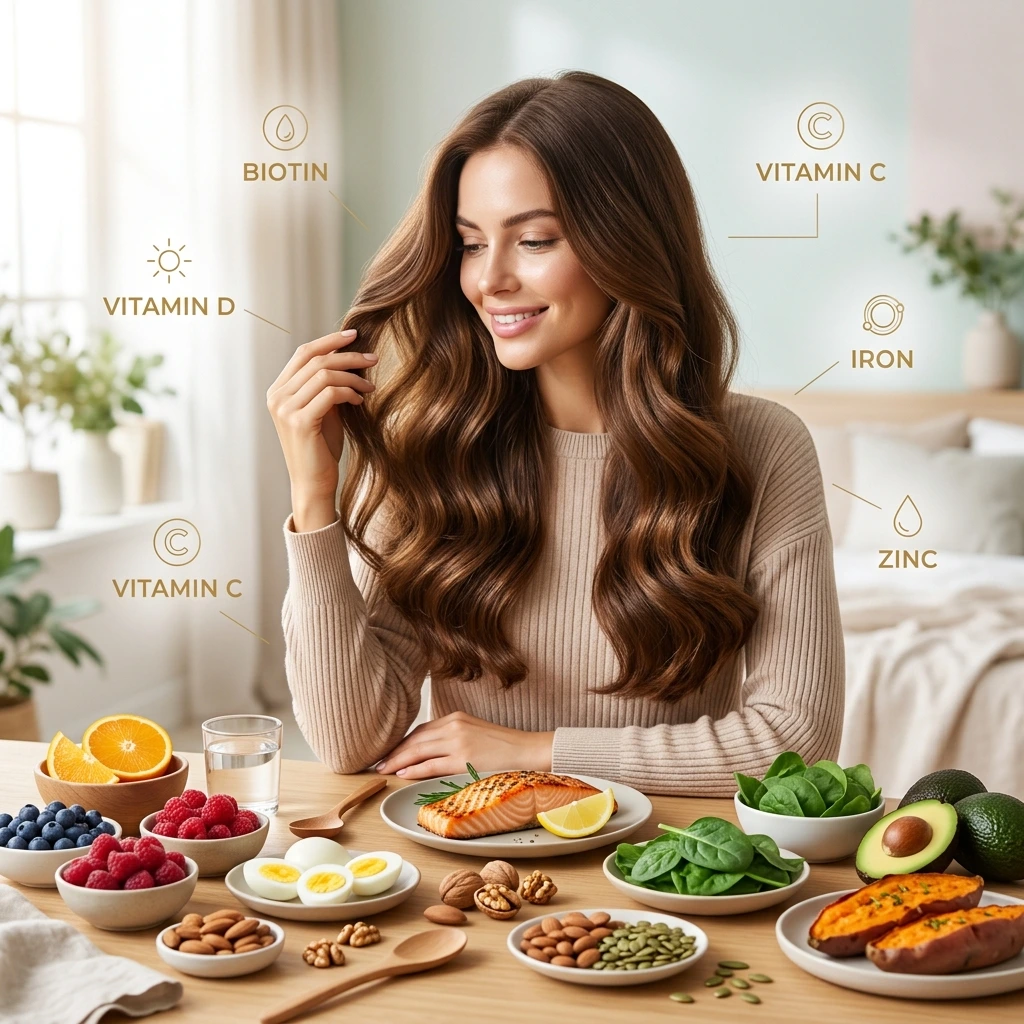
A Food-First Strategy Without Rebuilding Your Entire Diet
You don’t need a different meal for each hair nutrient. Eat foods that provide you with several nutrients at a time.
Breakfasts
- Eggs, toast and fruit.
- Fortified cereal with milk or fortified plant-based drink.
- Nuts, seeds and berries yogurt.
- Stir-fry the tofu with peppers and spinach.
Lunch recess
- Lentil soup with tomatoes and salad with citrus.
- Whole wheat wrap, filled with chicken, beans and vegetables.
- Tuna and potatoes and leafy vegetables.
- Quinoa and Chickpea bowl with bell peppers.
Supper
- Salmon, Brown Rice and Broccoli.
- Grilled beef, beans and roast vegetables.
- Noodles with greens and tofu or tempeh.
- Turkey, sweet potatoes and mixed salad.
For a complete food focus guide, check out Best Diet Choices for Stronger and Longer Hair.
A Four-Step Plan Before Buying a Supplement

Step 1: Identify the type of problem
Ask:
- Is it long hair coming off your head?
- Is the shaft hair popping?
- Is the density decreasing slowly?
- Do you have some lonely bald spots?
- Is the scalp red, sore, scaly, or inflamed?
Breakage and shedding can occur simultaneously, but they’re not caused by the same things nor do they have the same solutions.
Step 2: Review what changed
Cast your mind back over the last couple of months:
- Sickness or fever.
- Working.
- Birth.
- Extreme emotional trauma.
- Quick weight loss.
- A starvation diet.
- New med.
- Heavy periods.
- Changes in thyroid or hormone symptoms.
- Increased bleaching, straightening, heat, or tight styling.
This history can tell you more than what’s in the supplement bottle ingredient list.
Step 3: Discuss targeted testing
Bring a timeline of your symptoms, diet pattern, list of medications and supplements to your primary-care clinician or dermatologist. Ask which tests are relevant, not for every nutrient test available.
Step 4: Correct the identified problem
A possible sensible way could be:
- Medical treatment of a diagnosed condition.
- To correct a known deficiency.
- More variety in the diet.
- Adequate calories and protein replacement.
- Altering damaging styling habits.
- Using an evidence-based treatment for hair loss.
- Combining several approaches when more than one cause is present.
What Improvement Can Realistically Look Like?
Nutritional correction does not give any instant cosmetic change.
You may see an improvement in blood levels or general symptoms before a visible change is seen in the hair. The lengths that are still in place have weathering, chemical exposure, and mechanical damage that occurred before the nutritional problem was corrected.
Examples of meaningful progress would include:
- Less shedding.
- Stability at higher densities.
- New hairs appearing in previously affected areas – short hairs.
- More energy if you are anemic or have a deficiency that is corrected.
- Growth that sets hard with time.
- Less breakage after changing hair-care regimen.
Treatments and recovery from hair loss take time, and no one treatment works for everyone, says the AAD.
Don’t measure progress day to day. Usually more useful are photographs taken monthly under similar lighting conditions, with the same hairstyle and parting, than counting individual strands over and over again.
When to See a Dermatologist
When you see, create an evaluation
- Sudden or rapid hair loss.
- Bald patches that are round or irregular.
- A segment of clear expansion.
- A hairline that’s receding.
- Loss of eyelashes or eyebrows.
- Scalp pain. Burning, redness, pus or heavy scaling of the scalp.
- Scalp areas that are smooth, shiny, or scar-like.
- Hairs broken off, with itching or scaling.
- Medications that can cause hair loss.
- Shedding all the time, no obvious uptick.
- Hair loss with fatigue, unexplained weight change, menstrual changes, or neurological symptoms.
- Any unexplained loss of hair in children
A dermatologist can distinguish nutritional shedding from hereditary, autoimmune, infectious, inflammatory, hormonal, and mechanical causes. Early diagnosis is particularly important when inflammation or scarring could permanently damage follicles.
Frequently Asked Questions
Which blood test is best for hair loss?
There is not one blood test for all cases. Depending on the pattern of hair loss, diet, other symptoms, and whether you take medications or have a history of other medical conditions, a clinician may suggest a complete blood count, ferritin and other iron studies, vitamin B12, folate, vitamin D, thyroid testing, and more.
Can normal levels of vitamins rule out all causes of hair loss?
No. Normal nutrient levels make a major nutritional deficiency less likely, but do not preclude hereditary pattern loss, alopecia areata, traction alopecia, telogen effluvium after illness or stress, medication effects, hormonal conditions or inflammatory scalp disease.
Vitamins can help to strengthen hair, even if you’re not losing it.
Good nutrition helps to produce normal new hair. Existing hair, however, is more frequently broken off by bleaching, heat, friction, tight styles, dryness and poor conditioning. If it is broken, it is beyond repair by any vitamin.
Are multivitamins safer than hair gummies?
Not automatically. Either product can provide appropriate or excessive amounts depending on its formulation and what else you take. Check the Supplement Facts panels, beware of duplicated ingredients, and don’t assume that a gummy is safer because it looks like candy.
Should a hair supplement contain iron?
Only when iron is appropriate for the person taking it; many people do not need supplemental iron, while others require a specific dose to treat a confirmed deficiency. A product containing iron should also be kept securely away from children.
Can I take vitamin D, zinc, biotin, and iron together?
Some products have these nutrients together, but that doesn’t mean the combination is good for everyone. Iron and zinc can cause side effects and interact with medicines or other nutrients. Biotin may interfere with lab testing, and too much vitamin D can be toxic. Check totals with a health professional.
Can prenatal vitamins help hair grow?
Prenatal vitamins are designed to provide the nutritional needs of pregnancy and are not intended as general beauty supplements. They may contain iron, folic acid, iodine, and other nutrients that are unnecessary or inappropriate for some nonpregnant users. Don’t use a prenatal product on your hair unless a clinician has advised you to.
Is hair breakage usually caused by a vitamin deficiency?
Not usually. Breakage is commonly related to heat, chemical processing, tight hairstyles, rough detangling, friction, or dryness. Nutrition may affect the quality of new hair in a person with a significant deficiency, but the hair-care routine still matters.
The Bottom Line
The best hair growth vitamins are not the ones with the most ingredients on the label, or the highest numbers. This is what your body really needs to have.
Other nutrients, including iron, vitamin D, zinc, vitamin B12, folate, and biotin, promote important biological functions. Tackling a deficiency can promote healthier growth, but vitamins aren’t a magic bullet for hair loss, nor can they heal already-formed split ends or overpower genetics and hormones.
First, look for signs of shedding, slow thinning, patchy loss, or breakage. Revisit your diet, changes in health, medications, and styling habits. If the pattern is not obvious, then look for targeted testing or a professional scalp examination.
Before purchasing another hair gummy, create a one-page list of your symptoms, recent changes in health, diet pattern, medications, and current supplements. Take that list to your health care provider or dermatologist. Talking to someone who knows can cut months of guesswork off – and help you choose something that targets the real cause of your hair concern.
Medical disclaimer: This information is meant for general educational purposes and should not be used in place of specific medical advice, diagnosis, or treatment. Sudden, patchy, painful, or persistent hair loss should be evaluated by a board-certified dermatologist or other qualified medical professional. Before beginning high-dose vitamins or minerals, look for any interactions, contraindications, and duplicate substances.