
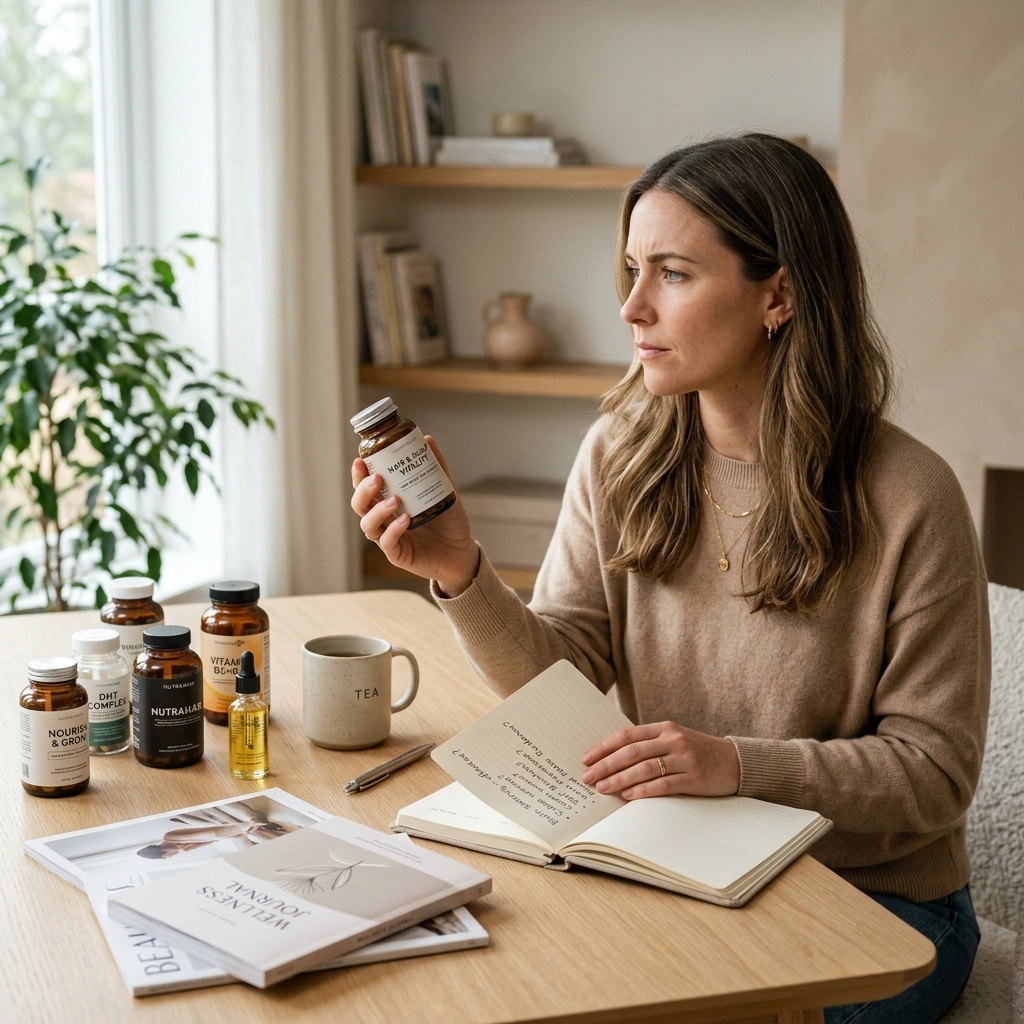
Maybe you’ve seen a million gummy ads claiming you’ll get thicker, shinier hair in 30 days, and you’re wondering if any of it actually works. You are not alone! Big promises make for good marketing, and the urge to dump money on every bottle that promises shampoo-commercial hair is real.
Here’s the story, the real story. Supplements that work, but only in the right conditions. Many do not do anything at all. Here is your guide to the supplements that actually have science behind them, who really benefits, and the common mistakes that quietly waste your money. Let’s take the hype out of the help.
Why Supplements Sometimes Work (and Sometimes Don’t)
Your hair is made by tiny little follicles, and those follicles need raw materials to do their job. If there’s a lack of certain nutrients in your body, your hair is often the first to take the hit. Why? Hair growth is not key to your survival, so when your resources are low, your body will place it at the Bottom of the list of things to do.
Most ads get the main point wrong. Supplements fill in the blanks. If you are already getting enough of a nutrient most of the time, taking more usually won’t grow extra hair. Mostly it just goes down the sink.
So the real question isn’t “Which pill makes hair grow?” “Am I missing something here?” That little change of thinking makes the difference.“
The Hair Supplements Worth Knowing About

Iron, the Unsung Mineral
If you had to choose one nutrient that affects more people’s hair than they know, iron would be a top contender. Heavy periods can cause shedding, especially in women, and low iron is a common and treatable cause of shedding.
Research on diet and hair loss suggests iron deficiency can cause some types of thinning, especially in premenopausal women (PMC review). Is the catch? No guesswork. Too much iron can be harmful, so ask your doctor for a simple blood test for ferritin before you start supplementing.
Quick tip: Pair iron-rich foods (like spinach) with vitamin C (like orange slices) to naturally boost absorption.
Vitamin D: The Stealth Deficiency
Studies on several types of hair loss (vitamins and minerals review) have identified low levels of vitamin D, and it is thought to activate dormant hair follicles.
Many people are short of running, especially if they spend most of their days indoors or if they live in a place with long, grey winters. The blood test is telling. Addressing a problem could encourage healthier development. If you have normal levels, then big doses are not going to perform magic.
Zinc: The Small Mineral with a Big Job
Zinc is necessary for tissue repair and for the normal function of the oil glands around your follicles. Zinc deficiency is associated with hair loss, and supplementation is helpful in true deficiency.
But here’s the big caveat: More isn’t better. Too much zinc can backfire by competing with copper. Use the amounts recommended unless advised otherwise by a professional.
Biotin: The popular one that is frequently oversold
Ah, biotin. Star of nearly every hair, skin, and nail gummy on the shelf. The plain fact is this.
Biotin only works if people are actually deficient, and that’s rare (NIH Office of Dietary Supplements). Most people get plenty already from foods such as eggs, nuts, and salmon. So if your levels are good, that fancy gummy probably won’t do anything for your strands.
One more thing to know about Biotin supplements is that they can interfere with some lab tests, including some thyroid and heart tests. If you are taking it, TELL your doctor!
Collagen – Promising, But Still Proving Its Worth
Collagen is everywhere, and it’s not hard to see why. The thinking is that it gives you amino acids that your body uses to make keratin, the protein that hair is made of.
The actual status? “There is still little and early evidence of collagen growing hair.” It may help with skin and protein intake, but hair benefits should be considered a maybe, not a given. “All right. Suppose you like it and can stand it. Don’t set your expectations too high.
Remember The Basics: Omega-3s and Protein
Healthy follicles love good fats and a steady stream of protein. Fatty fish, eggs, beans, and seeds will do more for your hair than any trendy capsule, and much more dependably. Sometimes the most powerful’supplement‘ is just eating enough real food.
What Actually Causes Nutrient Gaps?

Want To Know Why Deficiencies Happen In The First Place? Some familiar culprits:
- Elimination of entire food groups
- Iron deficiency due to heavy periods
- Low vitamin D from sun exposure
- Problems of absorption in the digestive system.
- Rapid weight loss or fad diets
- Changes in Pregnancy and Post-Natal
Knowing what your own risk factors are allows you and your doctor to determine what really should be tested for.
Common Mistakes to Avoid
These trip up a lot of people, so I want to flag them:
- Supplement w/o testing. “Guessing means overdosing or treating the wrong problem.
- Expecting results overnight. Hair takes time to grow. Any real change takes three to six months.
- Megadose on the safe side. Certain nutrients are toxic in excess. More is not more.
- To ignore the actual reason. Vitamins don’t cure stress , thyroid problems , genetics , etc.
- Believing in shiny before and after pictures. “Lighting and styling do a lot of the heavy lifting in advertising.
Expert Tips for Smarter Supplementing
This is a sensible way to proceed:
- Add to the second. First test. If your hair loss is significant, order iron (ferritin), vitamin D, and a thyroid panel.
- Pills, prior to meals. Most people’s needs are met by a balanced plate.
- Buy quality brands. Try it for yourself with third-party testing seals that prove what’s really inside.
- Be patient, and stay consistent. Take monthly photos with the same lighting to see your progress.
- Loop like a boss. “A dermatologist can tell what kind of hair loss you have, and that changes the whole game plan” (American Academy of Dermatology).
This article is for general informational purposes only and is not a substitute for professional medical advice. A sudden or patchy loss of hair warrants a real evaluation.
Frequently Asked Questions
1. Can I take hair supplements if I’m not deficient?
“Not very often. Supplements fill the blanks. If your levels are normal, extra pills usually don’t add any growth.
2. How long will results take?
You’re going to use it pretty consistently for three to six months, and then you’re going to see results. Hair grows at a slow rate. If it takes weeks to do something promising, you’re overselling.
3. Can I take biotin daily?
Most people tolerate it fine, but it can interfere with some lab tests. Always tell your doctor that you are taking it.
4. If I take a “hair, skin and nails” gummy, do I really need to do the tests?
But you may be paying for nutrients you already have. In the long run, it’s usually cheaper and better to test first.
5. Are natural food sources better than pills?
Yes, frequently! Whole foods offer the nutrients in a balance that your body can absorb well, and you get the fibre and other benefits.
6. Can supplements cause hair loss?
Some nutrients, like selenium or vitamin A, can also cause shedding if taken in megadoses. Limit to safe quantities.
7. Can stress decrease the effectiveness of supplements?
It can. Vitamins won’t help with stress-related shedding. Root cause management is also important.
8. Do I need to see a doctor before I start?
Yes, if you’re losing hair suddenly, in patches, or just for no apparent reason, a professional can identify what the underlying problem is and the appropriate treatment.
The Bottom line
The catch: hair supplements aren’t a miracle, but they’re not worthless, either. They’re awesome when they meet a real need, disappointing when you’re already getting enough. The best advice is to try before you buy, eat a nutrient-rich diet, and be patient while your follicles do their slow and steady work.
So before you hit “add to cart” on that shiny bottle, write down your risk factors and get a quick blood test. The true secret to healthier hair lies in knowing what your body really needs. What’s the first thing you’re going to do today?