I’ll tell you something. For years, I bought hair oil like I bought wine. Anything that looked prettiest went in my basket. The end result was a greasy mop, or a product that did absolutely nothing, depending on my luck that week. It took me embarrassingly long to work out the real secret. It’s not the label. It’s not the price tag. It’s about finding the oil that fits your real hair type.
That should be obvious now. It was not to me then. If you’ve ever found yourself in the drugstore aisle asking yourself if you need argan, coconut, or that fancy bottle that costs more than lunch, this is the guide for you.
Why is it so important? Using the wrong oil can waste your money and leave your hair flat, oily, or worse. The right oil, when used correctly, can add shine, reduce breakage, and improve manageability. Big difference. Little change.
This is what you will receive:
- Simple method to know your hair type at home
- Best hair oils for dry, oily, fine, thick, curly, and colour-treated hair
- What Really Happens If You Get Oil in Your Hair
- The errors that turn a good oil into a bad hair day
First, Figure Out Your Hair Type
If you don’t know what you’re starting with, you can’t choose the right oil. And no, “frizzy on Tuesdays” is not a hair type.
The Fast Self Test
Wash hair and skip all the products and air dry. Then, honestly, view it in a good light.
- Texture: Grasp a single strand between the fingers. Hardly feel it? Fine hair. Feels rough and stringy? Thick. Somewhere in the middle? Medium.
- OILINESS: Greasy roots by lunch time? Your scalp is oily. After a whole day, is it still tight and dry? Dry.
- Shape: Straight, wavy, curly, or coily. This will impact how your natural oils flow down each strand.
- Damage: Color-treated, heat-styled, or chemically processed hair reacts differently. It is thirstier. It is more fragile.
Most people are a mixture. The classic is an oily scalp with dry ends, which is honestly the most frustrating. Knowing your blend is more important than any one label on a bottle.
How Hair Oil Actually Works
Short answer: Some oils get into the strand, some just coat the outside. Both have some work to do. Magic isn’t either.
The outer protective layer of the hair shaft is the cuticle. If an oil gets past it and into the inner core, called the cortex, it can strengthen the strand from inside.
This has been measured directly in a study published in the International Journal of Trichology, hosted by the NIH’s PMC. Researchers found that oiling the hair increased the hair fiber thickness and tensile strength over the untreated hair. In simple terms, the oiled strands were heavier and harder to break.
And that’s the bit I find really useful. Oil is not merely shiny in a bottle. The right one can actually make your hair tougher over time. The trick is finding one that your hair type can actually absorb and use.
The Best Hair Oil for Each Hair Type

Go Rich and Absorbent Hair Dry
If your hair is a moisture-gobbler that wants more, you need an oil that sinks in, not sits on top.
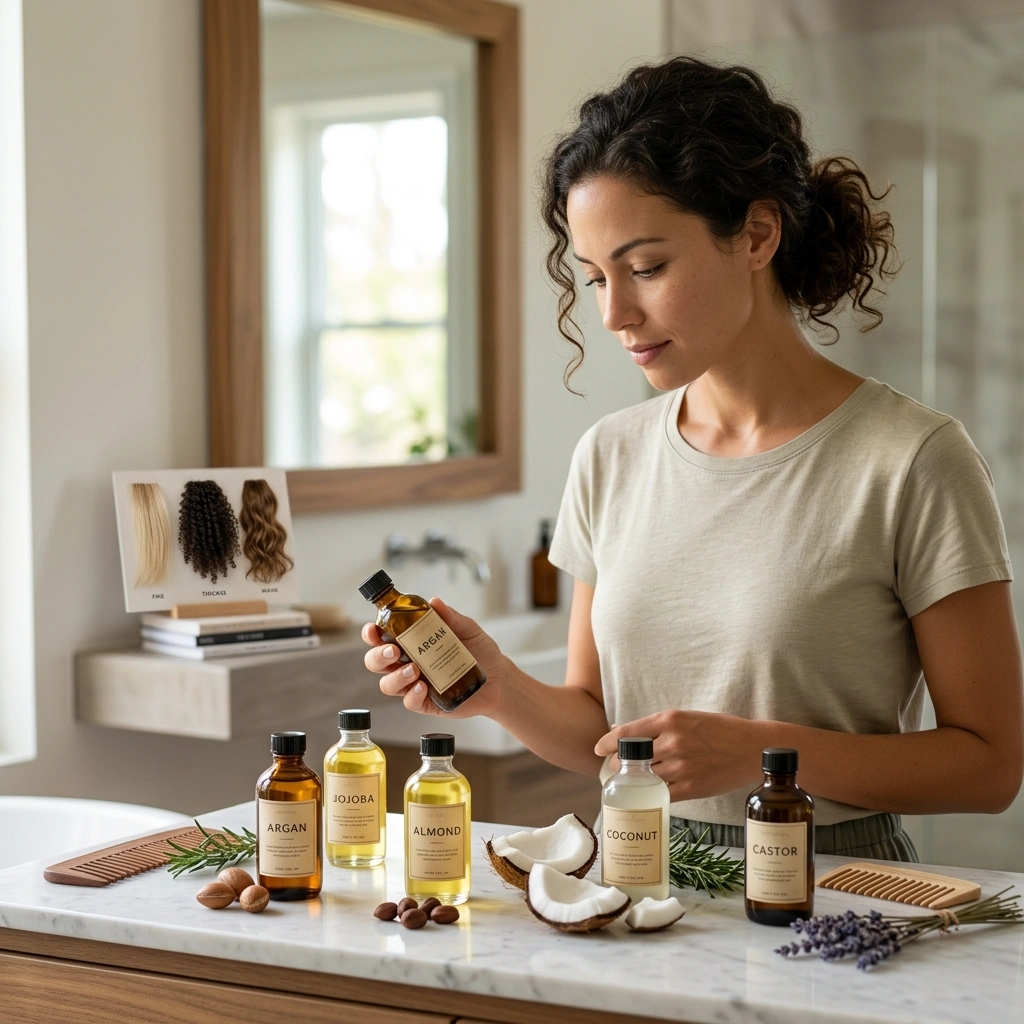
- This is where coconut oil is the big hitter! That’s because it’s one of the few oils proven to penetrate into the hair shaft, so it’s no wonder the benefits of coconut oil for hair are so widely discussed.
- Avocado oil is also another deep conditioning option for very thirsty strands.
Apply to mid-lengths and ends, leave for an hour or two (or overnight if you’re committed), and wash out. This is the gold standard in dry hair treatment.
Oily hair: Use sparingly or avoid applying to the scalp
This got me for years. I thought oily hair meant no oil at all. Huge mistake.
Your roots may seem slick, but your ends can still be parched. The remedy is a light oil such as argan or grapeseed, applied only to the ends. Avoid contact with the scalp.
For oily scalps, less is always more. A few drops on the ends once or twice a week will do.
Fine Hair: Almost Invisible
Heavy stuff weighs down fine hair. One good pump and you look like you haven’t showered in a week.
Grab the argan, or a little bit of jojoba, on the ends. Think seasoning, not a sauce.
Thick or Coarse Hair: Bring The Big Guns!
Thick hair can handle richer oils and still not go limp. Coconut and castor blends are good; shea blends are good. You can afford to be generous here, which is a nice change.
Curly Hair: Keep Moisture In
As a result, curls and coils can suffer from dryness, as your scalp’s natural oils struggle to travel down a spiral strand. The best oil for curly hair is going to seal in moisture in the curl pattern.
- Coconut and Castor Oil Deep Conditioning
- Jojoba for subtle, everyday definition
Apply to damp hair to seal water into the strand. That’s the trick most people don’t see.
Color-Treated Hair: Protect What You’ve Paid For
Coloring expands the cuticle and makes the hair more porous.” Argan and jojoba to smooth that cuticle down and add shine, without rushing your color to the door.
Don’t Forget Your Scalp
Healthy hair begins at the scalp, and oil can be your best friend or worst enemy, depending on how you use it.
Healthy growth begins with a clean, well-balanced scalp. Before applying anything, it is worthwhile to read the American Academy of Dermatology’s recommendations for treating the scalp and hair.
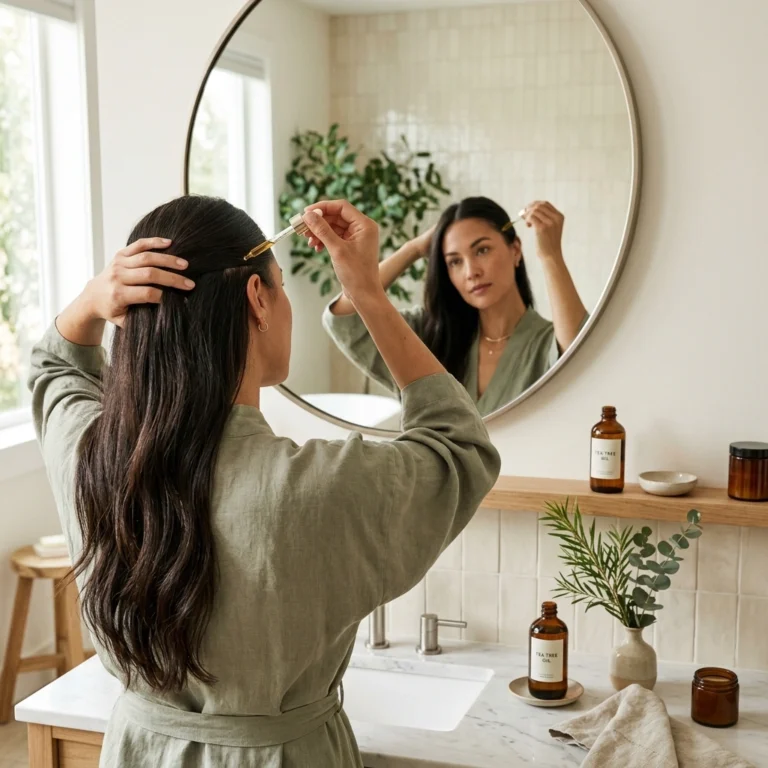
And that’s where they go wrong. Excess oil can sometimes make dandruff worse, too, if you’re suffering from it. Dandruff is often associated with a yeast-like fungus called Malassezia that feeds on oils on the scalp, according to the Mayo Clinic. Adding more oil can add more fuel to the problem instead of soothing it.
Consult a dermatologist before treating a flaky, itchy, or irritated scalp with oil. I’m a writer, not a doctor, and I’ve used a lot of products. If scalp issues persist, a professional eye is needed.
Common Mistakes to Avoid
I have made each and every one of these, so please learn from my greasy past.
- Too much use. It only requires a few drops. More shine does not equate to more oil. It almost always means limp hair.
- Applying to the scalp when you shouldn’t. Oily scalps/dandruff-prone scalps usually want oil on the ends only.
- No patch test. Fresh oil can be irritating to sensitive skin. Test on a small spot first.
- And leaving it on too long, too often. Heavy oiling daily can build up and weigh hair down.
- Looking for miracles. Oil just makes the hair you have better. It will not bring back what is lost or change your texture overnight.
The last one is very important. Any product that claims to “transform” your hair in a week should be avoided.
Expert Tips That Actually Help
- Add a little heat. When it’s warmed gently, it spreads better and feels better. First, try the temperature on your wrist.
- Apply to damp, not wet, hair. This is good for sealing in moisture, especially for curls.
- Use as a pre-wash treatment. Before shampooing, oiling protects strands from swelling and the stress of washing.
- Match the time of year. Hair often wants richer oils in the dry winter months and lighter oils in the humid summers.
- Let it happen. Expect steady progress over several weeks, not a single dramatic reveal.
Choose one oil, see how your hair responds, then adjust. “Think of it as a slow experiment, not a shopping spree.
Frequently Asked Questions
Which hair oil is best for growing new hair?
No oil has been proven to grow hair. Oils can help reduce breakage and keep more length on your hair, but they don’t increase the number of strands. See a dermatologist if you are experiencing hair loss.
How long should you apply hair oil?
Yes, if you have thick or dry hair. Use a pillowcase you don’t mind getting stained and wash it out in the morning. For oily or fine hair, limit yourself to an hour or two.
Does every type of hair benefit from coconut oil?
Great for dry, thick, curly hair as it penetrates into the shaft. Fine, oily hair is often weighed down by it.
How frequently should my hair be oiled?
Most people do well once or twice a week. Dry hair can take it more often, oily hair less.
Dandruff and Hair Oil?
Oil itself won’t cause the dandruff, but it can feed the fungus involved. If you tend to flake, go slow and check in with a pro.
Do I put oil in dry hair or wet hair?
Best to seal in moisture with wet hair. Dry hair is ideal for a quick shine boost at the ends.
Can I use oil instead of conditioner?
No. They have different jobs. Oil seals and protects, conditioner softens and detangles. Use both for best results.
The Bottom Line
Choosing a hair oil isn’t about the trendiest bottle or the priciest price. It’s about understanding your hair and pairing it in a sensible way. Coconut and avocado for thick and dry hair. ARGAN & JOJOBA FOR FINE, COLORED, AND OILY HAIR. A softer touch for oily scalps, richer treatments for curls.
Try one oil first, observe your hair’s reaction, and treat your scalp as you would your strands. What’s your next step? Do that air-dry self-test this week and then choose the oil that corresponds to what you actually find.