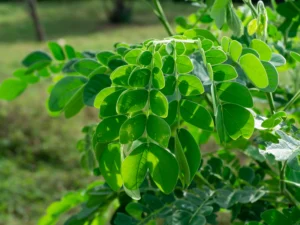
Moringa has been getting a lot of attention in the natural hair care arena, thanks to its impressive nutritional profile and use in traditional beauty practices for centuries. Moringa oleifera, known as the “drumstick tree,” contains a variety of plant compounds, antioxidants, vitamins, minerals, and fatty acids that may help create a healthier scalp and hair that looks stronger.
But the big question is, does moringa really make your hair grow faster?
The evidence suggests a more complex answer than many marketing claims would have us believe. Moringa is not a miracle cure for hair growth and cannot turn around all forms of hair loss. That said, its nourishing properties can help to create healthier hair by helping to hydrate the scalp, reduce dryness, improve hair softness, and protect strands from environmental damage.
Research on moringa-based hair formulations is nascent, but the current evidence is promising. In a recent systematic review, potential benefits of moringa formulations were observed in preclinical studies and limited human observations. However, the authors stressed the need for larger and more rigorous clinical trials to confirm the efficacy of moringa for hair growth and hair loss management.
In this guide, we’ll show you the many ways moringa can benefit your hair and scalp, how to properly use moringa oil and powder, what hair types they are best for, and how to safely incorporate them into your hair care regimen.
What Is Moringa and Why Is It Used for Hair Care?
For ages, the culinary, wellness, and cosmetic industries have utilised moringa (Moringa oleifera). The plant’s various sections, including the leaves and seeds, contain important nutrients and bioactive substances.
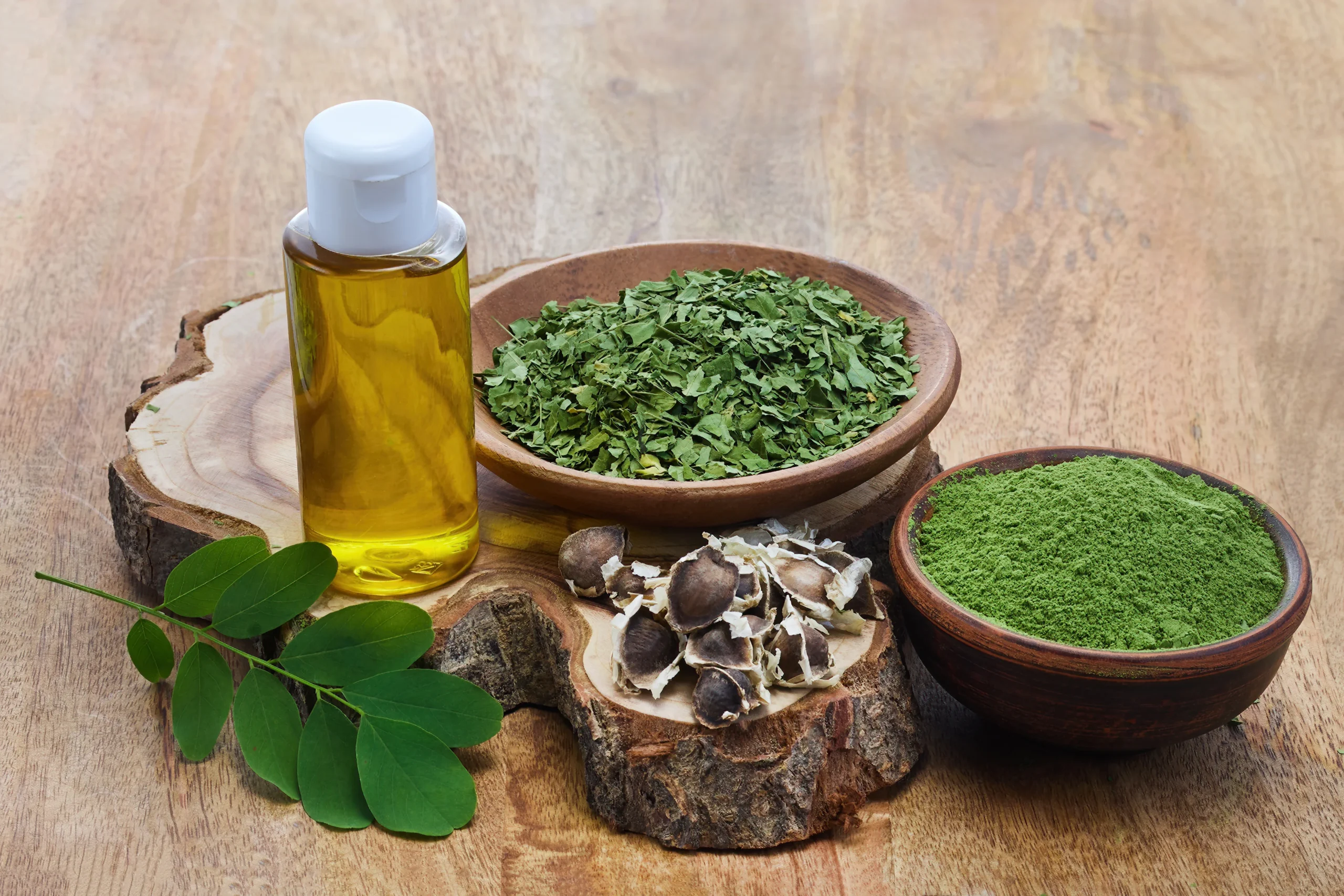
Moringa is generally found in hair care formulations in the following forms:
- moringa oil
- Moringa powder
- Moringa extracts.
- Hair masks and conditioners
Moringa’s appeal is in its unique combination of nutrients, as the nutrients work synergistically to support overall hair quality and condition.
Moringa Nutrients That May Promote Hair Health
There are many different factors that all work together to affect the health of your hair. These include your genes, your hormone levels, your diet, the condition of your scalp, and how you care for your hair on a day-to-day basis. Moringa contains several nutrients that are closely related to keeping the hair structure healthy.
Vitamins
Moringa provides the following essential vitamins:
- Vitamin A – Maintains healthy skin and cell function
- Vitamin C – Antioxidant protection and support for collagen production
- Vitamin E – Protects cells from oxidative stress.
- B Vitamins – Involved in normal energy metabolism
Minerals
Moringa leaves contain several important minerals, which include:
- Iron
- Zinc
- Calcium
- Magnesium
These nutrients are particularly important because hair follicles are metabolically active structures that require a constant supply of nutrients.
Fatty Acids
Moringa seed oil is especially rich in fatty acids, especially oleic acid. These lipids may help improve the texture and appearance of dry hair by coating the hair shaft and reducing transepidermal water loss.
Could Moringa Promote Hair Growth?
Many consumers are looking for moringa to help them grow their hair faster. However, hair development is a complicated biological process that is regulated by a number of interrelated variables.
Hair grows out of follicles under the scalp. The cycle is determined by:
- Genetics
- Hormonal status
- Age
- Nutritional state
- Stress levels
- Existing health conditions
- Condition of the scalp
It’s important to point out that moringa is not a direct substitute for scientifically proven hair-loss treatments. Instead, it may help create conditions that lead to healthier-looking hair over time.
How Moringa May Help Support Healthy Hair Growth
Moringa may promote hair health via the following mechanisms:
Helping With Scalp Nutrition
The condition of your scalp directly affects the condition of your hair. Dryness, irritation, and poor scalp care can have a dramatic impact on hair texture and behaviour. Moringa oil can help:
- Increase overall scalp comfort
- Reduce dryness
- Keep moisture balance optimal
Reduce Hair Breakage
Many people confuse hair loss with hair breakage. Common breakage causes include:
- Over-styling with heat
- Chemical treatments
- Rough brushing methods
- Lack of moisture
Moringa oil may reduce mechanical damage to hair strands by enhancing softness and providing conditioning benefits.
Shielding Hair from Environmental Stress
Every day, hair is subjected to environmental stressors, such as:
- Sunlight exposure
- Pollution
- Styling tools that use heat
- Frequent washing
Antioxidant-rich ingredients can provide protective benefits, but should be seen as a complementary piece to a full hair care regimen, not a stand-alone solution.
Moringa Benefits for Hair and Scalp
1. Nourishes a dry scalp
Dry scalp can make hair feel rough, brittle, and hard to manage. The fatty acids in moringa oil condition and can improve the moisture levels on the scalp, which reduces the discomfort you feel from dryness.
This benefit is particularly helpful for people suffering from:
- Scalp dryness
- Coarse hair type
- Less glimmer
If the dryness is caused by other problems, such as eczema, psoriasis, or severe irritation, then you should seek medical advice.
2. Can Help Make Hair Stronger and Healthier
Hair strength is largely dependent on the condition of the hair shaft. Moringa oil can help to increase strength by:
- Smoothing the outer hair cuticles
- Completing
- Lubricating every strand
Together, these effects can result in hair that feels stronger and more manageable.
3. Encourages a Healthier Scalp Environment
A healthy scalp is essential for long-term hair health. A good scalp-care routine usually includes:
- Soft wash
- Preventing product build-up
- Maintaining moisture balance
- Protection from irritation
Moringa can be a useful complementary ingredient as part of this wider regimen.
4. Hair Shine & Smoothness Enhancer
Dry or damaged hair looks dull because the surface of the hair shaft is uneven. Moringa oil can help make the hair look smoother and shinier by coating the hair and reducing roughness. It is generally employed as:
- A finishing oil.
- Pre-shampoo treatment
- A conditioning agent
5. Controls Frizz & Dry Split Ends
The most common reason for frizz is uneven moisture absorption or poor conditioning. Applying a little moringa oil to the lengths of your hair might help:
- Minimise the appearance of frizz
- Improve overall softness
- Simplify styling
How to Use Moringa Oil for Hair
Moringa oil is one of the easiest and most popular ways to introduce moringa into your hair care regimen.
Moringa Oil Treatment Step by Step
Step 1: Select a Good Product
When selecting a product, consider:
- Moringa Seed Oil, Pure
- Cold-pressed options where available.
- Formulations with the fewest unnecessary add-ons.
Step 2: Use a Small Amount
One of the biggest application mistakes is applying too much product. Be conservative to begin:
- A few drops for thin hair.
- Additional drops for thick or very dry hair
Step 3: Gently Rub
Use Oil on the:
- Scalp (if well tolerated)
- Mid-length
- Ends of hair
Don’t rub too hard; rough handling can make breakage worse.
Step 4: Rinse Correctly
Leave the oil on your hair as long as you like, then wash thoroughly with a mild shampoo.
How to Use Moringa Powder for Hair
Another natural ingredient commonly used in hair care products is Moringa leaf powder.
Possible Benefits of Moringa Powder Hair Masks
Moringa powder mask may help:
- Condition dry hair.
- Increase overall softness
- Use plant-based nutrients in your hair care routine
Easy Moringa Hair Mask Recipe
Ingredients:
- 1-2 tablespoons moringa powder
- Aloe vera gel
- Yoghurt or a moisturising conditioner.
Directions:
- Bring the ingredients together to a smooth, even paste.
- Primarily for hair lengths.
- Leave the mask for 15 to 30 minutes.
- Rinse thoroughly
Always do a patch test before adding any new ingredients to your regular routine.
Is Moringa Good For All Hair Types?

Moringa for Dry Hair
Moringa may be particularly good for dry hair, which tends to respond well to extra conditioning. Some possible improvements include:
- Better softness
- Easier manageability
- Increased gloss
Moringa for Curly & Wavy Hair
The natural oils in curly hair don’t travel as easily down the curved strands, so curly hair tends to lose moisture more quickly. Moringa may help with:
- Dryness reduction
- Boosted curl softness
- Prevent frizz
Moringa for Greasy Hair
Caution for people with oily scalp: Moringa should be used with caution. Consider the following suggestions:
- Use less product.
- Not the scalp, only the hair ends
- Avoid oil accumulation
Moringa for Damaged Hair
Moringa may improve the surface appearance of damaged hair, but cannot repair structurally damaged strands. More effective treatment of hair damage is attained through:
- Trim split ends regularly
- Less heat exposure
- Mild hair care product use
How to Select the Correct Moringa Hair Product
Here are some factors to consider before buying a moringa-based hair product:
Quality of Ingredients
Search for products that have:
- Moringa oil (seed)
- Extract of moringa
- Easy, straightforward ingredient lists
- Avoid too many additives
Watch out for products that contain:
- Strong fragrances
- Ingredients known to irritate the scalp
- Too many unnecessary fillers
Moringa Oil vs Moringa Products for Hair
Best Moringa Oil:
- Specifically designed oil treatments
- Fight dry ends
- Simpler routines for hair
Moringa Hair Products Are Ideal For:
- Convenient
- Mixing good ingredients together
- Daily use
Safety Precautions To Follow Before Using Moringa On Hair
Most people tolerate plant-based oils well, but that doesn’t mean you can’t have a bad reaction. Before using regularly:
- Do a patch test
- Do not use if irritation develops
- Avoid applying to skin that is inflamed or damaged.
If you experience any of the following symptoms, consult a dermatologist for proper evaluation:
- Sudden hair loss
- Bald spots
- Intense itching of the scalp
- Painful inflammation of the scalp
A Simple Weekly Moringa Hair Care Regimen
Weekly Moringa Oil Treatment
- Put a little oil
- Massage gently into scalp and hair strands
- Rinse well after the suggested time.
2–3 Times Weekly: Mild Hair Care
- Pick a mild, sulfate-free shampoo
- Do not use excessive heat
Every day: Protective Measures
- Do not scrub hair with a towel.
- Comb with a wide-tooth comb to avoid breakage
- Protect hair when styling
Consistency in application is much more important than amounts of any one ingredient.
Moringa for Hair Growth: Frequently Asked Questions
Does moringa promote hair growth?
Moringa can help to improve the condition of the hair, and therefore its appearance, and to support the care of the scalp. While promising, current research is not enough to prove moringa as a definitively proven hair-growth treatment.
Does moringa oil help with dry scalp?
Yes, if used correctly, moringa oil can help moisturise a dry scalp and improve hair softness.
How often should moringa oil be applied?
Most people can start with once-a-week applications and then tailor the frequency to suit their hair type and scalp response.
Does moringa help with hair loss?
Moringa can help with reducing breakage, but it’s not going to fix every root cause of hair loss. Excessive or persistent shedding should be assessed by a health care professional.
Is it okay to leave moringa oil on overnight?
Some people do it that way, but it is not always necessary to practise it extensively to be effective. If irritation or excessive heaviness occurs, shorten the time accordingly if used overnight.
Key Takeaways: Is Moringa for You in Your Hair Care Regimen?
A nutrient-rich component, moringa can be a fantastic addition to a comprehensive hair care regimen. Its main benefits are helping to lock in moisture, adding softness, minimising dryness, and helping hair look healthier overall.
While promising research exists for moringa for hair care, it’s not a guaranteed cure for hair loss or a way to make hair grow faster. Several factors determine how healthy your hair is, including genes, nutrition, scalp condition, and daily habits.
If you’re searching for ingredients for natural hair care, moringa is a worthy one to consider as a conditioning addition that supports the scalp in your routine. Select good quality products, use them consistently, and watch how your hair responds over time.
Ready to build a better haircare routine? For more evidence-based hair care guides, practical tips on oils, scalp health, and common hair concerns, visit HairCareGrowth.com.
Written by Mian Hussain.