

Why Your Daily Habits Matter More Than Any Product
Many of us spend serious money on serums, supplements, and miracle treatments hoping for a quick fix. But the truth is simpler than that. The biggest thing driving healthy hair growth isn’t anything in the bottle on your shelf. It’s what you do every day.
Hair grows .5 inches per month on average. “You can’t really dramatically accelerate that overnight. So what you can do is create the right conditions, the conditions that keep your follicles healthy, reduce breakage, and help you maintain the length you’ve already grown.
I’ve spent years studying hair health, working with dermatologists, and testing routines on real hair. What I keep coming back to is this: the habits in this guide are the ones that are going to make a real, lasting difference. No tricks. Only consistency.
Start with Your Scalp: The Base for Healthy Hair
Pretend your scalp is dirt. If your follicles are clogged, irritated, or too dry, they can’t do their best work. The root is where healthy hair growth truly begins.
Wash Your Scalp But Not Too Much
How often you shampoo is very important. How often you should wash your hair depends on your hair type and how oily your scalp is, according to the American Academy of Dermatology. You might be a daily washer if you have fine, straight hair or an oily scalp. For dry, curly, or thick hair, every few days is usually sufficient.
When you do wash, direct the shampoo at your scalp, not down the length of your hair. So you cleanse the follicle area without drying out your ends.
Try a Daily Quick Scalp Massage
Even just a few minutes of light massage to the scalp can boost blood flow to your follicles. A few small studies have linked regular massage with thicker hair, but larger trials are still needed to confirm this. Either way, it’s low risk and easy to work into your day. Go slowly in circles. Use the finger pads, not the fingernails.
Don’t Forget The Conditioner
Conditioner does more than soften your hair. It locks in moisture and detangles to cut down on the friction that causes breakage. After each wash, AAD recommends that you condition your hair. For fine hair, focus on the ends; for dry or curly hair, use all over.
Protect What You Grow by Reducing Breakage
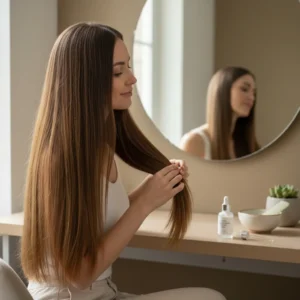
A lot of people swear their hair “just won’t grow.” Usually it is, it’s just breaking off at the same rate. That’s why keeping your length is just as important as growing it in the first place.
Be Gentle with Wet Hair
Hair is far more delicate when wet than when dry. Brushing it after a shower will cause excessive breakage and splitting. Instead, pick up a wide-tooth comb and start combing from the ends, working your way back up to the roots.
Have thick or curly hair? Use conditioner to detangle. The slip makes the entire process gentler on your strands.
Ease Up on the Heat
Hot flat irons, curling wands, and even your blow dryer, used hot and often, take their toll on the hair shaft. You get dry, brittle, split, and broken hair that seems to be frozen in time.
If you’re not willing to give up heat tools, make sure you use a heat protectant and keep the temperature as low as it will go while still working. The AAD recommends limiting heat exposure for all hair types to avoid damage.
Think Protective Hairstyles
Styles such as braids, buns, and twists conceal your ends, shielding the most fragile parts of your hair from the elements and daily friction. They are especially good if you are trying to grow your hair out.
One word of caution: Tightly pulled styles, including slick ponytails or extensions that are worn too tightly, can cause traction alopecia over time. Keep protective styles loose, especially around the edges.
Nutrition and Hair Growth: What Science Actually Says
This is the noisiest place. Let’s see what research says.
Hair follicles are some of the most active cells in the body.They require a steady stream of nutrients in order to keep producing healthy strands. But if you’re not getting enough of the right stuff, growth can slow, and shedding can increase.
First Protein
Hair is made from a protein called keratin. If you’re not getting enough protein in your diet, in general, your body may just put hair growth on the back burner to focus on more important jobs. Peer-reviewed dermatology research has shown that protein malnutrition can directly lead to thinning hair and hair loss.
Adults generally need about 0.8 grams protein per kilogram body weight per day. The basic sources are eggs, chicken, fish, beans, lentils, and Greek yogurt.
Beware of iron deficiency.
Low iron levels are one of the most common dietary causes of hair loss, especially for women before menopause. And here’s the thing that a lot of people don’t realize: it is possible to have low iron stores, as evidenced by low ferritin, without clinical anemia, and that can still affect your hair.
Research in NIH’s PubMed Central shows that iron, a critical nutrient for growth, is involved in the DNA synthesis of fast-growing follicle cells. If you think you’re low in iron, ask your doctor to test your ferritin instead of guessing. Blindly supplementing can be risky, as iron can be toxic in excess.
Vitamin D and Your Hair Follicles
Hair follicle cells have vitamin D receptors, and several studies reviewed by the NIH have linked low vitamin D to conditions such as telogen effluvium and alopecia areata. You get enough from a little sunlight, from fatty fish, and from fortified foods. Test before high doses.
Avoiding the Trap of Over-Supplementing
This is where good intent went bad. Supplements: More isn’t always better. The NIH’s review of vitamins and hair loss is blunt about this: getting too much of nutrients such as vitamin A, selenium, and vitamin E may actually cause hair loss rather than prevent it.
Biotin is heavily marketed for hair, but there is little clinical data for people who are not deficient. It is a valid medical concern that high doses of biotin can also affect the results of some laboratory tests.
The smart thing is to get your nutrients from a varied, balanced diet first. * Only take supplements if you are deficient (blood test).
Sleep, Stress, and the Hormonal Connection
These two are often overlooked but can make a huge difference to your hair.
Sleep is where recovery happens.
Most of the growth hormone that your body produces is during deep sleep. This hormone aids in regenerating cells, including the cells in your follicles. Night after night without enough sleep can disrupt that repair cycle and increase stress hormones, both of which can push more hairs into the shedding phase.
Aim for 7 to 9 hours a night. Your hair will thank you, and so will the rest of you.
Telogen effluvium and chronic stress
You’ve probably heard of someone who lost their hair after a hard time. It’s a real condition known as telogen effluvium, where physical or emotional stress causes a lot of hair to go from the growth phase into the resting phase and shedding.
Illness, surgery, major weight loss, postpartum hormonal changes, and long periods of stress are common triggers. The shedding usually occurs two to three months after the trigger, so the link is easy to miss.
Dealing with stress through movement, mindfulness, good sleep, and time with people you love isn’t just feel-good advice. “It’s true hair care.
Why Hydration Deserves a Spot in Your Routine
Your hair shaft has taken up water. “If you’re dehydrated all the time, the strands will get dry and break more easily. Water doesn’t speed up hair growth, but it does promote cellular function that keeps hair follicles and scalp healthy.
Drink at least 8 cups a day, more if you are active or in a hot climate.
Common Mistakes to Avoid
Here are the silent habits that hold you back or make progress appear slow:
- Not using conditioner after washing, especially if you have dry or textured hair
- Tangle aggressively when the hair is wet and vulnerable.
- Using heat tools without any heat protectant daily
- Crash dieting or eating less is a well-known cause of weight loss
- Taking too many of the vitamins you don’t really need
- Regularly wearing tight hairstyles, which pulls on the follicles along your hairline
- Ignoring your scalp and stressing only the ends
- Wanting quick results when real progress takes months, and that is totally normal
Expert Tips for a Smarter Hair Growth Routine
These don’t usually make the headlines, but they really move the needle:
- Trim frequently. It might sound counterintuitive, but chopping away split ends prevents breakage from traveling up the shaft and thinning your hair out.
- Sleep on a silk or satin pillow. It reduces friction and moisture loss as you sleep.
- Rinse with cold water. A cool rinse at the end will help close the cuticle and control frizz.
- Consume a wide variety of whole foods. Your follicles need a full spectrum of nutrients, not just one popular superfood.”
- Keep tabs on your shed. Normal to lose 50-100 hairs a day. Worth a chat with a dermatologist is significantly more, especially in clumps.
- Stay the same. A simple routine every day is far better than an elaborate one that you drop after a week.
When to See a Dermatologist
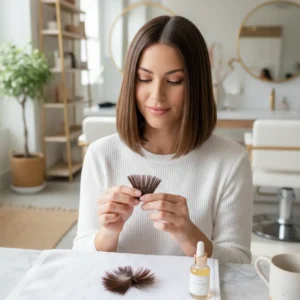
Let me be clear. If you notice sudden or heavy shedding, widening at your part, bald patches, or a sore or irritated scalp, see a board-certified dermatologist. These might be signs of hormonal imbalance, thyroid problems, alopecia areata, or nutritional deficiency, and should be diagnosed correctly.
Home routines and healthy habits are great for supporting your hair, but at the end of the day, they’re not a substitute for medical care when something bigger is going on.
Frequently Asked Questions
How soon will I see results from a new hair growth regimen?
You should see a real change after 3-6 months of consistent effort for most people. Hair grows slowly, so stuff going on at the follicle level takes a while to show up on the surface. Don’t judge it by weeks.
Can stress cause hair loss?
“Yeah. Telogen effluvium is a temporary shedding phase that can be caused by severe physical or emotional stress, leading to the loss of more hair than usual. The good news is that it’s usually reversible once you treat the trigger.
Does Cutting Your Hair Make It Grow Faster?
Cutting hair doesn’t make it grow any faster from your scalp, but it does prevent split ends from breaking further up the strand. You hold onto more length, which looks like faster growth.
Does biotin increase hair growth?
Biotin is only useful if you have a true deficiency, which is rare. Most people on a normal diet are not likely to see any visible difference from biotin. The evidence is behind the marketing here.
Best diet for hair growth?
There is no magic diet, but research continues to indicate sufficient amounts of protein, iron, vitamin D, zinc, and B vitamins. Most people are better off with a varied, whole foods diet than with any one supplement.
How do you know if your hair loss is normal?
Normal hair loss is 50-100 pieces of hair a day. If you are losing much more than that, have patches, or your hair is thinning over a couple of months, it is worth getting it checked out.
Does a tight hairstyle affect hair growth?
Sure. Traction alopecia is a slow and sometimes permanent loss of hair due to hairstyles that constantly pull on the follicle, particularly near the hairline.
Does Drinking Water Make Your Hair Grow?
Drinking lots of water can help promote overall cell health, including your scalp & follicles. It won’t directly grow new hair, but long-term dehydration can lead to brittle hair that is more likely to break.
Putting It All Together
There is no magic product that makes your hair grow faster. It’s about finding a pattern that maintains what you’ve grown, feeds your body the right way, and keeps your scalp healthy.
Climb on the ladder. Wash gently, condition often, get off the heat, and eat loads of protein. It also includes sleep consistency, stress management, and good hydration. Then give it in real time. “Measured in months, not weeks.”
These habits are not difficult. The trick is to keep on repeating them. And that consistent consistency is what separates the people who get real results from the people who are still chasing the shortcut that was never going to work.