
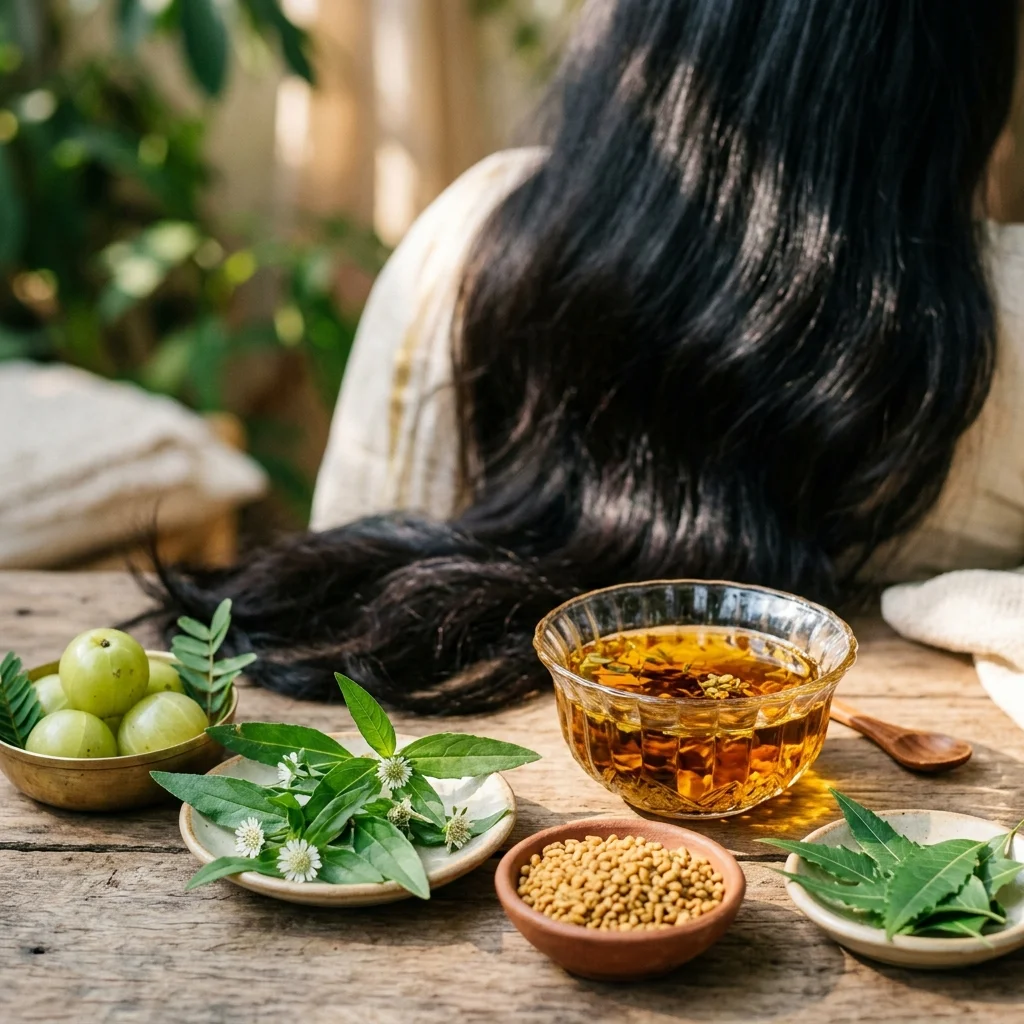
I still remember the morning I saw a clump of hair in the shower drain, and my stomach dropped! If you have ever looked at your hairbrush in confusion as to where all those strands came from, trust me, you are not alone. Hair fall is one of those silent problems that creep up on so many of us, and it can knock your confidence sideways before you even finish your coffee.
After years of writing about hair care and testing remedies on my own scalp, I kept returning to one beautiful source of wisdom: Ayurveda. These ancient Indian practices have been around for centuries, and the best part? So many of the herbs are easy to find and so comforting to use. So pour yourself a cup of tea and let’s talk about what actually works, what to skip, and how to treat your hair with a little more love.
Why Hair Fall Happens in the First Place
Before we grab the amla oil, it helps to know what is going on up there. But first, some reassuring news: it’s perfectly normal for you to lose a few hairs every day. But the American Academy of Dermatology says shedding 50 to 100 hairs a day is just your body replacing old hair with fresh new growth. So, a couple of threads here and there? There’s no need to panic!
But there’s usually something else going on when the shedding starts to really ramp up. Most common offenders include:
- Stress: The Mayo Clinic says that high stress can trigger a temporary type of shedding called telogen effluvium.
- Genetics: Pattern hair loss is hereditary and the most frequent cause, according to research shared by the NIH.
- Nutritional anaemia: Low iron, protein, or certain vitamins can leave hair weak and brittle.
- Hormonal changes: Think of pregnancy, postpartum changes, or thyroid issues.
- Stylish, but brutal: Tight ponytails, hot tools, and rough brushing really don’t do you any favours.
The reason I was drawn to Ayurveda is that it takes a slightly different view of hair fall. This is not just about treating the scalp; it’s about linking healthy hair to total body balance, including your digestion, sleep, and stress levels. Honestly, that whole body view just made sense to me.
Top Ayurvedic Remedies for Hair Fall
These are the five classic ingredients that I keep returning to, time and time again. Both have been used for a long and loving history in Ayurvedic hair care, and many people find them to be gentle and really nice to use.
1. Amla (Indian Gooseberry)
Amla is the rockstar of Ayurvedic hair care! It’s full of vitamin C and antioxidants and is thought to traditionally strengthen the roots and add a gorgeous shine. I love making a paste out of amla powder. That cool, fresh feeling on my scalp is so relaxing after a long, hectic week.
2. Bhringraj
Bhringraj, dubbed “the king of herbs” for hair, has been a preferred choice in traditional routines for ages. People use bhringraj oil to massage the scalp slowly to create a healthy environment for growth. That gentle massage in a circle honestly feels like a mini spa moment right at home.
3. Neem
Neem is your scalp’s friendly little clean-up crew! It has been traditionally used to soothe an itchy, flaky scalp, because a calm, clean scalp is a much happier home for your hair. The smell is strong, I will be completely honest with you, but that fresh feeling afterwards is so worth it.
4. Fenugreek (Methi)
These small seeds are a wonderfully economical favourite. Fenugreek, soaked overnight and made into a paste, is used in the traditional way as a nourishing hair mask. It’s gloriously simple and you probably already have a jar hiding away in your kitchen cupboard!
5. Ashwagandha
Stress plays such a huge role in shedding that ashwagandha deserves a place on this list. Traditionally, this adaptogenic herb has been used to help the body deal with stress. Some people take it as a supplement, but please, please, please check with your doctor first, especially if you are already on medication.
How to Use These Remedies at Home
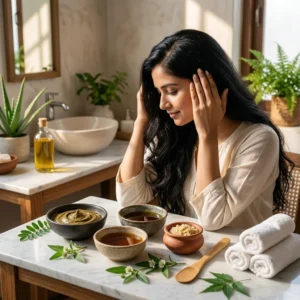
Ready to give them a try? I’ve tried these simple recipes in my own bathroom and enjoyed them.
Amla hair mask
- Mix 2 tbsp of amla powder with warm water and make a smooth paste.
- Gently massage into your hair and scalp.
- Leave it on for 20 to 30 minutes and rinse thoroughly.
Bhringraj scalp massage
- Rub some bhringraj oil between your palms to warm it.
- Gently massage it into your scalp for 5 to 10 minutes.
- Leave it on for an hour or overnight and shampoo out.
Fenugreek paste
- Soak 2 tbsp seeds overnight.
- The following morning, grind them into a paste.
- Apply to scalp. Let stand 30 minutes. Rinse.
One quick tip from experience: always do a small patch test on your inner arm before applying anything new all over your scalp. And start with once a week, not all the time!
Common Mistakes to Avoid
Please learn from my little flubs because I have made a lot of these myself over the years!
- The hope for magic overnight: Hair grows at a snail’s pace, often just half an inch a month. Give any routine at least 8-12 weeks before you judge it.
- Over washing or over oiling: Too much of either can go very wrong. It’s all about balance here.
- Rubbing your head vigorously: Be kind, my friend. A hard rub will only stretch the fragile strands.
- Quality and safety don’t matter: This is the big one. The National Center for Complementary and Integrative Health says some Ayurvedic products — particularly some supplements — have been found to contain heavy metals, such as lead or mercury. Buy only from reputable, tested brands, and read those labels.
- Pass on the doctor visit: If you see sudden patchy or severe hair fall, visit a dermatologist rather than relying only on home remedies.
Expert Tips for Healthier Hair
These little habits really make a difference, and the best part is they cost almost nothing!
- Feed your hair from the inside: Proteins, leafy greens, nuts, and iron rich foods are key.
- Manage your stress: Whether it’s yoga, a daily walk, or a good night’s sleep, calming things down can really help with stress-related shedding.
- Be gentle with wet hair: It’s most fragile when wet, so use a wide-tooth comb, and pat, don’t rub.
- Loose those hairstyles: Tight buns and ponytails can eventually pull on your roots.
- Stay consistent: Choose a simple routine that you’ll actually stick to, not a complicated one you’ll quit by week two.
Frequently Asked Questions
1. Do Ayurvedic treatments actually prevent hair loss?
They may help some people by supporting a healthier scalp and stronger feeling hair but results are variable and not guaranteed. Think of them as a gentle support, not a magical cure.
2. How soon will I see results?
Hair growth is slow, so try any approach for at least two or three months of consistent use before deciding if it is working.
3. Are these remedies safe for all?
Topical herbs are generally well tolerated, but allergies do occur. And, as always, do a patch test first. Speak with your doctor before taking any oral supplement.
4. Can I use these remedies on a daily basis?
Oils and masks are sufficient once or twice a week. If used daily, it can make your hair oily or irritate your scalp.
5. Should I rather see a doctor?
If you see sudden, patchy, or heavy hair loss, then yes. A dermatologist can identify the real cause and suggest effective treatments.
6. Are Ayurvedic supplements harmful?
If they’re poorly made, they can be. Some have been found to contain heavy metals, so always go for the reputable brands and check with your doctor first.
7. Does stress alone cause hair loss?
It can, absolutely. Stress-related hair loss is very real, but it often resolves once the stress is gone, says Mayo Clinic.
A Few Final Thoughts
I know hair loss can be discouraging, but little caring steps really add up. Ayurvedic remedies such as amla, bhringraj, neem, fenugreek, and ashwagandha have brought me so much comfort and a sweet little ritual to my own routine, and they might do the same for you. Pair it with good nutrition, gentle handling, and a calmer mind, and you’re giving your hair a real fighting chance!
So be patient, be consistent, and take the whole process as a form of self-care and not race. Your hair and your peace of mind will thank you.
Health Disclaimer: This article is for informational purposes only and is not a substitute for professional medical advice, diagnosis, or treatment. Always consult a qualified health care professional or dermatologist before starting any new remedy, supplement, or treatment, especially if you have a medical condition or are on medication. Results can vary.




Really helpful article! I liked how clearly you explained the Ayurvedic remedies for hair fall. The natural approach makes it easy to understand and actually feel doable in daily life.