You’ve probably seen argan oil if you’ve ever looked at a shelf of hair oils and wondered which one is actually worth your money. This oil has been called “liquid gold” for a reason, but much confusion exists between the hype and the reality of what this oil actually delivers.
The short version: Argan oil is really good for your hair, but it’s not magic. It will not regrow hair you have lost, nor will it repair years of damage overnight. It can impart genuine shine, hydrate dry hair, smooth frizz, and act as a lightweight barrier against heat and styling stress.
This guide will walk you through the real benefits, how to use it the right way, mistakes that might make things worse, and honest answers to the questions most people have.
What Is Argan Oil, and Why Do People Use It?
The Moroccan argan tree’s kernels are used to make argan oil. It’s been around for centuries, first in the kitchen and then in beauty regimes, and it’s packed with nutrients that are really good for hair health.
The big players in argan oil are:
- Oleic and Linoleic Fatty Acids: These lubricate the hair shaft and help strands retain moisture
- Vitamin E is an antioxidant that gives hair and the scalp an additional layer of defense.
- Squalene and polyphenols: Antioxidant and anti-inflammatory compounds
The fatty acids in argan oil are very hydrating and provide lighter moisture without weighing hair down, says Cleveland Clinic dermatologist Dr. Shilpi Khetarpal. That’s a big part of why it works so well for frizzy or dry hair types. It hydrates, without the heavy, greasy feel.
Real Benefits of Argan Oil for Hair
It deeply hydrates dry hair.
Argan oil can be quite helpful if your hair is straw-like, harsh, or prone to tangling. Throughout the day, the oleic and linoleic acids coat the hair shaft and prevent moisture loss. Used regularly, it provides a noticeable softness for dry, brittle strands.
It works especially well on the mid-lengths and ends, the oldest and most depleted parts of your hair.
It Tames Frizz, Not Grease
One of the most consistent things that people notice about argan oil is smoother, calmer hair. Humidity or dry air causes the hair cuticle to lift, and this is what primarily causes frizz. By sealing the cuticle, argan oil lessens the puffiness and flyaway texture.
It doesn’t flatten hair or make it look oily, especially if you use just a few drops, since it’s lightweight compared to heavier oils like castor or coconut oil.
Style & Heat Protection
If you regularly use a flat iron, blow dryer, or curling wand, some form of heat protection is important. Argan oil can help reduce the direct effects of high temperatures by forming a thin protective coating around the hair shaft. According to a 2013 study, argan oil’s ability to reduce stress from heat and chemicals was demonstrated by its ability to restore hair condition after intense color treatment.
It won’t replace a dedicated heat protectant spray, but it adds an extra layer of defence, and it also helps to reduce split ends from mechanical styling.
Adds Shine
This is simple: argan oil’s fatty acids reflect light. A little on dry hair makes the strands look more polished and healthy, even if they’re not in perfect condition.
It Could Improve Scalp Health
Studies shows that, argan oil has anti-inflammatory and antioxidant trades that hepls improvement of skin health.Some scalp disorders, such moderate dryness or irritation from psoriasis, may be relieved by it. According to Healthline’s medically vetted advice, it may also assist with ailments including seborrhoeic dermatitis, which can cause hair loss.
Note: Not prove found that shows argan oil helps in hair loss or hair growth. Small studies on hair development have showed some potential for vitamin E, but there isn’t much data on argan oil in particular. Talk to a dermatologist before trying any oil as a solution if you’re noticing considerable shedding or thinning.
How to Use Argan Oil on Hair
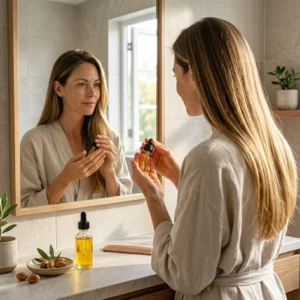
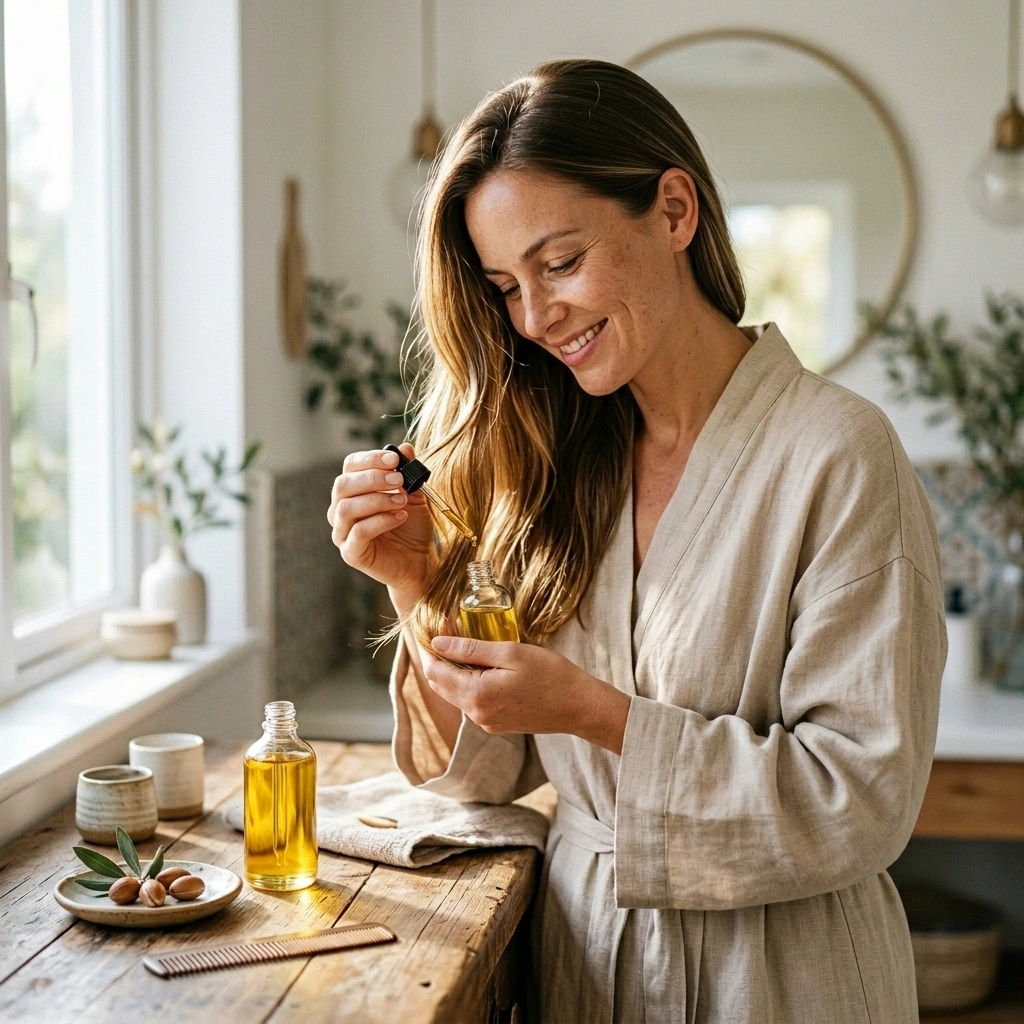
As Leave-In Conditioner
This is the most common use of it and works well on most hair types.
- Wash your hair and towel dry so it is damp, not soaking.
- Rub 2-3 drops between your hands
- Apply uniformly, avoiding the roots, from mid-length to ends.
To avoid accumulation, do this once or twice a week.
Use as a Prewash Treatment or Hair Mask
If your hair is very dry or damaged:
- Massage 8-10 drops into hair and scalp
- Work it through from roots to tips
- Cover with a towel and let sit for 30 minutes to overnight
- Use your regular shampoo to rinse it off in the morning
As a thermal protector
Apply 1-2 drops to clean, dry hair prior to styling with any heat tool. Focus on the lengths and the ends. Not many things are needed since a little goes a long way.
Add to Shampoos
Mix one drop of argan oil with your regular amount of shampoo in your palm and combine before washing. This is a gentler way to add moisture to your wash routine.
Common Mistakes to Avoid
Using Excessively
That’s the most common problem. Argan oil is concentrated, so a few drops are all you really need. Too much makes hair greasy, heavy, and more likely to attract dirt. Begin with 2 drops and increase as required.
Oily Hair or Dandruff – Apply directly on the scalp
This one is counting. Dr. Khetarpal at the Cleveland Clinic specifically warns against putting oil directly on the scalp, as it can lead to seborrhoeic dermatitis (the skin condition that causes a lot of dandruff) if done too much, especially if you already have an oily scalp. The American Academy of Dermatology also stresses the importance of properly caring for your scalp to prevent some types of hair loss, so be careful what you put on it.
If you tend to get dandruff or sticky roots, only put argan oil on the ends and middle lengths of your hair.
Incorrect Product Purchased
Much of what is sold as “argan oil” actually has very little of the real oil in it. Search for:
- 100% Pure Argan Oil No Added Fragrance or Preservatives
- A dark glass bottle (this prevents the oil from going rancid), “Cosmetic grade” labelling (culinary argan oil has a nutty scent and is not for hair)
- Pure argan oil should smell a little or nothing. If it smells bad or rancid, don’t use it.
Hoping It Will Solve Everything
A lot of people say that argan oil makes their hair look and feel better. But it won’t permanently close split ends, reverse severe chemical damage, or stimulate hair regrowth. Without realistic expectations, you may be tempted to pull the plug on a genuinely useful product too soon.
Expert Tips for Getting the Most from Argan Oil
- More is less. Warm 1-2 drops between your fingers and apply.
- Focus on the outcomes. Argan oil makes the biggest difference at the tips of your hair, which are the oldest and most damaged.
- First test. Even natural oils can trigger reactions in some people. Test on a small patch of skin inside the arm before applying to your scalp.
- Consistency trumps intensity. Light, frequent use is better than the occasional heavy use.
- Combine with good shampoo habits. The regular cleansing is still the basis of scalp health. Oil alone will not fix an unhealthy scalp routine.
Frequently Asked Questions
Will argan oil make my hair grow faster?
No, not in a direct way. There is no solid scientific evidence that argan oil causes hair growth. It can help improve overall hair health and reduce breakage, which may make hair look fuller over time, but it is not a hair growth treatment.
How regularly should I use argan oil on my hair?
Most people only need to use it once or twice a week as a leave-in or prewash treatment. If you have fine or oily hair, daily use can lead to buildup.
Can I use argan oil on my head?
You can, but be careful. If you have an oily scalp or are prone to dandruff, try not to apply it to the scalp directly, as too much oil can make these conditions worse.
Is argan oil good for coloured hair?
Yes, of course. Some of the damage that color treatments and chemical processes can do can be stopped with this. A study in 2013 found that it reduced damage from hair dye when applied after the colour processing.
What makes argan oil different from hair oils like coconut oil?
Argan oil is lighter than coconut oil, so it’s less likely to weigh hair down. Also, it is less likely to overload protein on already damaged hair. If you have fine or low-porosity hair, argan oil is generally the better option.
Will argan oil make my hair oily?
Only if you do it too much. Even for longer hair, two to three drops are usually enough. Use on the ends and lengths, avoiding the roots.
Argan oil as a conditioner substitute?
Not exactly. Works well as a supplement to conditioner or a lightweight leave-in, but doesn’t have the same proteins and moisturising agents as a rinse-out conditioner.
Is argan oil good for all hair types?
Yes, generally. It works well on dry, curly, colour-treated and heat-styled hair. Use sparingly on those with very fine or naturally oily hair and do not apply to the scalp.
The Bottom Line
Argan oil is rightly popular as a hair care product. But to get the best results, you need to know how to use it and what it does. It’s a good moisturiser, a light frizz fighter, and a decent buffer against heat and styling damage. If you have dry, dull, or breakage-prone hair, it’s really worth adding to your routine.
What it’s not: a cure for hair loss, a long-term fix for split ends, or something to coat an already-oily scalp. Set realistic expectations. Use a few drops consistently and target the areas of your hair that need it most.
If you’re eager to learn about the science behind it all, the Cleveland Clinic’s rundown on argan oil benefits, Healthline’s hair guide (medical review, of course), and the American Academy of Dermatology’s tips for scalp health are all great places to begin.