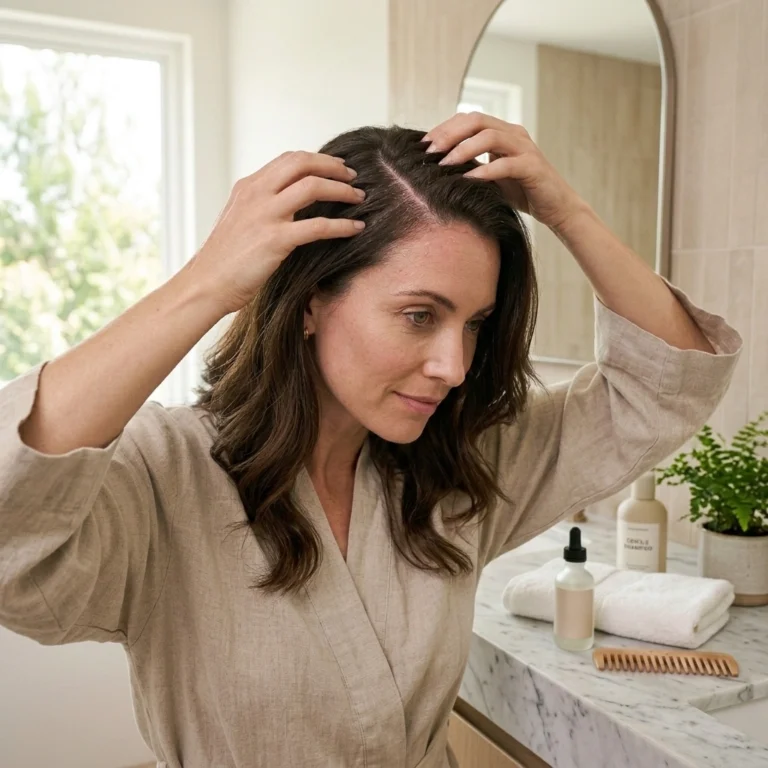
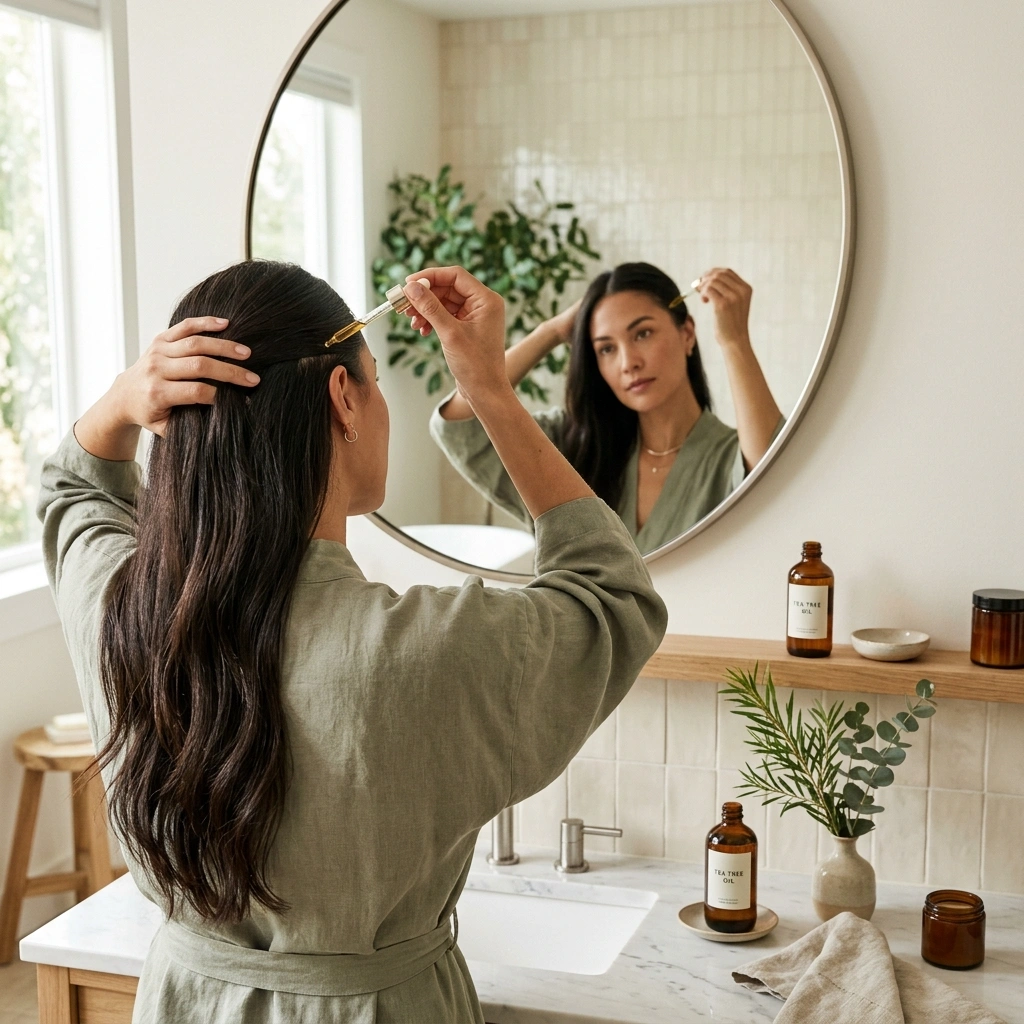
Imagine this: you’re at dinner, the light is just grazing your shoulders, and there it is. White flakes sprinkled on your favourite navy jumper. I’ve been there, and it sucks!! More times than I’d like to admit, that itchy, flaky scalp had me googling remedies at midnight.
That’s how I discovered tea tree hair oil. The first time I tried it, I sort of figured nothing would happen. But in a week’s time, the maddening itch was gone, and the flakes started to behave. I was so excited!
I’ve tried all the scalp care routines over the years, reading dermatology research, learning what really works. So my honest promise to you is this: by the time you finish this guide, you’ll know exactly why tea tree oil helps your scalp, how to use it the right way, and which slip-ups can quietly make things worse. So let’s dive in like we’re over a cup of coffee.
What Is Tea Tree Oil, Really?
Tea tree oil is an essential oil derived from the leaves of the Melaleuca alternifolia plant, a native Australian shrub. It has been used for generations due to its natural antimicrobial and anti-inflammatory properties.
These two qualities do the lion’s work for your scalp. Dandruff is frequently caused by an infection with a fungus known as Malassezia or simply by inflammation. Tea tree oil works for both, which is why you see it in so many scalp products on the shelves.
Tea tree oil is often used in scalp care products because of its antifungal and antibacterial properties, says the National Center for Complementary and Integrative Health. However, using it securely is crucial. Tea tree oil should never be swallowed and should always be properly diluted with a carrier oil before applying it to your scalp or skin to help reduce the risk of irritation.
Why Tea Tree Oil Helps Your Scalp and Dandruff
So what’s all the hype about this little bottle? Let’s take a look at the benefits that have made tea tree oil a staple in so many hair care regimens.
1. It Treats Dandruff at the Source
One of the most common causes of dandruff is overgrowth of Malassezia, a naturally occurring yeast that lives on the scalp. It can cause flaking, itching, and irritation when it overpopulates.
Tea tree oil is thought to have natural antifungal properties that may help keep this overgrowth in check. A study published in PubMed showed that participants using a shampoo containing 5% tea tree oil had improved dandruff symptoms after a few weeks of regular use.
That’s encouraging, but tea tree oil isn’t a miracle cure. You have to use it regularly. The results depend on the underlying cause of your dandruff.
2. May Help Soothe Itchy, Irritated Scalp
If your scalp is frequently itchy, tight, or irritated, tea tree oil might be of help. Its calming and anti-microbial properties can help alleviate the discomfort of mild scalp irritation.
In my own experience, that feeling of scratching all the time faded slowly after about a week of gentle, consistent use. All scalps are different, but most people who use tea tree oil properly find the refreshing and comforting effects to be quite beneficial.
3. It Maintains a Feeling of Freshness on the Scalp
Tea tree oil can also be used to get rid of excess oil and product buildup that accumulates on the scalp over time. Shampoos and scalp treatments with tea tree oil won’t literally dissolve the buildup, but they can leave the scalp feeling cleaner and refreshed.
It also helps to create a healthier environment for hair follicles, leaving your scalp cleaner, which may help support healthier-looking hair as part of an overall hair care routine.
The Big Picture
Tea tree oil has gained its reputation for good reason. May help control fungi causing dandruff, soothe an itchy scalp, and leave the scalp feeling cleaner and fresher. It isn’t a miracle worker for every hair woe, but it’s a simple, inexpensive ingredient that can be a valuable part of a well-rounded scalp care regimen.
What Actually Causes Dandruff?
It’s important to know what you’re working with before you reach for any scalp oil. Dandruff has different types, with different causes and different treatments.
Common causes include the following:
- Malassezia overgrowth: Excess of the naturally occurring yeast that may lead to flaking, itching, and irritation.
- Dry skin: Usually creates smaller, dry, powdery flakes, not oily ones.
- Seborrhoeic dermatitis: A chronic inflammatory condition characterised by oily scales, redness, and persistent dandruff.
- Product buildup: A lot of styling products, dry shampoos, or hair sprays can leave buildup on the scalp, leading to flakes.
- Lifestyle factors: Stress, sleep deprivation, and malnutrition can exacerbate scalp issues in certain individuals.
Here’s the bottom line: If your dandruff is severe, painful, bleeding, or you’re losing a lot of hair, it’s time to see a dermatologist. Tea tree oil should not be used as a substitute for a professional diagnosis or medical treatment if an underlying scalp condition is present, but it may be helpful to manage mild dandruff and scalp irritation.
How to Safely Use Tea Tree Hair Oil
Stay with me, now this is where most people would run. Tea tree oil is potent. In its pure state, it can irritate or even cause an allergic reaction.
Step 1: Dilute, Dilute, Dilute
Pure tea tree oil should never be applied straight to the scalp. Combine with a carrier oil such as argan, coconut, or jojoba oil.
A good starting ratio is 3 to 5 drops of tea tree oil to 1 tablespoon of carrier oil. Gentle, but effective.
Step 2: Always Do a Patch Test First:
I cannot say this loudly enough! Place a little of your diluted mixture on the inside of your arm and wait 24 hours. If you see redness, itchiness, or swelling, skip it altogether.
Step 3: Massage into your scalp
When you’re ready, part your hair and rub the mixture straight into your scalp. Use your fingertips to gently massage for a few minutes. It feels good, and it helps with circulation, too.
Step 4: Leave it to soak and rinse off
Leave the oil on for 15 to 30 minutes and wash off with a gentle shampoo. Some people leave it on overnight for a deeper treatment, but only do that if your skin is coping well with it.
Step 5: Repeat Twice or Three Times a Week
Consistency is always better than intensity. For most people, a couple of sessions a week is plenty.
Best Practices for Real Results
Want to make the most of your tea tree hair oil? These small habits pay off.
- Use good-quality oil. Buy 100% pure tea tree oil from a brand you trust.
- And use it with a mild shampoo. Harsh sulphates can undo all your hard work.
- Stay patient. Give it three to four weeks before you judge the outcome.
- Make it snappy. Put the bottle away in a cool, dark place so as to maintain its potency.
- Hear your scalp. If something is off, back off immediately.
Common Mistakes to Avoid
I’ve made a few of these mistakes myself, so learn from my mistakes!
How to Use It Straight
This is mistake number one. Pure tea tree oil is way too strong to put directly on your scalp, and you can be left with burning or stinging. Dilute, always.
Off the deep end
Here, more is not better. If you use it every day, it can dry and irritate your scalp, which is the last thing you want.
Forget the Patch Test
Allergies to tea tree oil are real. “The American Academy of Dermatology recommends patch testing new products to avoid surprise reactions,” A few minutes of testing can save you days of discomfort.
Immediate Miracle Expected
Natural remedies take time. If you give up after three days, you will never know whether it might have worked beautifully for you.
Not getting to the root causes.
If your scalp problem is medical, such as psoriasis or severe seborrhoeic dermatitis, oil alone won’t solve it. Seek proper advice and work together as a team.
Expert Tips for a Happier Scalp
Here are some other pointers I’ve discovered.
- Heat oil lightly. A light, warm blend is easier to apply, and it feels nice when massaged.
- Some aloe vera. Aloe has a greater ability to soothe irritated skin.
- Rake it up. A wide-tooth comb will help you detangle and distribute the oil without stressing your strands.
- I’m tracking my progress. Take a photo of your scalp once a week so you can really see the changes.
- Feed your scalp from the inside. Healthy fats, zinc, and tonnes of water help from the inside out.
Frequently Asked Questions
Can I apply tea tree oil to my scalp on a daily basis?
Better not to. It’s sufficient to do so once or twice a week. If you have sensitive skin, daily use can dry or irritate your scalp.
What is the duration of effectiveness of tea tree oil for dandruff?
The average user will have to use it for three to four weeks before they’ll really notice a difference. Results will vary, so be patient and watch how your scalp reacts.
Can I use tea tree oil on my treated or dyed hair?
Yes, generally with proper dilution. However, patch test and start with a low concentration to make sure that it does not irritate or disturb your colour.
Will Tea Tree Oil Help Hair Grow?
Hair doesn’t grow back on its own with tea tree oil. All it can do is help to create a cleaner, healthier scalp environment that supports your overall hair health.
Which oil works best as a carrier for tea tree oil?
All the great picks are coconut oil, Jojoba, and argan oil. Jojoba is especially good because it is very close to the natural oils on your scalp.
For what duration do you apply tea tree oil to your hair?
You can if your scalp can tolerate it. Always dilute first and patch test before attempting an overnight treatment.
When pregnant, is it okay to take tea tree oil?
Always ask your doctor first. Although topical use is frequently regarded as minimal risk, expert counsel is crucial because every pregnancy is different.
Final Thoughts
Tea tree hair oil was a must-have in my routine as it really soothed my scalp and got rid of those pesky flakes. When used correctly, diluted, patch tested, and applied with a little patience, it can be a wonderful natural friend for your scalp.
Just remember, it’s a helper, not a fix-all. Stay consistent and examine your scalp. See a dermatologist if your symptoms are severe or ongoing.
So here’s your nudge: Do a simple diluted blend this week, do that patch test, and hear what your scalp has to say. Your best, happiest hair days might be right around the corner!