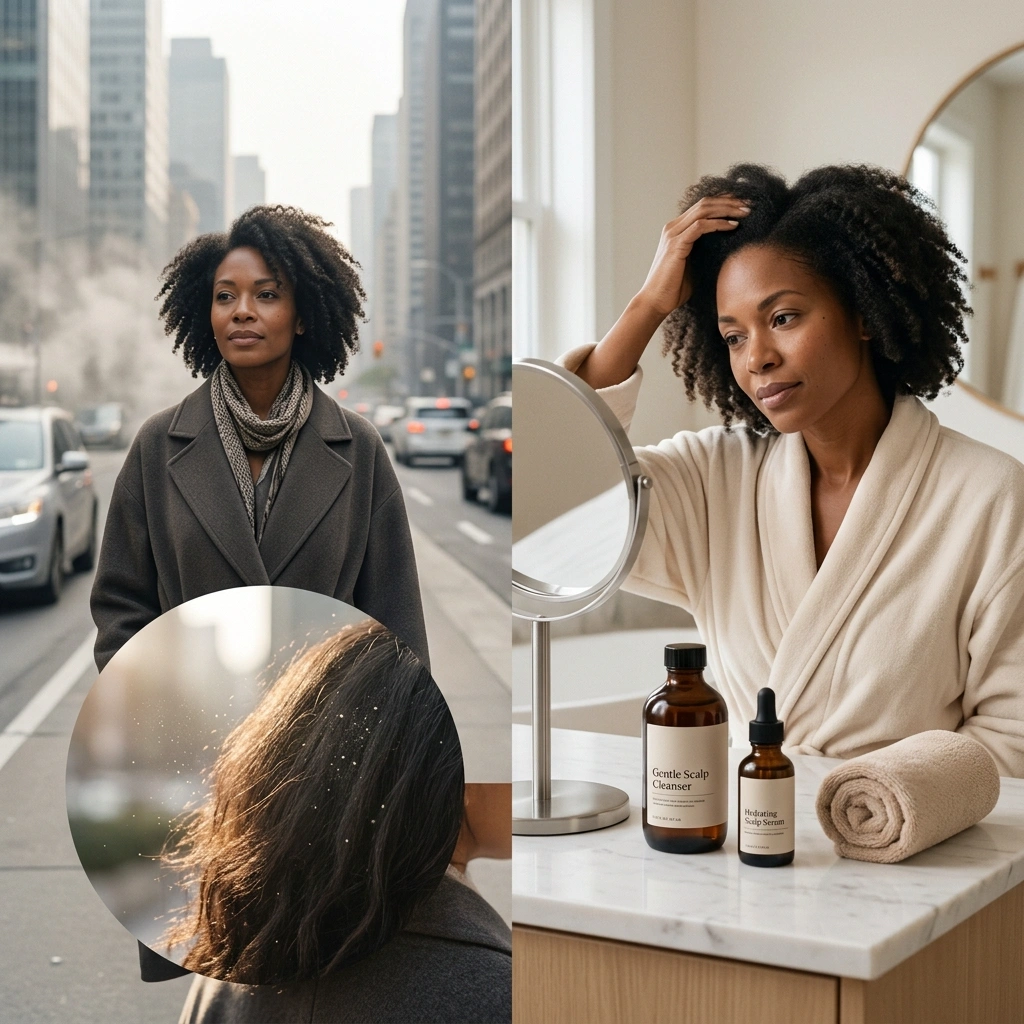
I’ll be honest with you. For years, I blamed my itchy, flaky scalp on ‘bad shampoo.‘ I was switching brands all the time, spending way too much money, and never getting any lasting relief. Then I moved out of a busy city block and onto a quieter neighbourhood, and my scalp calmed down on its own within a few weeks. Then it all clicked. The trouble was that the air was always about me!
So, can pollution damage your scalp? The short and honest answer is yes, it can play a real role. Not the only role, and often not the biggest role, but a role worth knowing.
Let me walk you through this as if I were talking to a friend over a coffee. No jargon. No scare tactics. Exactly what I’ve learned from years of personal hair care and a lot of research into the science.
Your scalp is skin, which is the point. Breathing, living skin with a thin protective barrier, much like the skin on your face. And it is exposed to the outside for the entire day. What we’re really talking about when we say pollution is “damaging” your scalp is how few airborne particles are interacting with that skin and the hair follicles that sit inside that skin.
How Pollution Affects Your Scalp
Air pollution isn’t one thing. It’s a chaotic mix of particles and gases suspended in the air, and some of them like to set up shop in your scalp and hair.
What builds up over the course of a day:
- Particulate matter (PM2.5 and PM10) Tiny particles from traffic, smoke, and industry
- Heavy metals: stubborn traces of heavy metals attached to hair and skin
- Free radicals: pollution creates unstable molecules that stress your skin cells
These particles are so small that they can settle on your scalp, blend in with your natural oils, and hang around for hours. When this occurs, they are able to cause oxidative stress. It’s just a fancy way of saying that your skin cells are slowly being worn away.
Pollution and UV exposure are environmental stressors that can speed up skin ageing and irritation, according to the American Academy of Dermatology. Not your noggin. For more information on caring for your skin barrier, visit the American Academy of Dermatology.
What Oxidative Stress Does To Your Hair & Scalp
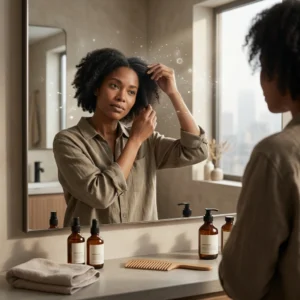
Free radicals are little troublemakers, zipping around and bumping into healthy cells, including the ones that support strong hair.
- That, over time, it can cause chronic stress
- Damage the protective layer on your scalp
- Increase sensitivity and irritation
- Help cause dryness and flaking
- Make your follicles a hostile environment
Let me be very clear about this. Pollution alone will not cause drastic hair loss. If someone says it does, they are overselling it. The research continues, and scientists are wary of making direct claims. But a stressed and congested scalp isn’t a happy home for healthy hair, and that’s a thing to care about.
Why This Topic Actually Matters
The biggest surprise for me was that. We invest heavily in shampoos, masks, and serums, but we don’t give much thought to what is silently falling onto our scalp between washes.
You have hair on your head. The best possible start for your strands is a healthy, calm scalp. So protection goes beyond comfort. The trick is to build a good base for the hair you really want.
I finally realised pollution was part of the puzzle, and suddenly my whole routine made sense.
Common Signs Your Scalp Is Feeling the Pollution
Scalp reaction? You ask how? These are the signs I have seen in myself and heard so many others speak of.
- Itching that doesn’t go away with a new product
- More flakes or dandruff
- Tightness in the scalp (sometimes tender)
- Hair that looks dull and tired by midday
- Quick return of oiliness, even after a short time after washing
Does that sound familiar? You’re not alone. City dwellers and commuters in heavy traffic are more likely to see them.
Important note: Do not skip this. These symptoms can also be signs of other conditions, such as seborrhoeic dermatitis, eczema, or a simple product reaction. If your scalp has been irritated for weeks, see a dermatologist instead of guessing. We have a great, medically reviewed overview of scalp conditions here at Healthline.
Causes: What Makes Pollution Worse for Your Scalp
There are a few common habits that silently stack the odds against you.
Long contact without washing. Particles can settle and sit for hours while you are walking, commuting, or working outside.
Not washing often. If you don’t wash the buildup off, it sits on your skin and combines with sweat and oil.
Broken scalp barrier. Harsh products, overwashing, and heat styling can leave your scalp more vulnerable to environmental stress.
Warmth and moisture. Hot, sticky weather can exacerbate the greasy feeling because the particles stick more stubbornly.
None of these, per se, is dramatic. But pile them up, and you get a congested, cranky feeling scalp!
Solutions: How to Protect Your Scalp From Pollution

Good news. You don’t need a complicated routine or a closet full of expensive products. A few smart habits do the heavy lifting.
Regular & Soft Cleaning
- Washing removes the pollution build-up. But here, balance is the key.
- Choose a gentle sulfate-free shampoo so you can cleanse without stripping
- Wash according to your lifestyle, not by the book (commuters might need more frequent washes)
- Massage the scalp gently to loosen up the residue.
I switched to a milder shampoo and washed a little more frequently on high-traffic days, and my scalp settled down in a couple of weeks. Small change, big return!
Add a weekly clarifying treatment.
A clarifying shampoo once a week or a gentle scalp scrub will help dislodge stubborn buildup that a regular shampoo can’t. Just don’t go too far. Over-clarifying can dry you out; most people only need to do it once a week.
Support Your Scalp Barrier
- A good barrier is much better for protection against environmental stress.
- Finish with a lightweight conditioner or scalp serum.
- Look for antioxidants, such as vitamin C and vitamin E, to help fight off free radical damage.
- Healthy Skin From the Inside Out: Eat a healthy diet and drink fluids
- Build a Physical Barrier
A hat or scarf can really help on days of heavy pollution! It protects your scalp and hair from particles settling on them, and as a bonus, it protects from UV rays.
Common Mistakes to Avoid
I have actually made a couple of these myself, so let me save you the trouble.
Washing too much to feel “clean”. “Frequent washing weakens your barrier and removes natural oils, which causes more irritation rather than less.”
Selecting harsh stripping products. Sulfate-heavy formulas might feel super deep cleansing, but they’ll also leave your scalp raw and reactive.
Persistent symptoms. Less appropriate are other random product swaps than redness, flaking, or chronic itching, for a doctor’s opinion.
Heavy oils every day. Some oils can actually trap particles on your scalp, rather than protect it. Use them wisely.
You have a head, don’t you remember? We condition our lengths and forget the skin beneath. SHOW SOME LOVE TO THE SCALP!
Expert Tips for a Pollution-Resilient Scalp
Ready to up your game? These small changes have a big effect.
- After exercising, rinse off the outside. Sweat + pollution = sticky combo. Quick rinse helps a lot.
- Use antioxidant-rich hair care products. A useful shield is also provided by products with protective antioxidants.
- Treat yourself to a gentle scalp massage. It helps circulation, it helps distribute product evenly, and I mean, it feels amazing.
- Rinse and chill. Very hot water is not as supportive of the scalp barrier as cooler water.
- Change your pillow cases often. Changing your bedding helps keep your scalp calm as you sleep, transferring particles and oils.
Consistency is better than intensity. One large treatment occasionally is much better for the scalp than regular daily habits.
Frequently Asked Questions
1. Does pollution cause hair fall?
Pollution can stress and inflame the scalp, which is not good for healthy hair. But hair loss is seldom from this one cause. Genetics, hormones, and health conditions seem to matter a lot more. If you are losing a lot of hair, see a dermatologist.
2. How often should I wash my hair if I live in a town with a lot of pollution?
Your hair type and routine will determine this. But many city dwellers do well washing every one to three days. Your head. Hear it. If it feels blocked or itchy, a gentle wash is usually enough.
3. Are anti-pollution hair products really effective?
Many contain antioxidants and mild cleansers that promote a healthy scalp, and this can really help. Just keep your hopes reasonable. They defend, they purify. But they aren’t some kind of magic shield for everything.
4. Can pollution cause dandruff?
However, it can make flaking and irritation worse for some, but true dandruff is usually related to a yeast on the scalp and other factors. Pollution is not the whole story, often just one piece of the pie.
5. Will pollution build-up be removed by a clarifying shampoo?
Great for building up, weekly clarifying shampoo. For best results, use with normal, gentle washing. However, don’t drink strong clarifiers on a daily basis. It will dehydrate you.
6. Should I wear a hat to protect my scalp?
Yes. On days when the air quality is bad or the sun is bright, a hat or scarf is a simple and effective way to protect your scalp from both particles and UV exposure.
7. When to visit a doctor for your scalp
If irritation, redness, itching or flaking persists for more than a few weeks or keeps recurring, schedule an appointment. A dermatologist can find the root cause and give you the right plan.
The Bottom Line on Pollution and Your Scalp
Is pollution bad for your hair? Sure, it can cause irritation, buildup, and oxidative stress that leaves your scalp less than happy. It’s not the reason behind every bad hair day, but it’s a force to be reckoned with.
And here’s the comforting thing. That’s all you need to keep your scalp protected. Gently cleanse, clean out weekly, boost your barrier with antioxidants, and protect on harsh air days. Do it regularly, and your scalp will thank you for it.
Your scalp works hard every day, so treat it as the foundation for healthy hair that it really is. If you want to learn more about how your skin is affected by environmental factors, the World Health Organization has good research on air pollution and health. Browse hair care growth for more practical and honest hair care guides. Here’s to a happier, calmer scalp!