You’ve probably walked past a hibiscus bush a hundred times and not thought much of it. But across South Asia, the Caribbean, and parts of Africa, women have been crushing those bright petals and leaves into hair masks for generations. There’s a reason that tradition has lasted.
Hibiscus (Hibiscus rosa-sinensis) has gotten serious attention in the hair care world, and some of it is backed by early scientific research. In this article, we’ll discuss what Hibiscus can truly do for your hair and scalp, how to use it the right way, and five DIY treatments you can try at home right now.
Fair warning up front: we’ll tell you what it can’t do, too, because no one benefits from overselling a flower.
What Is Hibiscus and Why Does It Matter for Hair?
Hibiscus rosa-sinensis is a tropical Asian flowering shrub. The flowers are eye-catching (mostly red, pink, or orange) and both the leaves and petals are rich in bioactive compounds, making them valuable beyond the garden.
The flower is:
- Anthocyanins – natural pigments that have antioxidant properties
- Quercetin and Kaempferol – Flavonoids That Might Benefit Scalp Health
- Vitamin C – Helps with collagen production, which is needed for skin structure.
- Mucilage — a natural slip agent that coats and softens strands.
- Amino acids are the building blocks of keratin, the protein that comprises your hair.
Hibiscus rosa-sinensis leaf and flower extracts were tested for hair growth in rats in a 2003 study published in the Journal of Ethnopharmacology (ScienceDirect). The leaf extract was more active than the flower extract in inducing anagen (growth) phase activity. This is encouraging, but it was an animal study, not a human clinical trial.
A 2025 review published in Food Science & Nutrition (PMC/NIH) confirmed rich bioactive compounds in Hibiscus. It noted research into antioxidant, antimicrobial, and anti-inflammatory properties, all relevant to scalp care. The review also showed that many of these uses still need validation in long-term human clinical trials.
The bottom line is that the traditional use is strong and centuries old. The early science looks promising. But if you’re looking for Hibiscus to reverse pattern baldness, or grow back a lot of lost hair, that’s not what the current evidence suggests.
Key Benefits of Hibiscus for Hair and Scalp
It May Help Reduce Breakage
Hibiscus petals are rich in amino acids that help to strengthen the hair shaft from the outside. The flower’s mucilage naturally conditions hair lightly and reduces friction between strands. Less friction means less mechanical breakage while brushing and styling.
If your hair breaks easily or you see short pieces broken off along your part line, Hibiscus might help over time.
It Adds Slip and Shine
The mucilage also imparts a natural slip and reflective quality to the hair, as well as reducing breakage. This is particularly visible on natural textures and coily hair. Hibiscus doesn’t weigh hair down with silicone-like heaviness. Instead, it softly smooths the cuticle, which is why your hair looks shinier after.
It Supports a Healthier Scalp
Hibiscus contains antioxidants and anti-inflammatory compounds, such as quercetin and anthocyanins, that may help soothe a stressed scalp. Chronic low-grade inflammation and oxidative stress can also damage the scalp skin barrier, leaving it more vulnerable to issues such as flaking and sensitivity.
The American Academy of Dermatology says the health of your scalp directly affects the quality of your hair. Healthy hair growth begins with a healthy, well-nourished, balanced scalp.
It May Support Dandruff Management
Hibiscus has shown antimicrobial activity in laboratory conditions, including against fungal strains. Dandruff often involves a fungal component (usually Malassezia), so a hibiscus-infused scalp rinse may offer some benefit.
That said, if you have persistent, thick, or inflamed dandruff, don’t rely on Hibiscus alone. The American Academy of Dermatology recommends dandruff shampoos with active ingredients such as zinc pyrithione, selenium sulfide, or ketoconazole. Mayo Clinic also recommends seeing a provider if dandruff doesn’t improve with over-the-counter treatment within a few weeks. Hibiscus is an adjunct, not a substitute.
It Moisturizes Dry Hair
You can combine Hibiscus with conditioning carriers like coconut oil, aloe vera, or yogurt. Together, they treat 2 levels of dryness: the scalp’s top layer and the hair strand. If your hair is dry at the ends or brittle from heat or chemical damage, regular hibiscus masks can help restore some flexibility.
How to Use Hibiscus for Hair: Your Options
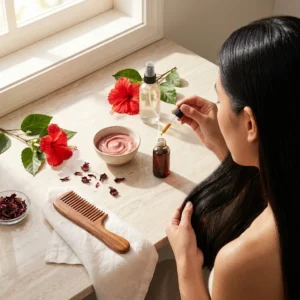
Using Fresh Flowers
Fresh red hibiscus flowers are the most powerful choice. You can also grind the petals into a paste with a mortar and pestle or blender with a little water. Massage directly into scalp and hair.
Using Dried Hibiscus Powder
Dried Hibiscus, ground into a powder, is easy to obtain and simple to use. Mix with water, oil, or yogurt to make a paste. For most people, this is the most convenient format.
Using Hibiscus Leaves
You can make a rinse by boiling hibiscus leaves in water, or by grinding them into a paste and applying the paste to the skin. But don’t forget the leaves. In a 2003 ScienceDirect study, leaf extract was more effective than flower extract in their models.
Hibiscus-Infused Oil
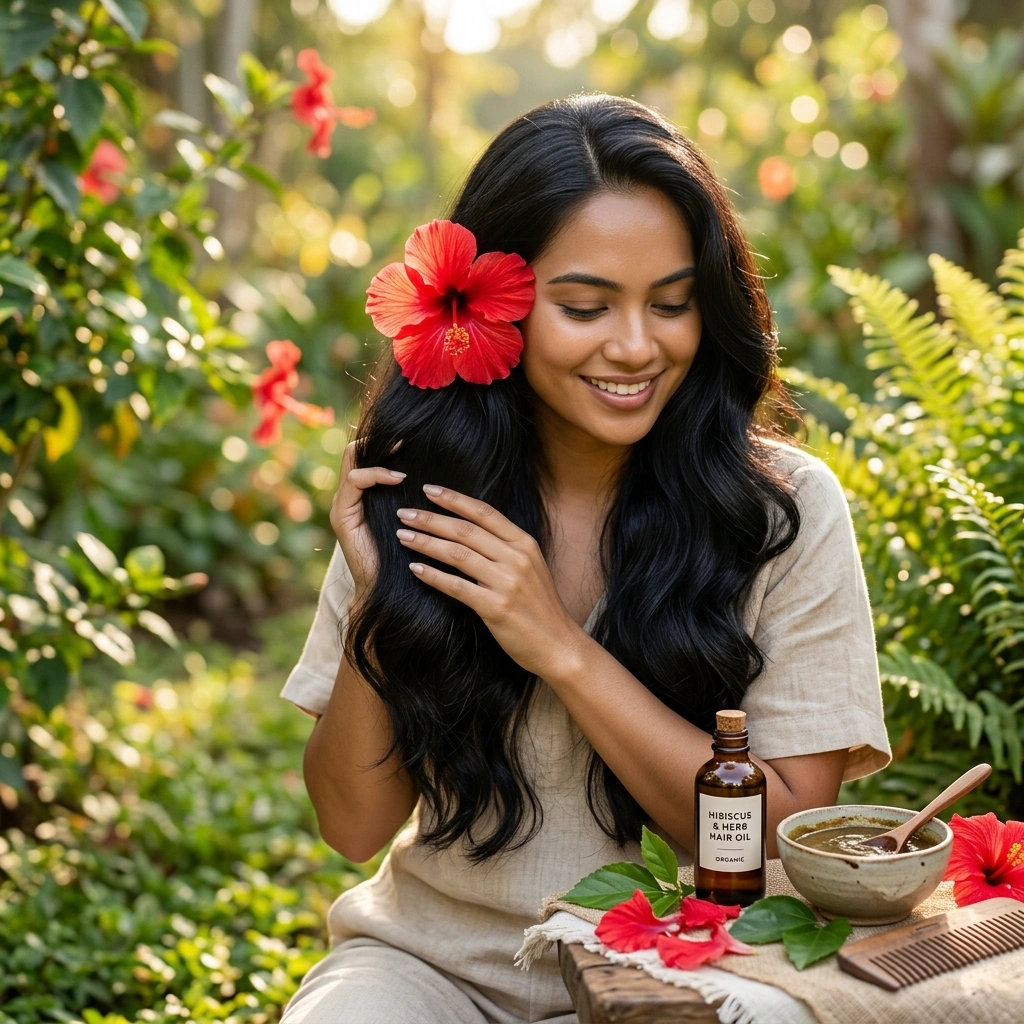
To make hibiscus oil for your hair, you can infuse dried petals and leaves in a carrier oil, such as coconut or castor oil, over low heat for a few hours. This process combines the benefits of Hibiscus with the deep conditioning of the carrier oil.
Best Carrier Ingredients to Pair With Hibiscus
The best results with Hibiscus come when you combine it with the right ingredients:
- Coconut oil – penetrates hair shaft, reduces protein loss
- Castor oil – thick and moisturizing; good for dry scalps
- Aloe vera gel – soothes and moisturizes the scalp
- Yogurt – Contains lactic acid to smooth the cuticle
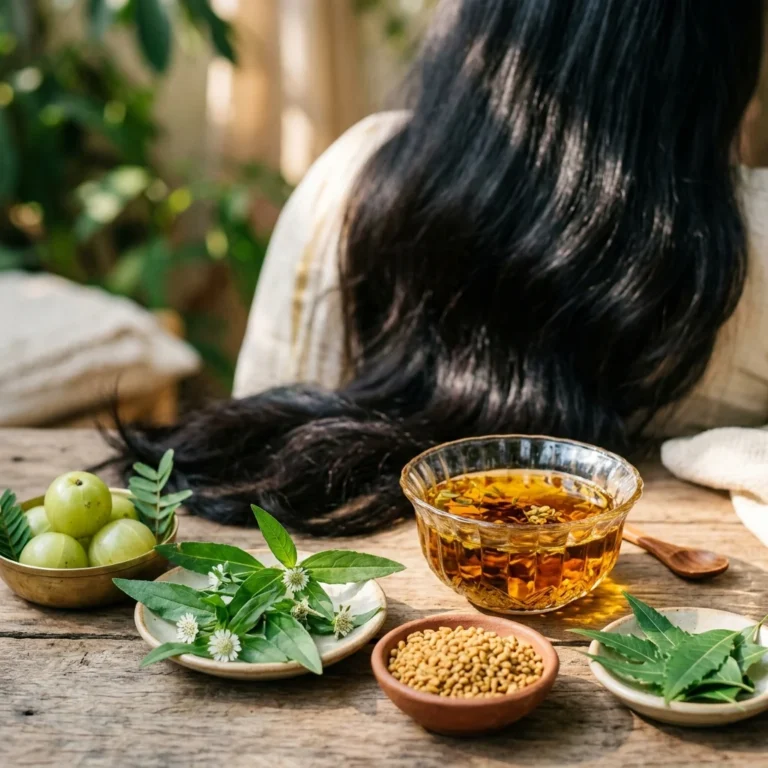
- Amla powder – another Ayurvedic staple that’s rich in Vitamin C
- Fenugreek paste: Protein-rich, promotes scalp health
5 DIY Hibiscus Hair Treatments
1. Basic Hibiscus Hair Mask (Moisture and Shine)
You will need: 2 tbsp hibiscus flower powder, 3 tbsp coconut oil, 1 tbsp aloe vera gel
Steps:
- Mix the hibiscus powder with the coconut oil until well combined.
- Add aloe vera gel and stir.
- Apply section-by-section from scalp to ends.
- Cover with a shower cap and keep for 30-45 minutes.
- Rinse thoroughly with warm water and shampoo once.
Best for: Dry or dull hair in need of moisture and softness.
2. Hibiscus and Yogurt Mask (Smoothing and Strength)
You will need: 2 Tbsp hibiscus powder, 3 Tbsp plain full-fat yogurt, 1 tsp honey
Steps:
- Blend all the ingredients into a smooth paste.
- Massage into clean, damp hair from roots to tips.
- Allow to remain on for 20 to 30 minutes.
- Rinse thoroughly with cool water. Shampoo gently.
Best for: Frizzy, brittle, or weak hair.
3. Hibiscus Scalp Rinse (Dandruff Support)
You will need: 5-6 dried hibiscus flowers or 2 tbsp dried Hibiscus, 2 cups water
Steps:
- Boil water and add the dried Hibiscus.
- Simmer 10 minutes; then cool completely.
- Sieve off the liquid into a bottle.
- Pour the rinse over your head after shampooing.
- Massage in gently and leave it on (do not rinse off)
Best for: flaky, itchy scalp, as a supplement to a proper dandruff routine.
4. Hibiscus-Infused Hair Oil (Deep Conditioning)
You will need: 1 cup coconut oil, 1/2 cup dried hibiscus petals, 1/4 cup dried hibiscus leaves
Steps:
- In a small saucepan, combine the oil and dried Hibiscus over very low heat.
- Cook slowly 2-3 hours, keeping the temperature below 150°F. Do not boil.
- Strain out the plant material and allow the oil to cool.
- Store in a glass jar.
- Massage a small amount into hair and scalp 1-2 hours before shampooing.
Best for: Weekly pre-shampoo treatment for dry or damaged hair.
5. Hibiscus and Amla Growth Paste (Scalp Nourishment)
You will need: 1 tablespoon of hibiscus powder, 1 tablespoon of amla powder, 2 tablespoons of castor oil, and adequate water to make a paste
Steps:
- Combine all the ingredients and mix until you have a thick spreadable paste.
- Section the hair and apply it directly to the scalp with fingertips.
- Gently rub in for 5 minutes.
- Leave under a warm towel for 45–60 minutes.
- Rinse thoroughly and shampoo.
Best for: Scalp nourishment and reduction of hair fall from breakage.
Common Mistakes to Avoid
I use it every day. More is not good. Two to three times a week is enough. Too much will build up product and weigh your hair down.
Skipping the patch test. Even natural ingredients can cause reactions. Test any new product on the inside of your arm before applying it to your scalp, and wait 24 hours. Do not use it if you notice redness, itchiness, or swelling.
Looking for quick results. Most people see a change in texture and brightness within 3-4 weeks of regular use. Any hair growth result takes several months to assess.
Wrong Hibiscus. Hibiscus products are not all the same. Look for Hibiscus rosa-sinensis in particular; it has the most research behind it. Hibiscus tea (Hibiscus sabdariffa) is different.
Scalp symptoms are missed. If you have scalp pain, severe inflammation or patchy hair loss, cease DIY treatments and see a dermatologist. They may be signs of a problem that needs medical care, not home care.
Expert Advice
- Warm your oil gently, then add the hibiscus powder. It is more easily absorbed and blends more readily.
- Red Hibiscus is the traditional favourite and most common Ayurvedic formulation.
- Mix your hibiscus regimen with a scalp massage. The massage itself is a good way to get blood flowing to your follicles (and this is well supported, no matter what you are applying).
- Always quality, not quantity. It is better to give a little every day than a big dose once a month.
- If you dye your hair, Hibiscus can temporarily dye light or grey hair pink or purple. Test a small patch first.
Frequently Asked Questions
Does Hibiscus really grow hair?
The honest answer is: we don’t know for sure in humans. Animal studies in 2003 (ScienceDirect) show promising evidence of activity in hair follicles. But this has not yet been demonstrated in large-scale human clinical trials. It might create healthy growth-friendly scalp conditions, which isn’t nothing, but it’s not a proven hair growth treatment.
Is Hibiscus safe for someone with a sensitive scalp?
Maybe. But always do a patch test first. Hibiscus is generally well tolerated, but like all botanical ingredients, it can cause reactions in sensitive individuals. Choose a diluted version or a short leave-in.
How often do you use a hibiscus hair mask?
A good range is one to three times a week. In the beginning, try once a week and see how your hair responds before increasing the frequency.
Does Hibiscus help with hair fall?
If your hair loss is mainly due to breakage (mechanical, not follicular), then Hibiscus’s strengthening and moisturising properties may help to reduce this. But if you are noticing real hair loss, such as hair coming out at the roots, bald spots, or scalp pain, you should see a dermatologist. The AAD offers easy-to-understand information on the types of hair loss and treatment options.
Hibiscus flowers or leaves, which are better for hair?
Both are good, but a 2003 study suggests that the leaf extract may be better than the flower extract at stimulating follicle activity. The flowers are great for shine and conditioning. Together, they cover more ground.
Can hibiscus oil be used on hair daily?
You don’t need to put oil in your hair every day; it can cause build-up. Use hibiscus-infused oil as a pre-wash treatment once or twice a week, not as a daily leave-in.
Is it safe to use during pregnancy?
Note: Hibiscus has been traditionally used in some cultures to manipulate menstrual cycles, and some animal studies have reported reproductive effects at high doses. If you are pregnant, talk to your health care provider before taking concentrated hibiscus preparations internally or applying them to your skin in large quantities.
Where to buy hibiscus powder for hair?
Look for it in Indian grocery stores (often labelled “China rose” or “gudhal”), health food stores, or online from reputable Ayurvedic suppliers. Make sure you get pure powder and not fillers or synthetic additives.
Wrapping Up
Hibiscus is one of the more grounded natural hair care options out there. It has a long history of traditional use, early research to back up its antioxidant and scalp nourishing properties, and a proven track record of improving shine and softness and reducing breakage.
The only thing missing is solid human clinical data on hair growth. This part is still very much in its early days, and we think you should know that.
Try one of the five DIY treatments above and use it consistently for a few weeks to see how your hair feels. If you have an irritated scalp, do a patch test before proceeding. And if it’s not dryness or breakage, visible thinning, scalp inflammation, or unexplained shedding, you need a dermatologist, not a flower mask. Your hair needs to be done right,