A few years ago, I was in a salon, clutching two glossy brochures, completely stuck. One promised a glassy shine. The other promised weeks of silky, frizz-free hair. They both looked awesome! But nobody could explain in simple English how they were actually different. So I did what any curious hair nerd would do: I tried both, read the research, and grilled every stylist who’d stay still long enough.
If you’ve been confused like this, you’re in the right place.
Here’s the thing. Hair gloss vs hair lamination. These two get confused all the time, and honestly, I get it. Both will leave your hair healthier and shinier. But they work in very different ways, and choosing the wrong one can leave you disappointed (and somewhat lighter in the wallet). These treatments are not cheap, and your hair deserves a choice that actually fits your goals, so it is important to get it right. Let’s dissect it like a conversation between two friends over coffee.
What Is a Hair Gloss Treatment?
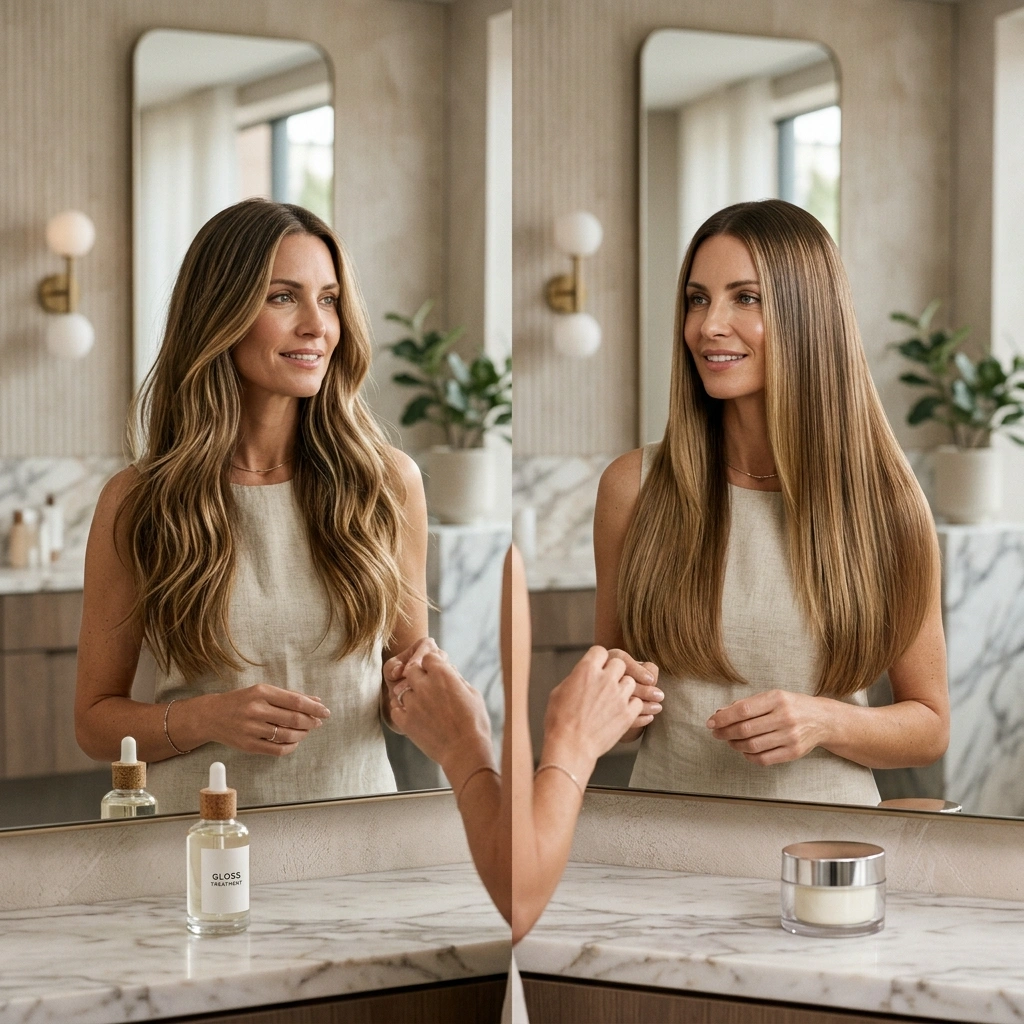
A hair gloss is a shine treatment that coats individual hairs and smooths the cuticle. Similar to how a clear polish completes a manicure, it functions as a topcoat for your hair.
Some glosses are completely clear, while others have a hint of colour that brightens your colour or cancels out brassy tones. This is why your colorist may recommend a glossing service to maintain fresh-looking highlights between full appointments.
What I love about it is that gloss is a semi-permanent treatment, so it fades over time, and it never leaves a harsh line as it wears off. No awkward re-grow drama!
How Hair Gloss Works, Scientifically
Each hair strand is covered by tiny overlapping scales known as the cuticle. When those scales lift, light scatters everywhere, and your hair appears dull, dry, and rough.
A gloss gives a thin layer to help flatten and seal those scales. What this does is give you smoother cuticles that reflect light back evenly. That’s the “glass hair” glow everyone’s trying to achieve on social media.
Most professional glosses have a slightly acidic pH, so the cuticle lies flat. The American Academy of Dermatology says being gentle and having cuticle-friendly habits will help keep hair looking healthier over time. It’s a bit of science that pays off in the mirror.
What Is Hair Lamination?
Hair lamination is a coating treatment that envelops each strand in a protective film-like layer. Suppose you are laminating a sheet of paper. Suddenly, it is smoother, sturdier, and much more resistant to wear and tear.
Conditioning agents, proteins, and film formers are usually found in lamination products. Together, they fill in microscopic spaces along the hair shaft and act to seal in moisture.
The payoff? Sleek, shiny hair that’s beautifully behaved. It’s a must-have for anyone battling constant frizz or wild flyaways.
How Does Hair Lamination Work
Lamination does not alter your hair colour, nor does it chemically restructure your strands. Rather, it creates a thin layer that covers the surface.
That coating does a few really nice things:
- Seals the cuticle for a smoother touch
- Adds a second reflective layer for more shine
- Fights frizz, even in humid weather
- Provides some protection against daily wear and styling
According to research summarised by Healthline, products with humectants and conditioning agents help hair retain moisture and fight damage. If you love getting into the “why” of hair care, their reviewed articles are a good, reliable place to start.
What Causes Dull, Frizzy Hair in the First Place?
It’s helpful to know what you’re actually fighting before you choose a treatment. Dullness and frizz usually come from a lifted or damaged cuticle, and a few everyday habits make it worse:
- Heat styling without protection slowly strips the outer layer
- Hard water, and shampoos with sulphates that strip natural oils
- Humidity that makes frizz puff up and swells the shaft of the hair
- Bleach and colour can leave strands porous and thirsty.
- Sun and chlorine exposure from summer days/pool time
Gloss and lamination both tend to hide the appearance of these problems, smoothing and sealing the surface. Simply knowing your root cause allows you to make better choices and keep the results longer.
The Real Differences Between Gloss and Lamination
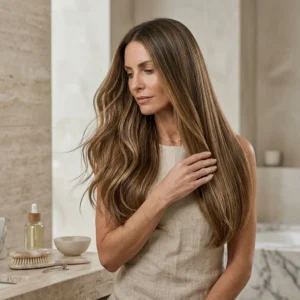
Okay, here it is, the part you’ve really come for! I’ll be as direct as I can.
Goals
- Gloss: adds shine, refreshes or corrects colour
- Lamination is used to smooth hair and control frizz.
Effect of colour
- Gloss: could be clear or coloured
- Lamination: no dyes used, colour neutral
- No suggestions.
The principal strength
- Gloss: that bright colour and mirror-like sheen
- Lamination: Long-lasting smoothness & frizz protection
How long will it go on
- Gloss: 2-4 weeks, usually
- Lamination: 3–6 weeks, depending on how often you wash your hair.
Best for:
- Gloss dull hair, colour fades, looks brassy
- Lamination: Hair that is coarse, frizzy, or unmanageable
The basic line is: Get a gloss if your color appears lifeless. If you’re a frizz-fighter with a mind of your own, lamination is your new BFF.
Benefits You Can Actually Expect
I want to be honest with you here because I have seen people expecting miracles and walking away disappointed.
Both treatments will improve the look and feel of the surface of your hair. It won’t damage your hair from the inside out or permanently change the structure of your hair. They are cosmetic fixes, not medical fixes. That expectation at the outset saves a lot of heartache.
But this is what you’re going to see:
- Smoother, softer hair
- More obvious shine
- Easier to detangle and do styles
- Fewer frizzy and flyaway hairs
- Rejuvenated colour (tinted gloss
For many of us, that’s enough to make us feel amazing about our hair.
Who Is the Best Candidate for Each?
Try a hair gloss if you:
- Looking to keep your hair colour?
- Flatness or brassy tones problem
- Want a quick shine boost that won’t last forever
By choosing hair lamination, you:
- Have frizzy or coarse hair
- Live in a humid climate (hi summer!)
- Want to smooth out your strands without wrecking your colour?
Curly or textured? Both look great, but check with your stylist first. Some lamination products can weigh down delicate curls, and you don’t want to sacrifice your bounce for flatness.
And a really important note: If you have a sensitive scalp, eczema, psoriasis, or any skin condition, check in with a board-certified dermatologist before you book. The AAD suggests patch testing any new products if you have sensitive skin and are prone to reactions. A two-minute test can save you a really bad week.
At-Home vs Salon: A Quick Reality Check
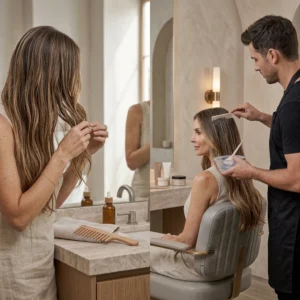
Both treatments have at-home versions, and they definitely have a place.” But it’s good to know what you’re getting into.”
- At-home glosses and glazes are less pricey, gentler, and a great pick-me-up between salon visits. They fade faster and have a softer effect.
- Salon treatments provide more potent, professional formulas and a trained eye. It’ll cost you more, but the finish will usually last longer and look more polished.
Honestly, my opinion? If you’re new, schedule an appointment for the salon version so you can see what it’s like to be “done right.” Once you’ve identified your target, home maintenance is a lot easier.
Common Mistakes to Avoid
I have made quite a few of these myself, so learn from my flops, please!
Too soon to wash. It will take time for both treatments to settle in. Allow the coating to cure properly by letting it sit for a minimum of 24 to 48 hours before washing again.
Using harsh shampoos. These treatments are washed away fast, with heavy sulphate formulas. To extend the results, change to a gentle, sulfate-free shampoo.
Looking for change that stays. They are semipermanent. They vanished. This is perfectly normal. Don’t be dismayed if you need to do some touch-ups.
No consultation. Don’t just snap a picture and hope for the best. Save yourself money and disappointment with a quick chat with your stylist about your hair type and goals.
Poorly coordinated treatments. If you overload your strands, you can stack too many services in a week. Give your hair room to breathe and space it out.
Expert Tips for Longer-Lasting Results
Want to keep that beautiful shine alive? This is what works after years of experimentation.
- Rinse in cold water. Hot water lifts the cuticle. Cool water helps keep it closed and shiny.
- Use a hydrating mask once a week. The moisture helps give a smooth finish and keeps hair flexible, not brittle.
- Turn off the heat tools. Coating protected at lower temperatures. Utilize a heat protectant whenever you utilize heat.
- 2. Sleep on satin or silk. Less friction, less frizz, and longer-lasting smoothness. Changed my pillowcase, and the week I did my frizz was way down!
- Maintenance of books on time. Colour and lamination touch-ups control frizz, with a gloss every few weeks.
Small rituals. Big shift.
Frequently Asked Questions
1. Are home hair glosses the same as salon gloss treatments?
Not really. The glosses you get at home will not be as intense and will fade more quickly than salon glosses. They are great for a quick pick me up, but generally a professional glossing service will give you a richer colour and longer-lasting shine.
2. Does lamination damage your hair?
It should be alright if you do it correctly. Lamination is a coating on the surface and does not alter the structure of your hair. That said, quality products and a good stylist are important, so this is not the place to skimp.
3. Can I get gloss and laminate at the same time?
Sometimes, but not normally in the same sitting. Ask your stylist to space them and time them so one treatment doesn’t counteract the other.
4. What is the true duration of these shine treatments?
Gloss lasts from 2 to 4 weeks. Lamination usually takes 3 to 6 weeks. How often you wash and the products you use can make a big difference to the length of that window.
5. Will my hair grow with this treatment?
No, and be wary of anyone claiming to be able to. Lamination and gloss make your hair look better and feel smoother, but they won’t make it grow faster. If you are concerned about thinning or shedding, see a dermatologist.
6. Are they safe for use in pregnancy?
Although many people utilize them without any issues, each person is unique. Always consult your doctor first, especially with regard to colored glosses.
7. Which one’s best for frizz?
Lamination wins frizz control. Its film-forming coating is designed to smooth and tame unruly strands even when the humidity spikes.
8. Do I need special products afterwards?
A nutritious conditioner and a shampoo without sulfates are crucial. They protect the treatment and keep your hair feeling soft and happy for longer.
So, Which One Should You Pick?
Simple. You have my rule of thumb. Want shinier, brighter, more color-fresh hair? Grab a gloss. Want smooth, frizz-free strands that behave in any weather? Lamination is your match.
And you know what? There are no wrong answers here, as long as your choice matches your hair goals. Both are great treats and confidence boosters.
If your scalp is sensitive, do a patch test and consult a stylist you can trust. Keep expectations realistic. If you do these three things, you’ll walk away loving the person in the mirror.
Check back on hair care growth for more honest guides and real-world tips. You can totally have your best hair days!
Medical Disclaimer: The content on haircaregrowth.com is provided for general informational and educational purposes only and is not intended to be a substitute for professional medical advice. If you notice any hair loss, scalp irritation, or have other concerns, see a licensed dermatologist or healthcare provider.