
Bond builders promise some of the boldest claims in hair care: stronger strands, reversed damage, rebuilt bonds, and hair that feels almost new again.
Some of those claims are based on sound science. Others extend the word “repair” as far as the evidence will permit.
Short answer: Yes. A good bond builder will help to repair damaged hair, reduce breakage and improve the feel and behaviour of chemically treated hair. It cannot biologically heal an old, damaged strand, reattach a broken hair, or make a bad split end disappear permanently.
This is a significant difference. The hair on your head is composed of dead cells. It does not heal as the skin does. Cosmetic products can reinforce, coat, fill, condition, or protect the fibre, but cannot restore weathered hair to its original condition. This limitation is very clear in a detailed scientific review of the structure of hair. Damaged hair can be physically or cosmetically improved, but once hair has left the follicle, it cannot be biologically regenerated.
This guide cuts through the marketing jargon to tell you what hair bonds are, when bond builders help, and when a trim or medical assessment is the better option.
Bond builders are most effective on hair that’s been damaged from bleaching, permanent colour, chemical straightening, perming, or heat styling. Depending on the formula, they can help to increase strength, improve elasticity, and reduce future breakage. They cannot regrow hair, treat hair loss at the follicle, replace missing cuticle cells, or permanently fuse severely split ends.
What Is a Hair Bond Builder?
A bond builder is a cosmetic treatment that seeks to strengthen structural bonds within and around the keratin network of the hair.
That definition is deliberately wide. “Bond builder” is not a formula or regulated treatment category. Different products may depend on maleate chemistry, peptides, amino acids, acids, polymers, proteins, or combinations of conditioning ingredients. Some are shampoos, masks, pre-shampoos, or leave-ins, while some are used during a chemical service at a salon.
That means two packages that say “bond repair” may not act the same — or produce the same results.
Some formulas are intended to interact with damaged areas within the fibre. Others mainly form a protective film, reduce friction, or improve the surface of the cuticle. But those superficial benefits remain. Hair that is easier to comb is less subject to pulling and may be broken less. But smooth hair does not mean that all the internal bonds have been restored.
When you review a product, you want to see clear technology, proper directions, and test results that relate to a meaningful result, like less breakage or more tensile strength. Claims like “molecular repair” sound impressive, but the strength of evidence is more important than the scale of the claim.
Hair Bonds, Explained Without a Chemistry Degree
To understand what a bond builder can fix, it helps to know what holds a strand together.
The visible shaft of hair has three major regions:
- The cuticle is the outer layer of protection. The cells are like shingles of a roof, one over the other.
- The cortex makes up most of the strand and is responsible for the majority of its strength, elasticity, shape and colour.
- The core region is the medulla. It may be broken, continuous, or absent, especially in finer hair.
In the cortex, there are organised keratin structures. They are stabilised by various types of chemical bonds and interactions.
Hydrogen bonds
Hydrogen bonds are relatively weak and temporary. They can be disrupted and reformed by water, humidity and heat. They help explain why wet-setting or blow-drying can change the shape of hair until it becomes wet again.
A 2024 laboratory study examined the role of weak hydrogen bonds in temporary shape changes in curly human hair, supporting the idea that these interactions contribute to reversible styling rather than permanent structural change (Journal of the Mechanical Behavior of Biomedical Materials).
Ionic or salt bonds
pH affects ionic interactions. Very high or very low levels of acid or alkali can change the electrical charges on the hair proteins and change the way the fibre behaves.
That’s one reason chemical services must be carefully formulated and timed. Extremes of pH can do more than just affect hair’s surface.
S-S bonds. Disulfide bonds.
Keratin contains cysteine residues (bearing sulfur). Disulfide bonds are strong links between cysteine residues. They provide hair with strength and long-lasting shape.
Chemical straightening and perming intentionally alter these bonds. Oxidative bleaching can also damage sulfur-containing structures. Research on sunlight-related hair ageing has similarly linked ultraviolet exposure with disulfide bond cleavage, greater porosity, surface roughness, and reduced mechanical strength (International Journal of Trichology review).
Peptide bonds and the keratin backbone
Keratin chains consist of amino acids linked by peptide bonds. Oxidation can be severe, damaging more than just a few isolated sulfur bonds. It can degrade proteins and interfere with several levels of the fibre simultaneously.
That’s important because “hair damage” is rarely one broken bond, waiting to be reconnected. In one strand, you may have oxidised proteins, lost surface lipids, lifted cuticle cells, cracks, more porous areas, and less strong sections.
No single product will replace all lost structures.
What Damages Hair Bonds and the Hair Fibre?

Damage accrues from a combination of chemical, thermal, mechanical, and environmental stress.
Bleach and permanent color
Bond-focused care is most obviously applied to bleaching. Oxidizing agents will reduce the pigment, but they also oxidize the cystine, disturb the cuticle, and weaken the cortex.
A study in International Journal of Trichology found that an electron microscopy study showed structural differences in the hair of people who regularly bleach, dye or straighten their hair, associated with frequent use of the methods, including cuticle damage.
See Does Hair Dying Damage Hair? for a more detailed explanation of the colouring process.
Perms, relaxers and chemical straighteners
They work by re-shaping the chemical structure that helps determine the shape of the hair. The desired change can also lead to a reduction of strength, particularly when processing overlaps of sections already treated.
If you use a bond builder in or after a service, it may help to prevent some strength loss. If it is poor or repeated, it does not make chemical processing economical.
Repeated heat styling
Heat can break hydrogen bonds, drive off water, alter surface lipids, damage the cuticle, and weaken proteins. The effect is dependent on the tool, temperature, time of exposure, number of passes, and condition of the hair.
If the hair is already bleached or very weathered, there is less room for more stress. A bond treatment can help with its durability, but it’s no substitute for a good heat protectant or safer styling habits.
Friction & tension
Rough towel-drying, aggressive brushing, tight hairstyles, extensions and repeated rubbing against clothing can wear away the cuticle and create weak points.
Damaged hair is fragile and breaks easily, the American Academy of Dermatology says. Suggestions include washing hair more gently, using conditioner after shampooing, detangling carefully, and avoiding high heat (AAD hair-damage guidance).
Sun, chlorine, salt water, and normal wear and tear
Untreated hair, from root to tip, gets more weather-beaten. Ends are older, washed more, sunned more, styled more, rubbed more.
Sun exposure may oxidize lipids and proteins. Swimming and rewetting may increase dryness, tangling, or mechanical stress. Bond care can help to support compromised lengths, but protection and gentle handling are still important.
What Can Bond Builders Realistically Repair?
The word repair is useful only when the outcome is clearly defined. Here is a more honest breakdown.
| Hair concern | What a bond builder may do | What it cannot do |
|---|---|---|
| Bleached or lightened hair | Improve strength, elasticity, manageability, and resistance to breakage | Restore removed pigment or replace all degraded keratin |
| Color-, perm-, or relaxer-related weakness | Reinforce vulnerable areas and reduce additional breakage | Make repeated chemical processing damage-free |
| Moderate heat damage | Improve feel, flexibility, and strength in some hair | Reverse severe burning or permanently altered texture |
| Rough, porous hair | Reduce friction and improve smoothness, depending on the full formula | Grow new cuticle cells |
| Split ends | Temporarily smooth or seal the ends and slow additional wear | Permanently fuse a severe split |
| Hair breakage | Help the remaining lengths resist snapping | Reattach a section that has already broken |
| Hair loss from the root | No direct role | Treat alopecia, hormonal shedding, nutritional deficiency, or scalp disease |
Chemically weakened hair
It is bleached, permanently dyed, permed, or straightened hair that is most likely to benefit from bond-building treatment.
A good formula can help the strand resist combing and styling. Less snapping, more stretch, and easier detangling are worthy objectives.
The key phrase is to improve the strand. This treatment will not turn processed hair into virgin hair. If parts of the cuticle are missing or the cortex contains cracks and cavities, a cosmetic formula can support those areas but cannot recreate the original cellular architecture.
Delicate hair
One of the most meaningful results to look for is less breakage.
A strand that bends and survives routine combing is more useful than one that merely looks shiny for a day. However, breakage can have several causes. A bond builder will not overcome constant tension, rough detangling, excessive heat, or repeated bleach overlap.
Think of it as one part of a damage-control routine, not permission to continue the habit that created the problem.
Moderate heat damage
Bond care may help hair that has become weak or brittle through repeated hot-tool use. Results are less predictable when heat has severely blistered the cuticle or permanently changed a curl pattern.
Stop using heat and chemical treatments until damage can be evaluated if wet hair feels gummy and stretches but does not regain its previous shape or breaks readily with very little stress. In worst cases, it may be necessary to gradually cut back the compromised sections.
Coarse hair, frizzy hair, porous hair
Some of the bond products really contribute to manageability and smoothness. But the bond technology may not receive all the credit.
Conditioning agents, silicones, oils, proteins, and film-forming polymers can all smooth down cuticle and reduce frizz and friction. That cosmetic improvement also helps the strand, because it takes less force to detangle it.
Not all products need to reestablish a disulfide bond for them to be useful. The product does have to be described truthfully.
A looser curl pattern
Damage can cause curls to become limp, uneven, or hard to define, so the more strength and conditioning you can give your curls, the better they’ll spring back.
There are no guarantees of full recovery. If heat or chemical straightening has permanently altered the hair, it will revert to its previous pattern.
What Bond Builders Cannot Repair?
Some damage is capped hard.
Dead hair cannot be healed.
The exposed shaft is devoid of blood supply and of any living mechanism of repair. It can change its physical properties but cannot begin healing itself.
They cannot fix a bad split end permanently.
A serum ties down the frayed fibres, reduces friction, and tidies up the end. That effect is not the same as fixing an intact strand.
If you have deep split ends, the best approach is to cut above the damage to repair them.
They are not able to replace the lost cells of the cuticle.
Exposed areas can be coated with conditioners and polymers. They cannot grow new cuticle scales on an existing hair.
Broken hair cannot be fixed.
If a section breaks off, it cannot be reattached with any topical treatment. The aim is to protect the remaining length as healthy hair grows from the follicle.
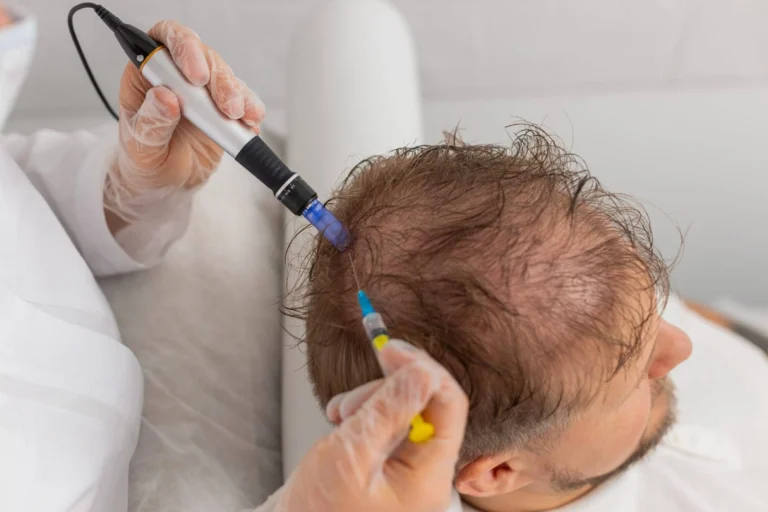
They cannot treat hair loss.
Breakage and shedding are different issues:
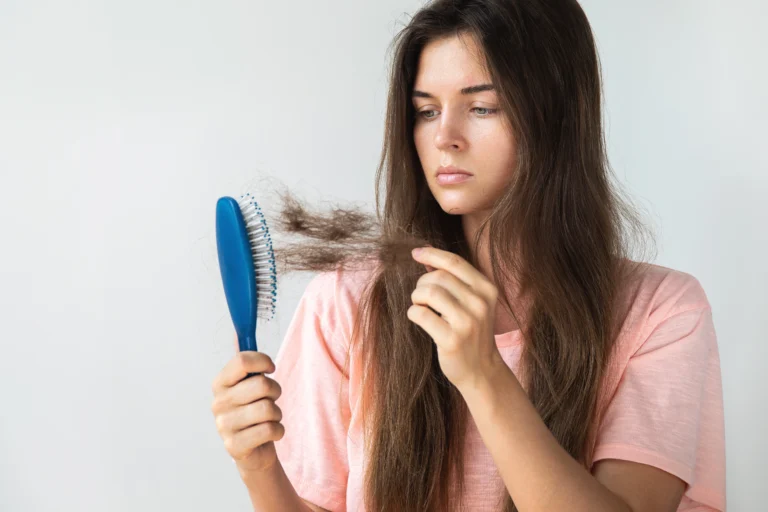
- Breakage produces shorter pieces snapping along the shaft.
- Shedding means a complete strand is released from the follicle.
- Hair loss can involve the follicle, growth cycle, immune system, hormones, medication, nutrition, illness, or scalp disease.
A fibre bond builder works at the hair shaft level. It does not induce a follicle nor cure alopecia.
The American Academy of Dermatology advises that people determine the cause of their hair loss before deciding on a treatment, because different conditions need different types of treatment (AAD hair-loss diagnosis guidance).
Bond Builder vs. Protein Treatment vs. Deep Conditioner
These categories are often treated as interchangeable, but they do different jobs.
| Treatment | Main purpose | Most useful when | Important limitation |
|---|---|---|---|
| Bond builder | Reinforce or support structural connections | Hair is weak after chemical processing or repeated heat | Technologies and evidence vary by product |
| Protein treatment | Deposit hydrolyzed proteins or amino-acid materials on damaged areas | Hair is porous, weak, or temporarily benefits from reinforcement | Results are cosmetic and formula-dependent |
| Deep conditioner | Improve lubrication, flexibility, softness, and detangling | Hair feels dry, rough, or difficult to manage | Does not necessarily provide internal reinforcement |
| Oil or serum | Reduce friction, add shine, and protect ends | Hair needs surface smoothing and easier handling | Does not automatically rebuild internal bonds |
| Heat protectant | Reduce thermal stress during styling | Any hair exposed to blow-dryers or hot tools | Does not make unlimited heat safe |
A formula may be in more than one category. The bond-building mask can also contain proteins, emollients, silicones and conditioning agents.
Hair may also require strength and softness. More often than not, if a strengthening treatment leaves lengths stiff, rough, or tangled, applying the treatment may not be the answer. Label accordingly, reduce frequency as needed, and make sure the routine has adequate conditioning.
“Protein overload” is a trendy term you’ll see on the internet but is not a clinical diagnosis. Stiffness can be caused by build-up, wrong formula, too many strengthening products, not enough conditioning, or continued damage.
Does Your Hair Need a Bond Builder?
If you have these concerns, you may get more out of a bond builder.
- Your hair is chemically lightened, highlighted, permed, relaxed or straightened.
- You may experience increased breakage after a chemical service.
- Usually, when you detangle, your lengths break.
- Hair has been damaged from repeated heat styling.
- Your curl pattern is damaged by heat or chemicals.
- A trained stylist has seen it all, including over-processed areas.
If your hair is in good shape and your biggest concern is a bit of dryness, static or frizz from humidity, you may not need a bond builder. You may find that a nice conditioner, leave-in or anti-frizz product will take care of those concerns more directly.
If you have these concerns, you may need a trim rather than another treatment.
- Splits are out of the ends.
- White nodes or obvious weak points develop along the strand.
- They fall apart when handled.
- Wet hair is sticky, and it snaps easily.
- A damaged section cannot be detangled without continued breakage.
How to Choose a Bond-Building Product
Begin with the damage, not the trend.
Select the correct format.
- Salon Additive: For use during a professional colour or chemical service.
- Pre-shampoo treatment: Use before shampooing and rinse off as directed on the label.
- Mask or conditioner: Strengthening claims coupled with softness and detangling.
- Leave-in treatment: It’s easy to use, but you have to be careful about the order and amount you use.
- Bond shampoo: Short contact time may be simply a cleansing aid in a larger system.
In a branded system, not all steps are required. Perhaps the product with the clearest technology and most relevant role is sufficient.
Read past the front label.
Try to find answers to these questions:
- What type of damage is the product meant to repair?
- Is there a technology or mechanism identified?
- Does the company report decreased breakage, increased strength, or some other defined outcome?
- Was it on hair fibres, on people, or just consumer perception?
- Are the results compared to untreated hair or a placebo formula?
- Is the claim that the company gives understandable enough information?
A percentage without a test method is not as informative as it looks. The “up to” results may represent the best possible result that may be achieved under ideal conditions and not what each individual user may expect to achieve.
Match texture to your hair
The strengthening ingredients are lovely, but a heavy mask can be too much for fine hair. Coarse or highly processed hair may need richer conditioning alongside bond care.
Curl pattern alone does not determine whether a bond builder is needed. Processing history, current breakage, strand diameter, and the rest of the routine are more useful clues.
How to Use a Bond Builder Without Wasting It
No magic bonding schedule. Products vary too much for one set of timing or frequency instructions to be accurate.
For the exact formula, follow directions.
So a practical routine is as follows:
- Make sure to identify the product type. Select whether it is pre-shampoo, post-shampoo, pre-conditioner, or final leave-in.
- Start with the suggested frequency on the label. More use of it does not mean more fixing of it.
- Apply on the affected area and apply it to the mid-lengths to ends unless it’s a scalp-specific product.
- Use enough to give a uniform coat. Over-styling hair can weigh a style down, and not in a good way.
- Keep conditioning in the routine. Stronger-feeling hair still needs lubrication and flexibility.
- Minimise damage. Less heat, easier detangling, and more careful chemical processing will help the improvement last.
- Not alone: Track breakage and shine. Beware of snaps when washing, combing, and styling over a number of wash cycles.
Discontinue use of product if burning, swelling, rash or continued itching occurs. Rinse as directed. Seek medical advice for a significant reaction.
Can Bond Builders Be Overused?
A bond builder doesn’t literally pack the hair with an unlimited number of new bonds. But if you use the wrong product, or get involved in an overly complicated strengthening regime, your hair can be left worse off.
Some warning signs could be:
- Hard or rigid parts
- More entanglement
- Hair feels coated or heavy.
- Hair feels less soft.
- Kinesiology tape used with therapy.
- Irritation of scalp from use of product outside intended area
Check the instructions first. Then consider reducing frequency, simplifying overlapping protein or repair products, and adding an appropriate conditioner.
If the breakage continues, the damage may be too great in the first place – or maybe there’s no structural damage at all.
Are Bond Builders Suitable for Children and Teens?
Healthy, unprocessed children’s hair typically does not require intensive bond repair. More relevant are gentle shampooing, conditioning, careful detangling, low-tension styles and minimum heat.
If a teen is colouring, bleaching, or heat styling their hair, a bond product may be considered, but age guidance and manufacturer directions should be followed. Never consider chemical services to be without risk because a bond additive exists.
Avoid cosmetic treatments around the eyes and on irritated skin. Use should be supervised by a parent or guardian when appropriate.
Common Bond-Builder Myths
Myth: Bond builders restore hair back to its virgin state
Reality: They may increase strength and performance, but processed hair is not the same as new, untreated hair.
Myth: A bond builder works, so you can bleach more often.
Bond care may actually reduce some damage. It can’t prevent every effect of oxidation, cuticle loss, or repeated processing.
MYTH: Bond builders fix split ends for all eternity.
Reality: A product can temporarily seal or smooth them. Split ends are not permanently deleted.
MYTH: All bond makers are alike
Reality: The category contains different ingredients, technologies, and levels of supporting evidence.
MYTH: Bond repair = protein treatment.
Reality: They can be combined into one formula, but the terms describe different proposed functions.
Myth: More expensive treatment is less damaging
Reality: Price does not establish penetration, mechanism, strength improvement, or suitability for your hair.
What the Research Can—and Cannot—Tell Us
Hair damage science, in general, is well known. Researchers can quantify changes in tensile strength, elasticity, protein oxidation, surface structure, porosity, and breakage.
For retail as a whole, the evidence is less clear-cut.
There are lots of proprietary technologies to build bonds. Public claims may be based on company-sponsored fibre tests, patents, salon observations, or studies that don’t compare multiple products under the same conditions. It’s not safe to use results from one patented ingredient to every bottle that says “bond repair.”
But that doesn’t mean bond builders are worthless. Thus, the most warranted conclusions are modest:
- Chemical and physical stress can damage multiple areas of the hair fiber.
- Cosmetic treatments improve the physical properties of damaged hair.
- There may be some bond-specific formulas to decrease breakage or increase strength.
- Performance will depend on the technology in use and the full formula.
- No cosmetic applied topically can fully regenerate a nonliving strand.
That is a more useful standard than asking whether the whole category is either a miracle or a scam.
When to See a Dermatologist
Damaged hair is treated with a bond builder. It is not a treatment for an inflamed, painful, or shedding scalp.
If you notice any of the following, see a board-certified dermatologist or other qualified health care professional.
- Sudden or rapid increase in shedding
- Spotty hair loss
- Wider part or receding hairline
- Smooth bare patches
- Scalp pain, ulcers, pus, or severe swelling
- Continued or severe flaking or itching of the skin
- Chemical burn hair loss
- Breakage was greatest with tight hairstyles
- Symptoms continue even after you stop taking the suspected product
This may be cosmetic weathering we know, or these signs may be on the follicle or scalp. Treatment must be cause-appropriate.
Frequently Asked Questions
Do bond builders work?
Some do seem to improve the strength, elasticity, manageability or breakage resistance of damaged hair. Results will depend on technology, formulation, type of damage, and correct use. Being a “bond builder” does not guarantee a certain result.
Are bond builders good for bleached hair?
A classic use case is hair that has been bleached and highly lightened. Oxidation can degrade the cuticle and internal protein structure. Weakness may be reduced by a bond treatment, but badly compromised sections may still need trimming.
Can bond builders repair heat-damaged curls?
They may help better-conditioned curls hold their pattern and improve moderate weakness. They can’t promise a reversal if the strand has been permanently altered by extreme heat.
How many times should I use a bond builder?
Follow directions on product use. A salon additive, pre-shampoo treatment, mask, and leave-in should not be placed on one universal schedule.
Do I need to condition after a bond repair?
It depends on the formula. Some treatments are followed by a conditioner; others are conditioning masks in themselves. Some leave-ins will say to apply before other styling products. Use as directed by the manufacturer.
Can I mix protein and bond repair?
Yes, if the products are compatible and your hair likes it. Do not stack several strengthening treatments automatically. Hair should be well-oiled and pliable enough to withstand handling.
Do bond builders grow hair?
No. They don’t stimulate the follicle. They may, however, help you to keep more of the length your hair has already grown by reducing breakage.
Bond builders do not lead to loss.
No, different things. Shedding starts at the follicle. Cosmetic treatment applied to the shaft is not a treatment for medical hair loss.
Are salon treatments better than doing your own?
They are for different purposes. One product for the salon may be for use during the chemical processing, and an at-home product may be for maintaining the hair between appointments. Because it’s “professional” doesn’t mean every hair on your head needs to be treated.
The Bottom Line
Bond builders are great for hair that has been compromised with bleach, permanent colour, chemical reshaping, or repeated heat. Realistic benefits include better-feeling strands, better manageability, and less breakage.
They aren’t the reset button.
It is not a cuticle cell replacement, broken hair reconstitution, split end repair, hair regrowth, or an unlimited chemical safety product. The best results are obtained when repair-oriented care is combined with gentler handling and less new damage.
If you’re unsure about buying one, ask yourself one simple question: Is my hair weak in structure, or does it just need moisture and easier detangling? That answer will save you more money – and more hair – than the loudest claim on the bottle.
Step two: Read How to Prevent Hair Damage Before It Starts and create a regimen to protect the progress your treatment makes.
Have you used a bond builder on bleached, coloured, relaxed, or heat-damaged hair? Tell us what type of damage you were treating and what actually happened, not only after the first use but after a few washes. Your experience can help another reader set more realistic expectations.
Medical Disclaimer
This article is for general educational purposes only and is not a substitute for diagnosis or treatment by a qualified medical professional. Bond-building products are cosmetics and do not treat hair-loss disorders, scalp disease, chemical burns or allergic reactions. Stop using any product which causes irritation. If you experience severe or persistent irritation or if your symptoms are rapidly worsening, consult a doctor.
Written By Mian Hussain.