Every morning, without thinking, I would reach for the same tight bun. Then one day, I saw little broken hairs all over my pillow and a thinning patch right where my elastic always sat. Does that describe you? If you love a quick bun but fear it’s wrecking your strands, stick with me.
Here’s the good news: You don’t have to give up your favourite look. The gentle way you do a bun can actually save your hair. I’m sharing nine easy bun ideas and the little tweaks that make a big difference for healthy, breakage-free hair.
Why Buns Can Damage Your Hair
Buns aren’t the villain in this story. The real problem is how hard we pull, what we use to hold things together.
Pulling your hair into a tight knot every day puts constant tension on the roots. Traction alopecia is a form of hair loss that can develop over time as a result of that continuous pulling. Tight hairstyles are a major cause of this condition, and the sooner you loosen up, the better your hair can bounce back, explain experts at the American Academy of Dermatology.
Here are the most common mistakes:
- Tightening the bun too much, pulling your hairline
- Metal clasps on rough elastics that snag and snap strands
- Wrapping your hair when it’s sopping wet – when it’s weakest
- Putting the bun in exactly the same place every day
- Night after night, in a tight bun, asleep
Once you know what is causing the damage, the fixes seem simple. Now on to the fun part!
The Benefits of Gentle Bun Styles

A bun is a real protective style if done right. It protects your delicate ends from friction, weather, and all that daily brushing that wears your hair thin.
A loose, low-tension bun can help you:
- Reduce breakage by dividing your lengths and ends
- Protect hair from the sun, wind, and dry air
- Skip the extra heat styling
- Save real time on busy mornings
That’s a lot of payoff for one simple style!
9 Easy Bun Hairstyles Without Damage
1. Loose Low Bun
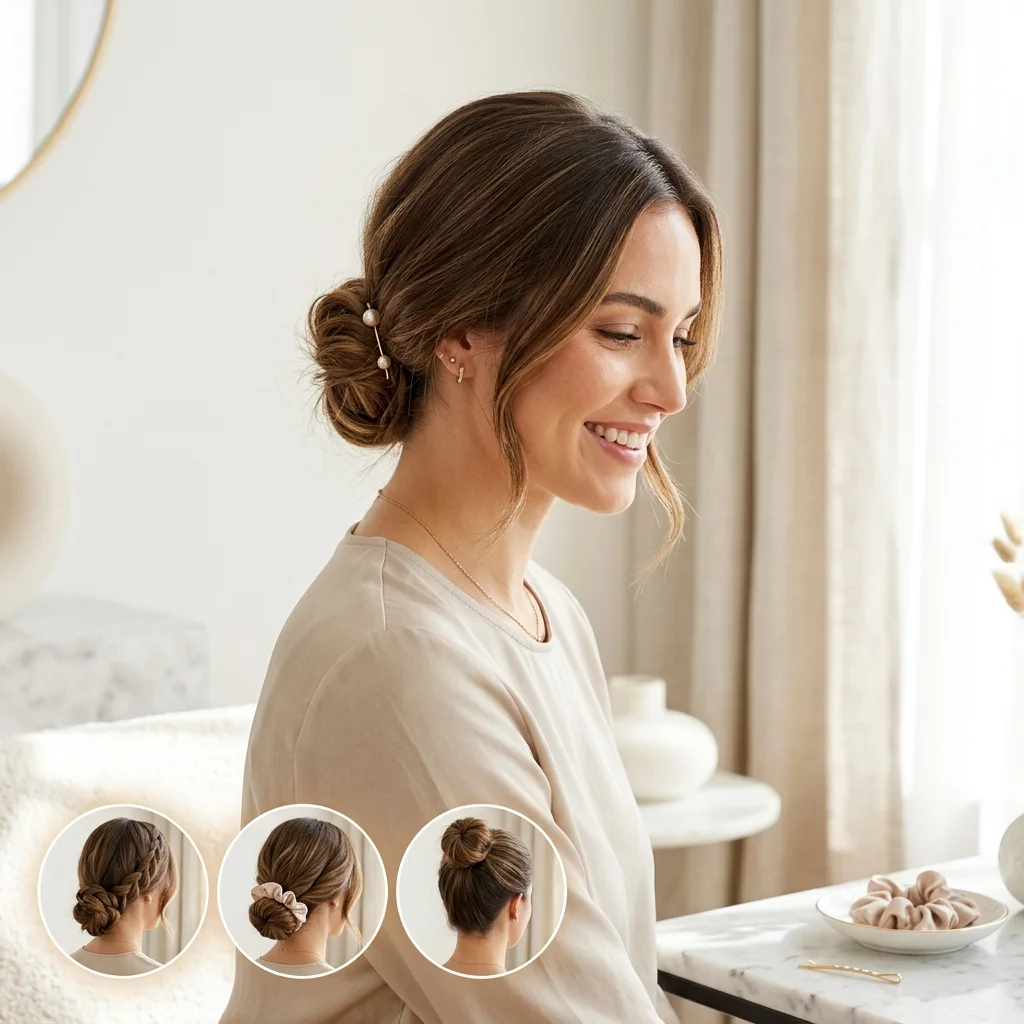
This is my go-to for everyday. Gather your hair into a ponytail at the nape of your neck, twist it loosely, and secure with a soft scrunchie. Keeping it low is less stress on your roots and hairline.
Tip: Keep it loose enough to slide a finger under. Make it again if it feels tight.
2. The Messy Updo
The idea here is to be imperfect. Flip the head forward, twist it loosely, and wrap it into a relaxed knot. To soften the look, pull out a few face-framing pieces.
You’re not slicking it all back, so your strands feel way less strain.
3. The Ballerina Bun (Soft Look)
You can still pull off a polished high bun without working your scalp out. Pull your hair up into a nice, comfortable ponytail and wrap it around the base. The trick is to stop when you feel tightness around your temples.
4. The Bent Bun
Divide your hair into two sections, twist each section, and then wrap them around the bun. The twists stay in shape with very little tension, so you don’t need to wrap super tight at all.
5. The Sock Bun (Soft Version)
A classic, and rightly so. Thread your ponytail through a doughnut of soft fabric and roll it down. Choose a fabric doughnut over a stiff foam doughnut and keep the ponytail down before you start rolling.
6. The Twisted Braid
Braid your hair first and then coil the braid into a bun. Braiding distributes the tension over the entire length rather than concentrating it in one spot. It’s elegant looking and comfortable all day long.
7. The Half Bun-Up
The rest is free to run; only the top section moves up. This one is so gentle on thin or fragile edges because it hits your hairline just right.
8. The Claw Clip Bun
Wow, this one really changed my mornings! Twist your hair up and pin with a sleek claw clip, not an elastic. No pulling, no catching, and you can drop it in one second when your scalp needs a break.
9. The Silk Bun, Overnight
Want your look to last overnight without the damage? Pull your hair into a loose pineapple-style bun at the top of your head and put on a silk or satin bonnet. Silk reduces friction beautifully, so you wake up with fewer tangles and breakage.
Best Practices for Damage-Free Buns
Whatever bun you pick, a few easy habits keep your hair happy.
- Use soft hair ties. Grab some fabric scrunchies, spiral coils, or chic claw clips. Avoid elastics with metal parts.
- Style on wet or dry hair. Wet hair is more prone to stretching and snapping, so let it dry a bit first.
- Take your bun out of the way. Alternate low, high, and side spots, so not all stress is on one area.
- Relax in the evening. Avoid wearing your hair in a tight knot while you sleep. Loose Pineapple is your best friend.
- Keep your ends wet. Apply a small amount of leave-in conditioner or a lightweight oil to keep the strands supple and less prone to breakage.
Common Mistakes to Avoid
I’ve done each of these, so take a warning from my pillow of broken hairs!
- Tug until your eyes feel lifted. If your style is snug, it will pull at your skin. Never get a headache from a bun.
- Rubbing too hard. Start at the ends and comb the hair with a wide-tooth comb. Tearing through snarls causes immediate breakage.
- Every day the same style. It is the repetition of a tight spot that stresses your follicles.
- Not heeding early warning signs. If you notice small bumps on the edge of your hair, pain, or a receding edge, you need to loosen up immediately.
- Bobby pins only. They scratch the scalp and pull out individual hairs. Use them judiciously.
If you notice bald spots, an expanding region, or ongoing shedding, consult a board-certified dermatologist. The American Academy of Dermatology provides some helpful guidance on early detection of hair loss, and real advice is better than a wild guess any day of the week.
Expert Tips for Healthier Buns
These are the tips I stand by, after years of trialling different styles on my own hair and delving into tonnes of dermatology research.
- Try a satin or silk pillow slip instead. Cotton causes friction that roughens the cuticle. The simplest upgrade you can perform is this one.
- Give your hairline a vacation. Let your hair breathe a couple of days a week and get out of the edges.
- Treat your scalp well. Healthy hair starts at the root. According to the National Institutes of Health, a healthy scalp and hair depend on good nutrition, gentle handling, and good circulation.
- Comb it out before styling. Much less tugging to get smooth hair without knots into a bun.
- Keep it loose. Always. If you don’t know, pick the loser one. Your hairline will thank you in the future.
Frequently Asked Questions
Can buns damage your hair?
Oh no, not if they’re loose. Tight buns every day cause tension and breakage, but a soft bun actually helps to protect your hair.
Can a bun make you lose hair?
If you style your hair tightly over and over again, you can get traction alopecia, which is hair loss caused by constant pulling. The fix is simple: loosen your styles and change positions a lot.
How do you tie a bun safely?
You can use a soft fabric scrunchie or a smooth claw clip. Keep the bun low and loose, and style on dry or damp—not soaking wet—hair.
Can You Sleep With Your Hair In A Bun?
Yeah, if it’s loose. A soft, high pineapple bun with a silk bonnet keeps your hair protected while you sleep without pulling on your roots.
Why does my head hurt from my bun?
A headache means your style is too tight and pulling on your scalp. Loosen it immediately to ease the tension and protect your hair follicles.
How frequently do you get to wear your hair down?
Leave a few days each week free. Take frequent breaks to keep your edges strong and healthy.
What are the best hair ties to avoid damage?
The gentlest are fabric scrunchies, spiral coil ties, and claw clips. Avoid hair ties with metal joints that will catch and break your hair.
Final Thoughts
And you can love your buns and maintain your hair health as well. The secret is softness: loose styles, soft accessories, a bit of variety day to day.
Try one of these nine ideas tomorrow morning and see how your scalp feels. No tugs. No pain. A style that suits you perfectly. Your hair has been asking for this kind of care, and it will thank you, believe me!
If you notice shedding or thinning that’s out of the ordinary or doesn’t get better, take a trip to a board-certified dermatologist for personalised advice. The right help and good habits make the difference.
Disclaimer: This article is for informational purposes only and is not intended to be medical advice. If you have itching that won’t go away, pain, hair loss, redness, or a lot of scaling, see a board-certified dermatologist.
Written by Mian Hussain.