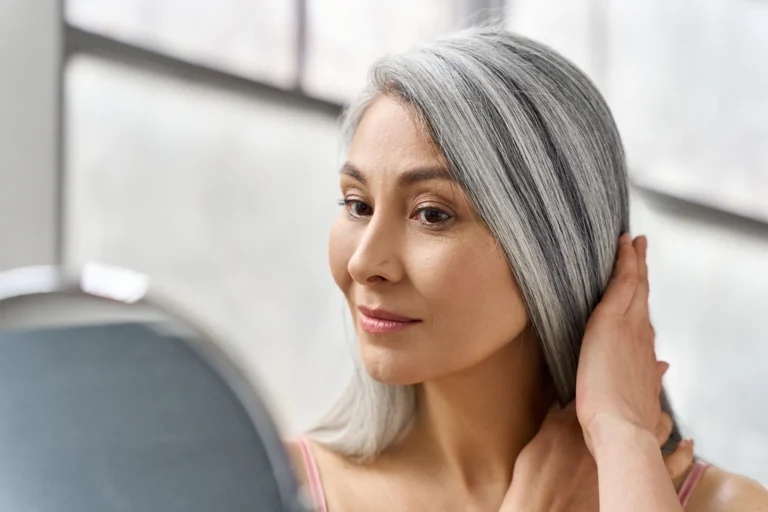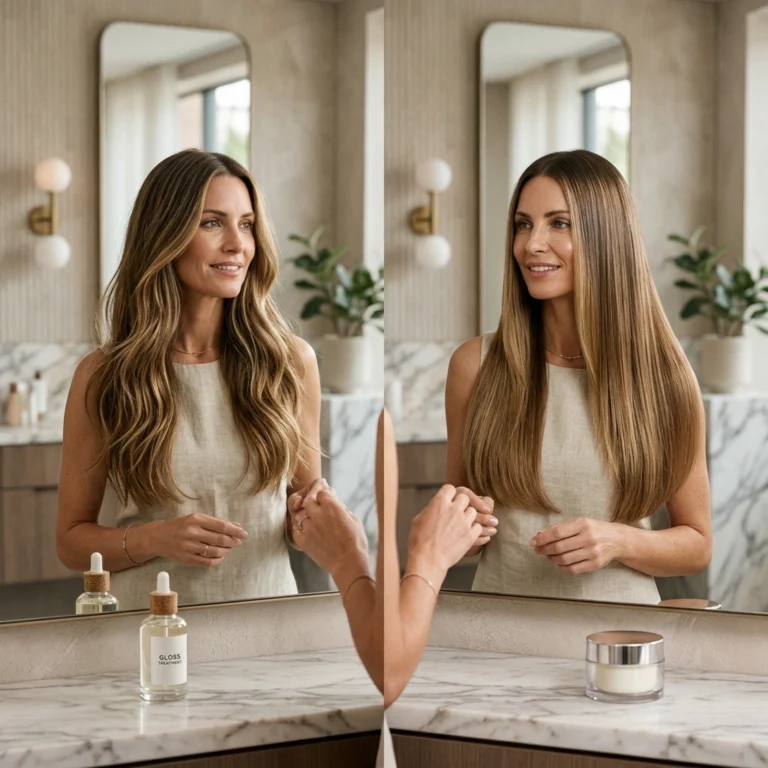
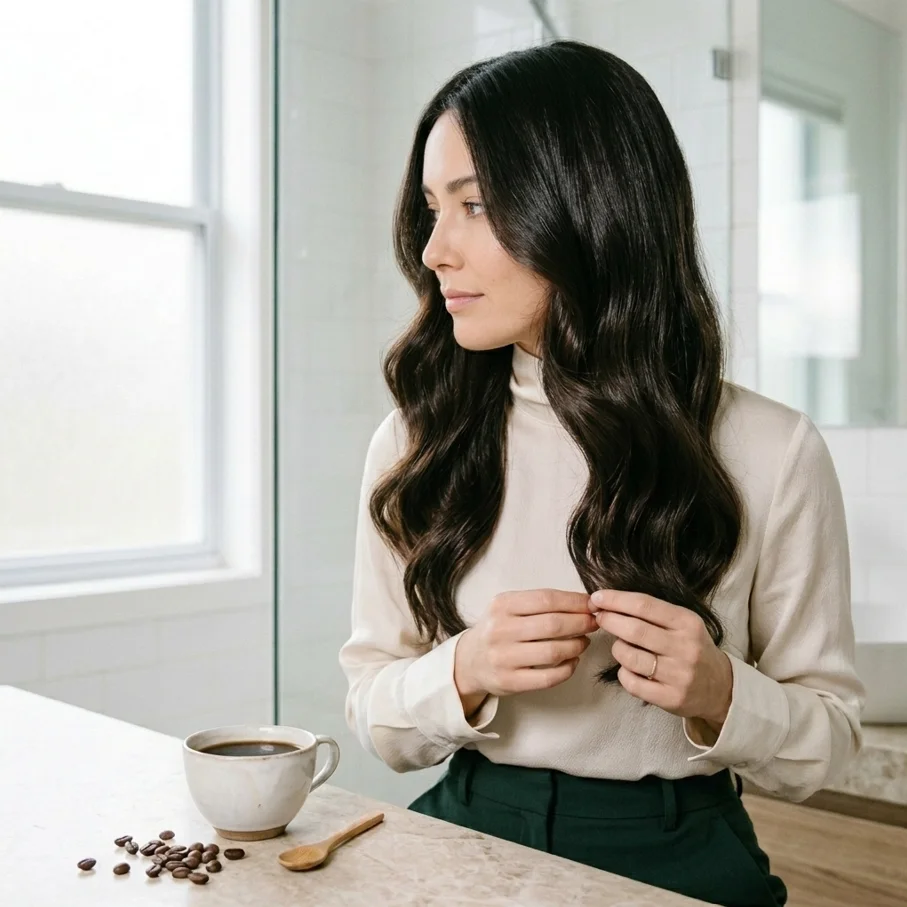
I admit, the first time someone told me to pour old coffee on my hair, I laughed. It was one of those DIY beauty hacks people swear by, but it never really lives up to the hype. But I had half a pitcher of cold brew in the fridge, and curiosity got the better of me.
I shampooed my hair and then, from root to tip, slowly poured the cooled coffee through the length of it. I let it sit for a few minutes and then rinsed it out with water. I didn’t expect a whole lot. But when my hair dried, I found a surprising change. It appeared to have a better shine and a softer feel and to look a little richer and fuller. It wasn’t a major change, but it was enough that I wanted to try it once more.
That simple experiment became a regular part of my hair care routine. I continued with the coffee rinses, and also did some research to determine if they really did improve the look of my hair, and if the benefits were backed by science, or just my own experience.
If you’ve dealt with dull, lifeless hair, you’re not alone. Sun exposure, heat styling, product buildup, pollution, and hard water are all everyday occurrences that can leave hair flat and dull. Among the many natural remedies people swear by, coffee rinses are popular because they’re cheap, easy to make, and often praised by the people who use them.
So, are coffee rinses really effective or just another internet viral trend? In this guide, we’ll look at what the science says, the realistic benefits you can expect, and how to use a coffee rinse correctly without getting sticky, messy hair.
What Exactly Is a Coffee Rinse?
One of the easiest DIY hair treatments you can try is a coffee rinse. Make a new pot of coffee, and when it is totally cool, pour it over your hair that has been shampooed and is damp and clean. From the roots to the ends, gently massage your hair. If desired, leave on for 5 to 10 minutes. Rinse thoroughly with cool or lukewarm water. And that’s the end of it.
So why do so many people keep coming back to this simple kitchen cure?
In most cases, there are only a few reasons to be attracted to someone:
- They want their hair to be shinier and healthier without paying for yet another hair product.
- They’ve heard that caffeine can be beneficial to healthy hair and wonder if brewed coffee will have the same effect.
- They like a natural, inexpensive remedy with something they already have at home.
But there is one important difference that is often overlooked: coffee and caffeine are not the same.
Brewed coffee is a complex beverage with hundreds of naturally occurring compounds, including antioxidants, organic acids, minerals,
aromatic oils, and caffeine. Caffeine is the most famous component of coffee, but it is only part of the puzzle.
This is an important distinction, because the overwhelming majority of scientific research is done on pure caffeine – the concentrated ingredient used in lab studies, or added to shampoos, serums, and scalp treatments – rather than brewed coffee itself.
So the evidence for coffee rinses is different than the evidence for caffeine. Coffee rinse can give hair a temporary, shinier, smoother look, and boost the richness of darker hair colours. But the best scientific evidence for stimulating hair growth or improving scalp health is for caffeine, rather than brewed coffee.
Understanding this difference helps to establish realistic expectations. Coffee rinses could be a nice addition to your hair care routine, but don’t assume they’re a surefire hair growth treatment just because caffeine has shown promise in lab research.
The Science: What Caffeine Actually Does

Now that is where the fun begins. Most people drink coffee for a morning pick-me-up, but researchers have found that one of its natural compounds may surprisingly influence hair follicles. The problem is that the evidence is more complicated than many social media posts make it seem.
Molecules. PubMed Central. 2025 review how caffeine affects hair follicles. Available from: One thing that really hit home for me personally was that caffeine doesn’t just sit on the surface of the scalp. It can reach the hair follicle, where concentrations up to 10 times higher than in the surrounding skin have been detected.
Imagine a hair follicle as a small reservoir. Some compounds can stay in contact with the hair root for a longer time than they would on the skin surface. They do not get washed away immediately, but accumulate in the follicle. This may explain in part why caffeine has generated so much scientific interest in research into hair care.
- But it’s worth noting that much of this evidence comes from studies with purified caffeine in controlled lab settings or specifically formulated hair products, not brewed coffee itself. A coffee rinse may expose the scalp to some caffeine, but researchers are still not sure if it delivers enough caffeine to cause the same biological effects seen in these studies.
- Stimulation of CAMP Caffeine blocks an enzyme called phosphodiesterase, which increases the concentration of a signalling molecule called cAMP. More cAMP stimulates cell division and activates the cells.
- Antioxidant effects. Caffeine destroys free radicals – unstable molecules that can damage skin and follicular cells.
- Chlorogenic acid Coffee is another source of this polyphenol and has its own antioxidant and anti-inflammatory benefits.
You may now rely upon it. This is the real thing. The same review points out that most clinical studies on Caffeine and hair were of poor quality and often lacked appropriate control groups. The promising lab results are also mostly from Caffeine in carefully formulated formulas, not a mug of coffee poured on your head. So the building blocks are real, but a home-made rinse is not a proven medical cure. Remember that in the back of your mind.
How Coffee May Boost Shine
Ever wonder what the real secret to that shiny finish is? It all depends on your hair cuticle, the outer layer of overlapping scales on each hair strand. The flat, smooth cuticle reflects light evenly, so your hair shines. Lifted and rough, the hair looks flat and tired.
Coffee is acidic. One of the biggest reasons you see an instant lift in shine is when a mild acid rinse helps lay that cuticle flat. It’s the same concept as the diluted apple cider vinegar rinse, which many people swear by.
And there’s a bonus. Massage the rinse into your scalp, and you’re giving your scalp a moment of stimulation. That gentle massage feels lovely and helps healthy blood flow, which is part of how follicles get their oxygen and nutrition.
The Potential Benefits
Ok, so let’s get to the caffeine hair benefits people want to know:
- Antioxidant support: Coffee contains caffeine and chlorogenic acid, so it’s a tasty little antioxidant hair treat that may help to protect cells from oxidative stress.
- Temporary shine boost: The mild acidity smooths the cuticle for a glossier look.
- Scalp stimulation: The massage, when applied, is pleasant and helps circulation.
- A faint hue. Coffee can add warmth and depth to darker hair and help blend the look of a few stray grays.
Don’t get too excited just yet. Coffee rinse is a feel-good beauty ritual. This is not a cure for hair loss and not a substitute for your dermatologist’s advice.
How to Do a Coffee Rinse: Step by Step
Want to give it a shot? My bathroom is my lab, and it has been perfected by endless experiments!
- Make strong coffee. Nearly two cups. Awesome regular brewed coffee, and yes, leftover morning coffee totally counts.
- Allow to cool completely. Sorry, we can’t do this one. Hot coffee on your scalp is uncomfortable. Anything hot near your skin is a really bad idea.
- Shampoo number one. Wash as usual so your hair is clean and ready to absorb the rinse.
- Pour it on. Leaning your head back, slowly pour the cooled coffee over your head. Collect the runoff in a bowl and reuse it.
- Rub in gently. Massage for a couple of minutes into your scalp and the length of your hair.
- Leave it be. Switch it on for 3-5 minutes.
- Rinse in cold water. No shampoo needed here. If you want, follow up with your regular conditioner.
Use this once a week and see the results on your hair.
Best Practices for a Coffee Rinse
Small habits can make big changes:
- Use black coffee, no sweetener, chilled. No milk, no sugar, no flavor syrups.
- Coffee can stain light grout and fabric, so protect your shower and towels.
- Do a quick patch test first, particularly if you have sensitive skin.
- Pair it with the larger actions dermatologists recommend in the AAD’s daily guide to hair care, such as limiting heat styling and going easy when you detangle your hair.
Who Should Be Cautious
For most healthy adults looking for a little extra shine, a coffee rinse is low-risk and actually fun to try out. If you: Slow down or check with a pro first
- If you have a sensitive, irritated, or damaged scalp
- Eczema, psoriasis, and more Scalp conditions
- Very light blonde or colour-treated hair is prone to unwanted tinting.
- Look for sudden or excessive shedding.
The last point is very important. If you are losing hair, it is better to see a board-certified dermatologist, rather than trying home remedies. The sooner you seek treatment, the better; no kitchen rinse can replace proper medical attention.
Common Mistakes to Avoid
I have made a few of these myself, so take heed of my flops:
- Steaming hot coffee. Let cool down completely. Your safety and comfort are always our priority.
- Cream or sugar. They leave residue. Your hair is sticky.
- Every single day. That’s enough, once a week. Too much acid rinse can backfire.
- Pray for a miracle. Yes, twinkle! Not a fix for thinning hair.
- No patch testing. A few minutes now can save you frustration later.
Expert Tips From My Own Routine
- Make it stronger if your hair is dark. A stronger pot will give brunettes and black hair a richer hue and deeper shine.
- Use the runoff again. Catching and re-pouring the rinse lets more coffee go through each string.
- Cool finish. A final rinse with cool water closes the cuticle for extra shine.
- Verify your results. Snap a ‘before’ shot and then one after a month of weekly rinses so you can judge fairly.
- Develop smart habits. Good nutrition, gentle handling, and heat protection do most of the heavy lifting when it comes to hair health in general, which is what gives real shine.
Frequently Asked Questions
Claim: Coffee rinse makes hair shine.
Many, myself included, see a temporary shine boost from the mild acidity of coffee kissing the cuticle. Individual outcomes will vary.
Can rinsing hair with coffee help it grow?
Lab studies of Caffeine and follicles are promising, but a home-made rinse isn’t a proven hair growth treatment. Don’t expect a miraculous regrowth.
Will it stain my hair?
It can give a subtle warmth to darker hair. Use with caution, the product may stain very light, blonde, or colour-treated hair.
We recommend a coffee rinse once a week.
“Once a week is a good place to start.” You don’t have to do it every day,
Does it leave a coffee smell?
It may smell a little for a while, but it usually goes away quickly, especially after conditioning.
Is caffeine good for the scalp?
A review of a cosmetic ingredient cited in the Molecules study concluded that Caffeine was safe and well-tolerated in cosmetics at typical concentrations. But, still, test a patch first.
Can you sleep with coffee in your hair?
I wouldn’t. A quick 3 – 5 minute application does the trick, and keeps your pillow case clean.
The Bottom Line
A coffee rinse is a cheap, fun, and relatively harmless way to add a bit of extra shine. And the shine is real, mostly because the acid in coffee smooths the hair cuticle, with antioxidants like caffeine and chlorogenic acid as a nice bonus. It’s not a magic bullet for thinning hair, nor is it a substitute for advice from your dermatologist.
So if you’re curious, go ahead and give it a try this weekend! Have realistic expectations, listen to your scalp, and enjoy the little ritual. Sometimes a little experiment is just what your hair care routine needs.
Medical Disclaimer: This article is for informational and educational purposes only and is not medical advice, diagnosis, or treatment. Always consult a board-certified dermatologist or qualified healthcare professional before starting any new hair or scalp treatment, especially if you have a known allergy, sensitive skin, or existing scalp condition. If irritation or any other adverse reaction occurs, stop use and consult a doctor.
Written by Mian Hussain.