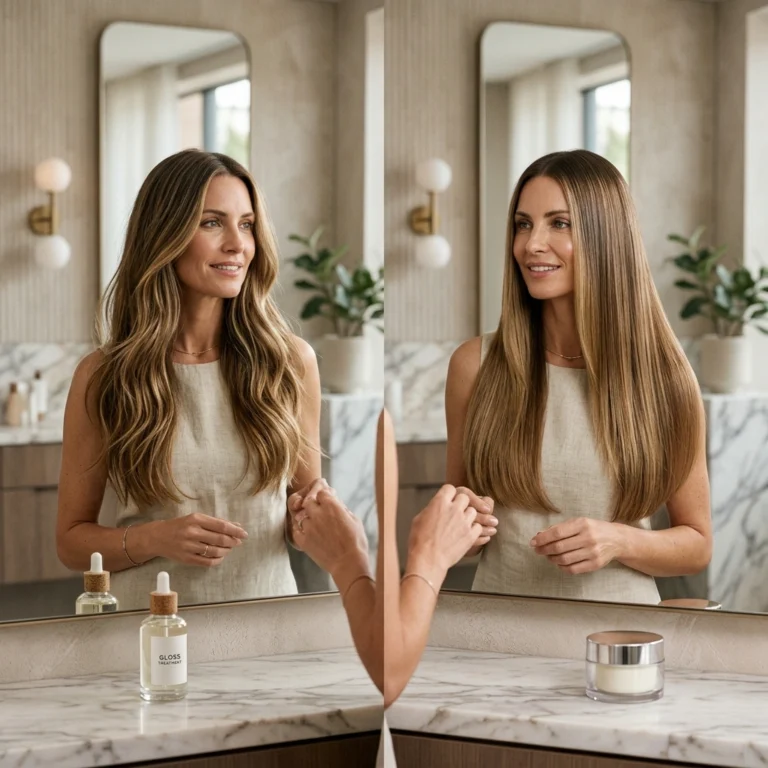

When your schedule is jam-packed, hair care can easily become another item that always gets put on the back burner. Between professional responsibilities, family obligations, chores, exercising, and other daily commitments, it is often impossible to find an hour each morning for hair care.
Luckily, great hair care doesn’t have to be complicated or time-consuming. Simple washing, conditioning, mild treatment, and basic protection are parts of a routine that can help keep your hair manageable and healthy-looking without taking up too much time.
The trick is to focus on what your hair actually needs and not have a huge list of products or a very complicated routine.
Here are some practical hair care tips for busy professionals, covering efficient hair care, how often you should wash your hair, easy hairstyles, product recommendations, and tips for different hair types.
Why You Need A Basic Hair Routine
If you are short on time, it is hard to maintain a complicated routine. It’s far more likely that a simple approach will become a habit.
You don’t need a dozen products to have fabulous hair. The fundamentals are usually more important:
- Washing your hair when it is greasy or dirty.
- Use conditioner when moisture or detangling is needed.
- Treat wet hair with care.
- Do not overexpose yourself to heat.
- Steer clear of haircuts that tug at your hair all the time.
- Select items that are appropriate for the demands of your scalp and hair.
The American Academy of Dermatology says that how often you wash your hair should depend on how fast it gets dirty or greasy, not on a set schedule. The type of hair should also help inform product selection and overall care strategy.
This method is great for busy people as you don’t have to add extra steps. Develop a routine around your actual hair and not some generic schedule.
How to Create an Easy Hair Care Schedule That Fits Your Time
Simple hair care routines do not need to be complicated morning and evening routines. Instead, divide it up into three categories: daily maintenance, wash days, and occasional care.
Daily Hair Care Routine in 5 Minutes
Most days, these steps are enough to maintain your hair:
- Lightly comb through hair if necessary.
- Control visible frizz and flyaways.
- If necessary, add a small amount of leave-in or styling product.
- Choose an easy, comfortable hairdo.
- Avoid excessive brushing or restyling during the day.
If your hair is already clean and manageable, you don’t need any more products.
The goal is to work with the hair, not work on it all the time.
A Fast Weekly Hair Care Routine
Your wash day routine will be different based on your hair and scalp type, but a basic one might include:
- Shampooing the scalp.
- Conditioning the lengths and the ends.
- Slowly detangling.
- Let your hair dry without rubbing it aggressively.
- Apply a leave-in product if needed.
- Whenever possible, allow your hair to air-dry until partially dry.
Every now and then, a deeper conditioning treatment can be used on especially dry or hard-to-manage hair, but this is not necessary for everyone.
Don’t Make The Routine Too Complicated
One of the easiest ways to save time is to minimize the number of decisions you have to make.
Concentrate on the essentials rather than keeping multiple products that serve the same purpose. For instance, you may only require:
- A shampoo suitable for your scalp
- A conditioner suitable for your hair
- A detangler or leave-in spray, if you need it
- Heat protectant for hot tools
- One styling product for the look you want
It’s easier to see what the hair likes with a smaller collection of products, and it’s easier to care for.
Hair Washing and Conditioning Time Saving Tips

Washing hair doesn’t have to be time-consuming.
How Often Should Busy People Wash Their Hair?
There is no one washing frequency that fits all.
You might need to shampoo more often if you have an oily scalp, but if you have dry, curly, textured, or thicker hair, you may be able to go longer between washes. The deciding factor is the condition of your scalp and hair.
Rather than washing every day just for the sake of it or purposely not washing for a few days, the advice is to look out for signs such as:
- Extra oil
- Sweat or dirt build-up
- Buildup of product
- Headache
- Scalp issues
- Any marked change in hair texture or appearance
Make Shampooing A Whole Lot More Efficient
Shampoo is really for your scalp, where oil, sweat, dead skin cells, and product buildup collect.
In general, you don’t need to scrub hard all the way through the hair. For normal cleansing, applying shampoo through the lengths is usually sufficient. Dermatologists recommend applying shampoo to the scalp, not distributing it throughout the full length of the hair.
Use fingertips, not fingernails, and rinse thoroughly.
The Right Conditioner Will Save Your Time
Conditioner helps with manageability and detangling.
Conditioner is often most beneficial when applied toward the ends, especially for fine or straight hair. If you have curly or dry hair, you might want to condition more of the length.
You leave the conditioner on to work, and you can do the rest of your shower routine while it’s working. It’s a step that fits easily into a busy schedule and doesn’t add a lot of extra time.
What If You Don’t Have Time to Wash Your Hair?
Sometimes, it is simply about making it through the day.
If the scalp is not very oily, it is sometimes better to refresh the current hairstyle than to wash it. Depending on your hair type, this might include:
- Softly reshaping the hair or brushing
- Rejuvenating curls or waves with a product suitable for the hair
- Dabbing a little leave-in conditioner on dry ends
- Making a braid, bun, ponytail, or other easy style
It is best not to pile styling products on top of existing buildup. In many cases, a good wash will work better than trying to hide the problem with more product.
Simple Hair Care Tips for Busy Mornings
When a low-maintenance hair care routine is most useful: in the mornings.
Detangle Right Away
Brushing aggressively from the roots should not be done to prevent knots.
Instead you:
- If needed, section hair into manageable pieces.
- Start from the ends.
- Work upward slowly.
- Use a suitable comb or brush.
- If you meet resistance, don’t pull; just loosen the knot a little.
Wet hair is more prone to breaking. The American Academy of Dermatology advises against rough handling and suggests proper detangling techniques. For tightly curled or textured hair, wet detangling may help reduce breakage.
Go for Low-Maintenance Hairstyles
Having a couple of good styles to fall back on can save a lot of time.
Think about your hair type and length:
- Loose ponytails
- Small buns
- Simple braids
- Claw-clip styles
- Half-up styles
Avoid pulling your hair into styles that are too tight. Constant pulling from tight ponytails, buns, braids, extensions, or similar styles can result in traction alopecia, a kind of hair loss.
A good rule of thumb is that if a hairstyle hurts, feels too tight, or is uncomfortable on the scalp, it should be loosened.
Multi-Purpose Products
Multi-purpose products are especially handy when time is short.
A good leave-in conditioner, for example, can help with detangling, controlling frizz, and general manageability. Some leave-in conditioners also contain heat-protecting ingredients, but this is not universal, so read product labels.
Quick Hair Care Tips for Different Hair Types

Your hair’s thickness, texture, and moisture requirements should all be considered when creating your hair care regimen.
Sleek Hair
Straight hair can get oil and buildup relatively quickly, especially if the scalp produces too much oil.
Helpful practices:
- Choosing the Right Shampoo for Your Scalp
- Avoid heavy products that are applied directly to oily roots.
- Condition the ends as required.
- If your hair tends to feel heavy quickly, use lightweight styling products.
Curly Hair
Brushing too much can ruin the natural pattern of wavy hair.
Good practices include:
- Carefully untangling.
- If you need to, use a light leave-in product.
- Don’t brush unless your waves have already formed.
- Dry the hair with as little handling as possible.
Wavy hair
Wavy hair generally does well with regular moisture and gentle treatment.
A sensible routine might include:
- Regular conditioning.
- Detangling with enough moisture.
- Using leave-in conditioner when it’s beneficial.
- Less brushing.
- Using easy curl-refreshing techniques between washes.
Coily Hair & Textured Hair
Extra-gentle handling is usually needed for coily and tightly textured hair.
Think about this:
- Keep up proper conditioning.
- Detangle in sections carefully.
- Limit unnecessary manipulation.
- Use loose or protective styles as appropriate.
- Avoid frequent pulling of the hairline.
The best routine will depend on your individual hair texture, density, scalp condition, and styling habits.
Fine / Thin Hair
Fine hair is prone to becoming heavy.
Recommended practices are:
- Using lightweight conditioners and styling products.
- Using heavier products sparingly.
- Keeping the product layering light.
- Opting for less manipulative and simpler styles.
If your hair is truly thinning or falling out more than normal (not just fine hair), don’t assume the cause is only a styling issue. Hair loss may be due to many causes and may require professional evaluation.
Thick or Long Hair
If you have long or thick hair, organization can save you a lot of time.
Parting the hair when washing or detangling will help make it easier to manage. Reducing daily restyling can also be achieved through simple braids, loose buns, or other low-manipulation styles.
How to Keep Your Hair Healthy With the Least Effort
Protect Hair From Too Much Heat
You don’t have to give up your blow dryer, flat iron, or curling iron. The goal is just not to overheat unnecessarily.
Where possible:
- Let hair air dry until it is about halfway dry before styling.
- Use low or medium heat settings.
- Reduce hot tool usage.
- Apply heat protectant according to product instructions.
Dermatologists recommend limiting your heat exposure, as repeated heat styling can damage hair over time.
Handle Wet Hair with Care
Rubbing hard with a towel can create unnecessary friction.
Alternatively, wrap your hair in a towel or a soft T-shirt, or squeeze it to remove excess moisture. Do not rub the hair back and forth.
This slight change takes very little extra time, but makes the routine a great deal gentler.
Protect Your Hair At Night
If your hair gets tangled overnight, try sleeping in a loose style or using another method to minimize friction and tangling.
The primary goal is to avoid excessive tension. A simple loose braid or similar easy style to keep hair manageable makes the need for an elaborate nighttime routine unnecessary.
Avoid tight hairstyles on a daily basis.
A tight ponytail is convenient, but repeated tension on the same areas can cause breakage and eventual traction hair loss.
We recommend changing your hairstyle and choosing looser options for everyday wear.
How to Choose Hair Care Products When You Are in a Hurry?

If time is scarce, the product choice should make the routine simpler, not harder.
What are the real needs for products?
For most people, the basic collection can be simple:
- Shampoos, conditioners
- If needed: leave-in conditioner or detangler
- Thermal protectant
- If needed, a styling product
Not every product is suitable for every specific hair type.
Select Products According to Your Actual Hair Needs
The products you use should be determined by your scalp and hair condition, not by advertising.
Think about these questions:
- Does my scalp get oily quickly?
- Is the hair dry or is it tangled?
- Is the hair fine, coarse, curly, or straight?
- Do you often use heat to style your hair?
- Is the hair dyed or chemically treated or regularly styled?
Answers to these questions can help identify products that are actually useful.
Dealing With Common Hair Problems When You’re Short on Time
Frizzy Hair
If your hair is dry, damaged, or frequently handled, frizz tends to get worse.
Frizz can be tamed with a good smoothing or leave-in product, a dab of which can be applied after hair is gently detangled and conditioned properly.
Dry Hair
Conditioning is essential if the hair is dry. Stay away from damaging activities such as excessive heat or rough handling.
Oily Hair
The frequency of washes for a scalp that gets greasy quickly should be based on the scalp’s needs, not a set schedule.
Tangles & knots
It’s usually easier to detangle gently and regularly than it is to try and deal with several days’ worth of tangles all at once.
You can also use a conditioner or other detangling product to make this easier.
Split Ends
Products cannot permanently fix a split end, but they can temporarily make damaged ends look better and be easier to handle. If you’re experiencing ongoing splitting, it’s best to minimize mechanical and heat damage and get regular trims.
Hair Care Routine (10 Minutes) For Busy Days
If time is particularly tight, the following sequence can be employed:
- Minutes 1–2: Gently comb through hair.
- Minutes 3–4: Apply a small amount of an appropriate product to smooth or refresh the hair.
- Minutes 5–7: Pull your hair into a simple style, such as a loose ponytail, braid, bun, or half-up.
- Minutes 8–10: Tweak any visible frizz or flyaways with small adjustments.
If you’re using a hot tool, allow more time and use proper heat protection.
The aim is not a perfect hairstyle but a neat appearance that will be easy to manage without too much trouble.
A Simple Weekly Hair Care Routine
There’s no need for a complicated calendar with a busy schedule.
|
Timing |
Basic Task |
|---|---|
|
Daily |
Gentle detangling and easy styling |
|
Wash days |
Conditioning and shampooing |
|
As required |
Leave-in or Detangler conditioner |
|
Occasionally |
If necessary, additional conditioning treatment |
|
Regularly |
Evaluation of scalp and hair health and hair tips |
This schedule is adaptable according to hair type and scalp condition.
7 Hair Care Mistakes Busy People Should Avoid
Some time-savers can create more trouble in the long run.
The following habits must be avoided:
- Brushing vigorously.
- Overheating your hair
- Always wearing extremely tight hairstyles.
- Rubbing with a towel
- Using too many styling products to delay washing
- Changing products frequently
- Using excessive detangling products
- Overlooking persistent scalp irritation or unusual hair loss
Hair can be damaged by repeated physical, thermal, or chemical stress. Studies of hair fibers also show that cosmetic procedures and heat treatment affect the structure and condition of the hair shaft.
How to Make Your Hair Routine More Sustainable
The best routine is one that you can realistically maintain.
Here are some tweaks that might help:
- Store essential products together.
- Keep two or three good hairstyles.
- Wash according to the needs of the scalp.
- Style your hair the night before, especially on busy mornings.
- Have a suitable detangling product available for hair that tends to knot.
- Use heat only if it aids in achieving the desired style.
- If your hair feels heavy or coated, stop adding product.
Your hair care routine is not an extra burden but a time-saving system.
Frequently asked questions (FAQ)
How do you care for your hair when you’re busy?
Keep it simple: wash your scalp when you need to, condition your hair, detangle it gently, avoid putting too much heat on it, and keep your hair in simple styles.
What is the most basic hair care routine?
A simple routine might be shampooing as needed, conditioning, gentle drying, and low-manipulation styling. Frequency depends on individual characteristics of hair and scalp.
How often do I need to wash my hair?
How often you wash should depend on how oily or dirty the scalp gets. There’s no universal schedule that works for all hair types.
How to style hair quickly?
A simple hairstyle with a small amount of proper styling or leave-in product can give you a clean, polished look quickly. Having a few reliable styles will cut down on your morning decision-making.
What’s the best hairdo for busy days?
There is no one perfect hairstyle. Loose braids, low ponytails, buns, claw-clip styles, and simple half-up styles are all practical, provided they are not too tight.
What’s the fastest way to get rid of frizz?
Frizz can be tamed with regular conditioning, gentle handling, minimal heat, and a little bit of a good leave-in or smoothing product.
How can someone with a busy schedule retain the health of their hair?
Simple is better than complex. A simple regimen of cleansing, conditioning, gentle handling, and protection from too much heat and tension can go a long way.
When to consult a dermatologist for hair problems?
If you are experiencing ongoing or abrupt hair loss, bald patches, excessive scalp irritation, pain, or other changes that don’t improve with simple adjustments, then professional assessment should be considered. Hair loss has many different causes, and so it’s important to get a diagnosis.
Conclusion
Busy people don’t have to choose between healthy hair and a busy life.
The most practical routine is usually simple: wash the scalp when needed, use conditioner, be gentle with the hair, avoid excess heat and tension, and choose a few go-to styling options.
No need for an extensive product collection or lengthy morning routine. Start with habits that meet real hair needs, and add products or steps only when they address a particular concern.
If a person is experiencing ongoing hair loss, scalp pain, severe irritation, or another persistent problem, they should know that regular hair care may not be sufficient. A dermatologist can help determine if there is an underlying condition causing it.
If you want to minimize your hair care routine, start with the three most important steps (washing, conditioning, gentle styling, etc.) and stick to those. Small sustainable habits are way easier to sustain than a routine that exceeds the available time.
The information in this article is general in nature and regarding hair care, and it is not a substitute for professional medical advice. Every hair and scalp has different needs.
Written by Mian Hussain.