Understanding your hair type goes far beyond knowing if it is straight, wavy, or curly. The real secret to achieving hydrated, strong, and vibrant hair lies in a factor we do not always talk about: porosity. If you have ever felt like your hair products just sit on the surface without doing anything, or that your hair dries the second you step out of the shower, the answer lies in how your strands absorb and hold onto moisture.
Identifying your hair porosity will completely change your care routine. It allows you to pick the right ingredients and apply the right techniques so your hair responds positively. You will stop wasting time and effort on methods that simply do not match your unique hair structure.
In this guide, we will explore the exact differences between low porosity and high porosity hair. We will show you how to identify your type and share practical, everyday routines for each situation. Grab a cup of coffee, and let us figure out exactly what your hair is trying to tell you.
What Exactly is Hair Porosity?
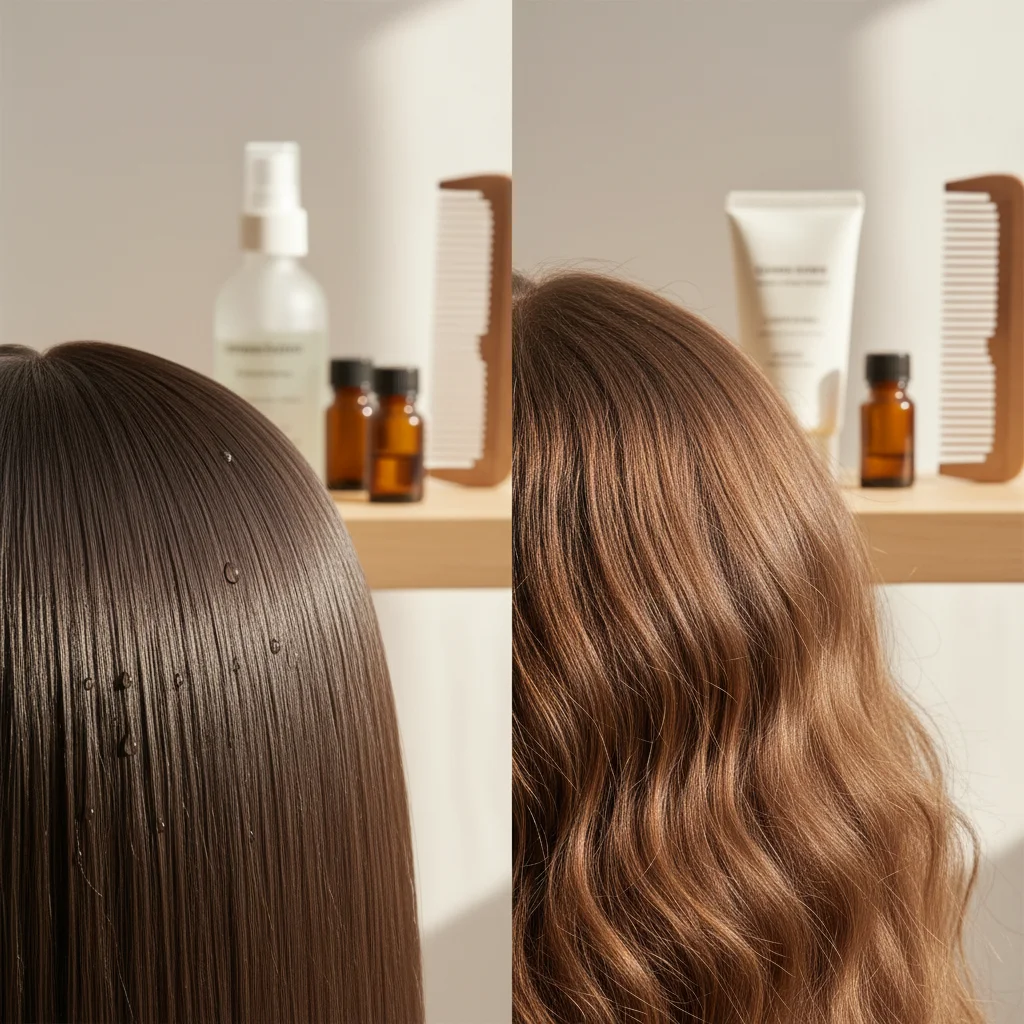
Hair porosity refers to the ability of each strand to absorb and retain moisture. This ability is strictly determined by the structure of your hair cuticle, which is the outermost layer of the hair shaft. Think of the cuticle like the overlapping shingles on the roof of a house.
When these “shingles” are tightly packed and closed together, water and hair products have a hard time getting in. But once moisture finally gets inside, it does not escape easily. On the flip side, if the shingles are lifted, spaced out, or damaged, moisture rushes in immediately, but it leaves just as fast.
Your genetics play a massive role in your natural porosity level. However, external factors like excessive heat styling, chemical treatments, and environmental damage can permanently alter your porosity over time. According to research available on government health databases, the structural integrity of the hair cuticle is vital for overall hair health and moisture retention for more details on hair shaft structure, you can read this clinical overview: https://www.ncbi.nlm.nih.gov/pmc/articles/PMC4387693/
There are three main levels of porosity: low, medium (or normal), and high. Medium porosity is the perfect balance, where cuticles are slightly loose to let moisture enter and stay without issues. However, low and high porosities require very specific, specialized care to look their best.
Low Porosity Hair: When Moisture Just Won’t Enter
Low porosity hair features cuticles that are tightly bound and completely flat. This creates a highly resistant natural barrier. It is the kind of hair that usually looks shiny and feels healthy, but it is incredibly stubborn when you actually try to hydrate it.
Key Characteristics of Low Porosity Hair
Identifying this hair type is quite easy if you pay attention to how it reacts during your normal wash routine. Some of the clearest signs include:
- Water forms visible beads on the surface of your hair instead of soaking in right away when you step into the shower.
- It takes a surprisingly long time to get your hair fully saturated with water.
- Your natural air-drying time is extremely long, sometimes taking an entire day.
- Styling products tend to build up on the surface, leaving a white residue, flakes, or a greasy feeling.
- Heavy protein treatments usually leave your hair feeling stiff, brittle, and like straw.
The Best Care Routine for Low Porosity Hair
Your biggest challenge here is opening the cuticle just enough to let hydration penetrate. Once you manage to get water and nutrients inside, your hair will hold onto them beautifully.
Use gentle heat
Heat is your best friend. When applying deep conditioners or hair masks, use a thermal cap, a warm towel, or simply the natural steam from your shower. Gentle heat helps lift the tightly packed cuticles slightly, allowing those penetrating ingredients actually to do their job.
Pick lightweight ingredients
Stay away from thick creams and heavy butters like raw shea butter or pure castor oil. These will only sit on the surface of your hair and make it look greasy. Instead, look for products rich in humectants that draw moisture from the air, like glycerin, honey, and aloe vera. Lightweight oils such as argan, jojoba, or grapeseed are absolutely perfect for sealing the hair without suffocating the strand.
Avoid product buildup
Since low porosity hair is so prone to product buildup, use a clarifying shampoo once or twice a month. This will keep your hair completely clean and free of physical barriers that block moisture absorption during your next washes.
High Porosity Hair: When Moisture Escapes Too Fast
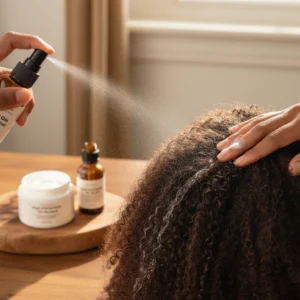
On the complete opposite end of the spectrum, we find high porosity hair. Here, the cuticles are widely spaced, severely lifted, or even physically broken. This means your hair drinks up moisture instantly, but because there is no flat barrier to lock it in, the hair dries out and dehydrates just as quickly.
Signs You Have High Porosity Hair
This hair type is often the result of physical or chemical damage from bleaching, frequent coloring, or constant use of hot tools. However, it can also just be your natural hair texture. Pay attention to these common indicators:
- Your hair absorbs water almost instantly the second you wet it.
- It air-dries incredibly fast.
- It tends to be highly prone to frizz and tangles very easily throughout the day.
- It looks dull, overly fluffy, and lacks a natural, reflective shine.
- It absorbs massive amounts of leave-in product quickly, yet still feels rough and dry to the touch just a few hours later.
The Best Care Routine for High Porosity Hair
The main goal when caring for high porosity hair is to help the cuticle lie flat and physically seal the moisture in so it does not evaporate into the air during the day.
Incorporate proteins into your routine.
High porosity hair usually has microscopic “holes” or gaps in the cuticle layer due to damage. Protein treatments help temporarily fill in these empty spaces, strengthening the hair shaft and significantly reducing breakage. Look for ingredients like hydrolyzed keratin, wheat protein, or silk amino acids. However, always keep a balance; too much protein can cause stiffness and snapping.
Use heavy butters and oils.
Unlike low porosity hair, this hair type absolutely loves rich, thick products. Shea butter, mango butter, and heavy oils like olive or castor oil are excellent for creating an artificial seal over the lifted cuticles. Always apply your water-based moisturizers first, and then lock that hydration in with a good, heavy oil or butter.
Rinse with cold water.
While warm water helps open the cuticles for low porosity hair, cold water does the exact opposite. Finishing your wash routine with a cold water rinse helps flatten and close the cuticle. This traps the hydration you just applied with your deep conditioner.
How to Test Your Hair Porosity at Home
Figuring out your porosity level does not require a trip to a scientist or complicated tools. There are a few very simple methods you can do right in the comfort of your home to get to know your hair better.
The Glass of Water Test
This is the most well-known and easiest technique. Take a single strand of your clean, dry hair. It must be completely free of styling products, oils, or heavy conditioners, or the test will not be accurate. Fill a clear glass with room-temperature water and drop the hair strand inside.
Watch what happens over the course of three to four minutes:
- If the hair floats entirely on the surface and stays there, you have low porosity hair.
- If it sinks very slowly and sort of hovers in the middle of the glass, you have medium porosity hair.
- If it sinks rapidly straight to the bottom, you have high porosity hair.
The Strand Slip Test
Take a single strand of hair while it is still attached to your head. Pinch the very end of the hair between your thumb and index finger, and slowly slide your fingers upward toward your scalp.
If your fingers slide easily and the hair feels completely smooth and slippery, you have low porosity hair. If you feel little bumps, snags, or a rough texture along the way, that means the cuticles are lifted, which indicates high porosity.
The Impact of Hard Water and Environment on Porosity
It is important to understand that your hair does not exist in a vacuum. The water you use to wash your hair can actually impact its porosity over time. Hard water contains high levels of calcium and magnesium, which can build up on the hair shaft.
In the case of low porosity hair, this buildup makes it even harder for moisture to penetrate. For high porosity hair, the minerals can make the hair feel even more brittle and prone to snapping. Installing a simple shower filter can make a world of difference for both hair types. To learn more about how water quality affects skin and hair health, you can check out this resource from the U.S. Geological Survey on water hardness: https://www.usgs.gov/special-topics/water-science-school/science/hardness-water.
Finding Your Perfect Balance for Healthy Hair
Knowing your hair porosity is a truly transformative step in your personal care journey. It removes the stressful guesswork from your routine. It saves you time, frustration, and money by keeping you away from products that simply are not formulated for your specific structure.
Remember that your hair health is an ongoing, dynamic process. Factors like hormonal changes, moving to a new climate, and shifting your styling habits can change what your hair needs over time. Listen to your hair closely. If you notice it becoming brittle and snapping, dial back the protein. If it feels heavy, limp, and dull, do a deep clarifying wash and reduce the heavy oils.
Maintaining a delicate balance between moisture (water) and strength (protein) is the foundation of any successful hair care regimen, no matter your porosity level. Give your hair the patience and gentle care it deserves, applying techniques based on its actual physical structure. Soon enough, you will see it respond with more elasticity, incredible strength, and a lasting, beautiful shine.
Conclusion
Understanding the difference between low porosity and high porosity hair is the ultimate key to unlocking your hair’s true potential. By identifying exactly how your strands absorb and hold onto moisture, you can customize your wash routine, pick the precise ingredients you need, and avoid the deep frustration of using ineffective products. Your hair is unique, and caring for it based on its structure guarantees visible, long-lasting results.
Start transforming your hair health today. Do the simple glass of water test at home this week, and adjust your routine using the tips we shared above. Your hair will thank you for it!
If you found this guide helpful, make sure to bookmark HairCareGrowth.com for more simple, science-backed hair care tips, and share this post with a friend who is struggling with their hair routine!
Frequently Asked Questions (FAQs)
Can my hair porosity change over time?
Yes, frequent use of heat tools, chemical treatments, and harsh environmental damage can permanently lift your cuticles, changing your hair from low to high porosity.
Is it bad to have high porosity hair?
Not at all; it just requires a different approach, mainly focusing on adding strengthening proteins and sealing in moisture with heavier products to prevent frizz.
How often should I use hair masks based on my porosity?
For low porosity, use a hydrating mask with gentle heat once a week; for high porosity, alternate between deep moisture and protein treatments weekly to repair the cuticle.