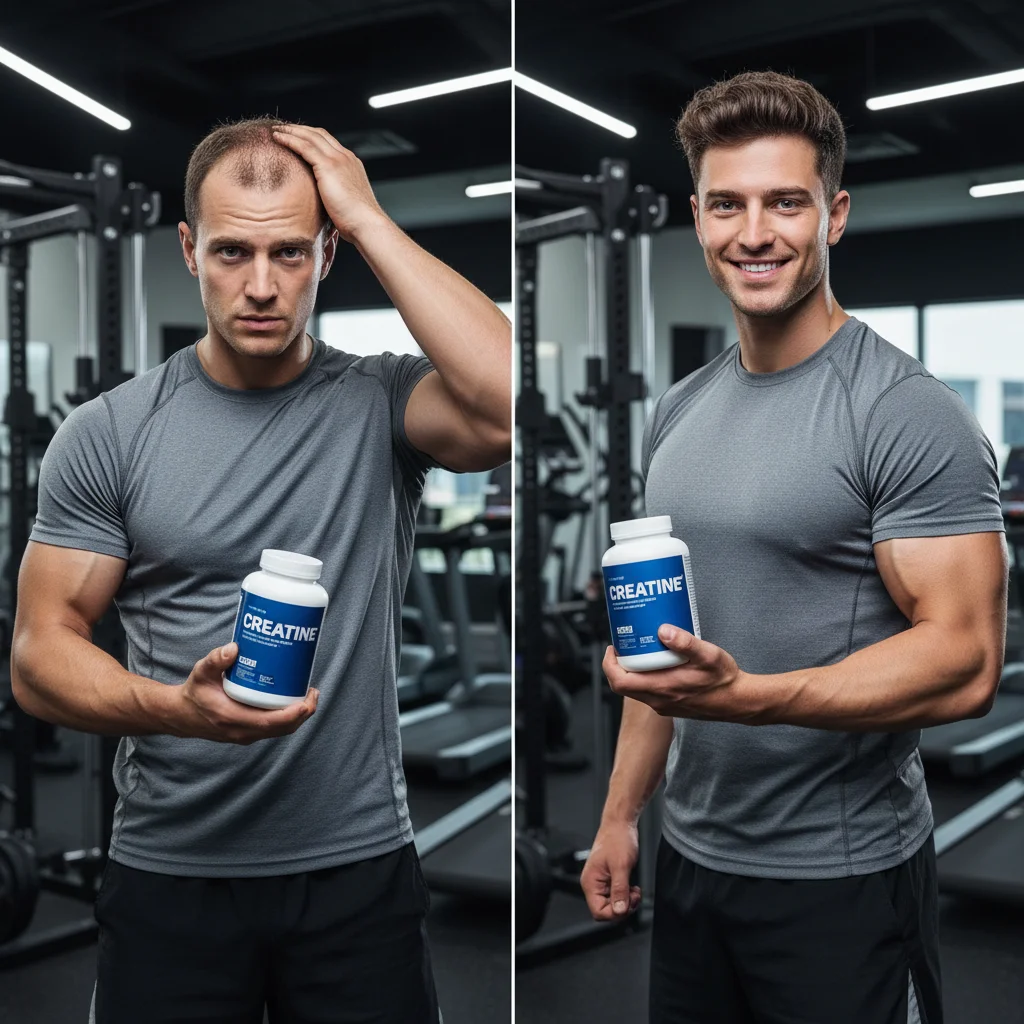
I’m gonna be honest with ya. The first time a buddy blamed his receding hairline on creatine I nearly died laughing. And then I heard the same worried question again and again. I saw it in my inbox. I saw it in my gym group chat. One night at dinner my brother even leaned over and said, “Hey, is my pre-workout scoop silently stealing my hair?”
And you know what, it’s a fair question to ask. Creatine is in almost everyone’s gym bag. And nobody wants a thinner crown to go with a heavier bench. So get yourself a coffee and let’s really talk this out. We’ll set the scary headlines aside, look at what the research shows, and figure out what you can actually do about it.
Why This Worry Keeps Coming Back
Creatine has been studied for decades and most experts will tell you it’s safe and effective for building strength and muscle. So why won’t this hair loss rumor die?
It pretty much all boils down to one small study. Researchers tested rugby players who were taking creatine and saw a bump in a hormone called DHT in 2009. That one finding took off everywhere, forums, locker rooms, and comment sections of every fitness video you can think of. People put 2 and 2 together, got nervous and a myth was on its way.
But here’s the thing, no one says. A study of 20 guys is not the be-all, end-all of anything. So let’s actually take a look at what DHT does and where creatine fits in.
The Science Behind Creatine and DHT
To understand why people freak out you have to meet the real character at the heart of most hair loss talk: DHT.
What Is DHT, Exactly?
DHT stands for dihydrotestosterone. Your body makes it from testosterone. And the kicker is this: DHT is closely related to androgenetic alopecia, which is just the medical term for male and female pattern baldness.
If your genes are sensitive to DHT, this hormone can gradually shrink your hair follicles. Those follicles begin to pump out thinner, weaker strands bit by bit until they stop growing hair altogether. Notice I said genetically sensitive though. Lots of guys have high DHT and a thick head of hair for their entire lives.
What That Famous Study Really Showed
That 2009 study by van der Merwe and his team found that creatine was linked to about a 50% increase in DHT in the players. I know, right? Sounds scary.
But read it closely. The study found DHT increased. It did not measure real hair loss Nobody checked to see if those athletes thinned out or went bald. It really only showed a short-term hormone change in a small handful of men.
If you want to see it for yourself, here’s the summary on PubMed.
Has Anyone Confirmed It Since?
That’s the part that confuses people. No study has ever shown that creatine directly causes hair loss, and more importantly, no one has been able to reproduce that DHT spike in all the years since. A 2021 review in the Journal of the International Society of Sports Nutrition sifted through the evidence and found no solid evidence linking creatine to balding.
So the honest answer is this. Theoretically it could happen to someone already predisposed to pattern baldness but that’s never been proved.
The Real Benefits of Creatine
Before you toss your tub in the trash, let’s take a minute to remember why people buy this stuff in the first place. Creatine is one of the most studied supplements out there and its benefits are no secret:
- More power and strength in your training
- Muscles recover faster in between sessions
- Better performance during short-lived, hard efforts
- Potential benefits for the brain, research on this side still expanding
The International Society of Sports Nutrition says creatine is safe in recommended amounts for most healthy adults. That’s a big stamp of approval.
What Actually Causes Hair Loss

This is where I want to sort of bring your attention to. If your hair is thinning, creatine is not usually the cause. The usual suspects are much more common:
- Genetics: The biggest factor in pattern baldness is family history, no question.
- Hormones: DHT sensitivity, thyroid problems and other imbalances.
- Stress: Physical or emotional rough patches can cause some temporary shedding.
- Diet gaps: Low iron, low protein or crash diets can weaken hair.
- Age: Follicles just slow down with the years.
- Medical conditions, such as alopecia areata or infections of the scalp.
Notice that creatine is not on that list as a known cause? When someone starts creatine and sees shedding, the timing is usually consistent with harder training, big calorie swings, or frankly, just getting older.
Solutions and Best Practices
So what do you really do? Here’s my game plan (No Panic!).
Know Your Genetic Risk
Look at the men and women in your family honestly. Did any of them have early baldness? If so, you might be more sensitive to DHT. That doesn’t mean creatine will push you over the edge, but it’s good to know when you’re making your own call.
Run Your Own Test
Want peace of mind? Here’s a trick I’ve passed on to friends more than once. In good light, get a few good shots of your hairline and crown. Use creatine consistently for three or four months. Then put the photos side by side. Real proof from your own head is better than internet panic any time.
Support Your Hair From the Inside
Good hair begins with good food. Check that you’re getting enough of these:
- Protein-the raw material your hair is built from
- Iron and zinc to keep the follicles working right
- Biotin and B Vitamins for Hair Growth Healthy
- water. It’s more important than people realize.”
Talk to a Professional
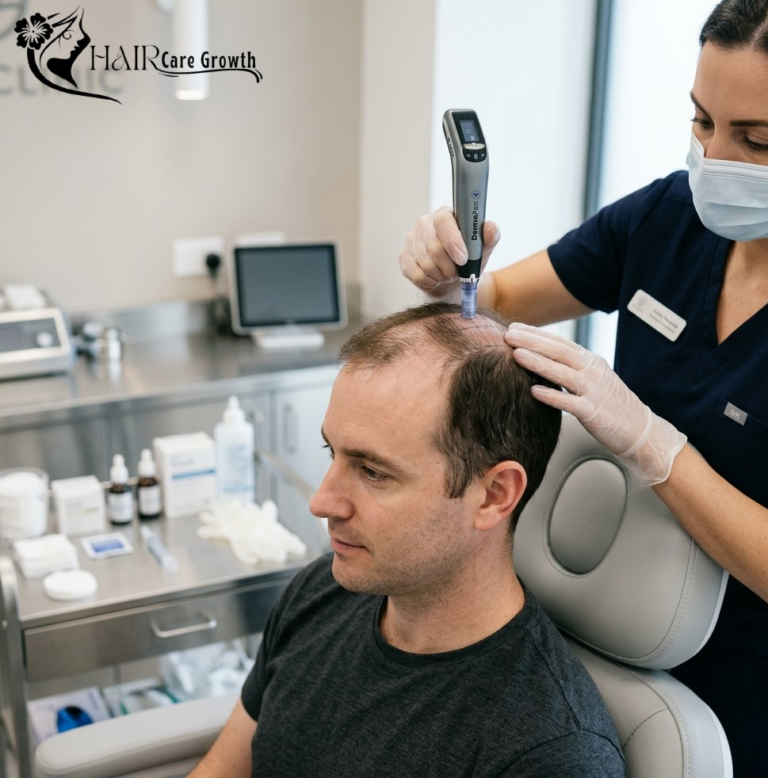
If you’re really worried, you can see a board-certified dermatologist who can look at your scalp and point you toward treatments that really work. The American Academy of Dermatology has good solid information on causes of hair loss and what to do about it.
Common Mistakes to Avoid
I’ve seen people trip over the same things over and over. Don’t be that guy.
- Creatine sucks anyway, genetics aside. You could quit creatine and get leaner because the real cause was in your genes all along.
- Freaking out over normal shedding. It’s normal to shed 50 to 100 hairs a day. Having a few in the shower drain does not mean you are going bald.
- Mega dosing for faster gains. More creatine won’t build more muscle. It certainly won’t help your hair. Stick to normal doses.
- Quitting over a forum post. No stranger’s story matters.
- Straight to the doctor. Diagnosing yourself on the internet is just a waste of time that could be spent getting real answers.
Expert Tips for Smart Supplementing
A few other things I tell people all the time:
- Limit it to about 3 to 5 grams a day. That’s the maintenance dose that has been well studied. You don’t need a loading phase to feel the benefits.
- Choose creatine monohydrate. It’s the cheapest, most reliable, and most studied. The fancy ones are seldom worth the extra expense.
- Mix it with good scalp care. Whatever it is, gentle washing, a balanced plate and keeping stress at bay are all good for your hair.
- Track changes sincerely. Photos and short notes are better than squinting in the mirror at 11 pm.
- Give at a time. Hair takes time to change so don’t judge anything for a few months.
Frequently Asked Questions
1. Is creatine a direct cause of baldness?
There’s little evidence that creatine leads to hair loss. One small study found an increase in DHT, but it never measured actual balding, and no later research has confirmed a direct link.
2. Should I quit creatine if baldness runs in my family?
It’s your call. If you are very sensitive to DHT you might want to be careful. But quitting creatine won’t stop the genetic hair loss if that’s what’s really causing it. A dermatologist can help you make that call.
3. Will my hair grow back if I stop taking creatine?
If creatine wasn’t the cause, quitting it won’t regrow your hair. Pattern baldness is mostly genetic and hormonal, not supplements.
4. Does creatine boost testosterone?
Most research says creatine doesn’t raise testosterone levels much. The 2009 study noted a DHT change but overall the hormonal effects appear small.
5. How much creatine is safe to consume?
For healthy adults, the well-studied and generally recommended dose is around 3 to 5 grams daily. If you have any health conditions, check with your doctor.
6. Are there alternatives to creatine that are safe for hair?
Creatine itself is safe. If your anxiety remains, concentrate on whole-food protein and smart training. There is no proven “hair-safe” alternative, primarily because creatine has not been proven to cause loss.
7. What’s the best type of creatine?
Creatine monohydrate. It’s the most researched, most effective, and most cost-effective option you will find.
8. When do I need to see a dermatologist?
If you notice sudden shedding, patchy loss, scalp irritation or thinning that appears quickly, make an appointment. The earlier you find it, the more options you have for treatment.
The Bottom Line on Creatine and Your Hair
So after all the research and talking to a bunch of anxious readers this is where I came down. All the fear that creatine causes hair loss is based on one small study measuring a change in hormone levels, not actual hair loss, and no one has replicated it since.
If you have a family history of pattern baldness, keep an eye out and speak to a dermatologist. But for most people, creatine is a safe, well-researched way to support their strength and performance. Don’t let an old internet rumor keep you from something that could actually help your training.
Feed your hair from the inside out, see your own results and make decisions based on facts, not fear. Your strands and your gains will thank you.
Health Disclaimer: This post is for informational and educational purposes only and is not a replacement for professional medical advice. Always consult with a licensed dermatologist or healthcare professional before beginning or discontinuing any supplement, or if you experience hair loss, irritation on the scalp, or any other concerns.