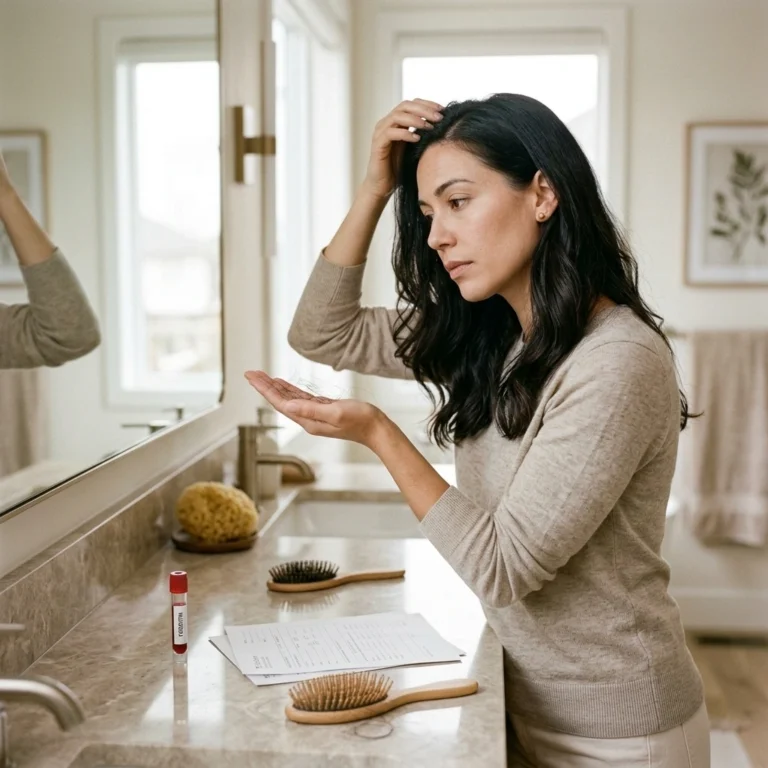
Picture this: you buy yourself a shiny new serum, faithfully use it every night, and a few weeks later, you notice way more hairs swirling around the shower drain. Is it your skin care? Maybe! “Having spent years writing about hair care and digging through dermatology research, I can tell you, this is a question worth taking a beat on.
I will give you the simple answer now. Most skin care products won’t make your hair fall out in clumps. But some ingredients and practices can irritate your scalp, strain your hairline, and cause shedding in sensitive individuals. So if you’ve been blaming stress or your family genes, your shelf in the bathroom may need a closer look, too.
This is important because so many of us are using more products than ever, layering serums, acids, and rich creams without thinking about where they actually go. This guide breaks down how face products get into your hair, which ingredients are most likely to cause problems, and what to do about it.
How Can Skincare Products Affect Your Hair?
Your scalp is skin. I know that sounds obvious, but it is so easy to forget! The same skin that turns red and flaky when it doesn’t like a product can also react around your hairline and crown.
Skincare products can impact your hair, and this typically occurs in one of three ways:
- Scalp irritation from face products that run over your forehead or wash into your hairline
- Allergies that inflame your follicles and break the natural growth cycle.
- Build-up or blockage along the hair line, trapping oil and weakening new growth.
Here is the important part. Hair loss related to skincare is almost always indirect. The product irritates your scalp, the scalp becomes inflamed, and the inflamed follicles shed hair. “Temporary shedding can occur due to scalp inflammation and conditions such as contact dermatitis,” says the American Academy of Dermatology.
Your Hair Growth Cycle in Plain English
Your hair goes through three phases: growth, rest, and fall out. If your scalp is inflamed or stressed, you may have more follicles prematurely entering the shedding phase. This is called telogen effluvium by doctors, and it is a common cause of people suddenly noticing extra hair falling out. The bad news? Usually, it’s temporary once you get rid of whatever caused it.
Which Skincare Ingredients Can Trigger Hair Shedding?
Not all the ingredients are bad guys here. However, there are a few that keep coming up when readers email me about scalp issues and the surprise shedding. These are the ones to look out for.
Fragrances and Essential Oils
Synthetic fragrance is one of the most common causes of contact allergies, period. A heavily scented moisturiser or toner that brushes against your hairline can cause redness, itching, and flaking. All that scratching can damage the hair right at the root.
My tip: Choose fragrance-free products instead of unscented. Some unscented products will still have masking fragrances.
Sulfates
Some face washes and exfoliating products do have sulphates like sodium lauryl sulphate, which are powerful cleansers. They strip oil quickly. When they hit your hairline repeatedly, they can dry out the skin, leaving hair brittle and causing hairline breakage you never saw coming.
Parabens
Parabens are preservatives. To most people, they are harmless, but a small group develops a sensitivity that manifests itself as scalp irritation. I won’t oversell the research here, since it’s still developing. But if you’re sensitive, it’s worth scanning for this label.
Retinoids
Retinoids like retinol and prescription tretinoin are great for your skin, but they also cause peeling and sensitivity, especially when you first start. If the retinol gets too close to your scalp or creeps up to your hairline, that irritation and flaking can be painful for the follicles nearby. The Mayo Clinic notes that skin irritation is a known side effect of topical retinoids, so use caution when applying near the hairline.
Comedogenic Ingredients
Heavy oils and butters clog pores. When these comedogenic ingredients make their way to your hairline, they can clog follicles, trap bacteria, and create little bumps that interfere with healthy growth. If you’re prone to breakouts, you may want to avoid coconut oil, some silicones, and heavy waxes.
Contact Dermatitis and Your Scalp
Contact dermatitis is the medical name for skin reacting to something it touches. It exists in two forms:
- Irritant contact dermatitis: caused by harsh ingredients that damage the skin barrier.
- Allergic contact dermatitis: An immune response to a specific ingredient.
They can both appear on the scalp and hairline. Usually, prior to your hair changing, you will have itching, redness, small blisters, or persistent flaking. If you scratch a lot, or if the inflammation persists, the hair in that spot can start to thin.
One reader told me she switched to a new “natural” face oil and within a week had an itchy, scaly hairline. She thought it was dandruff. It was not! Once she stopped the oil, the irritation went down, and her hairline filled back in over a couple of months. Her story is just one of many.
If you think you may be allergic, a dermatologist can do a patch test to find out exactly which ingredient. You can also check out peer-reviewed studies on contact dermatitis and hair at PubMed.
Real-Life Patterns Worth Learning From

The situations I see time and time again are:
- The forehead spillover: People rub rich night cream right up to the hairline, and the hair there looks thinner over time, and the skin gets bumpy.
- The exfoliation overdose: Daily acid toners or scrubs near the temples dry out delicate baby hairs until they snap off.
- The surprise of “clean beauty”: Natural doesn’t always mean gentle. Essential oils and plant extracts are some of the most common allergens in the world.
This doesn’t mean these products are “bad.” It just means placement, frequency, and your own skin type come into play.
Common Mistakes to Avoid
Avoid these slip-ups and save yourself some frustration:
- Too close to the hairline with product use. Give some breathing space.
- Disregarding early scalp symptoms. Itching and flaking are warning signs, not nuisances.
- Changing five products at one time. When something reacts, you will never know which one did it.
- Over-exfoliating. More is not better. Allow your skin barrier time to heal.
- Assuming all hair loss is hereditary. Sometimes the answer is on your dressing table.
Expert Tips for Protecting Your Hair and Scalp
Want to enjoy your skincare routine without worrying about your hairline? Try these:
- Try out new products on the inside of your arm for a few days before you go all in.
- Leave facial products on your face. Put on a headband to keep hair out of the way and apply it with purpose.
- Rinse thoroughly, so no cleanser or treatment remains along the hairline.
- Sensitive? Look out for fragrance, sulphates, and heavy oils on the ingredient list.
- Add new products one at a time. Wait 2 weeks before adding another product.
- Lightly moisturise the hairline as a barrier to the delicate skin.
- If hair loss continues for a few months or is accompanied by pain, scaling, or bald patches, see a dermatologist.
Every time, a gentle, steady routine beats a pushy one. Follicles love consistency!
Frequently Asked Questions
1. Is my face moisturiser really causing my hair to fall out?
The odds are not direct. Yes, indirectly. “If it irritates your scalp or clogs your hairline, it can cause inflammation and lead to shedding.”
2. How do I know if my skincare is the culprit?
Look for signs of timing. If you start to shed or have scalp irritation soon after a new product, that’s a big tip-off. Stopping the product and looking for improvement confirms it.
3. Can skincare cause permanent hair loss?
Not typically. Irritant or telogen effluvium hair loss is usually temporary. The hair loss will reverse itself once you remove the trigger and your scalp heals.
4. Are ‘natural’ products better for my hair?
Not necessarily. Essential oils and plant extracts are common allergens. Everyone gets a patch test, chemical or not.
5. Should I discontinue retinol?
You don’t have to let it die. Keep it away from your hairline, start slow, and moisturise to ease the peeling and irritation.
6. When will my hair improve?
Once the cause is corrected, it will take time for the hair cycle to return to normal. In most cases, you will see regrowth within 3 to 6 months.
7. When should you see the doctor?
If you notice bald patches, scarring, pain, or shedding that doesn’t subside after a few months, make an appointment with a dermatologist.
The Bottom Line
Your hair and your skincare routine are more related than you know. Your favourite serum probably won’t make your hair fall out overnight, but irritating ingredients, careless application, and a cranky scalp can certainly lead to extra shedding and a weaker hairline. The fix is elegantly simple: consider placement, patch test new products, keep that scalp calm, and act swiftly if something doesn’t feel right.”
Check the labels on whatever you’ve been using the most and give your hairline some breathing space. Start tonight. Your hair will thank you!
Health disclaimer: The content of this article is for informational purposes only and not a substitute for professional medical advice, diagnosis, or treatment. If you are experiencing persistent hair loss, scalp irritation, or a possible allergic reaction, please consult your licensed dermatologist or healthcare provider.