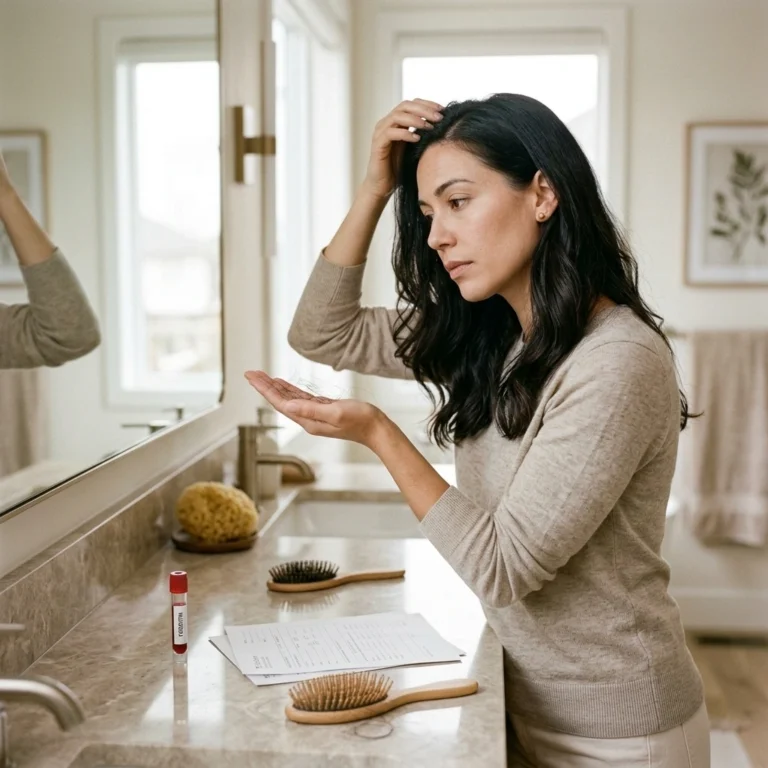
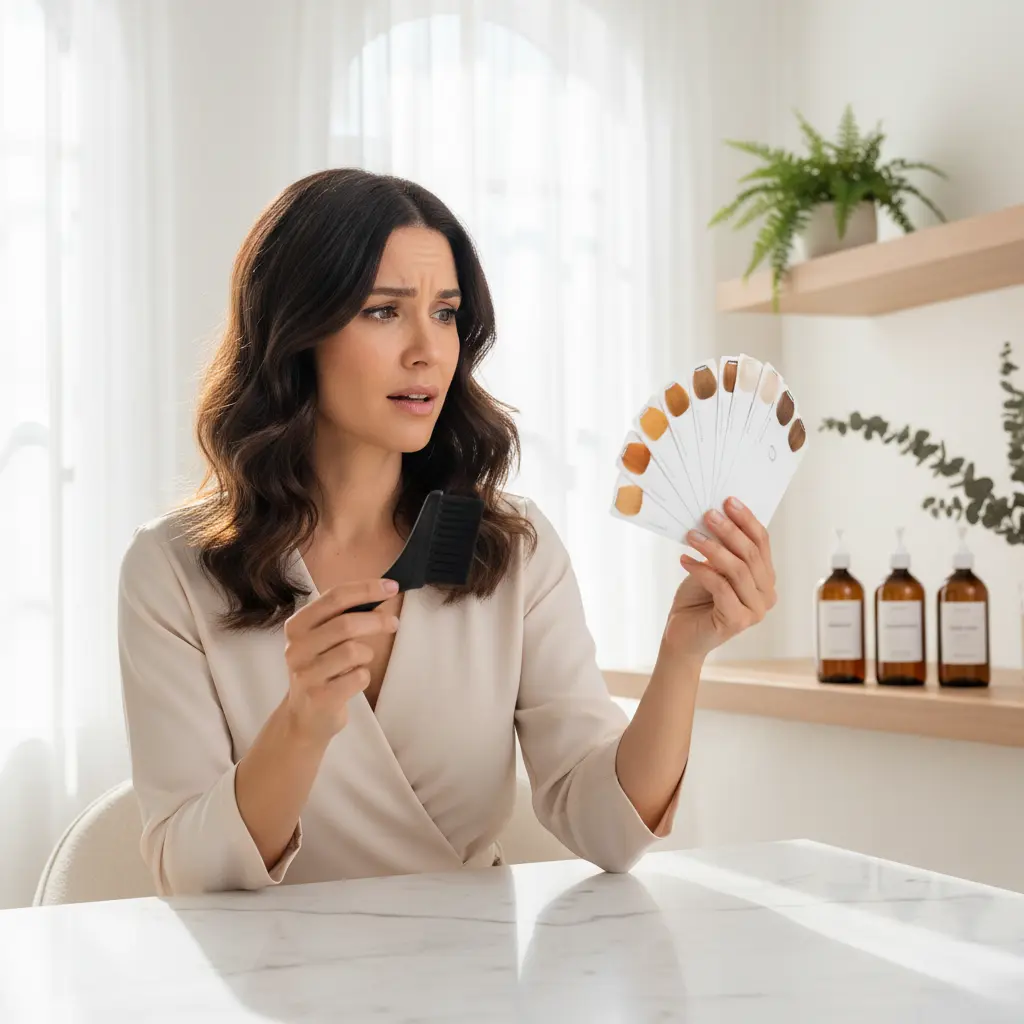
To be truthful, I’ve been dyeing my hair for years, and I’ve made pretty much every mistake in the book. I’ve gone platinum blonde in one sitting, box-dyed over a salon colour, and skipped the patch test more times than I should have. My hair paid for it too: think of it breaking mid-strand, like dry hay.
So when people ask me if dyeing your hair really does damage, I don’t say some vague shit. The truth is: it depends on what kind of colour you’re using, how often you do it, and how well you take care of your hair afterwards.
What You Need to Know Before You Open That Box or Sit in That Salon Chair
What Actually Happens to Your Hair When You Dye It
Your hair consists of three layers: the medulla (the inner core), the cortex (where the colour lives), and the cuticle (the protective outer layer that looks like roof tiles overlapping). When you put hair dye on, the chemicals have to get through that cuticle to work, and that process comes at a cost.
Permanent Hair Dye: The Most Impactful Option
Permanent colour relies on two essential ingredients: an alkaline agent (typically ammonia) to open the cuticle, and hydrogen peroxide to break down your natural pigment and deposit new colour. This is what makes the colour last through several washes.
But here is the rub. The more the cuticle is forced open and the internal protein structure altered, the more porous and less resilient the hair becomes. Multiple permanent colorings, especially when lightening, can remove some of the proteins that make hair strong and elastic.
Many of the treatments that make your hair look better can actually make it dry and brittle over time, according to the American Academy of Dermatology, especially when you are lifting your hair more than 3 shades. This needs higher volumes of peroxide and is a lot more damaging.
Bleach: The Strongest of the Bunch
Bleaching is a colour amplification that is permanent. It removes almost all of your natural pigment using a much more concentrated form of hydrogen peroxide. The outcome? Hair that can look fantastic but is compromised at the cellular level.
A downside to bleached hair is that it loses a lot of its keratin protein. The cuticle is rough and raised so that hair feels coarser. It tangles more easily and breaks under less stress than healthy hair. Bleaching is the number one reason for severe hair breakage, and what stylists call “chemical haircut,” when hair has been broken so badly that it looks to have been cut.
Semi-Permanent Dye: Gentler, But Not Risk-Free
Most semi-permanent colour doesn’t contain ammonia or peroxide. They coat the outside of the hair shaft and can be washed out slowly over 5-10 washes. They do not go as deep into the cortex, so the structural damage is much less severe.
But even these types of colourants contain chemical compounds that can cause allergic reactions in some people. They’re not completely risk-free – but they’re a much gentler option for someone who wants to enhance or refresh their colour without causing dramatic damage.
Temporary Color: The Least Damaging
Temporary dyes sit on the surface of the hair and are removed after one or two shampoos. They don’t change the hair shaft at all, so they’re the safest in terms of structural damage. Think of them as makeup for your hair.
Signs Your Hair Is Damaged From Dyeing

At first, the damage may not be obvious – it builds up slowly. Look for signs such as:
- More breakage, especially mid-strand
- Hair feels dry/rough even right after washing
- Loss of elasticity, healthy hair stretches a little before it breaks, damaged hair just breaks
- Severe tangling that wasn’t there before
- The colour fades quickly and looks dull or brassy after colouring.
- split ends that run up the shaft
If you’re seeing several of these at once, your hair is trying to tell you it needs a breather and some serious recovery time.
Who Is Most at Risk for Hair Damage From Coloring
Not everyone who colours their hair ends up with damaged strands. But some factors make some people more vulnerable than others:
- Frequent colourers, particularly those colouring roots every 4 to 6 weeks
- Anyone who regularly lightens or bleaches
- People who use heat-styling tools with chemical treatments
- If you have naturally fine or thin hair with less structural cushion,
- Anyone processing over hair previously treated with chemicals
The more you stack chemical processes, colour on top of bleach on top of a relaxer, for example, the more the damage adds up. Your hair can only take so much before it literally reaches its breaking point.
A Word About Scalp Irritation and Allergic Reactions
This is something that is not discussed enough. Hair dye damage doesn’t just stop at your strands — it can hurt your scalp, too.
Some will develop contact dermatitis or allergic reactions to ingredients in hair dye, most commonly a chemical called paraphenylenediamine (PPD). The reactions could be mild such as itching and redness or more severe such as swelling. The FDA notes that even if you’ve used the same product before without any problems, you can still be allergic to it, as sensitivities can develop over time with repeated use.
That means patch testing is not optional. Use a small amount of the product behind the ear or on the inner elbow 48 hours prior to each use, not just the first use. The FDA also emphasizes that hair dyes should not be used on eyebrows or eyelashes, as they could lead to serious eye injuries, including blindness.
If you notice your scalp is burning or there is lots of redness, swelling, or hair loss after dyeing, stop using the product and see a dermatologist.
What About Hair Dye and Cancer Risk?
There may have been scary news about hair dye and cancer. So what does the study really say?
Some individual studies have found mixed associations between hair dye use and certain cancers, particularly bladder cancer in professional hairdressers and some blood cancers, but the overall evidence for personal use is not conclusive, according to the American Cancer Society. Given the current evidence, personal use of hair dye is classified by the International Agency for Research on Cancer (IARC) as “not classifiable as to its carcinogenicity to humans”.
Hair dye formulations have changed a lot since the 1970’s when some problematic chemicals were identified and removed. If you are worried about your risk of cancer, talk to your doctor for individual advice.
How to Reduce Damage Before and After Coloring
The good news is that you can colour your hair and keep it in reasonable health. It just takes a bit of planning and steady aftercare.
Before You Color
- If you are changing colour dramatically, do a strand test before committing to a full application.
- Don’t wash your hair immediately before colouring it; the natural oil will help to protect your scalp.
- Wait at least 14 days after bleaching, perming, or relaxing before applying a new chemical treatment.
- Do not scratch or brush your scalp hard for a few days before colouring
- The AAD recommends that if you can, stay within three shades of your natural color—going darker is gentler than going lighter.
After You Color
- Use a sulfate-free, colour-safe shampoo to prevent stripping colour and to keep moisture in
- Weekly deep condition with a protein or moisture treatment—colored hair is thirsty
- Always use a heat protectant before hot tool use
- Wash less often – two to three times a week is the sweet spot for coloured hair
- When you’re out in the sun, use a hair product that offers UV protection; UV exposure will make colour fade faster and hair more brittle.
- Regular trims will prevent split ends from travelling up the shaft.
Common Mistakes to Avoid
- Over-processing at home: Colouring for longer than the recommended time won’t yield more colour; it will only cause more damage.
- Don’t skip the patch test: Your body can become sensitive at any time, even if you’ve used a product 10 times before.
- Too close stacking of chemical processes: Allow at least two weeks between treatments on your hair, and preferably longer.
- Box Dye on Blonde Hair: The results are unpredictable and can be extremely damaging to the hair.
- Skip aftercare: Dyeing with no solid plan for upkeep is like running a marathon without training — your hair won’t survive.
Expert Tips for Healthier Colored Hair
- If you are determined to go much lighter, do it gradually over a series of appointments and not all at once.
- Ask your stylist about bond-building treatments like Olaplex that can help repair some internal damage to the hair as you go through the colouring process.
- Think about going semi-permanent between permanents for a chemical break for your hair
- Add a protein treatment to your routine. Colour processing strips keratin from your hair, and protein masks can help rebuild it.
Frequently Asked Questions
Is it always damaging to dye your hair?
Permanent and semi-permanent dyes do bring about some change of structure, not always in a dramatic way. The amount of damage depends on the type of colour, how often you colour, and how well you take care of your hair afterwards.
What is worse, home hair dye or salon hair dye?
Salon colour is generally safer because a professional can look at the condition of your hair and adjust the formula as needed. That said, well-formulated, at-home products used correctly can also be fine — it’s all about following instructions to a T and not over-processing.
How often can I safely dye my hair?
Most stylists recommend waiting at least 4 to 6 weeks between permanent colour applications. Waiting 8 to 12 weeks is much safer for the integrity of your hair when it comes to bleaching.
Can you grow back hair that has been damaged from dyeing?
Yes. “Hair grows from the root, so as long as you have a healthy scalp and are not continuing to damage it, you will get new healthy growth.” The damaged section of the existing shaft won’t fix itself, but trimming and good aftercare can help manage it while you grow it out.
Does hair dye make you lose your hair?
Hair dye doesn’t usually cause lasting hair loss, but it can cause hair to fall out or break for a short time. In some cases, an allergic reaction or a severe scalp irritation from the dye can also contribute to hair loss. See a dermatologist if you experience a lot of hair loss after colouring.
Is dying your hair safe while you’re pregnant?
There isn’t good evidence that hair dye is bad for pregnant women, but as a safety measure, many doctors say to wait until after the first trimester. The American Cancer Society says that some doctors say women who are pregnant shouldn’t do it at all. Make sure you always talk to your doctor or nurse.
What is the best hair dye for damaged hair?
The least damaging option is a temporary or semi-permanent colour. For permanent colour, select a shade close to your natural colour and use a bond-building additive to reduce damage.
The Bottom Line
Many women regularly dye their hair and keep it in good condition. It’s absolutely possible. But chemical processing, especially bleaching and lightening, over and over again, takes a real toll on your hair’s protein structure, moisture levels, and overall strength.
The trick is to be realistic about what your hair can handle, spacing out treatments, and having a solid aftercare plan. Follow the patch test, don’t skip the conditioning steps, and listen to what your hair is telling you.
If you’re not sure, it’s always a good idea to check in with a board-certified dermatologist or experienced colorist, especially if you’re experiencing breakage, scalp problems, or an allergic reaction.