
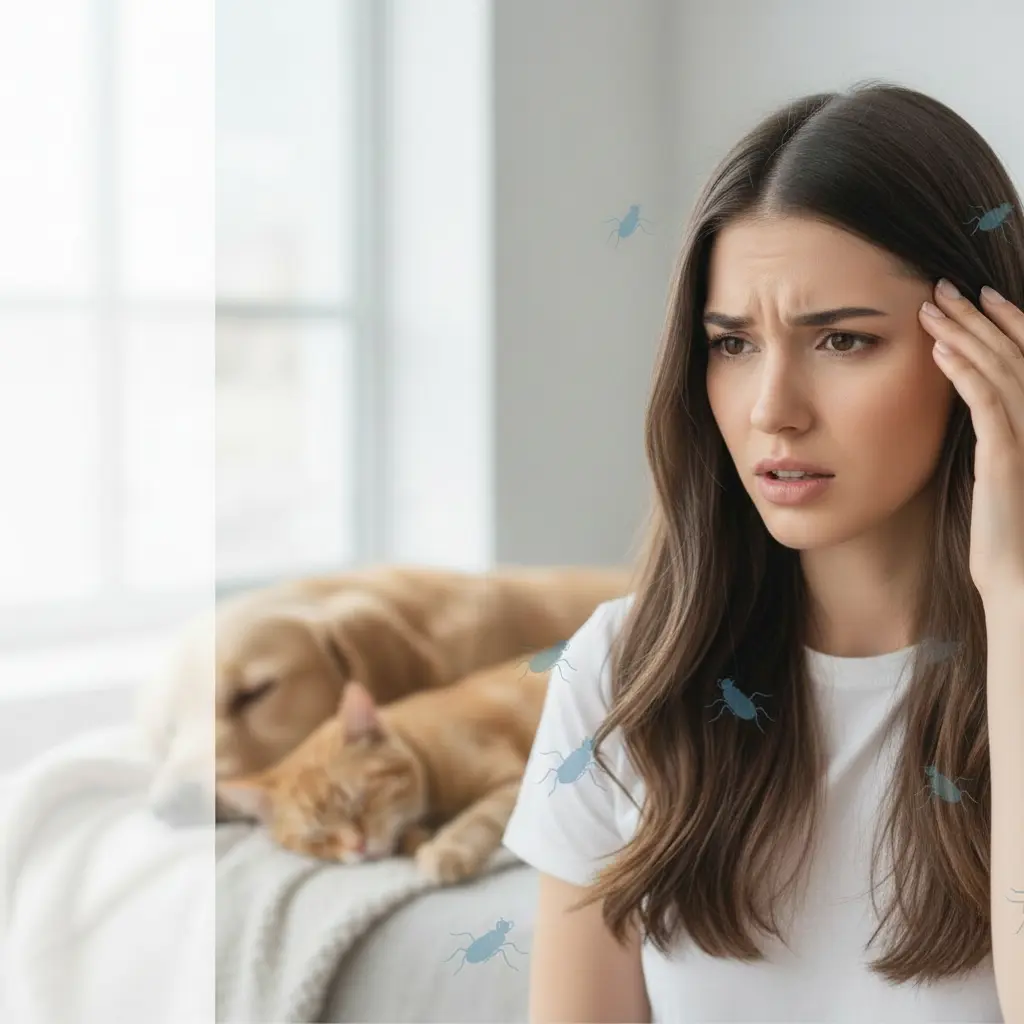
Your dog has fleas. Your scalp suddenly itches. But if you’re already panicking and grabbing the clippers, let me put your mind at ease. The thought of fleas taking up residence in your hair is terrible, but the reality isn’t so scary as you might imagine.
“I’ve been writing about scalp health for years, I’ve spoken with dermatologists, and it’s a question that comes up constantly.” A person cuddling a flea-infested pet feels a tickle on their head, and their mind goes to the worst-case scenario. The good news is that fleas do not like to live in your hair. The mildly annoying thing is that they can still bite you. So let’s walk through what’s really going on and what you can actually do about it.
Can Fleas Actually Live in Human Hair?
Short answer, nope. Fleas can jump on your head and bite your scalp, but they can’t make a permanent home in human hair or complete their life cycle.
Here’s why. Fleas have evolved to live on furry animals such as cats, dogs, and rodents. Their bodies and feeding habits are adapted to these hosts. Human hair simply doesn’t give them the nutrients they need to thrive.”
Flea’s reasons for not settling in with humans:
- We aren’t thickly furred. Fleas love the cover and warmth of heavy coats. By comparison, human scalp hair is far too sparse.
- They are not best for our skin and body heat. They like the warmth and the easy access to food from animal skin.
- They can’t breed on us easily. Fleas lay their eggs on animals, not on humans.
According to the Centers for Disease Control and Prevention, fleas are parasites on the outside of the body that feed on the blood of mammals and birds. They will bite people when the opportunity arises, but people are not their long-term hosts. So a flea may jump on your head for a quick snack, but it’s not going to be raising a family up there.
Why Do Fleas End Up Near Your Hair and Scalp?

Fleas mostly get to your head by accident, not design. They are powerful jumpers and can leap many times their own body length. That is how they land on people inside the first place.
How fleas get to your head:
- Contact with infested animals. Usually, you’ve snuggled with a flea-ridden dog or let a cat nap on your pillow.
- Sitting or lying on infested surfaces. Fleas and their eggs can live in carpets, couches, and pet bedding.
- Intense household infestations. In an infested home, fleas will jump on the nearest warm body, and that can be your legs, arms, or even your head.
- Outside exposure. Fleas also live in tall grass, sandy areas, and places where wild animals roam.
If the itching is confined to your scalp, check to see if the bites are local to your scalp or if they are all over your body. Flea bites are usually clustered on the lower legs and ankles, because fleas live near the ground and jump up.
Fleas vs. Lice: Don’t Mix Them Up
And this is where the confusion gets a lot more. People often think any little bug near their hair is a flea, when in fact, head lice are much more likely.
It’s quite a big difference because the treatment is totally different.
Head Lice
The head louse is an insect that actually inhabits human hair. They:
- They attach their eggs (nits) to the hair shafts, close to the scalp.
- They feed on the scalp and complete their entire life cycle on a human head
- Primarily transmitted by direct head-to-head contact
- Very common in school-age children
Head lice are a common, treatable problem, and not a sign of poor hygiene, says the Mayo Clinic.
Fleas
Fleas, by contrast:
- Prefers animal hosts; does not reproduce on humans
- Bite and move on instead of settling
- Don’t crawl, jump from hair to hair.
- More difficult to find than lice, darker and faster
If you see small eggs attached to individual hairs, you are almost certainly dealing with lice, not fleas. If you are unsure, a doctor or pharmacist can quickly identify the culprit.
Health Risks of Flea Bites
Fleas don’t live in your hair, but their bites are nothing to sneeze at, either. They can be quite uncomfortable and, at times, lead to complications.
Possible side effects of Flea:
- Red itchy bumps that are usually in small clusters
- Allergy in susceptible individuals, sometimes with oedema
- Secondary infections from scratching too hard and breaking the skin
- Fleas can carry some diseases, and in rare cases, disease transmission
Fleas have been associated with transmission of diseases such as plague and murine typhus, but in most modern settings with good pest control, this is rare, says the CDC. Still, it’s not wise to ignore an infestation. See a doctor if the bites become badly swollen or infected or if you develop a fever.
How to Prevent Fleas From Reaching Your Hair
Prevention is about controlling the source, because fleas don’t actually live on you. Treat the source of the infestation, and your scalp will be clear.
Treat Your Pets
- Use vet-approved flea preventives, such as topical treatments, oral medications, or flea collars.
- Check your pets regularly with a fine-toothed flea comb.
- Don’t speculate with random store products; follow your veterinarian’s advice.
Clean Your Home Thoroughly
- Vacuum carpets, rugs, and furniture frequently; empty the canister outdoors.
- Wash your puppy’s bedding and your very own bedding in hot water.
- For heavy infestations, consider professional pest control.
Protect Yourself Outdoors
- Avoid sitting directly on the grass, where fleas are often found.
- Long sleeves and trousers in the tall grass or woods.
- Exposed? Shower and change clothes
Keep Your Scalp Healthy
A clean, well-groomed scalp makes it easier to spot and deal with any irritation. A precise wash frequently gained’t maintain fleas away, but it helps you to see bites, bumps or some other changes early.
Common Mistakes to Avoid
A few common slip-ups tend to make flea problems worse instead of better.
- Caring for your hair, not your home. Avoid the use of pet flea shampoo on your scalp, as it will irritate your skin.
- Ignoring the pet Bomb your house, skip your animal, and restart the whole cycle.
- Confusing fleas with lice and buying the wrong product. Lice treatment and flea products are not interchangeable.
- Hard scratching. This may result in skin infections.
- I guess one cleaning takes care of the entirety.Flea eggs can hatch later, so steady treatment over a few weeks really matters.
Expert Tips for Managing Flea Concerns
When fleas appear, a few simple habits make a big difference.
- Get to the source fast. The sooner you treat your home and pets, the sooner the bites will stop.
- Use a flea comb on pets once a week during warm months when fleas are most active.
- Keep nails short so you don’t injure your skin when scratching.
- Calm bites. Apply cool compresses or mild anti-itch creams to relieve irritation. Ask the pharmacist for advice on an alternative.
- Look for warning signs. If you see spreading redness, pus, or a fever, it’s time to call in the professionals.
If you’ve gotten rid of the fleas in your home but are still experiencing scalp irritation, it might be something else entirely, such as dermatitis or some other skin condition. You need a dermatologist to help you sort it out.
Frequently Asked Questions
1. Are flea eggs laid on human hair?
No. Fleas breed on animal hosts and are not able to complete their life cycle in human hair.
2. How can I tell if it’s fleas or lice in my hair?
Lice live on the scalp and glue eggs to hair shafts. Fleas bite, they’re gone. They don’t lay eggs in your hair. Your physician can let you know what you have got.
3. Do flea bites on the scalp differ from other bites?
No, not really. They look like flea bites on the rest of the body and appear as small red itchy bumps often in groups.
4. Will washing my hair kill fleas?
Washing may get rid of a flea that wandered onto your head, but it won’t solve an infestation. The real answer is caring for your pets and your home.
5. Are flea bites harmful?
Most just itch and irritate a little. Fleas rarely spread disease or cause allergic reactions, but if you notice any severe symptoms, get care.
6. Can I use my pet’s flea shampoo on my hair?
No. Pet products are designed for animals and can irritate human skin. Look for products made for people and ask a professional for advice first.
7. How long does it take for fleas to die?
Typically, it takes a few weeks with steady pet and home treatment as the eggs continue to hatch over time.
Final Thoughts
Fleas can jump on your head and bite you, leaving you with an itchy bite, but they won’t set up home and live in your hair as lice do, and that’s where you want to work, as the pain usually comes from a pet or home invasion. Treat the source, keep your scalp healthy and clean, and you’ll usually clear things up without much fuss.
If the irritation persists or the bites appear infected, don’t just tough it out. A quick visit to your healthcare provider or dermatologist can save you a lot of guesswork.
Explore the rest of Hair Care Growth for additional practical guides on scalp health and hair care.
Disclaimer: This article is for educational purposes only and is not a substitute for professional medical advice, diagnosis, or treatment. Always consult a qualified healthcare provider or dermatologist with any questions or concerns you may have regarding a medical condition or treatment.