I remember that night, my hair was like dry straw. My hair had been bleached and blow-dried for months, and my strands were suffering for it. I reached desperately for the bottle of extra virgin olive oil sitting next to my stove, warmed it in my hands a little, and ran it through my ends before bed. The next morning, my hair felt softer, shinier, and, strangely, happier. That was a cheap kitchen experiment I kept for years!
So let’s settle the big question once and for all. Does Olive Oil Help Your Hair? Or is it just another one of those internet-circulating tricks? Let’s just talk as friends over a cup of coffee with a little bit of science and some real experience.
Why Everyone Keeps Talking About Olive Oil for Hair
Olive oil has been a beauty staple for millennia. Used on skin and hair all over the Mediterranean long before fancy salon serums were even dreamed up. There is something very comforting about a cure this simple and this inexpensive, is there not?
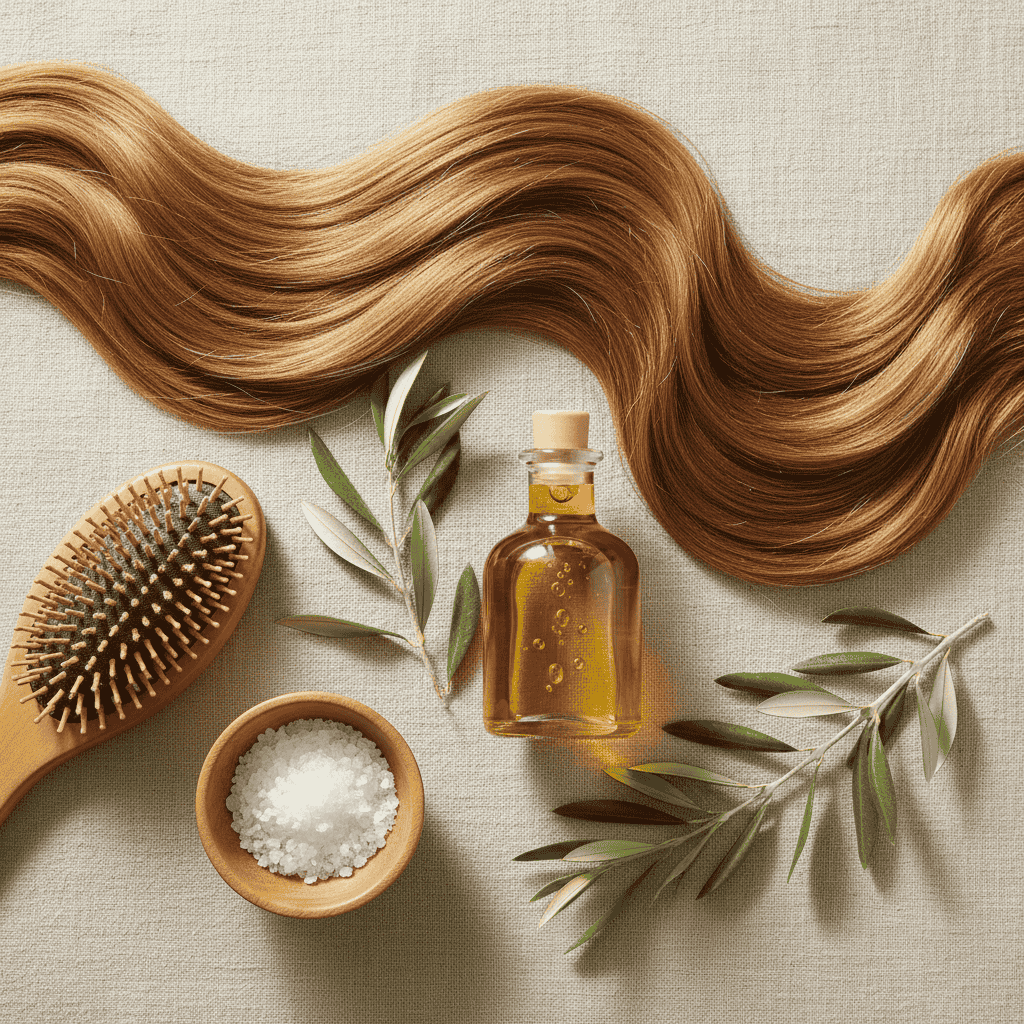
Here’s what makes it interesting. Olive oil is loaded with healthy fats,m vitamin E, and antioxidants. They coat the hair, hold moisture, and give a natural shine that’s hard to duplicate with synthetic products.
But let me talk straight to you. Olive oil is not magical. For some hair types, it works beautifully, but for others, it feels heavy and greasy. But the real secret is knowing how to use it in the right way, and that’s exactly what I’ll walk you through.
The Real Benefits of Olive Oil for Hair
Here’s what really works, based on years of hands-on use and what dermatology research supports.
It Locks in Moisture
Thirsty hair is dry hair. Olive oil is a soft sealant, which helps your strands trap water so they don’t feel as rough and brittle.
If the ends are prone to breaking or are like a scratchy broom, a light oil treatment can soften them up fast. I personally saw less breakage after a couple of weeks of regular use.
It Boosts Natural Shine
That dull, flat look is often caused by rough, raised cuticles. Olive oil smooths the outer layer of each strand so the light is bounced off evenly. So what is it you get? Healthy, shiny hair without the weight of styling products.
It May Soothe the Scalp
I hate a flaky, itchy scalp. Some people swear by olive oil for its mild moisturizing benefits and find it soothing for a dry scalp.
A little warm scalp massage is relaxing and will loosen the dry flakes. Just be gentle and not too rough. Healthline says oils can help condition the scalp, but they’re not a cure for scalp conditions.
It Tames Frizz
Humidity is the enemy of a good hair day. A little olive oil on your ends helps keep frizz in check, especially on muggy or rainy days. That’s why I always have a little on hand in the summer.
What Actually Causes Dry, Dull, Frizzy Hair
Knowing the “why” makes all the pieces fall into place. Here are the usual suspects in unhappy hair:
- Overwashing, stripping your natural oils
- Flat Irons, Curling Wands, and Blow Dryers Heat Styling
- Hard water that deposits minerals on your hair
- Chemical treatments such as coloring, bleaching, or relaxing
- Changes in weather, especially dry winter air and harsh sunlight
Overwashing strips your natural oils, but it does help to replenish some of the moisture and protection your hair loses along the way, which makes a real difference over time.
How to Use Olive Oil on Your Hair (Step by Step)
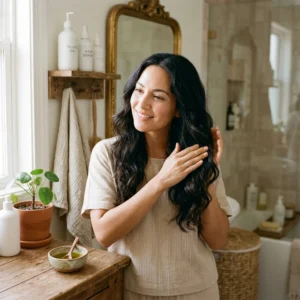
This is where most people get it wrong, so follow me! A little does a long way.
As a Pre-Shampoo Treatment
This is my favorite way, perfect for a lazy weekend.
- Heat 1 to 2 tablespoons of extra virgin olive oil. You want it warm and cozy—not hot.
- Work it in from the mid-lengths to the ends. If your hair gets oily fast, skip the roots.
- Cover with a shower cap and allow to sit for 20 to 30 minutes.
- Shampoo well, then condition as normal.
Your ends are going to be a whole lot softer after.
As a Gentle Scalp Massage
- Use a small quantity, about one teaspoonful.
- Using your finger tips, massage it into your scalp in slow circles.
- Leave for 15 minutes, then wash out thoroughly.
The massage itself is lovely and helps spread the oil around.
As a Quick Frizz Tamer
Rub a small drop between your hands and work through dry ends. Seriously, just a drop! If you put on too much, you’ll just get a greasy mess again.
Best Practices for the Best Results
Here’s what I’ve discovered through lots of trial and a few messy mistakes:
- Choose extra virgin olive oil. It’s the least processed, so it has more of the good antioxidants and vitamin E.
- Use it in moderation. Start small. You can always put in a little more.
- Treatments to once or twice a week max.
- Rinse. Really rinse. Oil that’s left over attracts dirt and weighs down your hair.
- If you have a sensitive or reactive scalp, do a patch test first.
If you choose these, then you will avoid most of the problems people complain about.
Common Mistakes to Avoid
I see these kinds of mistakes all the time, and the good news is they are easy to fix.
Using Way Too Much Oil
More is certainly not better here. It leaves your hair greasy and flat. It is hard to wash out. Trust me, I learned this the hard way on a Sunday morning.
Slathering Oil on the Roots
If your scalp isn’t really dry, keep the oil on your lengths and ends. Your roots are already giving off natural oils, and the more you add, the more everything looks limp and unwashed.
Skipping the Wash-Out
Leaving heavy oil in for days can clog the scalp and trap dirt and product buildup. Always rinse thoroughly.
Expecting Overnight Miracles
Olive oil promotes healthier hair over time. A flashy video may say so, but it won’t fix serious damage or regrow lost hair. If they tell you they can, they’re not being honest.
Expert Tips for Shiny, Healthy Strands
A few more tricks to take your results up a notch:
- Add it to your conditioner. For an easy moisture boost, just add a few drops to your usual conditioner.
- Wrap in a hot towel. During a treatment, wrap your hair in a warm towel for better absorption of the oil.
- Focus on your goals. They are the oldest, driest part of your hair, and they need the most attention.
- Feed in your hair. A healthy diet with plenty of protein, healthy fats, and vitamins is the foundation of healthy hair.
If you have ongoing scalp issues, sudden hair loss, or a skin condition, please see a board-certified dermatologist. One can be found at the American Academy of Dermatology. The Cleveland Clinic is a great resource for reliable general information about hair and scalp health.
Who Should Be Careful With Olive Oil
Olive oil is good for most people, but some should take it easy:
- Often too heavy for fine or oily hair types. Apply a small amount on the ends only.
- Acne-prone scalps can be reactive to oily buildupbuildup around the roots.
- Always patch test before full application if you have any allergies.
Listen to your hair. If it feels heavy, greasy, or flat – just tone it down. Your hair will tell you what it wants.
Frequently Asked Questions
1. Is it okay to leave olive oil in your hair overnight?
You can. But just a little, and protect your pillow with an old towel. For most people, 20 to 30 minutes of treatment works just as well without the mess.
2. Does olive oil help hair grow faster?
There’s not a lot of science to support that olive oil increases hair growth. What it can do is promote a healthier scalp and reduce breakage, which in turn helps your hair appear fuller and longer over time.
3. How often should I put olive oil on my hair?
Most hair types require washing only once or twice a week. Fine hair may require it less often, perhaps every other week.
4. Is extra virgin olive oil superior to regular olive oil?
Yeah! Extra virgin olive oil is less processed and retains more of its antioxidants and vitamin E, which makes it a better choice for hair care.
5. Is olive oil good for dandruff?
It may help soothe a dry, flaky scalp for some people. But dandruff can be caused by a number of different things, so if it keeps coming back despite your efforts, see a dermatologist.
6. Is olive oil safe for colored or treated hair?
In general, yes. Olive oil can add some much-needed moisture to dry processed hair. Use it sparingly and rinse thoroughly so it doesn’t take the color away.
7. Why is my hair oily after using olive oil?
Probably used too much or didn’t wash it out completely. Next time, try a smaller amount and shampoo twice if necessary.
8. Can I use olive oil on my kids’ hair?
A little usually goes a long way for detangling and moisture. First off, do a quick patch test, and if your baby has a sensitive scalp or any skin condition, then consult a pediatrician.
Final Thoughts
So, is olive oil good for your hair? The answer is a happy yes for most people based on years of using it myself and the research behind it! It’s affordable, it’s natural, and it actually helps with moisture, scalp comfort, frizz control, and that beautiful shine we are all looking for.
The true secret is clever use. Keep it simple, use a little, focus on your goals, and be consistent. Your strands will thank you!
Why not give it a try this week and see how your hair reacts? Healthy hair is a journey, and the small, steady habits are the ones that make the biggest difference of all.
Health Disclaimer: This post is for general informational and educational purposes only. It’s not intended as a substitute for professional medical advice. Results vary from person to person. If you have any scalp conditions, allergies, hair loss, or other conditions, please consult your health care professional or a board-certified dermatologist before starting any new hair care routine.