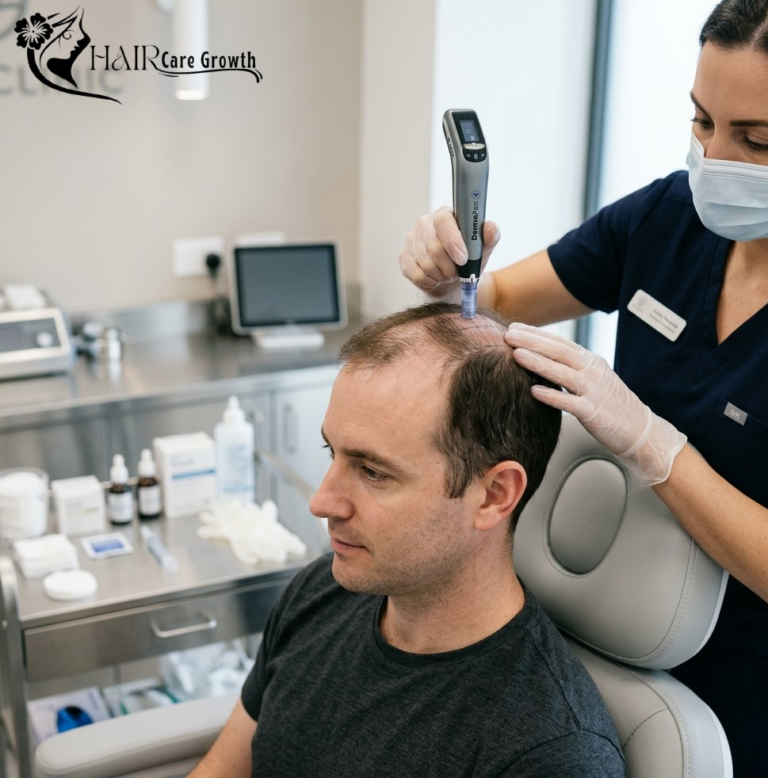
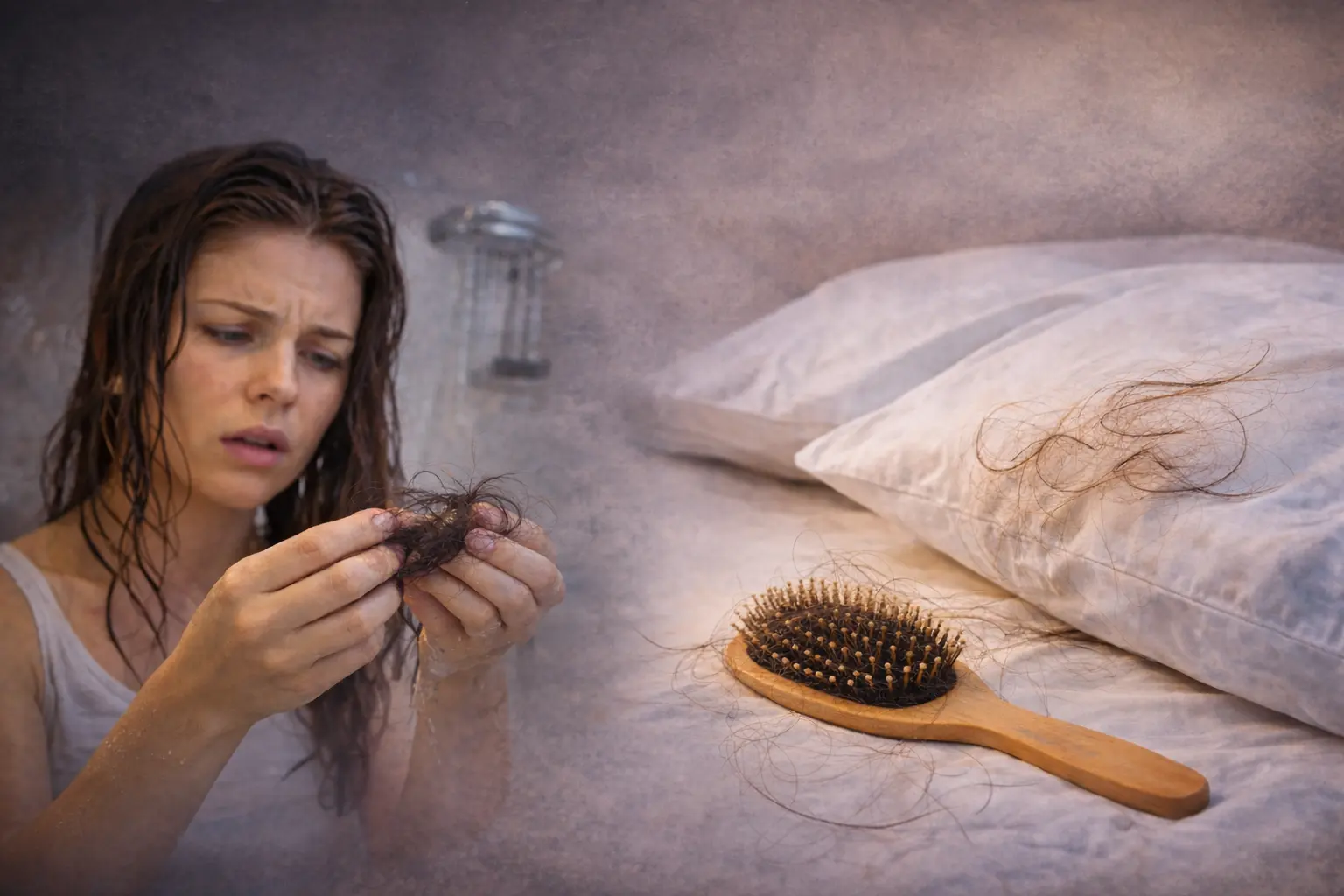
You wake and see a little nest of hair on your pillow. A few strands swirl about the shower drain. “Your brush is bigger than usual. And then your heart sinks.
If that scene sounds familiar, you’re not the only one. Hair anxiety is one of the most-asked questions I get after more than five years of research on hair health and scalp care. Our hair is part of our confidence, our look, our identity. So when it begins to fall out, our brains hit the panic button pretty quickly.
Here’s the wonderful news: most everyday shedding is completely normal! Much of the anxiety over hair loss, it turns out, is overblown. But when you understand how hair really grows, that fear diminishes.
Let us find it out together.
What is the typical amount of hair loss? The American Academy of Dermatology states that most adults shed between fifty and one hundred hairs every day. That’s your hair renewing itself, not a warning sign.
Understanding Hair Shedding vs. Hair Loss
The first step in calming any hair anxiety concern is knowing the difference between shedding and loss. They sound the same, but they aren’t the same thing.
What Is Normal Hair Shedding?
Your hair has cycles. It grows a bit, it rests a bit, then it falls out to make room for new strands. It’s a daily occurrence and is a sign that your scalp is working beautifully.
Losing a handful of hairs when you wash, brush, or run your fingers through your hair is totally expected. Temporary shedding does not mean you’re going bald.
Signs of normal shedding include:
- Hair falling evenly across your whole scalp
- Small amounts showing up daily on your brush, pillow, or drain
- No visible thinning patches or scalp changes
If that sounds like you, take a deep breath. This is your hair doing exactly what it’s supposed to do!
When Does Hair Shedding Become Hair Loss?
What actually happens with hair loss is that it’s a pattern over time. You should observe when you see:
- A part line that just keeps on growing
- Where it gets thin, in particular
- Bald spots or round bare circles
- Excessive shedding (unusual)
- Changes that take months.
Friendly tip: check changes calmly; don’t check your hair a dozen times a day. Monthly: Photograph your part or hairline. Real change takes time, so a monthly check gives you a lot more information than an anxious morning glance.
Why Do We Feel Anxious About Hair Shedding?
Hair loss anxiety is not silly or dramatic. It is a real emotional response, and it makes perfect sense. So let’s look at why hair is so powerful in the way we feel.
Hair and Self-Worth
For so many of us, hair is us. It determines how we see ourselves, our confidence in social situations, and how we express ourselves. A great hair day can turn your whole mood around!
So when hair starts falling, it can feel like a little piece of yourself is disappearing. That’s the emotional weight that makes the fear feel so big.
Fear of Losing Control
You never know when they’re going to start shedding, and that’s kind of freaky. You didn’t pick it, and you can’t always account for it.
And then there’s the late-night search spiral. You Google your symptoms and come up with scary worst-case scenarios. And suddenly a few more strands feel like a major crisis. Our minds have a way of turning small things into big fears, especially when we’re tired or stressed.
Social Media and Hair Anxiety
Social media fans the flames. Perfect thick glossy hair is everywhere, but a lot of it just isn’t real.
- Filters and edits smooth it all out
- Unattainable standards of beauty.
- Infinite scrolling = Infinite comparison
- Nobody’s immune to the pressure of ‘perfect’ hair
Keep in mind: you’re comparing your real-life hair to someone’s best angle, best light, best editing app. “Not a fair fight, friend.
Can worrying about hair loss worsen your anxiety? Yes, and it can even become a loop. Stress causes shedding, and shedding causes worry, and worry causes stress. The first step to ending this loop is to comprehend it.
Common Causes of Hair Shedding

Knowing why hair sheds takes away so much of its scary mystery. Here are the most common reasons behind the hair shedding you’re seeing.
Stress and Emotional Changes
Big stress can push extra hairs into the shedding phase all at one time. This is often referred to as stress shedding, and the curious thing about it is that it tends to happen a couple of months after the stressful event, not during the event. This delay is a hallmark of stress-related shedding called telogen effluvium, notes the Mayo Clinic.
Typical triggers include:
- school pressure or exams or something
- Family changes or loss
- Work stress and burnout
- Recovering from an illness
The best part? This type of shedding is usually temporary. Once life settles down, your hair often bounces right back.
Changes in Diet and Nutrition
Good fuel is needed to grow strong hair. Your hair is one of the first places that you’ll notice a deficiency in important nutrients in your diet.
Nutrients for healthy hair are:
- Protein is crucial because it makes up the majority of hair.
- Iron – A known cause of shedding is low iron, according to the NIH.
- Vitamins – particularly vitamins D and B
- Minerals – such as zinc
One of the easiest ways to feed your hair from the inside out is with a balanced plate of colourful foods!
Hormonal Changes
Hormones have a big say in how your hair behaves. Often shifts are at:
- Teenage years
- Pregnancy and after birth
- Old Age
- Other hormone highs and lows
A textbook example of this is postpartum shedding. Heavy shedding a few months after birth is noticed by many new parents, and it usually resolves on its own.
Hair Breakage Due to Hair Care Habits
Sometimes what looks like shedding is actually breakage. These habits can snap hair mid-strand:
- Too much heat styling
- Tight ponytails, braids, or buns
- Harsh chemical treatments
- Rough, aggressive brushing
The difference is this: breakage occurs along the hair shaft while shedding occurs at the root. Gentler habits can cut down breakage fast.
The Science Behind Hair Growth: Why Shedding Happens Naturally
This is what soothes most people right down. Once you understand how the hair cycle works, shedding is not scary.
Hair Growth Cycle Explained in Layman’s Terms
Three stages, every hair on your head. And the great thing is, all your hairs are on different schedules, so you’re always growing and shedding at the same time.
1. Anagen Phase (growth phase)
- Your hair is in a growth phase
- This phase may last many years Cleveland Clinic
- Now, at this moment, about 85-90% of your hair is in this phase
2. Catagen Phase (Transition Phase)
- The growth decelerates and stops
- The follicle contracts to sleep
- This brief stage is only a couple of weeks long.
3. Telogen Phase (Resting and Shedding phase)
- Then the old hair ceases and falls
- Just below, a brand new hair is growing
So, when you see a hair on your pillow, it usually means that a fresh one is already on its way. Shed is not a failure; shed is renewal!
Let’s do a quick comparison of the phases:
|
Phase |
What Happens |
How Long It Lasts |
Share of Your Hair |
|---|---|---|---|
|
Anagen |
Active growth |
2–6 years |
About 85–90% |
|
Catagen |
Follicle winds down |
2–3 weeks |
About 1–2% |
|
Telogen |
Rest, then shed |
Around 3 months |
About 10–15% |
How to Reduce Hair Anxiety and Build a Healthier Mindset
Science is half the battle. The other is altering your day-to-day reactions. These small tweaks make a huge difference!
Don’t Check Your Hair All the Time
You may feel that counting lost hairs gives you a sense of control, but it often results in more anxiety. All threads start to look like evidence of a problem that may not even exist.
- Forget strand counting,
- Don’t look in the mirror so quick
- Zoom out and consider your hair health as a whole.
Monthly photo trick is a hundred anxious glances better.
Focus on Healthy Hair Habits Instead of Fear
Focus your efforts where they will be productive. Big habits always break down into small, steady habits:
- Gentle regular wash
- Gentle head care
- Eat a varied and balanced diet
- Sleep enough
- Move, rest, or do whatever makes you relax to relieve stress
These simple practices feed your hair and peace of mind.
When to Seek Professional Help
Sometimes the best thing to do, the kindest, the smartest, is to check in with a professional. If you observe: Consult a doctor or dermatologist.
- Heavy sudden loss
- Bald patches visible
- An itchy, sore or irritated scalp
- Months of thinning underway
- Worry that’s interfering with your daily life
The AAD notes many causes of hair loss are treatable, especially if caught early. Often the quickest way to cool down is to get answers.
Family-Friendly Hair Care Tips for Stronger, Healthier Hair
Healthy hair habits are for everyone in the house, from little kids to grandparents! How to keep everybody’s hair happy.
Easy Hair Care Tips for Children and Adults
- Brush from the ends up gently
- No tugging and yanking, especially with tangles
- Choose appropriate, gentle products for your hair type
- Keep your scalp clean and fresh.
Simple habits to keep all your hair in the family healthy, no fancy routine needed.
The proper way to teach children hair confidence
Kids sense our fears in no time. If we get panicky about hair, they learn to get panicky too.
- Little hair changes are stress-free.
- Encourage a healthy, kind self-image
- Remind them that everyone’s hair is gloriously different
Teaching children that all hair is good hair is a gift that lasts a lifetime.
Common Myths About Hair Shedding
Hair anxiety is often born from the myths that just won’t die. Let’s get the biggies out!
|
Common Myth |
The Reality |
|---|---|
|
Losing hair every day means you’re going bald |
Daily shedding of 50–100 hairs is normal renewal |
|
Washing your hair causes hair loss |
Washing only removes hairs already ready to fall |
|
More products always mean better hair |
Simple, healthy routines beat piling on products |
|
When you cut your hair, it grows back thicker. |
Cutting just impacts the ends, not the growth or root. |
Myth: If you lose hair every day, you are going bald.
We all drop it every day in the hair cycle. You want to see a pattern of hair loss over time, not a few strands on your brush.
MYTH: WASHING YOUR HAIR WILL MAKE YOU LOSE HAIR
Those hairs you see when you wash your hair are already at the end of their cycle. The wash doesn’t get ’em out early; it just bunches ’em. A gentle wash, in fact, prevents your scalp from drying out.
Myth: The more hair products you use, the better your hair looks.
You can’t simply pile product upon product and expect to solve shedding. A clean scalp, gentle handling, and good nutrition are far more important than a crowded shower shelf.
Frequently Asked Questions About Hair Anxiety and Shedding
How much hair loss is okay?
Our daily hair loss is from 50 to 100, but this is an average and varies from person to person. Long hair is always more hair, and wash days just feel heavier. Don’t count the strands; see your total pattern.
Will worrying about hair loss make you lose more hair?
It can be stressful for a few months. Severe stress can cause more hairs to enter the resting phase. The worry-shed-worry cycle is real, and that is why calming your mind is part of taking care of your hair.
The fear of hair. Phobia of hair?
There is a yes! Chaetophobia (sometimes trichophobia) is the fear of hair. Not the usual nervousness of losing hair/hair falling out. If your fear of hair is interfering with your day-to-day activities, a mental health expert can be of great assistance.
How do I stop worrying about my hair?
The facts are the first step, because understanding the hair cycle takes away a lot of the fear. Cultivate soft, healthy habits. Stop comparing yourself to filtered social media posts. So if you are still worried about hair loss, then it is wise and smart to seek professional help.
Is sudden hair loss normal?
Temporary increase in shedding due to stress, illness, or childbirth. If you’re losing a lot of hair for more than a couple of months, or if you see bald patches or scalp irritation, make an appointment with a dermatologist. You should check if you have sudden, patchy hair loss or hair loss with itching and soreness, says the NHS.
Key Takeaways: Understanding Hair Shedding Without Fear
- Hair loss is a normal part of the hair cycle.
- Most hair anxiety is caused by confusing normal hair fall with hair loss.
- Good food, less stress, softer habits, stronger hair
- Always easier to see the patterns rather than count the individual strands
Conclusion: Healthy Hair Starts With Understanding, Not Anxiety
This is what I need you to know. Most of the time it’s normal to find hair on your pillow. * Your scalp is healing itself, as it should.
Mostly it’s a misunderstanding and not a real danger to be afraid of hair. Eat well, replace the worry with some gentle habits, rest up, and be kind to yourself. Confidence is not perfect hair; it is taking care of all your health.
And if it doesn’t seem quite right, listen to your gut and get a professional opinion. Always worth the peace of mind!
Ready to begin to feel calm and confident about your hair again? See Hair Care Growth for more real science-based hair care tips. Or, begin to build your simple, family-friendly hair care routine today. Are you having Hair Problems? Leave me a comment and let me know – I read them all and love to help!
Medical Disclaimer: This article is for general information only and does not constitute medical advice. It is not meant to take the place of expert medical advice, diagnosis, or treatment. See a physician or dermatologist if you are worried about hair loss, unexpected shedding, scalp issues, or your mental well-being. References: American Academy of Dermatology, Mayo Clinic, Cleveland Clinic, National Institutes of Health, NHS