The first time I lived in an apartment that had hard water, I had no idea that’s what it was. All I knew was my hair felt like dry straw all of a sudden. It looked dull, tangled in weird places, and my shampoo barely lathered, no matter how much I squeezed it out. I thought I’d completely messed up my hair or something. Does that sound familiar?
If your strands feel rough, your color fades too fast, or your scalp becomes itchy and flaky for no apparent reason, hard water could be the silent culprit. And the question that likely led you to this page is a simple one: Is this damage irreversible, or can you really turn it around?
Here’s the good news, pal. We’ll figure this out together with some straight talk, a little science, and the hands-on tips I wish someone had given me back then.
What Exactly Is Hard Water?
Hard water is simply water that has a high level of dissolved minerals, mainly calcium and magnesium. On its way to your tap, it picks up these as it moves through rock and soil.
Hard water is present to some degree in most homes in the country, according to the U.S. Geological Survey. If this is your reality, you are in good company.
The clues are often around your house as well:
- White, crusty buildup on faucets and showerheads
- Spots left behind on glasses and dishes
- Soap that refuses to lather well
- Skin that feels dry or filmy after a shower
If any of this sounds familiar, your hair may be absorbing those same minerals each time you wash it.
How Hard Water Affects Your Hair and Scalp
But here’s the thing that completely threw me. Hard water usually doesn’t eat away at the inside of your hair. The real problem is minerals building up on the surface of each strand, little by little, over time.
Mineral Buildup on the Strands
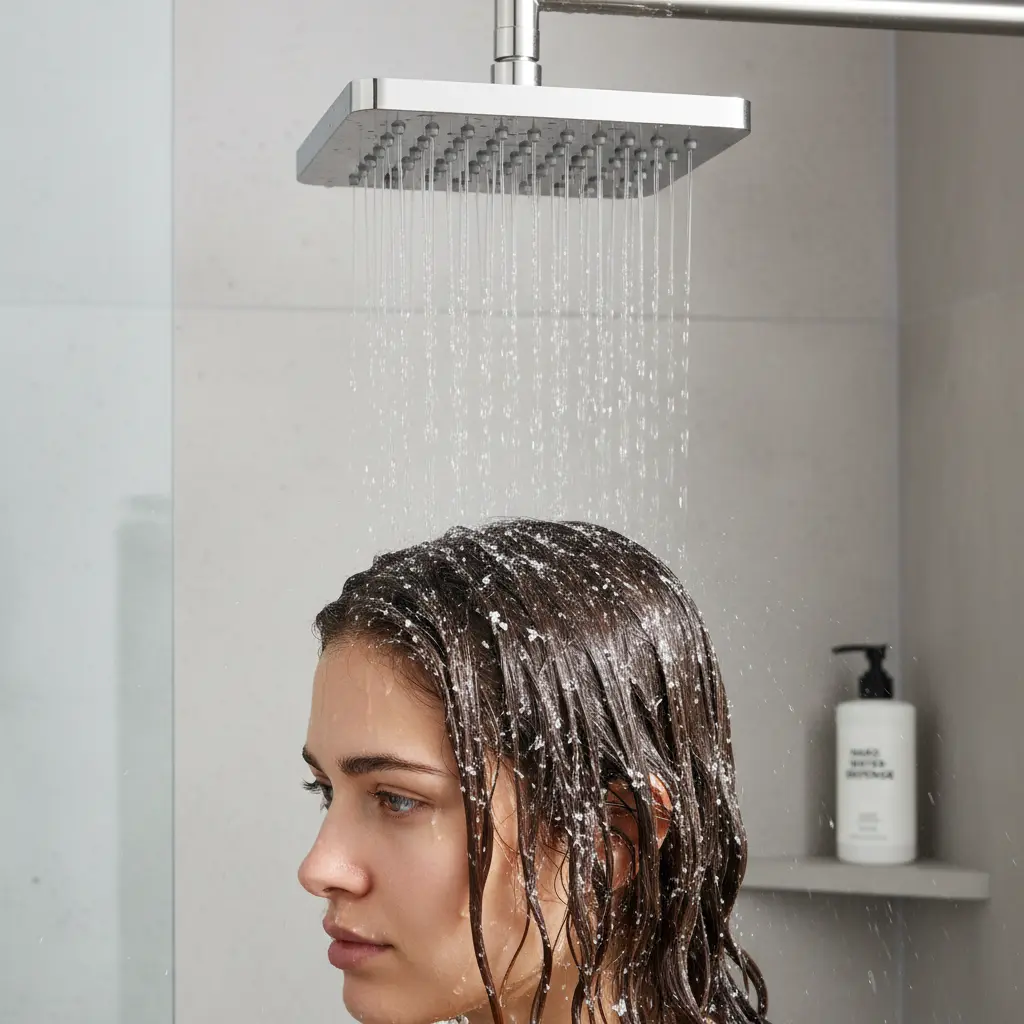
Calcium and magnesium stick to your hair like a thin, invisible film. That film keeps water out and prevents your products from doing what they’re supposed to do. The result:
- Dry, rough, straw-like feel
- Dullness, loss of shine
- Tangles and snaps while brushing
- Color that fades or bronzes faster
The Scalp Side of Things
Your scalp feels that, too. That mineral residue can combine with natural oils and residual product to leave your skin irritated, itchy, or flaky. Many people find that their dandruff gets worse when hard water is involved.
Research by scientists, such as those publishing in the National Library of Medicine, has looked at the effects of hard water exposure and found it could lower the strength and elasticity of hair over time. So, that hunch that “my hair just feels weaker”? It’s not just in your head.
Is Hard Water Damage Permanent or Reversible?
This is the part you really want to know, so let me be clear with you.
Hard water damage is not permanent for most people. The minerals are sitting on the surface, and once you remove that buildup and protect your hair going forward, things really get better.
But there’s a catch that it’s worth being honest about. The constant dryness and brittleness can cause breakage and split ends if you let the buildup sit and ignore it for a long stretch. And split ends don’t grow back. But the only true fix is a trim when a strand breaks or frays.
So the mineral coating is reversible. It doesn’t break what it finally breaks. That’s the very reason why early detection matters.
What Makes Hard Water Hair Problems Worse
Certain everyday habits can quietly accelerate the damage from hard water.
- No clarifying washes, so the buildup keeps stacking
- Rinsing with more shampoo to create a lather that strips your hair
- Hot water rinses that lift the cuticle and dry out strands more
- Over-styling brittle, mineral-coated hair with heat
- Frequent Coloring – Without Protection Against Mineral Interference
The problem starts with the minerals. These habits make a small annoyance into real, visible damage.
Solutions and Best Practices That Actually Work
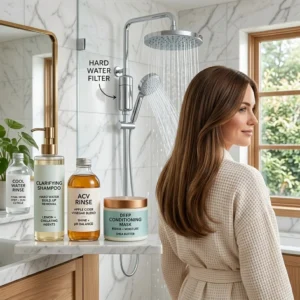
This is where it gets exciting, because you actually have the power to turn this around. These are the changes that made the most impact on my hair.
Install a Shower Filter
This was the game-changer for me. A good showerhead filter lessens the minerals that hit your hair every time you wash it. It’s cheap, easy to install, and lots of people find softer hair after a couple of weeks.
Use a Clarifying or Chelating Shampoo
A clearing shampoo clears buildup. For hard water, especially, try a chelating shampoo that binds to and washes away mineral deposits. Use it once a week (not every day), as too much can dry your hair out.
Try a Vinegar Rinse
A diluted apple cider vinegar rinse, about one tablespoon to a cup of water, can help dissolve mineral buildup and restore shine. Pour it on after shampooing and let it sit for a minute before rinsing. Your hair will feel significantly smoother.
Deep Condition Regularly
Hard water dries out hair, so it returns moisture. A weekly deep conditioning mask helps to replace what the minerals keep blocking out. I made this a habit and noticed less breakage almost immediately.
Finish With a Cool or Filtered Rinse
If you can, rinse off with cooler water to help seal the cuticle. Some people even have a jug of filtered or bottled water for a final rinse on wash days.
Common Mistakes to Avoid
I’ve made plenty of these myself, so save yourself the trouble.
- Downplaying early signs. So when “my hair feels off,” that’s your cue to act, not wait.
- Explaining each day. Too many strips natural oils away, and it backfires.
- Skipping conditioner to “keep hair light. Hard water hair requires more moisture, not less.
- First, blame your products. Sometimes it’s not the shampoo you just threw out, but the water.
- Allowing split ends to linger. No product will reverse a split strand; trim them away.
- You forgot your scalp. Buildup can happen on skin, too, so be kind to your scalp.
Expert Tips for Healthier Hair in Hard Water
I’ve picked up a few more tips from years of testing routines and reading the research.
- When in doubt, test your water. Cheap home test strips remove the guesswork by telling you exactly how hard your water is.
- Be consistent, not confrontational. Gentle weekly cleaning will always beat the occasional harsh scrubbing.
- Extra protection for coloured hair. Minerals love to play with color, so a chelation treatment prior to a salon visit can really help.
- Watch your scalp carefully. If itching, redness, or flaking don’t stop, it may be more than just hard water. A dermatologist can help with that.
- Give it some time. Hair grows back slowly, so expect real improvement over weeks, not hours.
Frequently Asked Questions
Does hard water cause hair loss?
There is no proven link between hard water and hair loss. It can lead to weaker hair that breaks and can look like thinning. If you notice real hair loss or bald patches, consult a board-certified dermatologist to find out what’s really going on.
How do I fix my hair from hard water damage?
Yes, most of the time. Chelating shampoo can help remove mineral buildup, and you can add moisture and filter your water to restore softness and shine. Just remember, any existing split ends will still need a trim.
How to Know if Hard Water Is Damaging Your Hair
You may see dullness, a straw-like texture, tangling, rapid color loss, poor lather, and an itchy, flaky scalp. You can easily test your water hardness with a home water test strip.
Does a shower filter really make a difference?
Yes, for many people. With every wash, a filter reduces the minerals that reach your hair and skin. It won’t cure everything, but most people notice that their hair and skin are softer after a few weeks.
How Often Should You Use a Clarifying Shampoo?
Once a week is generally enough. Daily use can strip your hair, leaving it dry. See how your hair reacts and do accordingly.
Is hard water worse for color-treated hair?
Usually it does. Minerals can cause dye to fade faster or become brassy. Chelating treatment before coloring and protecting your hair after that helps a lot.
Can hard water also be bad for my scalp?
It could be. For others, mineral residue can dry out, irritate, or flake the scalp and worsen any existing dandruff. If it keeps bothering, consult a dermatologist.
The Bottom Line
Is it possible for hard water to cause permanent damage to your hair? Mostly, no. The mineral buildup that makes your hair feel rough, dull, and brittle is reversible once you remove it and protect your strands going forward. The only permanent part is the breakage and split ends from ignoring the problem for too long.
The best part is you’re in the driver’s seat here. Purify your water, soften gently, deep condition often, and watch your scalp. Do that, and you can totally bring back your hair to soft, shiny, happy days, even with hard water running out of your tap.
Yes, your hair has been through it, but it’s tougher and more forgiving than you think.
Medical disclaimer: This article is for informational purposes only and is not intended as a substitute for professional medical advice, diagnosis, or treatment. Always seek the advice of your qualified healthcare professional or board-certified dermatologist with any questions you may have regarding a medical condition or your general health.