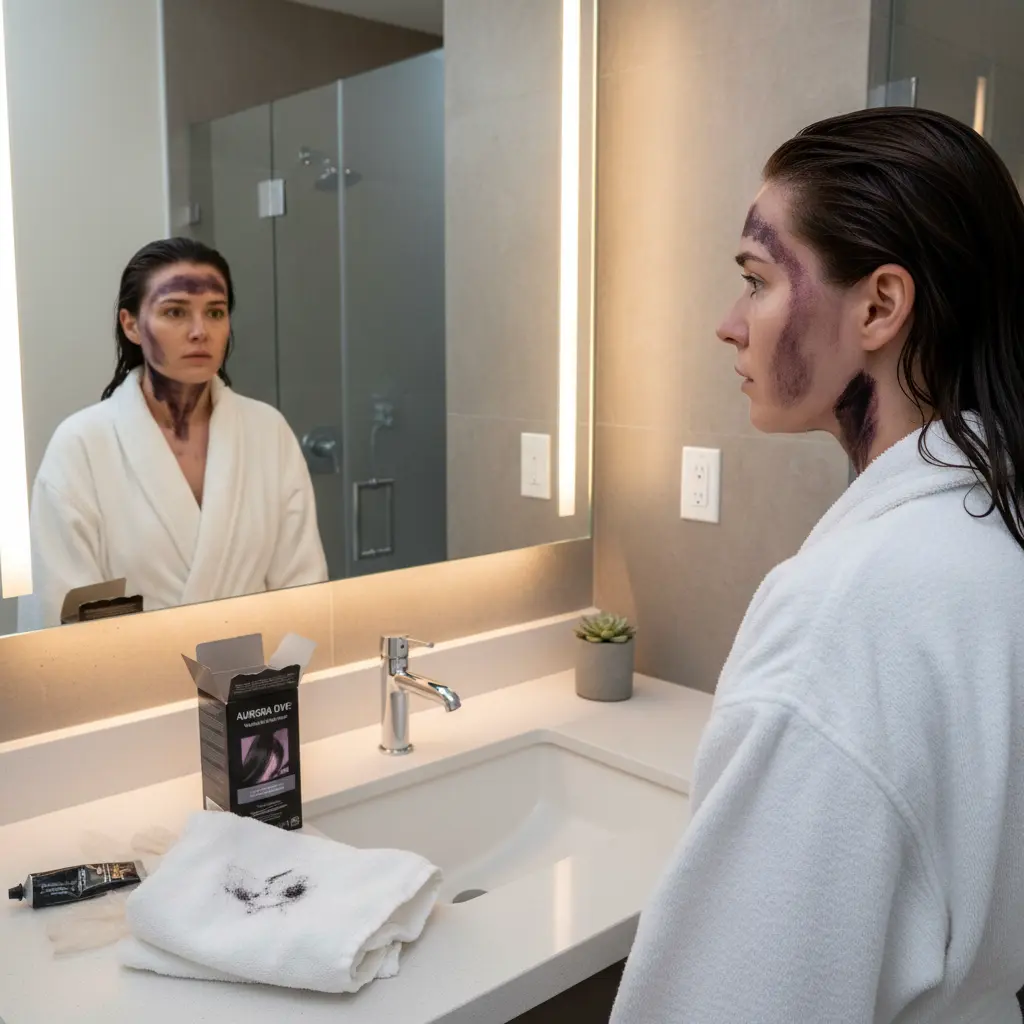
It happens to the best of us. You’ve just completed applying that fabulous new coffee brown or colourful purple color. You’re looking forward to the color to increase, feeling like a DIY stylist pro. Then, you catch a glimpse of your self within the toilet reflect.
You didn’t simply dye your hair; you dyed your forehead, your ears, and maybe even a touch patch for your neck.
Panic units in. Will I have to go to the paintings the next day, looking like a tie-dye task?
Take a deep breath. Getting hair dye in your skin is one of the maximum not unusual splendor mishaps, and happily, it’s not often permanent. Whether you’re coping with a fresh smear or a cussed stain that’s already dried, there are masses of secure, powerful methods to dispose of it.
In this guide, we’re going to stroll you through precisely how to get hair dye off skin the use of belongings you probable have already got in your toilet or kitchen. We’ll cover mild techniques for sensitive areas like your face and tougher solutions for your hands.
Why Does Hair Dye Stain Skin?
Before we dive into the answers, it facilitates to understand the problem. Hair dye is designed to penetrate the hair cuticle and deposit pigment. Skin, like hair, is a product of keratinized cells. Because the protein shape is rather comparable, the dye does not discriminate—it fortunately grabs onto your pores and skin cells simply because it does your hair strands.
The excellent information? Your skin clearly sheds cells and produces oils; this means that even without intervention, the dye will finally fade. But no person wants to wait three days for a purple brow to disappear.
Safety First: When trying those techniques, constantly start with the gentlest alternative, mainly to your face. Stop straight away if you feel burning or excessive inflammation.
Immediate Action: What to Do When the Dye is Fresh
If you seize the dye while it’s still moist, you are in luck. Fresh dye is notably less complicated to remove than dried pigment.
The Water and Soap Method
This sounds apparent, but it’s your first line of protection. If the dye hasn’t set, a damp washcloth with hot water and a piece of hand cleaning soap can regularly wipe it right off.
- Dampen a material: Use warm water.
- Add cleaning soap: A mild facial purifier or hand cleaning soap works nicely.
- Wipe gently: Don’t scrub tough; simply wipe the region firmly to lift the moist product.
If the dye has already started to dry or stain, simple soap might not cut it. That’s why we circulate directly to the heavy hitters.
How to Get Hair Dye Off Your Face and Neck
The skin on your face and neck is thinner and more sensitive than the skin on your palms. You want to be cautious, no longer to apply abrasive chemical compounds that would cause redness or breakouts. Here are the pleasant techniques for these sensitive areas.
1. Olive Oil or Baby Oil
Oil is an extremely good purifier because it breaks down the color molecules without stripping your skin of moisture. This is the quality approach for human beings with touchy skin.
- How to apply it: Soak a cotton ball in olive oil, infant oil, or maybe coconut oil. Rub it lightly over the stained place.
- Let it sit: For stubborn stains, apply a layer of oil and allow it to sit for as long as possible—even up to eight hours (in a single day) if the stain is terrible.
- Rinse: Wash off with hot water and your regular face wash.
2. Micellar Water or Makeup Remover
If you have got waterproof make-up remover, it could work wonders on hair dye. Since it’s formulated to break down long-wear pigments in eyeliner and lipstick, it can frequently address hair dye pigments too.
- How to apply it: Apply to a cotton sphere and press it against the stain for 10-15 seconds to allow it penetrate.
- Wipe away: Gently wipe the region. Repeat as necessary.
3. Toothpaste (Non-Gel)
This is a conventional DIY splendor hack. Toothpaste incorporates mild abrasives (like baking soda) that exfoliate the stained top layer of skin.
- What kind to apply: Use an undeniable white paste. Gel toothpastes don’t normally paint as nicely for this.
- Application: Apply a small dot to the stain and rubdown it in together with your finger or a cotton swab.
- Time: Let it take a seat for five-10 minutes.
- Removal: Wipe off with a heat-damp cloth.
4. Petroleum Jelly (Vaseline)
Petroleum jelly acts in addition to grease but remains in a higher area. However, be careful when you have acne-prone skin, as it could clog pores.
- Application: Massage the jelly into the stain till it begins to turn the coloration of the dye.
- Wait: You can wipe it off right now, but leaving it on for an hour works better.
- Clean: Wipe away with a wet cloth. The dye must rise off with the jelly.
How to Get Hair Dye Off Hands and Arms
The skin on your fingers is more difficult, so you can use slightly more abrasive strategies if necessary. Hands generally get the worst of it, in particular if a glove broke or you decided to “fix” a phase with your bare palms.
5. Baking Soda and Dish Soap
This creates an effective exfoliating paste. Dish cleaning soap cuts through oils and pigment, while baking soda scrubs away the stained cells.
- The Recipe: Mix identical parts of baking soda and liquid dish cleaning soap (like Dawn) in a small bowl.
- Scrub: Rub the paste onto your arms like you are washing them. Focus on the cuticles and knuckles where dye likes to settle.
- Rinse: Rinse with warm water. This may be drying, so apply hand lotion straight away.
6. Nail Polish Remover (Acetone)
This is powerful, however harsh. Never use this in your face. It is precisely for fingers and fingernails.
- Caution: Acetone strips herbal oils immediately.
- Method: Soak a cotton ball in nail polish remover. Quickly swipe it over the stained areas on your arms.
- Wash: Immediately wash your arms with soap and water to do away with the acetone residue.
7. Hand Sanitizer
Since hand sanitizer has a high alcohol content, it can help reactivate dried dye and remove it.
- Application: Squirt a beneficiant amount onto the stain.
- Rub: Rub quickly along with your hands or a cotton pad.
- Wash: Rinse very well.
Professional Solutions: When DIY Doesn’t Work
Sometimes, that black box dye simply won’t budge with olive oil or toothpaste. If you dye your hair often, it is probably well worth investing in merchandise specifically designed for this purpose.
eight. Professional Hair Color Stain Remover
You can buy these online or at shops like Sally Beauty that promote beauty products. They are available in liquid, wipe, or cream form.
- Why the paintings: They are chemically formulated to dissolve hair color molecules correctly.
- Top Picks: Look for brands like Roux Clean Touch or Colortrak Wipes. They scent a chunk of chemical, but they paint immediately.
nine. Rubbing Alcohol
Similar to hand sanitizer, however stronger. Isopropyl alcohol is effective, however, very drying.
- Use carefully: Dab a small amount on a cotton ball and dab the stain.
- Moisturize: Apply a heavy cream or lotion later on to restore the skin barrier.
Special Care: Removing Dye from Fingernails
Fingernails are porous, which means dye can soak deep into the nail plate. This is arguably the hardest region to put off dye from.
10. The Cuticle Remover Trick
Cuticle remover liquid is designed to dissolve useless pores and skin. Since your nails and the hardened skin around them are hard, this works well.
- Apply: Brush cuticle remover onto the stained nail or skin around the nail.
- Wait: Let it sit down for the time endorsed at the bottle (normally 30-60 seconds).
- Scrub: Use a nail brush to scrub the location vigorously.
- Wash: Wash hands thoroughly.
If the nail plate itself is deeply stained, you may need to gently buff the surface of the nail with a buffing block to get rid of the top layer of stained keratin.
What NOT to Do When Removing Hair Dye
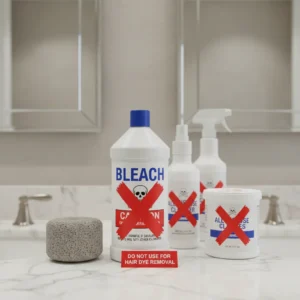
In the panic to take away a stain, you might be tempted to clean until your skin is raw. Please don’t.
- Avoid Bleach: Never apply bleach to your skin. It can cause extreme chemical burns and lasting damage.
- Don’t Over-Exfoliate: Scrubbing your forehead with a pumice stone or harsh scrubber will go away you with a purple, raw patch that appears worse than the dye stain.
- Don’t Mix Chemicals: Stick to 1 method at a time. Mixing ammonia-based cleaners with other products is dangerous.
Prevention: How to Stop Dye Stains Before They Start
The quality manner to cope with hair dye on skin is to prevent it from getting there in the first place. Next time you color, take five minutes to prep.
Create a Barrier
Before you open the dye bottle, apply a thick layer of petroleum jelly (Vaseline), heavy conditioner, or a solid lip balm around your hairline.
- Where to use: Trace your hairline, cover the tops of your ears, and swipe a few on the back of your neck.
- How it works: If dye drips onto this barrier, it sits on top of the jelly rather than soaking into your skin. You can just wipe it away when you rinse your hair.
Wear Better Gloves
Those flimsy plastic gloves that come in the field dye kit are infamous for tearing or slipping. Buy a container of equipped latex or nitrile gloves. They give you better dexterity and don’t slide off, preserving your arms pristine.
Have Clean-Up Tools Ready
Keep a moist rag and some micellar water on the bathroom counter before you start. If a drip falls on your cheek, you could wipe it right away as opposed to fumbling for a towel even as the dye sets.
Don’t Wash Your Face Before Dyeing
Interestingly, the herbal oils in your face act as a slight barrier. Freshly scrubbed, dry skin absorbs dye a whole lot faster than skin that hasn’t been washed for some hours. Save your face washing for after you’ve rinsed the colour out.
Frequently Asked Questions (FAQ)
How long does it stay on my skin if I don’t do something?
It relies upon the sort of dye and your skin type. Generally, semi-everlasting and everlasting dyes will fade from the pores and skin within 2 to three days as you shower and wash your face. Your skin certainly exfoliates, taking the pigment with it.
Does hairspray take away hair dye from skin?
This is an antique-college trick that used to paintings higher when hairsprays had better alcohol content. It can work in a pinch: spray onto a cotton pad and rub the stain. However, modern hairsprays often contain greater conditioners and less alcohol, making them less powerful than rubbing alcohol or hand sanitizer.
Can I use magic erasers on my skin?
No. Magic erasers (melamine foam) are essentially ultra-excellent sandpaper. While they get rid of stains from partitions beautifully, the use of them on your face can cause “friction burn,” doing away with layers of healthful pores and skin together with the dye. It is too harsh for sensitive facial pores and skin.
Conclusion: Don’t Let Stains Ruin Your New Look
Coloring your hair at domestic is a laugh, empowering way to change up your style. While the stains are demanding, they’re transient and fixable.
Remember the golden rule of hair dye removal: persistence over electricity. It is better to use a mild oil cleaner twice than to scrub your pores and skin raw with harsh chemical compounds once. Start with the mild techniques like olive oil or toothpaste. Only circulate to the tougher stuff, like baking soda or alcohol, if the stain is on your hands and refuses to budge.
Next time, grease up that hairline with Vaseline, pull on a few pleasant gloves, and dye with self-assurance. Your hair appears remarkable—and now, your pores and skin do too.
Disclaimer: The records provided in this text are for academic purposes. Always carry out a patch take a look at whilst attempting new skin care merchandise or DIY mixtures to make certain you do not have an allergic reaction.