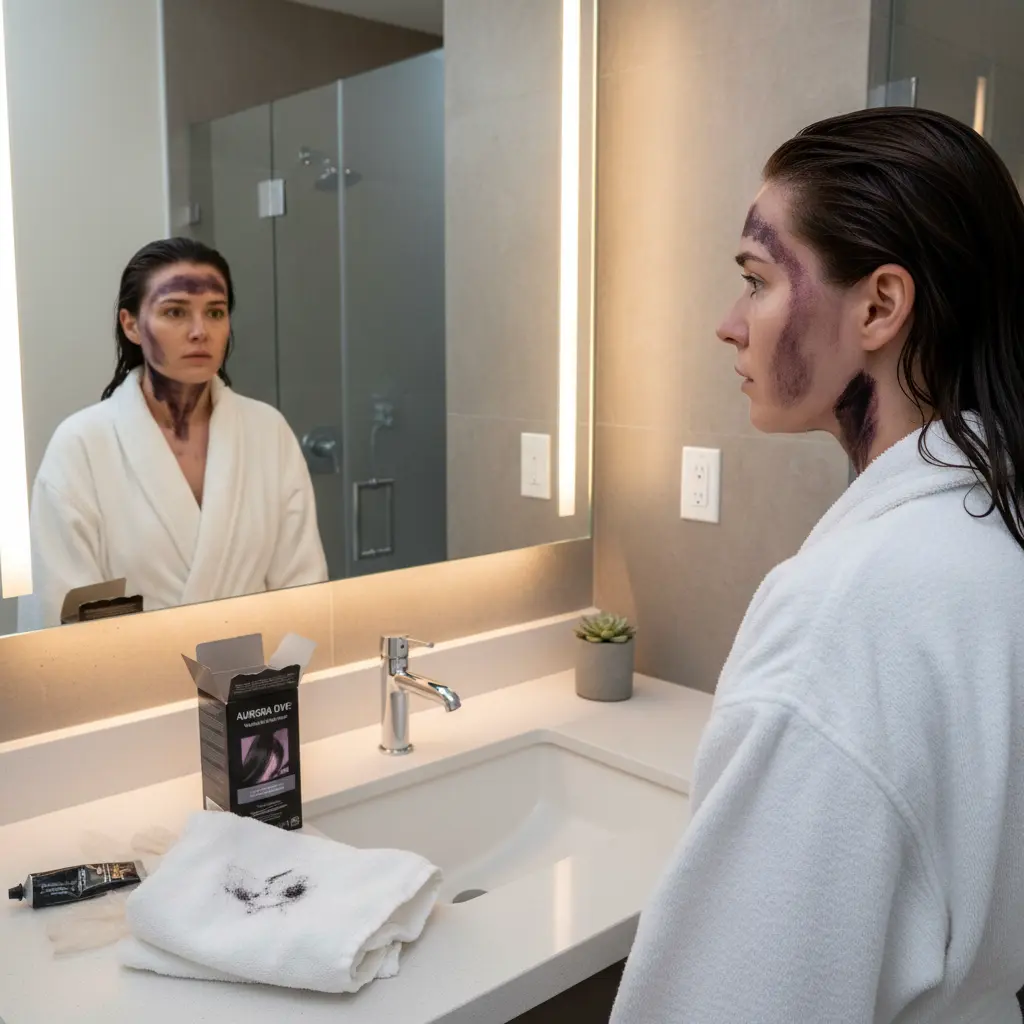
Been there more times than I can count. Having spent years coloring my own hair and helping friends avoid stained hairlines before parties, I know what really works and what is just a waste of time.
The best part? Most dye stains come off without a struggle. You just need the right trick for the right place. Let’s work it out.
Why Hair Dye Clings to Your Skin
Hair dye is made to grab on and hold on. That is its entire job.
Permanent dyes open the hair shaft and lock the color deep inside. There is no shaft to open, but your outer layer of dead cells takes up pigment very quickly. That’s why a stray drip becomes a stubborn stain in seconds.
Stains are made worse by a few things:
- Color lasts longer on dry or porous skin than on smooth, moist skin.
- Blondes don’t stain as much as red and blue shades, and dark ones.
- Letting the dye sit allows the pigment time to settle in.
So speed is more important than any fancy product.” The faster you go, the easier your cleanup.
Act Fast: Your First Minute Decides Everything
This is the most useful habit in this entire guide. When the dye touches skin, wipe it off immediately.
Have a damp cloth or baby wipe handy while you are coloring. In case of a spill, blot up right away. Don’t wait till you rinse.
Plain water and a little soap will remove fresh dye. Dried dye fights back. That gap in time is between five seconds of wiping and ten minutes of scrubbing.
Quick takeaway: Have a wipe station ready before you open the box of dye. Your future self will thank you.
Safe Ways to Remove Hair Dye From Skin
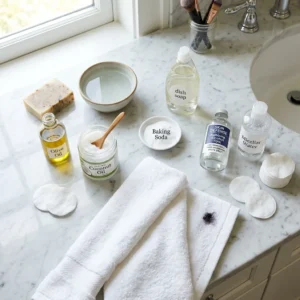
Be nice. If the soft techniques don’t work, then go for something harder. Your skin will love you for being patient.
1. Soap and Warm Water
Try this first, always. It’s free and takes care of most fresh stains on its own.
- Dab the stained spot with warm water.
- Lather with a mild soap or body wash.
- Massage gently in small circles for about 30 seconds.
- Repeat and rinse, and repeat once.
If soap clears it, call it a day. No need to reach for the hard stuff.
2. Olive Oil or Coconut Oil
I use oil for sensitive areas like the ears and the hairline. It loosens pigment by gentle scrubbing.
- Put a little oil on a cotton pad.
- Press the stain for two to three minutes.
- Wipe gently in a single direction.
Oil is gentle on dry skin, so many stylists keep a bottle on the counter. Leave a thin layer on overnight for a stubborn mark.
3. Baking Soda and Dish Soap Paste
This combo adds a light scrubbing power for tougher marks on hands and arms.
- Mix one part baking soda and one part dish soap.
- Rub it on the stain with light pressure.
- Hydrate and rinse thoroughly.
Use only on thicker skin, such as your hands. Leave it off your face. It’s a bit gritty, so let the paste do the work, not your fingers.
4. Makeup Remover
An oil-based or micellar makeup remover is a clever choice for makeup removal around your eyes and on your face.
- Soak a cotton ball.
- Keep it on the stain for a few seconds.
- Wipe slowly until it comes off.
It’s gentle enough for hairline stains near your eyes and designed for the delicate skin of the face.
5. Rubbing Alcohol (Use Sparingly)
Rubbing alcohol will take out dye that nothing else will touch. It also dries out skin fast, so use it as a last resort.
- Moisten a cotton ball with a little.
- Blot the stain lightly; do not soak the area.
- Rinse off immediately and apply moisturizer.
Keep it away from your eyes and any broken skin. Stop using it if your skin stings or turns red.
Removing Dye From Tricky Spots
Different areas require different care. This is what I do with the most staining spots.
Hairline and Forehead
This is the first trouble spot. Using a cotton pad and makeup remover or oil, gently wipe downwards away from your eyes.
Ears and Neck
The skin is thin and soft here. Oil works great. Press and wait a bit, then wipe. Do not scrub.
Hands and Fingernails
Hands get it the worst. A paste of baking soda or dish soap will generally clean the skin. A little oil on a cotton swab works well for nail edges, getting into the corners. Next time, wear gloves. Saves a hassle.
The Prevention Trick That Beats Every Cleanup
The best stain is the one that never occurs. There’s a simple barrier trick that stylists use, and you can do it in two minutes.
Before you begin coloring, apply petroleum jelly or a heavy moisturizer around your hairline, ears, and the back of your neck.
The dye sits on top of that barrier, not soaking into your skin. After coloring, it wipes off in seconds with a tissue.
Quick takeaway: Two minutes of prep saves you scrubbing later.
Common Mistakes to Avoid
Certain habits will make stains worse, or even damage your skin. Stay away from these.
- Scrub. Rubbing aggressively irritates the skin and rarely speeds things up.
- Bleach on your skin. Never do that. It can burn you and damage your skin.
- Allow the dye to dry thoroughly. That is, once stains are set, they are far more difficult to lift.
- Burning or redness with pushing. That’s a stop sign, not a wall to be powered through.
- No patch test. Dye allergy is real and should be ruled out first.
Before each coloring session, the American Academy of Dermatology recommends a patch test to check for reactions. You can read their hair dye safety advice here.
Expert Tips for Cleaner, Safer Coloring
These small habits make a difference. There are things I’ve gathered through the years of doing touch-ups at home and fixing friends’ roots.
- Wear gloves at all times. Most kits come with a few. Employ them.
- Have a damp cloth ready to soak up drips as they occur.
- Color in high light. You get stray dye before it fixes.
- After cleaning, moisturize. Oil, soap, and alcohol can dry out your skin.
- Be patient with tough stains. Light pressure over a few rounds beats a harsh scrub.
- Try any strong method on a small patch first, especially alcohol or baking soda.
If the stain still won’t remove, wait a day. Your skin naturally sheds the top layer, so most residual color will fade away naturally in two or three days.
Frequently Asked Questions
How to get rid of hair dye on skin fast?
For starters, apply soap and warm water to fresh stains, for tougher marks, try olive oil, makeup remover, or a baking soda paste. If you’re going to do something, do it fast.
Does toothpaste take hair dye off skin?
A mild, non-gel toothpaste can lift small stains with its gentle grit. Apply sparingly and avoid contact with the eyes.
Do hair dye stains go away by themselves?
Yes. Your skin naturally sheds its outer layer, so most stains will fade in two to three days even if you do nothing.
Is rubbing alcohol good for removing dye from skin?
It works, but it dries skin out fast. Use sparingly, rinse off quickly, and follow with a moisturizer. Avoid contact with the eyes and broken skin.
How to remove hair dye from your fingernails?
A paste of baking soda and dish soap is good, and a cotton swab dipped in oil gets the nail edges. Gloves stop the stain from happening in the first place.
Is hair dye on the skin dangerous?
The stain itself is not harmful to most people. The real problem is an allergy to ingredients such as PPD. Here’s the Mayo Clinic’s rundown of contact dermatitis symptoms. Always do a patch test first.
How can I stop dye stains the easiest way?
Before coloring, apply a thin layer of petroleum jelly along your hairline, ears, and neck. That barrier, the dye wipes right off that.
When should I see a doctor?
Seek medical help if you see burning, swelling, blistering, or a spreading rash. Seek immediate medical attention if you have difficulty breathing or swelling of the face. Research on dye allergies is well documented in PubMed.
Final Thoughts
It feels like a minor disaster in the moment, having hair dye on your skin. It really isn’t so.
Begin with mild soap and water. Use only oil, makeup remover, or a baking soda paste, if you need to. Next time, move quickly, skip the harsh scrubbing, and shield your skin with a simple barrier.
Take one tip from this guide and try it out at your next coloring session. That one tweak makes the whole process cleaner, calmer, and so much less stressful.
Medical Disclaimer: This article is intended for informational purposes only and does not replace professional medical advice. Everyone reacts differently to hair color products and to skin reactions. If you experience irritation, burning, swelling, or an allergic reaction, discontinue use of the product and consult a qualified healthcare professional or dermatologist.