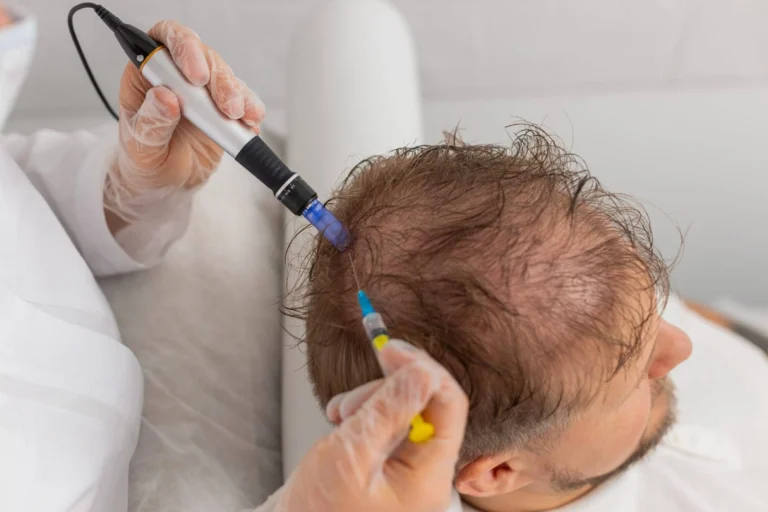
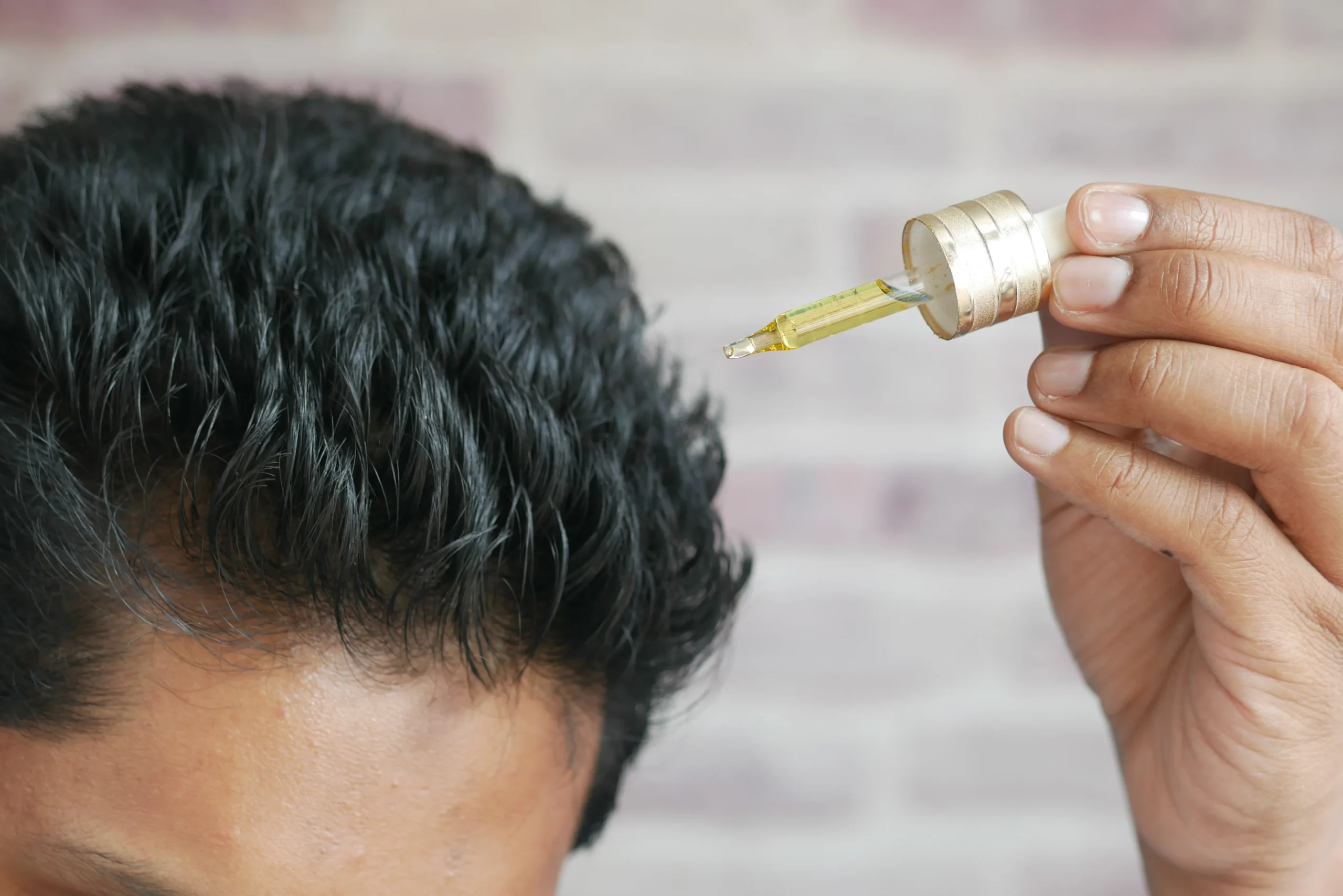
Minoxidil is marketed as a product that can slow hair loss and grow some hair for individuals with androgenetic alopecia. Most people know this as male or female pattern baldness. While it does help, you should know that minoxidil does not provide any instant results, cure baldness, or even provide a permanent solution.
The time required to see results with minoxidil treatment is generally underestimated. Part of the reason for this is that significant improvement can take multiple months, and the American Academy of Dermatology (AAD) states that it can take six to twelve months to see if minoxidil is effective. Along with that, should treatment with minoxidil be effective, continued treatment is required in order to keep the results effective.
So, minoxidil should be treated as a long-term hair loss management plan, not a one-time hair growth treatment.
This guide is intended to explain the main aspects of using minoxidil, including its function, its limitations and benefits, what results can be reasonably expected, associated risks and side effects, and the correct way to use it.
Medical disclaimer: This article aims to be informative and not diagnostic or therapeutic. Hair falls out for many reasons. Patients who suffer sudden, significant, patchy, or unusual hair loss or hair loss that is accompanied by symptoms and/or signs on the scalp should consult a dermatologist or other health care professional.
What Is Minoxidil?
Minoxidil is a hair regrowth medicine for certain forms of hair loss. It addresses the thinning of hair and stops the process. In the US, topical minoxidil ordinarily is a foam or liquid at 2% or 5% strength and is sold over the counter.
Minoxidil was initially an oral antihypertensive used for high blood pressure. Interestingly enough, patients using Minoxidil experienced increased hair growth. This side effect prompted the creation of topical minoxidil for use on the scalp.
Oral minoxidil is a prescription medication. Dermatologists have prescribed some low doses off-label for hair loss treatment. However, oral and topical forms of minoxidil must not be substituted. A 2024 report states that the FDA has approved topical minoxidil for the treatment of androgenetic alopecia. Low-dose oral minoxidil remains an off-label use.
How Does Minoxidil Grow Hair?
Exactly how minoxidil stimulates the growth of hair is still largely a mystery.
Current studies indicate minoxidil works by stimulating dormant tanical hair follicles to enter the growth phase of the hair growth cycle and possibly lengthening it. Additionally, minoxidil has shown the possibility of reversing pattern loss hair shrinkage by enlarging follicles.
This distinction is clinically relevant. Minoxidil does not add hair follicles; it only acts on hair follicles that exist on the scalp. Since minoxidil functions in this manner, it indicates that it is better to have started treatment for pattern baldness earlier rather than later when a long period of baldness has been established.
Who May Benefit From Minoxidil?
Minoxidil is most well known for treating androgenetic alopecia, the clinical term for male or female pattern hair loss.
In men, this condition first presents as gradual recession and thinning of the crown and top of the scalp. In women, it is more common to see this as a part that is widening or reduced density of the top of the scalp.
According to the AAD, topical minoxidil is often the first recommendation to both men and women experiencing hair loss as a result of pattern hair loss.
There are many factors outside of pattern hair loss that can contribute to hair loss, so the use of treatment, such as minoxidil, should be preceded by a consultation with a dermatologist, especially for people presenting with:
- Sudden or dramatic shedding
- Round or patchy bald spots
- Scalp pain, burning, redness, or scarring
- Hair loss after starting a new medicine
- May be related to thyroid, hormonal, iron or nutritional deficiencies
- Hair loss following illness, surgery, childbirth, or significant stress
In these situations, it may be more important to treat the cause rather than to use follicle stimulation.
Minoxidil: Advantages and Limitations
|
Potential Advantages |
Potential Drawbacks |
|---|---|
| Evidence-based Treatment for Patterned Hair Loss | Results may take several months to show. |
|
May slow continued thinning |
Not all people respond to the treatment. |
| It may stimulate some hair to grow back. | It may cause temporary hair loss for the first few weeks. |
|
Topical formulations are available over the counter |
It can cause irritation of the scalp. |
| It may be in a foam or liquid. | It must be applied daily to maintain the benefits. |
| It can be used for both males and females with the condition. | The benefits will go away once you stop using it. |
| The generic version is affordable. |
Cannot restore every previously lost hair follicle |
Minoxidil should be regarded as a long-term solution rather than something that will deliver an instant result.
What Results Can You Realistically Expect From Minoxidil?

Successful treatment of minoxidil does not mean complete restoration of the hair density. A good result could mean one or both of the following:
- Reduced visible shedding
- Slower progression of thinning
- Better coverage of the scalp
- Increased density of hair on the scalp
- Thickening of existing fine hairs over time
- Retention of hair that may have continued to miniaturize
According to the AAD, minoxidil may be effective in the prevention of hair loss in the early stages. However, using this medication may not yield complete coverage of the scalp.
Clinical research shows variability in response to treatment. One study on 393 males with androgenetic alopecia reported that, after 48 weeks of use, 5% topical minoxidil was better at producing regrowth than 2% topical minoxidil. Although participants of this study showed preference towards using the 5% topical minoxidil, 2% was shown to have less irritation during use. Based on the findings, the use of higher concentration drugs does not reflect better outcomes across the board for every participant.
Minoxidil Results Timeline
Hair grows slowly, which means that you can’t really see results from your daily scalp check.
Weeks 1–8: Potential Increased Shedding
Some people may have increased shedding for a short period after starting a treatment. According to the AAD, women who use minoxidil may experience this “shedding phase” within the first two to eight weeks as the follicles go through the process of shedding in preparation for the growth of new hair. Not everyone experiences increased shedding. It’s better to see a health care professional for persistent, severe increased shedding, or shedding accompanied by other symptoms of the scalp, rather than consider this a normal reaction.
Months 2–4: Early Indicators
During this period, some patients begin to see a reduction in hair shedding or new fine hair growth. Some patients do not see any change at this stage of the treatment. Lack of change is not a sign of treatment failure.
Months 4–6: An Appropriate Interval for Comparison
At this point, standardized photography can be used as an assessment tool. Photographs must be taken with the following consistent factors:
- Lighting
- Hair part
- Camera angle
- Hair length
- Wet or dry state
The assessment of density with this method is more accurate than relying on recall.
Months 6–12: Comprehensive Response Evaluation
The AAD recommends allowing between six to twelve months to gauge the benefits of minoxidil. During this time, continued use against hair loss is advised. If hair loss is of continued concern, the dermatologist should be reevaluated during this time.
Proper Application of Topical Minoxidil
Patients must pay attention to the specific instructions for their product as application frequency varies with concentration, formulation, and the target audience. Steps that are commonly shared include:
- Unless otherwise noted, start by washing your hair and scalp with no product.
- To facilitate product application, part your dry hair to the side.
- Only as much product as needed should be added.
- As evenly as possible, apply product to the affected area.
- Before applying product to another part of the scalp, wash your hands.
- Allow the minoxidil to dry completely before wearing a hat, resting your head on a pillow, or applying other products to your scalp. Follow the drying instructions provided on the product label.
- Application should be continuous.
MedlinePlus states that exceeding the dosage of Minoxidil puts users at risk of side effects for no added benefit. It advises that Minoxidil shouldn’t be used on irritated or sunburned scalps. If you miss a dose, skip the missed dose and continue according to the usual administration schedule. Do not apply a double dose to make up for a missed dose.
Do Minoxidil and Hair Oil Interact?
The main issue with the use of hair oil and minoxidil together is not a chemical interaction, but rather the inability to make proper contact with the scalp and the blocking of absorption. A thick layer of oil on the scalp will prevent even application of minoxidil.
A recommended approach includes:
- Applying minoxidil according to label instructions
- Completely dry minoxidil.
- Heavy oil application near the treatment site should be avoided when using minoxidil.
- Avoid many potentially irritating scalp treatments layered one on top of the other.
Patients must consult a pharmacist or dermatologist regarding how long to space treatments when using multiple active treatments or when using a medicated scalp product.
Minoxidil Foam Versus Liquid Solution
There is no difference in the effectiveness of minoxidil between liquid and foam variations. Foam will dry faster than all liquid versions, and some users report that liquid solutions are more irritating. Measuring and applying a solution to a liquid version is easier compared to foam variation since it is easier to cover the whole scalp. The liquid variation has a select scalp area application.
The optimal formulation is usually the one a patient can stick with. Irritated patients may wish to switch to a different formulation with their doctor.
2% vs 5% Minoxidil Concentration
Higher concentrations may provide higher efficacy in some cases, but they may also increase the risk of irritation. The previously mentioned 48-week trial in men showed more regrowth with the 5% concentration than with the 2% concentration, although it also showed an increase in itching and irritation.
For pattern hair loss, female patients can use 2% or 5% topical formulations, depending on the product and instructions provided for each, respectively. The selection of concentration should be determined by the product label or clinical recommendation and should not be based on the presumption of greater efficacy due to higher concentrations.
Side Effects of Minoxidil
The side effects of topical minoxidil largely affect the scalp and can include:
- Itching
- Dryness
- Redness
- Scaling and flaking
- Burning and irritation
According to the AAD, users should apply the product carefully and only to the scalp to prevent facial hair growth due to the nature of the product.
More severe symptoms, including chest pain, dizziness, fainting, irregular heart rate or heart palpitations, swelling, rapid weight gain, etc., that can occur with systemic absorption, should prompt an immediate physician visit. Mayo Clinic lists these symptoms as warning signs that require prompt assessment.
Use During Pregnancy and Breastfeeding
According to the AAD, expectant or breastfeeding patients, or patients trying to conceive, must not use minoxidil. Patients must contact their doctor to learn safe remedies during the designated timeframe.
Important Safety Considerations for Pet Owners
Minoxidil negatively affects the health of cats and dogs. The AAD states that cats may come in contact with minoxidil several ways like through contact with a treated scalp, with hair shedding containing minoxidil, minoxidil pills, or remaining product on fur and paws. There are several ways a cat can be harmed through minoxidil exposure and a cat can develop serious health issues, even through limited exposure.
Users of topical minoxidil in households with pets should:
- Store bottles out of the reach of pets.
- Wash hands after each application.
- Clean spills immediately.
- Put used tissues in garbage out of reach of pets.
- Keep pets from licking the treated hair or scalp.
- Never use any minoxidil formulated for humans on pets.
Suspected pet exposure warrants a call to a veterinarian or animal poison control service without delay.
What Occurs After Discontinuing Minoxidil?
It is important to know the ramifications of discontinuation prior to starting treatment. Minoxidil has no long-term effect on genetic pattern hair loss.
If minoxidil has been keeping or increasing hair density, usually, hair density will start decreasing after stopping its use. This is how the virtue of most medications works. The Mayo Clinic reports that hair will start to fall again many months after stopping treatment.
This outcome does not confirm that minoxidil worsened the condition. This outcome illustrates the loss of treatment-related improvement with the progression of the natural state of the hair-loss condition.
Topical Versus Oral Minoxidil
|
Topical Minoxidil |
Oral Minoxidil |
|---|---|
|
Applied directly in the scalp. |
Administered as a tablet |
| Available over-the-counter. |
Requires a prescription |
| Approved by the FDA for hair loss as a result of pattern baldness. |
Used off-label for hair loss |
| Scalp irritation is a common limitation. | Systemic side effects are a concern. |
| Lower than systemic exposure. | Affects the balance of fluids in the body, blood pressure, and heart rate |
|
Generally considered as a first-line treatment. |
Requires a medical consultation and will need constant supervision |
There is growing interest in the use of low-dose oral minoxidil for hair loss treatment and some emerging studies suggest benefits for certain patients. However, oral minoxidil is prescribed off-label for hair loss treatment and there is potential for the drug to cause systemic effects. So it should be administered by a health care professional and not be incorporated into a personal hair care routine.
Common Misconceptions About Minoxidil
“Permanent damage is caused by shedding after starting treatment.”
This statement is false. While shedding can occur temporarily due to the follicle transitioning between growth phases, more severe cases or prolonged shedding should be evaluated by a professional.
“Doubling the recommended amount will grow hair faster.”
This statement is false. MedlinePlus states not only will this not help the hair to grow faster, but it also increases the chance of unwanted side effects.
“You can cease treatment once hair begins to regrow.”
This is almost never true. Though not in all instances, in most instances, once improved hair density is attributed to minoxidil, hair density returns to its original, unimproved state upon treatment cessation.
When Should You Consult a Dermatologist?
The following situations warrant a professional evaluation:
- Mysterious cause of hair loss
- Unexpected hair fall
- Visible patches instead of gradual hair fall
- Uncomfortable scaling or scarring of the scalp
- Drugs that you take cause hair loss
- You treat your hair loss but still get more hair fall
- You are considering either minoxidil or combination therapy.
An accurate diagnosis is vital because pattern hair loss, alopecia areata, scarring alopecia, telogen effluvium, nutritional deficiencies, and thyroid abnormalities, etc. differ in their required treatment approaches.
Conclusion: Is Minoxidil an Effective Treatment Option?
For the pattern hair loss types where treatment is indicated, minoxidil is one of the more established treatments. Positive attributes as listed are: treatment support through a good evidence base, topical over-the-counter availability, and the reported ability to slow down the loss and/or enhance the density of hair of some patients.
Its limitations include a wide range of varying individual results, lengthy regrowth time, the potential for side effect irritation, and a need for continued use to maintain the results.
Minoxidil, in its current form, is more of a management therapy than a cure. People looking into this therapy should follow the instructions on the product labels to the letter, take baseline photos according to the standards, allow time to evaluate its effects, and investigate the real causes of their hair loss before starting minoxidil therapy.
Frequently Asked Questions
Will Minoxidil regrow hair?
Pattern loss hair regrowth as a primary goal is unrealistic with Minoxidil. However, stabilization of loss and regrowth of some of the fallen hair can occur in a portion of the population.
How long before I see results from minoxidil?
Early results may appear within months. The AAD, however, asks that users wait 6 to 12 months before determining the efficacy of minoxidil.
Is 5% minoxidil more effective than 2%?
At higher concentrations, increased effectiveness is countered by increased irritation of the scalp. Patients should use formulations that are most appropriate for their respective individual circumstances.
Does minoxidil cause hair shedding?
Shorter-term increased hair shedding can occur with the initiation of treatment, but not in all users.
Is indefinite minoxidil use necessary?
If you are experiencing improved hair density from minoxidil, then you must use it constantly for that to persist.
Can hair oil be used concurrently with minoxidil?
Yes, hair oil can be used while minoxidil is used. However, it’s important that minoxidil reaches the scalp. This can be achieved by the patient following instructions with the product and allowing the treatment to dry completely before using more products.
What happens upon discontinuing minoxidil?
Newly regrown or maintained hair will begin to fall out within months after stopping treatment.
Is oral minoxidil more effective than topical minoxidil?
Not necessarily. Oral minoxidil has distinct risks and is used off-label for hair loss treatment. It requires a prescription and a healthcare professional to do regular checks.
Written by Mian Hussain.