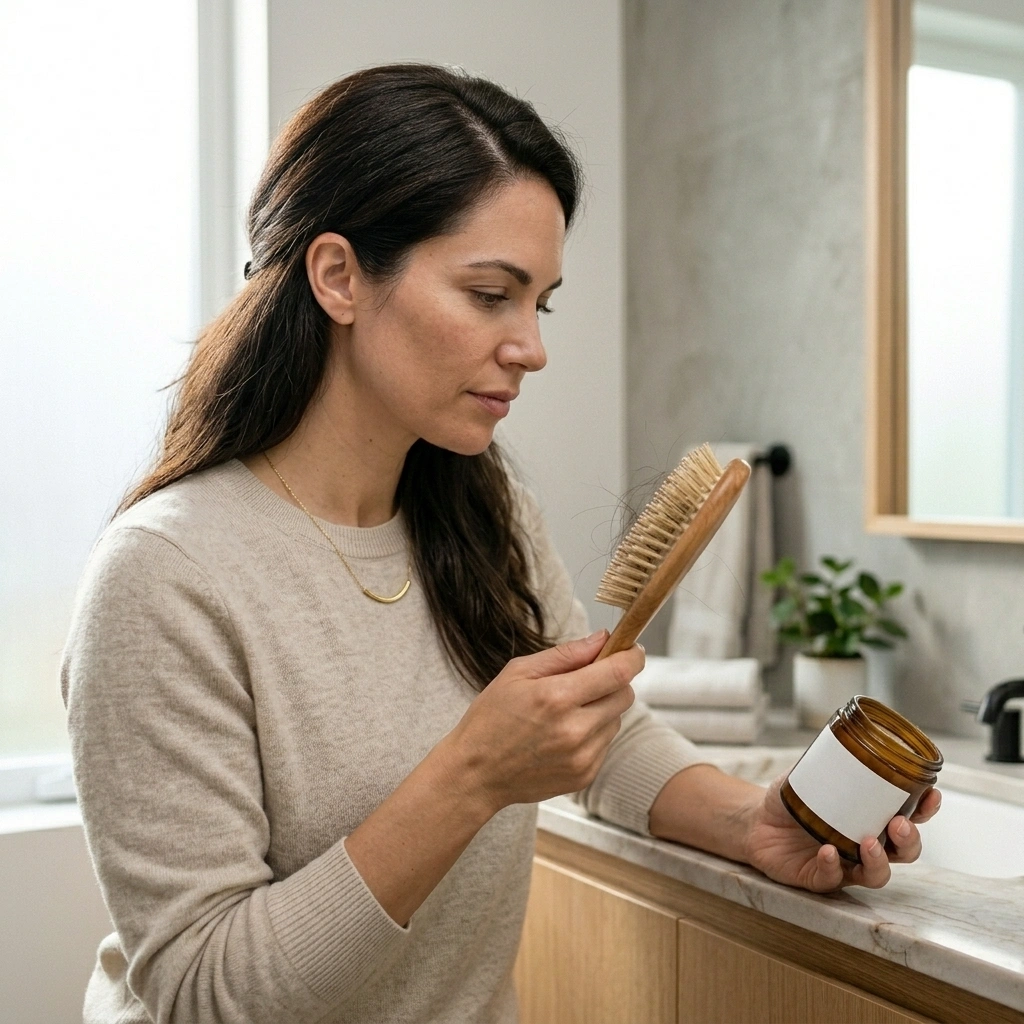
You run your fingers through your hair, and a few strands snap right off in your hand. That little thing is painful. So many of us turn to Google and type in ‘protein treatment for hair growth’ hoping for a quick fix.
Here’s the straight talk before we go any deeper. Protein treatments can be very beneficial to your hair. But they don’t accelerate growth as some ads claim. The benefit is something else, and you stop wasting money on products you never needed once you get it.
I’ve been trying protein treatments on my own bleached, heat-damaged hair for years. Some did help. Some made it worse. So let’s find out what actually works, who really benefits, and how to use them without doing further damage.
What a Protein Treatment Actually Does
Most of your hair is made of a protein called keratin. Think of keratin as the bricks that make up each strand. As those bricks chip away, your hair gets weak, dull, and breaks easily.
A protein treatment coats your hair and temporarily fills in the damaged areas along each strand. Ingredients such as hydrolyzed keratin, collagen, or amino acids are present. They are small enough to stick to the surface of your hair.
It’s just fortifying the weak spots so your hair feels stronger and breaks less.
Think about this. Protein acts on the outside of the strand you already have. This does not alter anything at the source, where new hair is actually created.
How Protein Treatments Work on Your Hair
Imagine a rope that begins to fray. Think of a protein treatment as wrapping tape around the frayed parts. The rope holds together better; you didn’t make a brand-new rope.
What happens when you apply a treatment?
- Small protein molecules bind to holes in the cuticle, the outer layer of your hair.
- Those spaces often come from heat styling, bleach, or rough treatment.
- It fills them in, making the strand feel more flexible and smoother.
- It helps prevent breakage when you brush or style your hair.
Less breakage means hair retains its length over time. That’s why people often think protein ‘makes’ hair grow. Really, they are just losing less of what they already have.
That distinction matters. According to the American Academy of Dermatology, the health of your scalp, genetics, hormones, and nutrition are largely responsible for hair growth. Most topical products just protect and beautify the strands you can see.
The Real Benefits of Protein Treatments
So if Protein doesn’t grow hair from the root, then why bother? Since the benefits are still very real.
This is what a good protein treatment does for you:
- Less breakage. The thicker strands break less, so there is more length.
- More stretchy. Healthy hair stretches and recovers instead of breaking.
- More smooth body. Less frizz, softer feel, fill in the blanks.
- Enhanced styling. Strong hair better retains heat and color.
- More volume. Hair often looks shinier and thicker almost right away.
If you bleach, flat-iron, blow-dry, or color your hair often, your hair takes a beating. Protein helps repair that wear, so your hair survives daily life.
Why Hair Loses Protein in the First Place
Your hair doesn’t just lose Protein out of thin air. Certain habits and conditions strip it away. When you know what the cause is, you can fix the problem at the source.
Why your hair is losing strength: common reasons
- Chemical processing. Bleach, dyes, and relaxers destroy keratin bonds.
- Heat styling. Flat irons and curling wands bake the protein structure.
- Over-washing harsh shampoos wears away at the cuticle over time.
- Sun and Chlorine. Pool chemicals and UV rays destroy your strands.
- Hard wear. Damage occurs from brushing wet hair or tight styles.
If your hair feels limp, stretchy when wet, or mushy to the touch, these are classic signs of protein loss. You will also generally see more breakage and split ends.
Understanding the Protein-Moisture Balance
This is where most people get it wrong. They believe more Protein is always the answer. It isn’t,
Two things need to be in balance for healthy hair. Protein makes you strong. Moisture provides flexibility. They work to produce a balance of moisture and Protein.
- Too little Protein and hair becomes weak and too stretchy.
- Too much Protein and hair gets stiff, dry, and brittle.
Think of it like making bread. Too little flour and the dough will not hold. Too much flour and it will be dry and crumbly. You need the right balance.
Your hair tells you when your balance is off. Too much Protein typically results in brittle, straw-like hair. Mushy, limp hair is a sign of not enough.
Best Practices for Using Protein Treatments
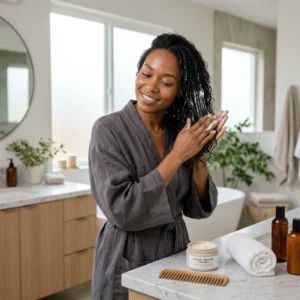
Want to apply a protein treatment the right way? Follow these simple steps, and you will avoid most trouble.
- First, know your hair. Perform the stretch test. Pull a wet strand gently. If it breaks right away, you probably need Protein. If it stretches a lot before it breaks, look for moisture.
- Keep it light. Try a leave-in or a mild protein conditioner before you go for a heavy deep treatment.
- Timing is the key. Do not take any treatment for longer than the label recommends. More time does not equal more benefit.
- Follow with moisture. Finish with a hydrating conditioner or mask to keep the hair soft and flexible.
- Spread ’em out. Most hair needs protein treatment every 2-4 weeks, not every wash.
See how your hair responds. Listen to what you see and feel, not what an ad says.
Common Mistakes to Avoid
A few minor errors can make a helpful treatment a frustrating one. Keep an eye out for these.
- Too much Protein. This is the largest one. Many treatments make hair hard and brittle.
- Moisture skipping Protein, without moisture, leaves the hair dry and brittle.
- Your hair type doesn’t matter. Fine hair often requires less Protein than coarse or color-treated hair.
- Overnight growth anticipated. Protein protects length. It won’t hurry up your follicles.
- Too many products are mixed. Layering a number of “repair” products can weigh your strands down.
If your hair suddenly feels worse after a treatment, you’ve likely overused it. Switch to a hydrating mask for a week, and it should bounce back.
Expert Tips for Stronger, Healthier Hair
Want lasting results? Real hair health is from the inside out.
- Feed your hair from the inside. Your strands grow from nutrients from your body. For healthy growth, a good diet with enough Protein, iron, and vitamins is required. PubMed shares research that connects hair loss to nutritional deficiencies.
- Protect before heat. Prior to styling, always use a heat protectant.
- Trim routinely. Trimming split ends prevents breakage from creeping up the strand.
- Be gentle when wet. Hair wet is at its weakest. Use a wide-tooth comb and a soft towel.
- Get help if shedding worsens. Sudden hair loss may be a sign of a medical problem. The National Institutes of Health says shedding can be caused by conditions such as thyroid problems and iron deficiency, so a dermatologist can help determine the cause.
Be gentle with your hair every day, and your protein treatments will be far more effective.
Frequently Asked Questions
1. Do Protein Treatments Help Hair Grow Faster?
No. They prevent breakage so you retain more length, but they don’t make it grow faster from the root.
2. How often should I do a protein treatment?
Most people are great every two to four weeks. Adjust to the condition of your hair.
3. Does protein treatment damage my hair?
Yes, if you overdo them. It becomes brittle and hard due to an excess of protein. Always balance with humidity.
4. How do I know if I need Protein for my hair?
Do the stretch test. If a wet strand breaks easily, your hair probably needs Protein.
5. Do salon treatments work better than at-home?
Salon treatments are stronger and more lasting. For routine maintenance, at-home products are fine.
6. Protein treatments for natural or curly hair?
Yep. Curly and coily hair often benefits, but watch the protein-moisture balance carefully.
7. Does Protein help to thin hair?
It makes the strands you have stronger, but it doesn’t regrow hair that’s gone. If thinning is a problem, visit a dermatologist.
8. What is the duration of a protein treatment?
Most last a week or two as they wash out gradually. Hence, spaced-out regular use is the best.
So, Help or Hype?
Really? Both. If your hair is damaged and breaking, protein treatments can really help. They make strands thicker, smoother, and better able to hold their length.
But they are hyped as a magic growth product. Real growth comes from your scalp, your health, and your daily habits.
First, figure out what your hair really needs. Do the stretch test, balance Protein with moisture, and be gentle on your hair. If you do that, you’ll have healthier, stronger hair you’ll be proud of.
If your hair loss is sudden or severe, don’t take a chance. Consult a dermatologist for the answers you can trust.
Disclaimer: This article is for informational purposes only and is not intended to be medical advice. If you have itching that won’t go away, pain, hair loss, redness, or a lot of scaling, see a board-certified dermatologist.