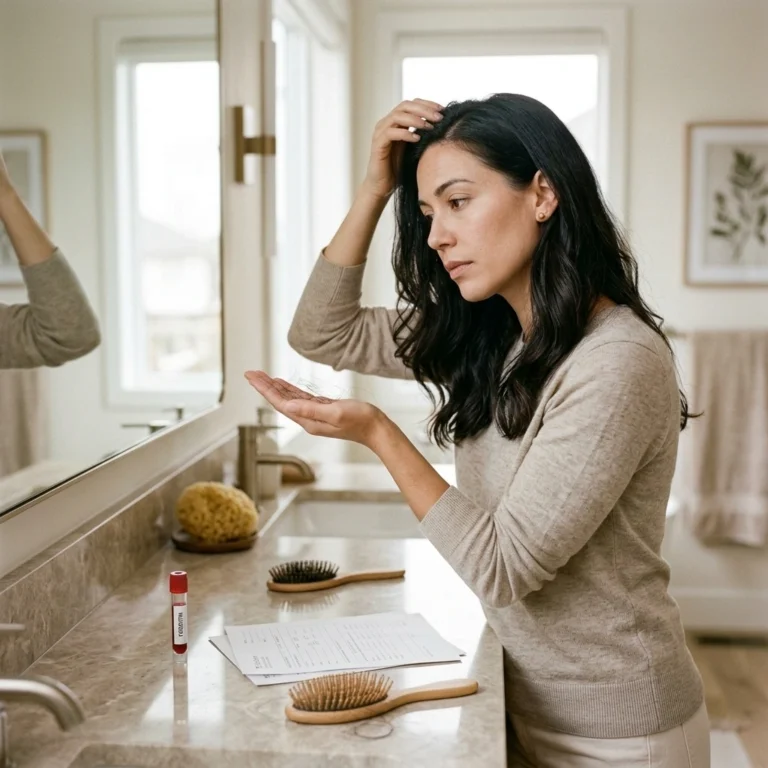

Noticing more hair than usual in your brush or shower drain can feel alarming. However, a small amount of daily hair loss is normal. On average, a person loses between 50 and 100 hairs each day. These hairs are then replaced by new hair.
Hair fall becomes more worrying if it suddenly increases, persists for months, leads to visible thinning, or occurs with bald patches, itching, pain, redness, or scaling.
The most important step is not selecting an oil or a hair mask. Why Your Hair Is Falling Out: While natural remedies may soothe the scalp, reduce breakage, and promote healthier hair-care habits, they cannot remedy every cause of hair loss.
In this guide, we’ll go over common reasons for hair loss, natural options that have some science behind them, remedies that have weak evidence, and when you might need to see a professional for treatment.
Hair-Fall Decision Table
Use this table to decide what to do first.
| What you notice | Possible explanation | Best first step |
|---|---|---|
| Short, broken hairs and split ends | Heat, chemical, or mechanical damage | Reduce heat and handle hair gently |
| Sudden shedding across the scalp | Stress, illness, surgery, childbirth, rapid weight loss, or medication | Review recent health changes and speak with a healthcare professional if it continues |
| Gradual thinning at the crown or hairline | Hereditary pattern hair loss | See a dermatologist early to discuss proven treatments |
| Smooth, round bald patches | Alopecia areata or another medical condition | Arrange a dermatology appointment |
| Itching, redness, pain, or heavy scaling | Dandruff, dermatitis, psoriasis, infection, or inflammation | Treat the scalp condition with professional guidance |
| Hair fall with tiredness, weight changes, or irregular periods | Possible nutritional, thyroid, hormonal, or other health issue | Ask a healthcare professional whether testing is needed |
| Dry, rough hair that snaps easily | Hair-shaft damage rather than loss from the root | Use conditioner, reduce friction, and consider coconut oil on the lengths |
| Hair loss after tight braids, buns, extensions, or ponytails | Traction alopecia | Stop tight styles before the damage becomes permanent |
According to the American Academy of Dermatology, different forms of hair loss need different treatments, making it essential to determine the underlying cause.
Hair Fall or Hair Breakage?
Hair fall and breakage are often used interchangeably as the same problem, but they require different solutions.
Hair fall
Hair fall is when an entire strand is shed from the follicle. You may see:
- Long strands in shower or brush
- More hair loss on head
- A shorter pigtail.
- A broadening expanse
- More scalp on display
Hair breakage
Hair breakage happens when a strand snaps somewhere along its length. Signs of breakage may include:
- Short, rough hairs
- Frayed ends
- A hard or brittle texture
- Hair that snaps while being brushed
- Frizz and thinning in areas that are styled frequently
Breakage is commonly associated with heat, bleaching, chemical straightening, rough towel drying, tight hairstyles, and forceful detangling. Better hair-care practices may reduce breakage, but they cannot treat hair loss resulting from genetics, illness, hormones, or nutritional deficiencies.
Common Causes of Hair Fall
1. Hereditary pattern hair loss
Gradual thinning is one common cause and is known as androgenetic alopecia, or male or female pattern hair loss.
Men may notice thinning or a receding hairline on the top of the head. Women will often see a widening part or thinning on top of the scalp.
Natural remedies can be helpful in scalp care, but they are not to be considered a cure for hereditary hair loss. The sooner you are diagnosed, the better, as pattern hair loss can progress if untreated.
2. Stress, illness, or major physical changes
Emotional stress of a serious illness, fever, surgery, childbirth, rapid weight loss, and the like can push more hairs into the shedding stage. The temporary shedding is called telogen effluvium.
The increase in hair fall may not begin until several weeks or months after the triggering event. That lag can make it difficult to tell what’s causing it.
3. Nutritional deficiencies
In some people, hair problems can be caused by low intake or deficiency of nutrients such as iron, protein, vitamin D, zinc, and vitamin B12, among others.
But supplementing when you don’t know if you are deficient is not always helpful. Excess of some nutrients can aggravate hair loss or cause other health issues. First, a balanced diet should be the first step, and when a deficiency is suspected, blood tests may be appropriate.
4. Hormonal or medical conditions
Thyroid disorders, polycystic ovary syndrome, autoimmune conditions, anaemia, scalp infections and other health problems can impact the hair cycle.
If you’re losing hair and also feeling tired, notice changes in your weight, have irregular periods, notice changes in your skin, or experience other symptoms, get it checked by a professional.
5. Scalp inflammation
Itching, scaling and inflammation can be caused by dandruff, seborrhoeic dermatitis, psoriasis, allergic reactions and infections.
Scratching an irritated scalp can also increase breakage. Don’t smother your scalp in heavy oils and a bunch of DIY mixtures! Treat your persistent scalp symptoms!
6. Damaging hair-care practices
Repeated tension and physical damage may weaken the hair or harm its follicles. Common triggers include:
- Tight braids, ponytails, buns or hair pieces
- Frequent bleaching or chemical straightening.
- Flat irons and curling irons every day
- High blow-dryer heat
- Detangle coarsely
- Rubbing wet hair with a towel
Traction alopecia can be caused by wearing styles that frequently pull on the roots. If used for a long time, it may cause permanent damage to the hair.
7. Medications
Some medications can cause shedding. If your prescribed medication is causing hair loss, do not stop taking the medication without talking to your prescribing professional.
Natural Hair-Fall Remedies: Evidence Ladder

“Natural” is neither effective nor safe nor proven. This evidence table sets expectations in a realistic manner.
| Option | Evidence level | What it may help | Important limitation |
|---|---|---|---|
| Gentle washing and conditioning | Strong for reducing damage | Breakage, dryness, fragile hair | Does not treat an internal cause |
| Avoiding tight styles and excessive heat | Strong for preventing damage | Breakage and traction-related loss | Existing permanent follicle damage may not reverse |
| Correcting a confirmed deficiency | Strong when a deficiency exists | Deficiency-related shedding | Supplements may not help without a deficiency |
| Coconut oil | Moderate for hair-fiber protection | Protein loss, dryness, and breakage | Not proven to regrow hair from the follicle |
| Rosemary oil | Limited but promising | Pattern hair loss in some people | Evidence relies heavily on a small number of studies |
| Scalp massage | Limited | Hair thickness and relaxation | Research is small and does not prove major regrowth |
| Onion juice | Very limited | Studied in patchy alopecia areata | Not established for ordinary shedding or pattern loss |
| Aloe vera | Insufficient for regrowth | May soothe or moisturize some scalps | No strong proof that it regrows hair |
| Fenugreek, hibiscus, and green-tea rinses | Insufficient | Mainly traditional or cosmetic use | Human evidence is weak |
| Rice water, garlic, ginger, and apple cider vinegar | Insufficient | Mostly based on online claims | May irritate or dry the scalp |
Natural Options That May Be Useful
Coconut oil for damaged or breaking hair
There’s less evidence that coconut oil can be used as a treatment for hair loss at the root than it is for treating the hair shaft.
It has been shown that using coconut oil as a grooming product reduces protein loss of damaged and undamaged hair. This works well for dry, porous hair, chemically treated or snapping hair.
How to use it:
Use a small amount on the mid-lengths and ends before shampooing. Let stand for about 30 minutes and rinse well.
Fine or oily hair might need only a little. Do not use if scalp buildup, itching, or increased flaking occurs.
Rosemary oil for possible pattern hair loss support
A comparative trial of rosemary oil vs minoxidil 2 % in the treatment of androgenetic alopecia. Both groups had an increase in hair count by the end of the study, but this one trial is not enough to demonstrate that rosemary oil works as reliably as established medical treatment.
Never use rosemary essential oil undiluted.
Safer use:
- Choose a scalp product that is formulated with rosemary oil or dilute as per the product’s instructions.
- Perform a patch test before general use of the product.
- Discontinue if burning, redness, swelling or persistent itching occur.
- Do not use in place of medical advice.
Gentle scalp massage
A small study showed increased hair thickness after subjects performed a standard daily scalp massage for 24 weeks. But the study was small, with only nine men, so the results should be considered preliminary.
A simple way to relax and become more aware of changes to the scalp is still through massage.
Use your fingers, not your nails. Massage gently for a few minutes, without pulling or tangling the hair.
Aloe vera for scalp comfort
While aloe vera may feel cooling and moisturising on a dry or irritated scalp, it is not a proven hair-regrowth treatment.
Patch-test aloe before application. Don’t use homemade products on broken, infected, or severely inflamed skin.
Onion juice requires caution.
A small study tested onion juice in people with patchy alopecia areata, not normal hair shedding or hereditary thinning. But this was a small study, and its results don’t necessarily make onion juice a universal cure for hair loss.
Onion juice may cause burning, dermatitis, dryness, and an odour. If you are suffering from bald patches, get it diagnosed and do not rely on onion juice.
Natural Remedies With Weak or Insufficient Evidence

You’ll find lots of talk on the internet about fenugreek, hibiscus, green tea, rice water, coffee rinses, garlic, ginger and apple cider vinegar. Most have not been tested in good-quality human trials for common forms of hair loss.
Some may offer temporary improvement in softness, shine or scalp feel, but cosmetic improvement is not the same as follicle regrowth.
Avoid harsh or acidic ingredients directly on the scalp. Garlic, undiluted apple cider vinegar, concentrated essential oils and heavily fragranced DIY mixtures can cause irritation or chemical burns.
Only one new product should be used at a time. If irritation develops, this helps to pinpoint the cause.
Practical Ways to Reduce Breakage and Protect Your Hair
Wash according to your scalp’s needs.
There is no correct schedule for washing.
Oily scalps may need more frequent washing, while dry or curly hair may need less. The aim is to remove sweat, excess oil, flakes, and product buildup without the harsh treatment.
Washing instructions:
- Only shampoo the scalp.
- Massage with your fingertips, not fingernails.
- Wash well.
- Apply conditioner to the lengths and ends.
- Detangle carefully.
- Do not use boiling water.
You don’t stop losing hair just because you stop shampooing. You may just notice hairs that are already in the shedding stage when you finally wash.
Handle wet hair carefully.
Wet hair is more likely to stretch and snap.
Use a wide-tooth comb and start detangling at the ends and work your way up. Instead of rubbing briskly, blot or wrap the hair in a soft towel.
Reduce heat and chemical damage.
Use the lowest effective heat setting, and minimise the number of times you go over the same spots with heating tools. Allow time between services of bleaching, relaxing, perming or permanent colouring.
Conditioning after shampooing can help to reduce friction, split ends and breakage.
Avoid constant tension
A hairstyle should not hurt, cause headaches or bumps on the scalp, or cause a pulling sensation.
Rotate hairstyles and give the hairline regular breaks from extensions, tight braids, ponytails and buns.
Eat in a Way That Supports Hair Health
Hair follicles need the proper nutrition, but there isn’t one food that will make your hair grow faster.
Base meals on:
- Protein from eggs, fish, poultry, beans, lentils, tofu, yoghurt or other appropriate source
- Meat, beans, lentils, leafy greens and other iron-rich foods
- Fresh fruits and vegetables
- Nuts & Seeds
- Grains, Whole
- Good oils
If you are on restrictive diets, rapidly losing weight, or eating very little protein, you may be more prone to lose hair.
Don’t jump on high-dose iron, zinc, vitamin D, or biotin because you’re losing hair. Ask a healthcare professional whether your symptoms and medical history suggest that testing is appropriate.
A Simple 30-Day Starting Routine
This routine will help minimise damage and help you learn to recognise possible triggers. It does not guarantee visible regrowth in 30 days.
Week 1: Remove obvious sources of damage
- Avoid tight hairstyles.
- Reduce heat styling.
- Use mild shampoo and a conditioner.
- Photograph your crown, temples, hairline, and part in the same light.
- Note when shedding began and any major event in the past three months.
Week 2: Improve scalp and hair care
- Wash often to remove oil, flakes & build-up.
- Gently detangle.
- If your hair is susceptible to breakage, apply coconut oil to the dry lengths before washing it.
- Don’t try using DIY remedies simultaneously.
Week 3: Review nutrition and health changes
- Ensure your meals are packed with protein.
- Have you been ill recently? Stressed out? Had a baby? Lost weight quickly? Changed medications? Gone on a restrictive diet?
- Do not self-treat a suspected deficiency with mega-supplements.
Week 4: Evaluate the pattern
Compare notes, photos.
Don’t look for a lot of new growth in four weeks. Watch for:
- Less breakages
- Less irritation to scalp
- More softness and manageability
- Less destructive habits
- Better understanding of shedding pattern
Arrange a medical assessment if shedding remains heavy, thinning is becoming more visible, or warning signs are present.
How to Track Hair Fall Without Becoming Obsessed

It’s hard to count every strand, and more often than not the numbers are wrong. A better way is to follow what is seen to change.
Every 4 weeks:
- Take photos in the same room, with the same lighting.
- Same hairstyle and part.
- Photograph the front, temples, crown and centre part.
- Note any changes in medications, health, stress, diet or hair products.
- Check skin for tenderness, bald spots, scaling or itching.
Hair grows slowly. Checking daily might increase anxiety without useful information.
When to See a Dermatologist or Doctor
Professional evaluation is especially important when you notice:
- Sudden or rapidly increasing hair loss
- Glossy bald patches
- Losing hair in clumps
- Scarring or shiny areas on the scalp
- Pain, pus, redness, or severe scaling
- Loss of eyelashes or eyebrows
- A receding hairline or widening part that continues to progress
- Hair loss for over three months
- Hair loss with fatigue, weight changes, menstrual changes, or other symptoms
- Drug-induced hair loss
- Hair loss that is causing significant distress
Your dermatologist might look at your scalp, ask you about your history, do a hair-pull test, or order blood tests or a scalp biopsy if necessary.
The NHS also recommends seeing a healthcare professional if you are concerned about hair loss before visiting a commercial hair clinic, or if the hair loss is affecting your wellbeing.
Frequently Asked Questions
Can natural remedies completely stop hair fall?
Not always, I do. They can reduce breakage, increase scalp comfort and promote healthier habits. They cannot reliably treat hereditary hair loss, autoimmune disease, thyroid problems, infections, scarring alopecia or an untreated nutritional deficiency.
Which natural remedy has the strongest evidence?
Depends on the purpose. There is some good evidence that coconut oil can reduce protein loss and protect the hair shaft. There is little clinical evidence for rosemary oil for pattern hair loss. Neither should be touted as a sure cure.
Does hair grow faster if you cut it?
No. Trimming can remove damaged ends and make the hair appear healthier, but it does not influence the activity of the follicles beneath the scalp.
Washing your hair every day, will it lead to hair loss?
The gentle washing does not usually cause the loss from the follicles of healthy growing hair. After washing, you may see some strands that have already completed the shedding stage.
Aggressive detangling, rough handling, very hot water and harsh products can do more harm than good.
Should I use biotin for hair loss?
Biotin can help someone with a genuine biotin deficiency, but deficiency is uncommon in people eating a balanced diet. Evidence supporting routine biotin use for hair loss is limited. Biotin supplements can also interfere with some laboratory tests.
How long does hair regrowth take?
It depends on what causes it as to how long it takes. Reducing breakage may improve appearance in a matter of weeks, while changes in density typically take several months to be seen.
Sudden, patchy, painful, scarring, or rapidly progressive hair loss. Seek medical advice, not wait.
Key Takeaways
- Find out if you are shedding, breaking, or both.
- Some causes of hair loss are not correctable with natural remedies.
- Coconut oil can protect damaged hair, but that does not cure follicle disorders.
- Rosemary oil and scalp massage have limited evidence and should not be presented as guaranteed treatments.
- Most home remedies for viral diseases have not been well studied in humans.
- Correct nutritional deficiency after appropriate assessment.
- Washing gently, conditioning, using lower heat, and sporting looser styles can prevent a lot of damage.
- Seek professional help for sudden hair loss that is patchy, persistent, painful or progressive.
Conclusion
There is no one magic ingredient that will control hair fall naturally. First, determine what type of hair problem you have, avoid any damage you can prevent, treat your scalp, eat a good diet and see a professional if the pattern suggests an underlying condition.
Natural approaches work best with realistic expectations. Coconut oil may help with delicate strands. Dilute rosemary oil and gentle massage of the scalp may be reasonable optional add-ons but evidence is scanty. Other popular remedies are best considered traditional or cosmetic options, not proven regrowth treatments.
Start with the most safe basic products and add only one new product at a time and watch the changes for few months. If hair loss is sudden, patchy, persistent or associated with symptoms on the scalp or health symptoms, you are better off with a professional diagnosis than trying another home remedy.
Medical disclaimer: This article is provided for general educational purposes and should not be considered medical advice, diagnosis, or treatment. Consult a qualified healthcare professional or dermatologist if your hair loss is severe or continues for an extended period.