If your hair feels greasy after using oils but still feels dry, castor oil may not be the simple solution many people claim. For low-porosity hair, the right amount and application method matter more than the oil itself. It’s highly touted for dryness, breakage, shine, and even hair growth, but its dense, sticky texture may leave low porosity hair feeling greasy, coated, or weighed down. So it is worth answering the question straight: Does castor oil work well for hair with low porosity?
The short answer is yes, almost always in small amounts. Castor oil is best as a light sealing or finishing oil for low porosity hair, not as a primary source of moisture. The oil is unusually thick, so over-application (especially on fine strands) can lead to buildup. Better yet, apply a tiny bit to moist, hydrated hair, paying particular attention to the ends, or mix it with a lighter oil like grapeseed or jojoba.
The key to success is knowing what castor oil can actually do and what it can’t.
Quick answer: Castor oil can help smooth low porosity hair, reduce friction, add shine, and help with moisture retention of existing moisture in the hair. However, it is a heavy consistency and can therefore leave low porosity hair greasy or coated if overused. No evidence that it speeds hair growth.
What Does Low Porosity Hair Really Mean?
The degree to which a hair fibre absorbs water and other materials is known as its porosity.
Each strand has overlapping cells called the cuticle on its outer surface. This outer layer protects the cortex inside the hair fibre. Scientific studies have shown that bleaching, heat, and other chemical or physical stressors modify the structure and water permeability of hair, making it more porous.
In “normal” hair care, low porosity hair is generally considered hair that doesn’t absorb water and products well and will often get coated when piled with heavy products.
Low porosity is not a disease or a scalp condition. It’s a useful cosmetic descriptor and can exist with any curl pattern.
Typical signs of low porosity hair are:
- It seems that the water lies on the surface before the hair gets wet all the way through.
- Heavy conditioners or oils seem to coat the hair.
- Products pile up fast.
- You may have tried multiple products, and still your hair feels dry.
- Fine strands easily lose volume when oiled.
But porosity isn’t the only factor that determines which products will work for you. And it is determined by the thickness of strands, density, previous chemical treatments, scalp oiliness, climate, and styling habits.
Why Is Castor Oil Different From Other Oils For Hair?
Castor oil is made from the seeds of Ricinus communis. It isn’t like most light cosmetic oils; it has a very thick and gluey consistency.
The fatty-acid profile is also distinctive. Ricinoleic acid constitutes about 90% of the total fatty-acid content of castor oil and is responsible for many of the characteristic physical and chemical properties of the oil.
This thickness can be a benefit when you want a richer coating on dry ends. It can also be a downside if you have fine hair or hair that is already prone to product buildup.
Here is a practical comparison of castor oil with a few lighter alternatives:
| Oil | Feel/Weight | Suitability for Low-Porosity Hair | Best Use |
|---|---|---|---|
| Castor oil | Heavy | Use sparingly | Sealing ends |
| Jojoba oil | Light | Usually easier | Finishing |
| Grapeseed oil | Light | Good option | Light sealant |
| Argan oil | Light to medium | Good for fine hair | Shine and frizz control |
| Sweet almond oil | Light to medium | May work well for hair needing more slip | Softness and finishing |
These are wide comparisons, not strict guidelines. And just as important as the oil itself is the amount you use and the overall formulation of the product.
Advantages of Castor Oil for Low Porosity Hair
Castor oil is not a miracle cure, but it can be a meaningful part of a low porosity hair routine.
1. It Makes Hair Feel Smoother
Oils cover the surface of the hair and improve the lubrication between individual strands of hair. It can help the hair feel smoother and reduce some of the friction that comes from brushing, detangling, clothing, pillows, and everyday styling.
A 2022 systematic review examining the effects of castor, coconut, and argan oils concluded there’s some evidence for castor oil’s ability to improve hair quality and lustre, but the evidence for hair growth was weaker.
2. It Can Help With Moisture Retention
One of the most important distinctions to make is that oil and hydration are not the same thing. Water hydrates hair. Oil does not provide water.
This is why, if you put castor oil on very dry hair without a water-based product first, you could end up with dry and oily hair.
A better order is:
leave-in water or water based → conditioner if needed → a little oil
The castor oil in this routine is used as a finishing layer to help lock in moisture; it’s not a moisturiser on its own.
3. It Can Help Dry Ends
Ends are the oldest part of your hair, and usually get the most friction and mechanical damage.
If your roots get oily easily and your ends are dry, you don’t need to put castor oil all over your head. Instead, rub a very small amount over the last few inches. This targeted approach is especially good for low porosity hair because it minimises buildup.
4. May Help With Length Retention
Castor oil, often sold online as a “hair growth oil,” is not the same thing as hair growth and length retention.
More lubrication = less tangling and breakage = you may be able to hold onto more of the length your follicles have already produced. This can make it seem like the hair is growing better over time, even if the oil has not changed the growth rate at the follicle.
Does Castor Oil Accelerate Growth Of Low Porosity Hair?
This is where expectations must be realistic.
There is currently no strong clinical evidence that castor oil reliably accelerates human hair growth. According to the above-mentioned systematic review from 2022, there is no robust evidence that castor oil has any benefits for hair growth.
A more recent 2026 dermatology review mentions laboratory findings related to ricinoleic acid and the prostaglandin D2 pathway, which has been investigated for its role in androgenetic alopecia. But the authors warn that this mechanism might not translate to an effective clinical hair-loss treatment, and more research is needed.
Thus, an interesting biological mechanism is not evidence that putting castor oil on the scalp causes hair to grow back.
But castor oil can still work its way into a hair-care routine by:
- enhancing lubrication
- boosting shine
- making dry strands feel softer
- limiting unnecessary breakage by improving manageability.
But if you’ve been thinning, or got bald spots or a quick widening part, or if you’ve been losing suddenly or feeling painful, inflamed patches of hair loss, oil alone probably won’t do the job.
The American Academy of Dermatology says there are many causes of hair loss, and a dermatologist can tell the difference between excessive shedding and true hair loss and find the right treatment.
How to Apply Castor Oil on Low Porosity Hair
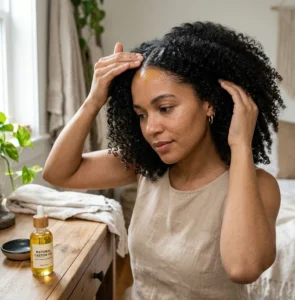
For low-porosity hair, how you use castor oil can be just as important as how much you use.
Step 1: Start with clean, moisturised hair
If your strands already feel waxy, greasy, or coated, adding more oil probably won’t do the trick. Wash your hair as needed and use your normal conditioner or a water-based leave-in conditioner first. Castor oil is typically most beneficial on hair that already has moisture.
Step 2: Start With a Small Amount
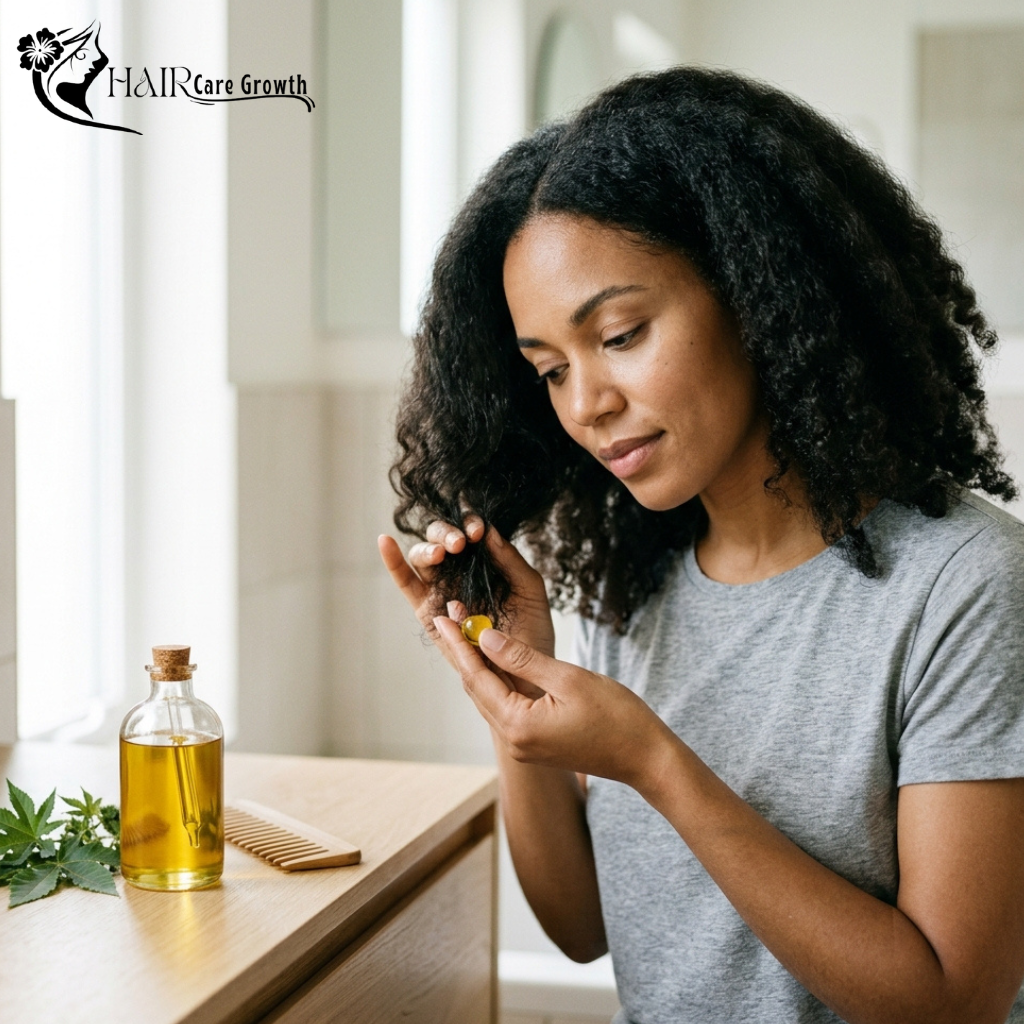
You don’t have to wet the hair. Apply a few drops, rub your hands together, and lightly smooth onto areas of need. That may be even more than enough for short or fine hair. You can always add another drop. Much harder to remove an excessive coating.
Step 3: If Needed, Dilute It
If plain castor oil is sticky, mix in a little of a lighter oil. Some common choices are:
- jojoba oil
- grape seed oil
- argan oil
- sweet almond oil.
There is no clinically established dilution ratio for this cosmetic use; mixing castor oil with a lighter oil simply makes it easier to spread.
Step 4: Concentrate on mid-lengths and ends
Unless you have a particular reason to oil your scalp, focus on the hair itself, particularly on dry, rough, or breakage-prone areas. This means less chance of greasy roots and unwanted buildup on the scalp.
Step 5: No Daily Layering
On low porosity hair, one application can be seen for several days. “Before you add more oil, ask yourself: does my hair need more oil? If it still feels slick or coated, leave it.”
How Often Should I Use Castor Oil?
There is no scientifically proven time frame for all low-porosity hair to follow. It is wise to start out with occasional use rather than daily use.
How often you should do it is determined by the following factors:
- Your hair thickness
- Your hair density
- How frequently you wash
- Your ends’ dryness
- How many creams and styling products you’re already using
- Whether your scalp is oily by nature
Coarse hair that is very dry may tolerate castor oil better than fine hair. If with each application your hair gets flatter, sticky, or like it needs to be shampooed aggressively to feel clean again, use less or switch to a lighter oil.
Does Castor Oil Cause Buildup?
Yes. Buildup is probably the biggest con for low porosity hair.
Signs you may be using too much include:
- waxy or sticky hair
- dull instead of shiny hair
- less volume
- greasy hair shortly after washing
- conditioner or leave-in products that sit on top of the hair
- coated rather than soft hair
When this occurs, stop oiling and thoroughly wash the hair. If you find the product is difficult to wash off, you can do a clarifying shampoo occasionally. But you don’t need to do it on a regular schedule. Over-cleansing can also lead to its own issues with dryness and irritation.
Castor Oil: Common Mistakes to Avoid
Using oil simply as a moisturiser. Start with water and proper conditioning if your low-porosity hair is dry. When used in conjunction with the regimen, oil works better than when used in its stead.
Soak the hair completely. There is no greater benefit to using more castor oil. The principal effect of heavy saturation is that the oil is more difficult to remove.
Apply the same quantity to both coarse and fine hair. Fine hair weighs down more quickly. If your strands are thin, start much lighter.
Anticipating that it will address hair loss. Castor oil is a cosmetic hair oil; it is not a proven remedy for hormonal hair loss, androgenetic alopecia, alopecia areata, or other medical conditions that cause thinning hair.
Ignoring irritation of the scalp. Castor oil is deemed safe for use in cosmetics under specified conditions, per a 2025 Cosmetic Ingredient Review safety evaluation. Individual responses are still conceivable, though. Unusual cases of castor oil-related allergic contact dermatitis can be found in published medical literature, and a 2026 review identified unusual case descriptions of severe matting, or hair felting. Stop using it if you have severe itching, redness, swelling, hives, or worsening irritation of your scalp. While no home patch test can ensure that a response will never happen, a patch test can be useful before trying a new oil.
Regular Castor Oil vs. Jamaican Black Castor Oil
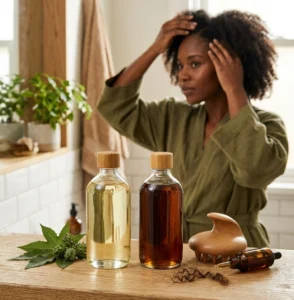
Although both conventional and Jamaican black castor oil come from the same plant, they are processed differently. The darker colour and distinctive aroma of Jamaican black castor oil are a result of the seeds being roasted prior to extraction.
However, the key point is still the same when looking at low porosity: both are castor oils and can feel heavy. There is no compelling clinical evidence that Jamaican black castor oil has a unique capacity to promote the growth of low porosity hair more quickly than ordinary castor oil. Rather than assuming the darker version is more powerful by nature, make your decision based on how your hair reacts.
Who May Benefit Most From Castor Oil?
Castor oil may be worth trying if you have:
- low-porosity hair with dry or rough areas
- dry or brittle ends
- especially hair that tangles easily
- breakage due in part to friction and rough handling
- a routine that sometimes needs a richer finishing oil
Who Should Avoid Using Castor Oil?
If you have: you may prefer a lighter alternative.
- very fine hair
- a naturally oily scalp
- frequent product build-up
- a scalp that is easily irritated
- hair that loses volume when oil is applied
Myths About Castor Oil: What the Evidence Really Says
Myth: Castor oil is a moisturiser.
To be more precise, it is a conditioning agent of oil-based character. Hydration first when dry hair needs water.
Myth: More oil = better moisture retention.
After the hair has been coated sufficiently, additional layers just add heaviness and buildup.
Myth: Castor oil has been proven to regrow thinning hair.
No evidence to support this claim at present. The research on hair quality is more promising than the research on hair growth.
Myth: Castor oil is bad for everyone with low porosity hair.
Not necessarily. Some coarse or dry low porosity hair might handle it a bit better, but fine hair is more likely to be weighed down.
F.A.Q. (Frequently Asked Questions)
Is castor oil too thick for low porosity hair?
It does. Castor oil is thick, so fine, low-porosity hair can get greasy or coated easily. Add a few drops or combine it with a lighter oil to make it much easier to handle.
Should I apply castor oil to dry or wet hair?
If your goal is to maintain moisture in your hair, applying a small amount to damp, conditioned hair is more sensible than slathering oil all over completely dry hair.
Can I use castor oil daily?
Low porosity hair typically does not require daily application. Repeated layers can lead to build-up. Only use more if your hair really feels like it needs it.
Can you mix castor oil and jojoba oil?
Yes. It is easy to spread and can be diluted with a lighter oil, such jojoba, to prevent overapplication.
Does Jamaican Black Castor Oil Help Low Porosity Hair?
It can be used with the same care as regular castor oil. The deeper colour and different processing method don’t eliminate the risk of heaviness or build-up.
Does Castor Oil Dry Out Low Porosity Hair?
Castor oil won’t literally suck water out of hair, but if you put it on too heavily with not enough moisture underneath, the hair can feel dry, stiff, or coated. If this happens, concentrate on water-based conditioning and decrease oil.
Which oils are lighter than castor oil?
Jojoba, grapeseed, and many argan oil products generally feel lighter. If you find that castor oil is weighing your hair down again and again, a lighter finishing oil might be a good option.
When to See a Dermatologist
Hair porosity doesn’t need medical treatment in itself. But it’s different with hair loss.
If you see:
- sudden or unusually heavy shedding
- round or irregular bald patches
- a steadily widening part
- a receding hairline
- scalp pain or burning
- redness, scaling, sores, or significant inflammation
- ongoing thinning that does not improve.
These signs can have causes that no cosmetic oil can diagnose or treat.
Medical Note: This article is not a diagnostic or a treatment guide for licensed medical professionals but is meant to be a general educational resource about hair care.
The Bottom Line: Does Castor Oil Help Low Porosity Hair?
Castor oil can be good for low porosity hair, but it’s important to use it in moderation. Its thick consistency can help dry ends feel smoother, add shine, and provide valuable lubrication. The thickness of that also makes it easier to go overboard with than lightweight oils.
For the greatest chance of success:
- First, hydrate your hair.
- Begin with a few drops.
- Primarily to the lengths and ends.
- If pure castor oil is too heavy, dilute it.
- Don’t put it on hair that’s been coated already.
- Wash away buildup as needed.
- Set realistic expectations for hair growth.
There’s no need for castor oil to do some dramatic hair-growth magic or penetrate deep to be worth it. Used on the right hair and in the right amount, it can be a practical tool for improving softness, manageability, and length retention.
If your hair feels weighed down with every use, that’s useful information too. Great hair care is not about shoehorning a trendy ingredient into your routine – it’s about choosing products that complement the way your own hair behaves.
To create a regimen that caters to your strands and not generic advice, check out our guides on how to choose hair-care products by hair type and porosity, comparing natural and commercial hair oils, and using lightweight oils like argan oil to find the method that’s best for you.