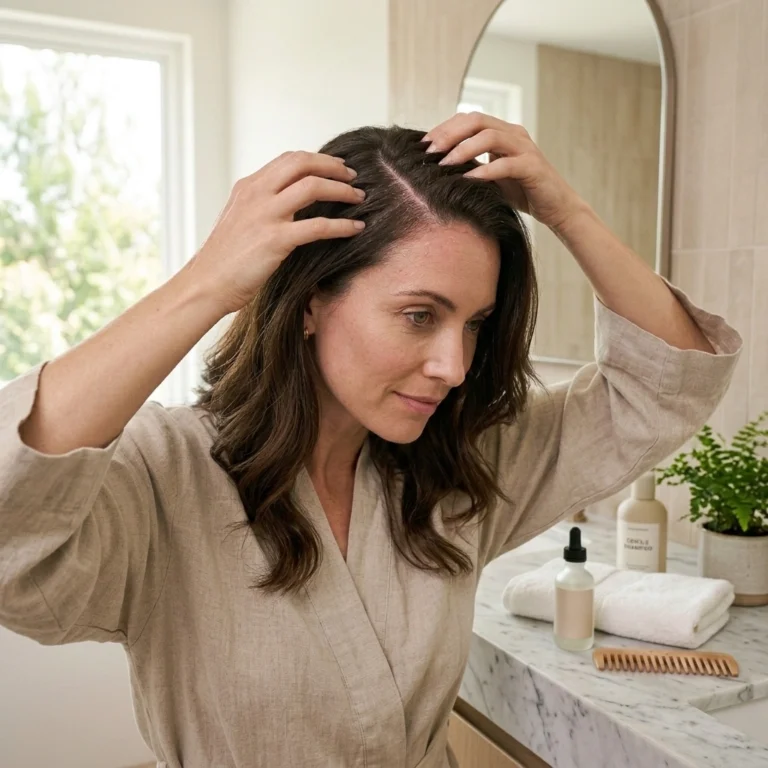
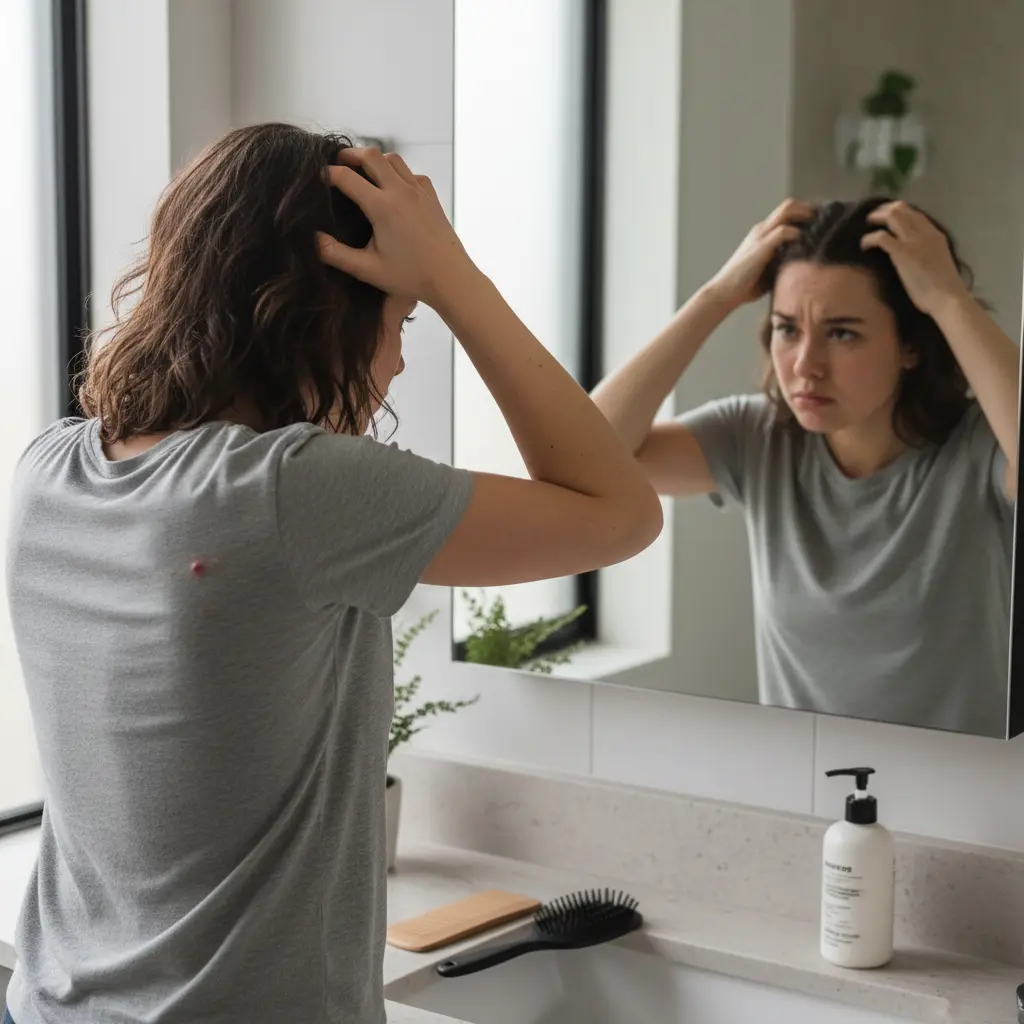
When you shampoo or brush, it can be surprisingly painful to find a tender bump. It may just look like a normal pimple hiding under your hair, but there are a few scalp problems that can look almost exactly the same on the outside.
Simply put, pimples on the scalp normally form when a hair follicle gets clogged or inflamed. Oil, dead skin, sweat, and hair product residue can all be factors. That bump is sometimes a pimple. Sometimes it’s folliculitis, an ingrown hair, a cyst, or something else that requires a different treatment.
This is a key distinction. A routine that helps product-related scalp acne may not do much for a fungal infection or a deep inflammatory condition. This manual will assist you to understand the likely causes, make sensible changes at home, and recognise when you need professional care.
How This Guide Was Researched
In this article, I reviewed patient guidance from the American Academy of Dermatology, Cleveland Clinic, Mayo Clinic, and the Centres for Disease Control and Prevention. I also discussed the clinical differences between acne, folliculitis, scalp ringworm, and inflammatory scalp disorders.
I’ve been researching hair health, scalp care, and scientific reasons for common hair-loss treatments for over five years for Hair Care Growth. But that research experience doesn’t substitute for medical training or a real-life exam. This article doesn’t force a simple answer but states that a bump on the head cannot be safely identified at home.
Can You Get Pimples on Your Scalp?
Yes. On your scalp, you have lots of hair follicles and oil-producing sebaceous glands. A follicle can get plugged with sebum and dead skin cells and develop into a whitehead, blackhead, or inflamed pimple. Hair products, sweat, and friction can make matters worse.
Cleveland Clinic says scalp acne is acne on the scalp or hairline caused by blocked hair follicles. The bumps can be whiteheads, inflamed papules, or deeper cysts. They may also itch or hurt. Importantly, there are several other conditions that can resemble scalp acne, so the word “pimple” does not always describe the actual diagnosis (Cleveland Clinic).
An occasional pimple on the scalp is usually nothing to worry about. Repeated clusters, drainage, crusting, or associated hair loss should be looked at more closely.
What Causes Pimples on the Scalp?
1. Oil, Dead Skin, and Blocked Follicles
Sebum is the body’s natural oil, which helps protect your skin and hair. Trouble starts when sebum and shed skin cells plug a follicle instead of moving out normally. This plug may remain closed as a whitehead, or become inflamed, swollen, and sore.
That doesn’t mean your scalp is dirty. Acne is caused by a number of biological processes and can happen even to people who are very hygienic. Washing will remove surface residue, but not every cause can be solved by aggressive scrubbing. In fact, a rough scrub can aggravate an already inflamed scalp.
2. Hair-Product Buildup
Oily pomades, waxes, gels, sprays, conditioners, and leave-in products can leave a residue around the roots.
The American Academy of Dermatology states that the oils found in hair care products can cause small breakouts along the hairline, forehead, and back of the neck-even in people who do not normally have acne (American Academy of Dermatology).
When a product is more likely to cause scalp pimples:
- You’ll find the bumps along your hairline or at the nape of your neck.
- They began following you after you released a new styling product.
- You habitually apply oil, wax, or pomade directly to the scalp.
- Bumps improve after discontinuing a particular product.
Dry shampoo can also add residue if it is layered on again and again without a good wash. Dry shampoo isn’t necessarily bad, but it shouldn’t become a permanent replacement for shampooing your scalp.
If you suspect a product, stop one product at a time. If you change your whole routine at once, it can be hard to tell which product was the offender.
3. Sweat, Heat, and Friction
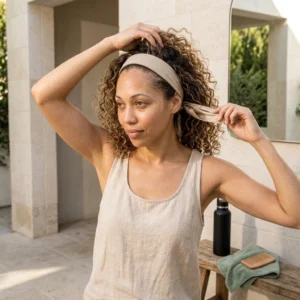
A helmet, tight-fitting hat or wig, headband, or tight scarf can trap heat and perspiration against your scalp. Repeated rubbing can also irritate the openings of the follicles.
This may make acne worse or can cause folliculitis, especially on the hairline and back of the head.
The answer is not to stop wearing necessary protective equipment. But:
- Whenever you can, wear a properly fitted and ventilated helmet.
- Wash sweatbands and removable helmet liners regularly.
- Take wet headwear off after a workout.
- After heavy perspiration, wash your scalp.
- You must not wear a tight hat on an already inflamed area.
You don’t have acne because you’re sweating. However, sweat, oil, and product buildup trapped against the scalp can create conditions that encourage irritation and clogged follicles.
4. Scalp Folliculitis
Folliculitis is an inflamed hair follicle. This may be caused by an infection or physical damage to the follicle.
Folliculitis may look like a sudden case of acne, with itchy or painful bumps centred around individual hairs. The American Academy of Dermatology states that tight clothing, shaving, rubbing, and hot, damp conditions can damage hair follicles and increase the risk.
Bacteria are one possible cause, but not the only cause. Yeasts, other microbes, some medicines, and noninfectious inflammation can also cause bumps that look like molluscum.
This is why “fungal acne” is not a reliable diagnosis to make from a photo or list of symptoms. An itchy cluster of pustules on the scalp is not necessarily fungal. The cause of the follicular inflammation determines the course of treatment.
5. Hormonal Changes and Acne-Prone Skin
Hormonal changes can influence oil production and acne activity. Scalp breakouts can happen in puberty and with acne elsewhere on the face and body.
There are a few things that can play a part in scalp acne, Cleveland Clinic explains, including changing hormone levels, genetics, stress, and side effects of some medications (Cleveland Clinic).
Stress may be a trigger, but it is not a diagnosis. But a sudden flare-up of a bad week doesn’t prove that stress hormones are the only cause.
If scalp pimples continue to recur with hormonal changes, or if you have moderate to severe facial acne, talk to a healthcare professional about a treatment plan that’s right for you.
6. Shaving, Close Haircuts, and Ingrown Hairs
If the hair is really tightly curled, close shaving can leave sharp hairs that curl back into the skin. Instead of acne, you may get an inflamed ingrown hair bump.
Reusing poorly cleaned clippers can cause irritation and transfer microorganisms from one follicle to another.
If bumps continue to crop up after a close cut:
- Don’t shave the scalp until the skin has had time to settle down.
- Don’t shave directly over inflamed bumps.
- Follow the instructions on the clippers for cleaning.
- Don’t keep going over the same spot with a blade.
- Don’t try to cut right down against the skin. Leave the hair a little longer.
Recurring bumps at the back of the scalp or neck that start to thicken or scar need early assessment.
7. Dandruff, Seborrheic Dermatitis, or Product Irritation
Pimples are not always caused by dandruff. However, scalp bumps may also be accompanied by itching, oiliness, scale, scratching, and inflammation.
Burning or an itchy rash after using hair dye, fragrance, essential oils, or a new shampoo may be due to irritant or allergic contact dermatitis, not acne.
If flaking is your biggest issue, check out our deep dive on dry scalp vs dandruff. For recurrent greasy scale and inflammation, we have a seborrheic dermatitis scalp-care guide (without reiterating it here).
What Do Different Scalp Bumps Mean?
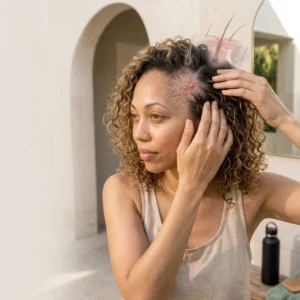
The following chart can help you narrow the possibilities, but it cannot confirm a diagnosis.
| What you notice | Possible explanation | Other clues | Sensible next step |
|---|---|---|---|
| Whiteheads or blackheads near the hairline | Scalp acne or product-related acne | Oily hair products or acne elsewhere | Remove likely product triggers and cleanse gently |
| Small, itchy pustules around individual hairs | Folliculitis | Sudden cluster, tenderness, or crusting | Reduce friction and seek care if widespread or persistent |
| One firm, movable lump beneath the skin | Pilar cyst | Smooth bump that may become painful when inflamed | Do not squeeze; have a growing or painful lump examined |
| Deep, throbbing, hot bump | Boil, inflamed cyst, or deep acne | Increasing warmth, pain, or pus | Use a warm compress and seek prompt care if it worsens |
| Flakes with redness or greasy scale | Dandruff or seborrheic dermatitis | Itching around the ears or hairline | Follow condition-specific guidance or consult a clinician |
| Bumps at the nape after close haircuts | Ingrown hairs or acne keloidalis nuchae | Recurrence, thickening, or scars | Stop close shaving and arrange an early dermatology visit |
| Scaly patch with broken hairs or hair loss | Tinea capitis or another hair disorder | More common in children and may spread | Seek medical care rather than relying on acne products |
According to the CDC, scalp ringworm is more common in children than adults and can cause a patch of hair loss that is itchy and scaly (CDC). Acne shampoo is not typically helpful. Usually requires treatment directed by a clinician.
Why Do Scalp Pimples Hurt So Much?
Scalp acne can be painful, sore, and itchy, according to the Cleveland Clinic. A small inflamed bump can be especially uncomfortable when brushing, and pressure from sleeping, a hat, or moving your hair can cause pain.
A hard pimple on the head can be a deep inflamed acne lesion. But it could also be a cyst, boil, or ingrown hair. Pain alone does not distinguish these conditions.
If you experience increasing warmth, swelling, drainage, or throbbing, you should suspect a deeper infection or inflamed cyst.
If you find that your scalp is sore but there is no bump, find out more about why your scalp can be tender to the touch in our guide.
How to Get Rid of Pimples on the Scalp Safely
The best treatment depends on the cause. Begin with low-risk changes instead of applying several strong products at the same time.
Step 1: Simplify Your Hair-Care Routine
Stay away from the newest or heaviest product that touches your scalp for two to four weeks.
Avoid applying pomades, oils, masks, and heavy conditioners directly at the roots; rather, apply them to the lengths and ends of your hair. Look for products that are labelled oil-free, noncomedogenic, or non-acnegenic whenever possible.
Change one thing in your routine at a time. If you stop five products at a time, your scalp might get better, but you won’t know which product was the difference.
Step 2: Wash According to Your Scalp’s Needs
Wash when you have sweated a lot, or when your scalp gets oily or coated.
When shampooing, massage your fingertips into the scalp, not your fingernails. Make sure to rinse shampoo and conditioner very well so there’s no residue around the roots.
Every hair texture, hairstyle, and scalp does not have a universal schedule for washing. Someone who has an oily scalp and works out every single day may need to wash more often than someone with a dry scalp and a protective style.
Do not scrub active pustules vigorously. The inflamed bumps can be torn by mechanical exfoliation. If buildup is its own problem, see our guide to exfoliating your scalp without the irritation.
Step 3: Consider an Evidence-Based Active Ingredient
If you have mild bumps that actually look like acne, an over-the-counter scalp product containing salicylic acid or benzoyl peroxide is probably reasonable.
Salicylic acid helps to decrease the material that can clog the follicles. Benzoyl peroxide is used for acne but can irritate the scalp and bleach hair, towels, or pillowcases. Both are listed as ingredients used in products for scalp acne by Cleveland Clinic.
Take these precautions:
- Select a product that is formulated and labelled for the intended area.
- Read and follow all product instructions completely.
- Begin slowly instead of combining many active ingredients.
- If you experience appreciable burning, blistering, swelling or a spreading rash, stop using the product.
- Recall that benzoyl peroxide can bleach textiles and hair.
If you have eczema, psoriasis, broken skin, or a diagnosed scalp disorder, or are using medicated products on a child or during pregnancy, ask a pharmacist or clinician.
An anti-dandruff or antifungal shampoo may be appropriate if there is obvious scale with the bumps. This is not a one-size-fits-all treatment for every scalp pustule. Medicated washes may be repeated if the diagnosis is wrong, adding irritation without fixing the underlying problem.
Step 4: Use a Warm Compress for One Tender Bump
For mild folliculitis or a small boil, a warm, moist washcloth can help ease discomfort. Mayo Clinic lists warm compresses as one of the self-care measures for mild folliculitis (Mayo Clinic).
The cloth should feel pleasantly warm, not hot. Use a new, clean cloth each time.
A compress may help relieve the area but does not substitute for professional attention if the lump is large, spreading, very painful, or producing a lot of drainage.
Step 5: Clean Items That Touch Your Scalp
Change pillowcases, hats, headbands, scarves, and helmet liners often. Clean brushes and combs of hair and other buildup.
Do not use the following with pustules or possible infection:
- Clippers
- Combs and brushes
- Helmets and hats
- Towels
- Pillow covers
- Hair accessories
Clean electrical clippers and styling products according to the manufacturer’s recommendations.
Step 6: Know When Home Care Has Reached Its Limit
If you have persistent or severe scalp acne, you may need prescription treatment.
Depending on the diagnosis, the clinician may suggest:
- Antibiotics, either applied topically or taken by mouth
- Antifungal drugs
- Anti-inflammatory therapy
- Prescription acne remedies
- Switch to a medicine that is helping the breakout
Mayo Clinic says that if folliculitis is unclear or treatment-resistant, a skin scraping, a swab for culture, or less commonly, a biopsy may be used (Mayo Clinic).
This testing is one reason not to treat every itchy pustule as bacterial or fungal.
What Not to Put on Scalp Pimples
Natural doesn’t always mean gentle or effective.
It is challenging to create handmade blends of consistent potency, and undiluted essential oils can irritate skin. Apple cider vinegar can sting broken or inflamed skin. And more importantly, vinegar and essential oil can’t tell you if you have acne, folliculitis, dermatitis, or a cyst.
Do not:
- Popping, squeezing, or poking the lump
- Scraping it with a comb or scalp massager.
- Multiple medicated shampoos at once, essential oils, and multiple acids
- The use of leftover antibiotics
- A prescription drug belonging to another person
- Applying heavy oil to a hot or pustular area
Popping can aggravate inflammation and increase the risk of infection or scarring. The Cleveland Clinic specifically advises against popping pimples on the scalp (Cleveland Clinic).
Professional Treatment vs. Home Care
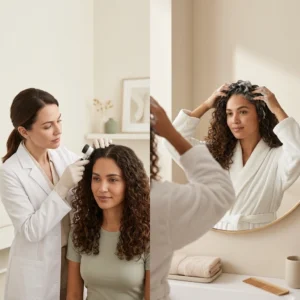
| Situation | Home care may be reasonable | Professional assessment is the better choice |
|---|---|---|
| One or two mild bumps | Gentle washing, removing a product trigger, and avoiding picking | The same bump repeatedly returns or does not heal |
| Mild hairline whiteheads | Switching oily products and trying a properly labeled acne wash | The bumps are numerous, painful, or unresponsive to consistent care |
| Itchy pustule cluster | Reducing friction and keeping the area clean | The cluster is spreading, draining, recurring, or treatment-resistant |
| Deep, painful lump | Applying a warm compress without squeezing | The lump is hot, enlarging, soft in the center, or severely painful |
| Bumps with hair loss or scarring | Avoid experimenting with remedies | Arrange a medical evaluation promptly |
| Child with scale and broken hairs | Avoid sharing combs, hats, and towels | Seek pediatric care for possible scalp ringworm |
How to Get Rid of Pimples on the Scalp Safely
The best treatment depends on the cause. Begin with low-risk changes instead of applying several strong products at the same time.
Step 1: Simplify Your Hair-Care Routine
Stay away from the newest or heaviest product that touches your scalp for two to four weeks.
Avoid applying pomades, oils, masks, and heavy conditioners directly at the roots; rather, apply them to the lengths and ends of your hair. Look for products that are labelled oil-free, noncomedogenic, or non-acnegenic whenever possible.
Change one thing in your routine at a time. If you stop five products at a time, your scalp might get better, but you won’t know which product was the difference.
Step 2: Wash According to Your Scalp’s Needs
Wash when you have sweated a lot, or when your scalp gets oily or coated.
When shampooing, massage your fingertips into the scalp, not your fingernails. Make sure to rinse shampoo and conditioner very well so there’s no residue around the roots.
Every hair texture, hairstyle, and scalp does not have a universal schedule for washing. Someone who has an oily scalp and works out every single day may need to wash more often than someone with a dry scalp and a protective style.
Do not scrub active pustules vigorously. The inflamed bumps can be torn by mechanical exfoliation. If buildup is its own problem, see our guide to exfoliating your scalp without the irritation.
Step 3: Consider an Evidence-Based Active Ingredient
If you have mild bumps that actually look like acne, an over-the-counter scalp product containing salicylic acid or benzoyl peroxide is probably reasonable.
Salicylic acid helps to decrease the material that can clog the follicles. Benzoyl peroxide is used for acne but can irritate the scalp and bleach hair, towels, or pillowcases. Both are listed as ingredients used in products for scalp acne by Cleveland Clinic.
Take these precautions:
- Select a product that is formulated and labelled for the intended area.
- Read and follow all product instructions completely.
- Begin slowly instead of combining many active ingredients.
- If you experience appreciable burning, blistering, swelling or a spreading rash, stop using the product.
- Recall that benzoyl peroxide can bleach textiles and hair.
If you have eczema, psoriasis, broken skin, or a diagnosed scalp disorder, or are using medicated products on a child or during pregnancy, ask a pharmacist or clinician.
An anti-dandruff or antifungal shampoo may be appropriate if there is obvious scale with the bumps. This is not a one-size-fits-all treatment for every scalp pustule. Medicated washes may be repeated if the diagnosis is wrong, adding irritation without fixing the underlying problem.
Step 4: Use a Warm Compress for One Tender Bump
For mild folliculitis or a small boil, a warm, moist washcloth can help ease discomfort. Mayo Clinic lists warm compresses as one of the self-care measures for mild folliculitis (Mayo Clinic).
The cloth should feel pleasantly warm, not hot. Use a new, clean cloth each time.
A compress may help relieve the area but does not substitute for professional attention if the lump is large, spreading, very painful, or producing a lot of drainage.
Step 5: Clean Items That Touch Your Scalp
Change pillowcases, hats, headbands, scarves, and helmet liners often. Clean brushes and combs of hair and other buildup.
Do not use the following with pustules or possible infection:
- Clippers
- Combs and brushes
- Helmets and hats
- Towels
- Pillow covers
- Hair accessories
Clean electrical clippers and styling products according to the manufacturer’s recommendations.
Step 6: Know When Home Care Has Reached Its Limit
If you have persistent or severe scalp acne, you may need prescription treatment.
Depending on the diagnosis, the clinician may suggest:
- Antibiotics, either applied topically or taken by mouth
- Antifungal drugs
- Anti-inflammatory therapy
- Prescription acne remedies
- Switch to a medicine that is helping the breakout
Mayo Clinic says that if folliculitis is unclear or treatment-resistant, a skin scraping, a swab for culture, or less commonly, a biopsy may be used (Mayo Clinic).
This testing is one reason not to treat every itchy pustule as bacterial or fungal.
What Not to Put on Scalp Pimples
Natural doesn’t always mean gentle or effective.
It is challenging to create handmade blends of consistent potency, and undiluted essential oils can irritate skin. Apple cider vinegar can sting broken or inflamed skin. And more importantly, vinegar and essential oil can’t tell you if you have acne, folliculitis, dermatitis, or a cyst.
Do not:
- Popping, squeezing, or poking the lump
- Scraping it with a comb or scalp massager.
- Multiple medicated shampoos at once, essential oils, and multiple acids
- The use of leftover antibiotics
- A prescription drug belonging to another person
- Applying heavy oil to a hot or pustular area
Popping can aggravate inflammation and increase the risk of infection or scarring. The Cleveland Clinic specifically advises against popping pimples on the scalp (Cleveland Clinic).
Professional Treatment vs. Home Care
Situation: Home care may be reasonable; professional assessment is the better choice.
One or two mild bumps Gentle washing, removing a product trigger, and avoiding picking The same bump repeatedly returns or does not heal.
Mild hairline whiteheads Switching oily products and trying a properly labeled acne wash The bumps are numerous, painful, or unresponsive to consistent care.
Itchy pustule cluster Reducing friction and keeping the area clean The cluster is spreading, draining, recurring, or treatment-resistant
Deep, painful lump Apply a warm compress without squeezing The lump is hot, enlarging, soft in the center, or severely painful.
Bumps with hair loss or scarring Avoid experimenting with remedies Arrange a medical evaluation promptly.
Child with scale and broken hairs Avoid sharing combs, hats, and towels Seek pediatric care for possible scalp ringworm.
Can Scalp Pimples Cause Hair Loss?
An isolated superficial pimple is unlikely to result in permanent hair loss. However, temporary hair loss can occur around major inflammation, and repeated scratching or picking can cause skin damage.
A more serious concern is a disorder that scars hair follicles
The back of the scalp and neck are affected by acne keloidalis nuchae, which can begin as inflammatory pimples and turn into hard scars (Cleveland Clinic). Other rare inflammatory conditions like folliculitis decalvans and dissecting cellulitis can also lead to scarring hair loss.
If you see any of these, don’t wait on home remedies:
- Bald spots
- Broken or tufted hair
- Raised/Thick scars
- Drain lumps repeatedly.
- Continued crusting
- Bumps on the scalp
Early diagnosis may preserve follicles that have not been permanently damaged.
How to Prevent Scalp Pimples: A Practical Checklist
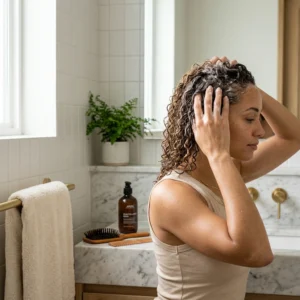
Here’s a checklist to reduce preventable scalp-pimple triggers:
- Wash your scalp after you sweat heavily or when it becomes oily and coated.
- Shampoo & conditioner; rinse thoroughly.
- Avoid heavy oils, waxes, and pomades on breakout-prone roots.
- Introduce one new hair product at a time.
- Pillowcases, brushes, hats, and helmet liners should be washed regularly.
- Wear properly fitted headgear and minimise unnecessary friction.
- Do not share clippers, combs, hats or towels.
- Don’t shave directly over inflamed bumps.
- Don’t use your fingernails on itchy or sore spots.
- Keep track of new products, workouts, headwear, and flare dates to see patterns.
The goal is not to get a totally sterile scalp. To minimise the mix of residue, trapped moisture, and irritation that can make follicles more susceptible to clogging or inflammation.
Common Myths About Scalp Pimples
Myth: Scalp pimples mean you don’t wash enough
Not so much. Aside from cleansing habits, hormones, follicle biology, friction, products, and inflammatory conditions can all play a part.
More vigorous washing is not always the answer. Repeated harsh cleansing and scrubbing may lead to more irritation.
Myth: All pimples on the itchy scalp are fungal acne
Itching is not limited to any single condition. Bacterial folliculitis, dermatitis, product reactions, and other disorders can itch, too.
Clinicians might want to do a scraping or culture if they don’t know what’s causing it.
Myth: Oil Will Calm Every Scalp Bump
There might be some oil in some dry hair routines, but oily products can also cause breakouts around the hairline.
Don’t smother unexplained pustules or inflamed follicles with heavy oil.
Myth: Scalp detoxes draw impurities from your follicles
“Detox” is really a marketing term, not a medical diagnosis.
Shampoo can help get rid of surface oil and styling buildup, but no rinse can identify or treat every cause of scalp bumps.
Myth: Popping a pimple will make it heal faster
Squeezing adds trauma to an area that’s hard to see. It can push the inflammation deeper, introduce contamination, and increase the risk of a scar.
When to See a Dermatologist or Doctor
Set up a routine appointment if:
- Scalp bumps keep coming back.
- They don’t get better once you cut back on your hair-care routine.
- Numerous painful, itchy, or crusted pustules.
- A hard lump grows, changes, or becomes inflamed again and again.
- The condition affects sleep, hair care, or daily comfort.
- You can’t tell if you have acne, folliculitis, dermatitis, or a cyst.
Call a doctor right away if you have:
- Rapidly spreading redness, warmth, or swelling
- Severe or worsening pain
- Fever or feeling unwell in general
- Large amounts of foul-smelling drainage or pus
- Bald patches, broken hairs, scars or thick crusts
- A non-healing, persistent sore or growth
- A child with crusting, pustules, or patchy hair loss on the scalp
Frequently Asked Questions
Why do I keep getting spots on my head?
Bumps that recur may also indicate that a trigger hasn’t been eliminated, or that the problem isn’t typical acne.
Possible culprits could be oily hair products, repeated friction, close shaving, sweating under headgear, folliculitis, and inflammatory scalp conditions. Pay attention to when the bumps happen and go for a medical check-up if they don’t go away after you remove obvious triggers.
What causes pimples on my scalp?
A hard, painful bump may be a deep acne lesion, an inflamed follicle, an ingrown hair, or a pilar cyst.
Don’t squeeze it. “If it is swollen, hot, draining, recurrent or not healing, get it checked.”
Why do I have whiteheads on my head?
When a pore beneath a closed surface becomes blocked with oil and dead skin, whiteheads result. Oily styling products can play a role, especially around the hairline.
Folliculitis can also appear as small, pus-filled bumps. So a cluster of itchy or painful “whiteheads” may need another diagnosis.
Is it Normal to Have Scalp Pimples?
You may get the occasional little pimple, and you can usually deal with it. Don’t ignore bumps as normal if they are common, widespread, very painful, draining, or scarring.
Can dandruff cause pimples on the scalp?
Not every single pimple on the scalp is caused by dandruff.
Bumps may be accompanied by scale, oiliness, inflammation, and scratching. Some aspects of both conditions can be mimicked by folliculitis and contact dermatitis. Get the proper diagnosis. Don’t just assume flakes and pimples are the same thing.
Can Scalp Acne Be Contagious?
Acne is not contagious.
Some infections that resemble acne can be spread through close contact or sharing of personal items. Do not share combs, hats, towels, and clippers until an unexplained pustular or scaly eruption is identified.
What is the best shampoo for pimples on the scalp?
There is no single shampoo that is best for all causes.
If residue buildup is the culprit, a gentle, residue-free shampoo might do the trick. Some acne-type breakouts may benefit from salicylic acid or benzoyl peroxide, and some scaly conditions respond to antifungal or anti-dandruff ingredients.
Pick a product based on the likely cause and its label, not just the word “pimple.”
How long do pimples on the scalp last?
The healing time depends on the diagnosis, the depth of the bump, and whether the trigger is still there.
Cleveland Clinic reports that you may start to see improvement after the cause is treated, and healing may take up to six weeks in some cases.
A bump that grows, recurs, or fails to heal should be examined rather than watched forever.
The Bottom Line
If you’re asking, “Why do I get pimples on my scalp?” the most helpful answer is not “oil” or “bad hygiene.”
Scalp pimples may be caused by clogged follicles, hair-product residue, sweat and friction, close shaving, or folliculitis. Cysts, dermatitis, infections, and inflammatory scalp conditions can also mimic acne and require different treatment.
First, try to use fewer products, wash gently after sweating or if you have a lot of buildup, don’t pick at your scalp, and clean items that touch your scalp regularly.
If the bumps are painful, persistent, spreading, draining, or accompanied by hair loss, have a doctor or dermatologist determine the cause before trying another home remedy.
Want to start a more peaceful scalp routine? Keep the prevention checklist. Review the products that touch your roots. Browse the Hair Care Growth Scalp Care section for more targeted, evidence-verified guides. If any of the above warning signs sound like you, make your next move a doctor’s appointment—not another DIY treatment.
Medical disclaimer: This article is for general education and cannot diagnose a scalp condition. If you have persistent, painful, spreading, or scarring bumps, or if you are not sure what you are treating, see a physician or board-certified dermatologist.