
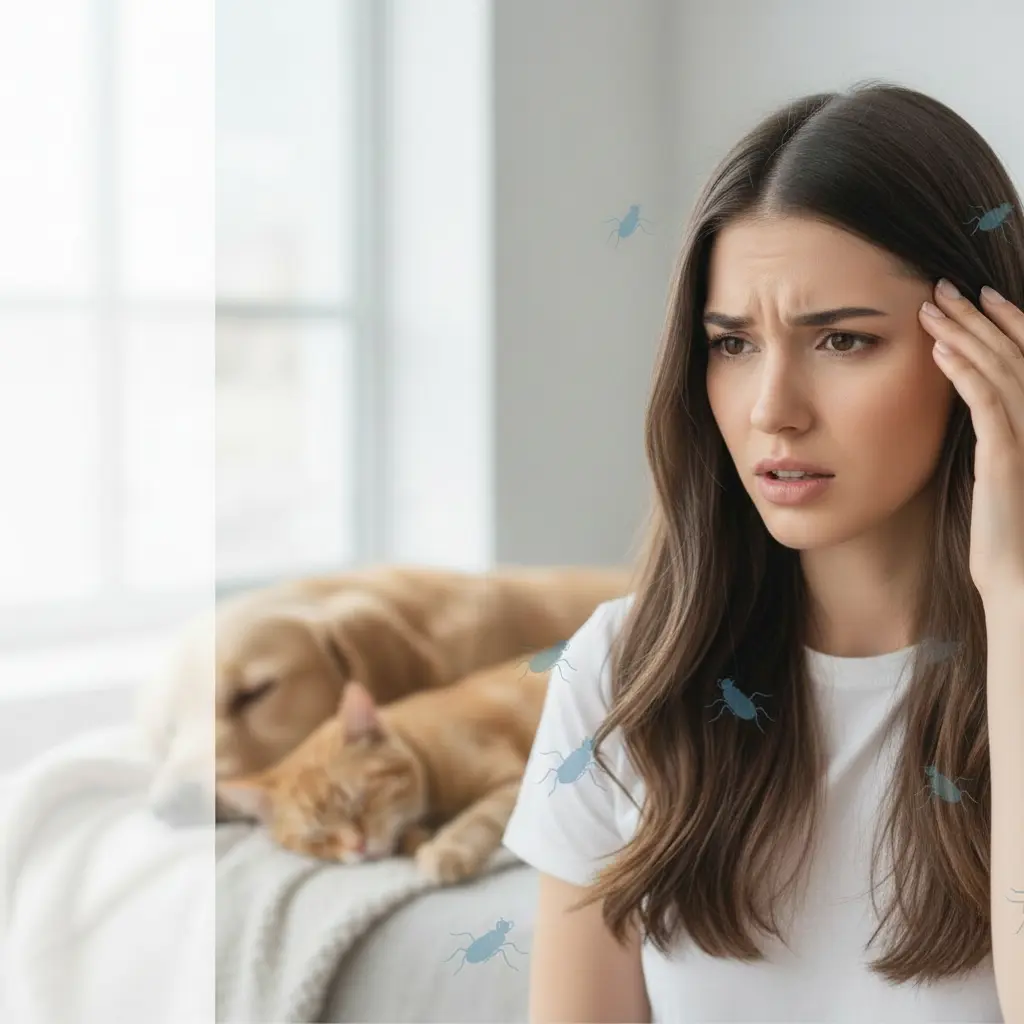
The notion of any malicious program crawling into your hair is enough to make your pores and skin move slowly. When you observe pests that infest hair, head lice are commonly the first to come to mind. But what about fleas? If you’ve got pets, the battle against fleas may be a consistent one. Finding a flea on your dog or cat is one component; what if you sense an itch on your very own scalp?
It’s a query many puppy proprietors have secretly asked themselves: can those tiny, jumping pests decide to make a domestic in human hair? It’s not an unusual challenge, in particular in case you’ve been snuggling with a hairy friend who is probably sporting these unwanted passengers.
This manual gets to the bottom of whether fleas can stay in human hair. We’ll discover why they might come to be there, the dangers associated, and most significantly, the way to save it for you from occurring, and what to do in case you suspect you have a flea problem.
Do Fleas Actually Live in Human Hair?
Let’s get straight to the factor: it’s notably not going for fleas to live and set up an infestation in human hair. While a flea would possibly leap onto someone and even chunk them, our hair isn’t their ideal home.
Fleas are professionals. The most common type you’ll come upon, the cat flea (Ctenocephalides felis), is flawlessly adapted to live on hairy animals like cats and dogs. Their bodies are designed for it.
Here’s why human hair is a poor choice for an everlasting flea residence:
- Lack of Dense Fur: Human hair is a good deal sparser than animal fur. Fleas thrive in the dense, warm environment that a canine or cat’s coat affords. It offers them protection from being dislodged and a great place to hide. Our especially skinny hair just doesn’t offer equal security.
- Body Structure: Fleas have bodies that are flattened from side to side and backward-pointing spines. This design permits them to move swiftly through thick fur and makes them hard to groom out. This is much less effective on human hair and skin.
- Survival Needs: Fleas want a bunch of fur to complete their life cycle successfully. They feed on the host’s blood, and the lady lays eggs that fall off the animal into the surroundings (like carpets and bedding). The larvae hatch and sooner or later change into person fleas, waiting to leap onto any other bushy host. Humans do not fit into this cycle as nicely.
So, while a flea may not set up an extended-term colony in your head, they could absolutely be brief, and very unwelcome, visitors.
How Do Fleas End Up on Humans?

If fleas don’t want to stay on us, why do we every now and then find them on our bodies or in our hair? Usually, it’s a case of being in the wrong location at the wrong time. Fleas are opportunistic and will take a blood meal from a human if their desired host is not available.
Main Causes of Flea Encounters
- Close Contact with Infested Pets: This is the number one motive. If your dog or cat has fleas, cuddling them, allowing them to sleep on your bed, or even simply sitting on the same furniture can cause fleas to jump onto you. They are effective jumpers and may effortlessly bridge the distance.
- An Infested Home Environment: A substantial part of the flea’s life cycle takes place off the host. If your puppy has fleas, there’s an amazing hazard your private home does too. Flea eggs fall into carpets, rugs, furnishings, and bedding. They hatch into larvae, pupate, and after which emerge as hungry person fleas geared up to jump on the primary heat body that passes by—which might be you.
- Visiting an Infested Location: You do not even need to own a pet. If you go to a domestic that has a flea trouble or spend time in an outside location where infested animals have been (like a dog park or a wooded path), you can pick up a hitchhiker.
A flea may land in your hair through hazard, take a chew, and then either soar off or get washed out on your next bath. The primary issue isn’t an infestation on your head, but the bites that go away in the back and the larger infestation in your property that wishes to be addressed.
Flea Bites vs. Head Lice: Telling the Difference
If you experience an itchy scalp and are worried about pests, it’s crucial to understand what you are coping with. Flea bites and head lice are frequently stressed, but they have distinct differences.
Identifying Flea Bites
- Location: Flea bites are most commonplace on the lower body, particularly across the ankles, ft, and legs. If you get them for your higher frame or scalp, it is typically because you were mendacity down or conserving an infested pet.
- Appearance: Flea bites are small, pink bumps, often with a darker pink spot inside the centre (the puncture mark). They normally appear in clusters or strains of two or 3 bites.
- Sensation: The itching from flea bites is extreme. The region across the bite may additionally become sore or soft.
Identifying Head Lice
- Location: Head lice live completely on the human scalp. They rarely venture to other components of the body.
- Appearance: You won’t see as many as you will see the lice themselves or their eggs (nits). Nits are tiny, yellowish-white ovals glued to the hair shafts near the scalp. Adult lice are grayish-white and about the size of a sesame seed.
- Sensation: The number one symptom is an itchy scalp, as a result of an allergy to the louse’s saliva. You may sense a “crawling” sensation in your hair.
Essentially, if the trouble is restrained on your head and you discover nits connected to your hair, it’s lice. If you have itchy crimson bumps, mainly on your legs and ankles, it is possibly fleas from your environment.
The Risks Associated with Fleas
While a flea infestation in human hair is not a number one subject, the presence of fleas poses other health risks for you and your pets.
- Allergic Reactions: Many people are allergic to flea saliva. This can cause a condition known as flea hypersensitivity dermatitis, ensuing in intensely itchy, infected skin and even hives or a rash.
- Secondary Infections: Scratching itchy flea bites can ruin the skin, creating an access point for microorganisms. This can cause secondary skin infections like cellulitis, which calls for scientific remedy.
- Disease Transmission: Fleas are vectors for severa illnesses. While rare, they are able to transmit ailments to humans. According to public fitness sources, this can consist of murine typhus and, in very uncommon instances, even plague. They are generally recognised for transmitting tapeworms to pets (and now and again to human beings).
For those motives, it is critical to cope with flea trouble promptly, even if they aren’t living in your hair.
A Step-by means of-Step Prevention and Treatment Plan.
An excellent way to keep fleas from your hair is to keep them off your pets and out of your property. It’s a two-front war: deal with the host and treat the surroundings.
1. Protect Your Pets
This is the maximum vital step. If you do away with the number one host, you’ll wreck the flea life cycle.
- Use Year-Round Flea Prevention: Talk to your veterinarian about the first-class flea prevention product for your pet. Options include topical treatments, oral medicines, and flea collars. Consistency is fundamental.
- Regular Grooming: Bathe and brush your pets often. A flea comb is a super tool for checking for fleas and casting them out of your pet’s coat.
2. Treat Your Home Environment
Only about 5% of the flea population (the adults) is in your puppy at any given time. The different ninety five%—eggs, larvae, and pupae—are in your property.
- Vacuum Everything: Vacuum carpets, rugs, upholstery, and hardwood floors often. Pay special attention to areas wherein your puppy loves to sleep. The vibration from the vacuum can also stimulate pupae to emerge, making them less difficult to kill. Immediately get rid of the vacuum bag or empty the canister outside.
- Wash Bedding in Hot Water: Wash all puppy bedding, your personal bedding, and any blankets or throws in warm, soapy water. High warmness will kill fleas in any respect lifestyles tiers.
- Consider Environmental Treatments: For excessive infestations, you can need to apply an insecticide. Look for products that incorporate an Insect Growth Regulator (IGR), which prevents flea eggs and larvae from maturing. You can use sprays for carpets or “flea bombs” (foggers), but be sure to follow the protection instructions cautiously.
3. What to Do If You Find a Flea on Yourself
If you discover a flea on your hair or in your body, don’t panic.
- Take a Hot Shower: A thorough wash with your ordinary shampoo and cleaning soap is commonly sufficient to dislodge and wash away any stray fleas. You do not want special medicated shampoos unless you have a secondary skin infection.
- Use a Fine-Toothed Comb: Combing your wet hair with a fine-toothed nit comb can assist put off any fleas you may have neglected.
- Treat the Bites: Apply an over-the-counter anti-itch cream, like hydrocortisone or calamine lotion, to soothe the bites. Try not to scratch.
When to See a Professional
If you’ve tried these methods and are still dealing with a flea problem, it may be time to seek the help of a specialist. An expert pest control organisation can verify the extent of the infestation and use extra powerful remedies to eradicate it accurately.
Similarly, if you experience an extreme rash, hives, or signs of a skin infection from flea bites, it’s vital to seek advice from a medical doctor or dermatologist.
Frequently Asked Questions (FAQs)
Q: Can fleas lay eggs in human hair?
A: It is extremely uncommon. Flea eggs aren’t sticky like lice nits. They are designed to fall from the host’s fur into the surroundings. Since human hair isn’t always an appropriate environment, a woman flea is very not likely to lay eggs there.
Q: Do I want to shave my head to dispose of fleas?
A: Absolutely no longer. Since fleas do not infest human hair, shaving your head is not sensible. A simple, thorough wash is sufficient to put off any fleas that could have jumped on you.
Q: How can I determine if my residence is infested with fleas?
A: One commonplace technique is the “white sock check.” Put on a couple of long white socks and stroll through your house, particularly in carpeted regions. Shuffle your toes to create warmth and vibration. If you have fleas, they will soar onto your socks, wherein they will be easy to spot against the white background.
Q: Can fleas stay in human beds?
A: Yes. Fleas can and do live in bedding, particularly if a puppy sleeps on the mattress. The bedding affords a warm, safe vicinity for fleas, eggs, and larvae. This is why washing bedding in warm water is a critical step in removing an infestation.
Final Thoughts
The idea of fleas in your hair is unsettling; however, you can rest assured knowing that your scalp is not their desired home. While a flea might chew you, it gained’t begin a family there. The real problem is sort of constantly an infestation on a pet and in your home environment.
By focusing on a consistent prevention plan for your pets and retaining an easy home, you could defend yourself, your family, and your furry companions from those pesky insects. A proactive approach is the best defence, ensuring your hair and your home stay flea-free.
For more facts on fleas and related health risks, you can consult dependable resources just like the Centres for Disease Control and Prevention (CDC).
Disclaimer: The records provided in this newsletter are for instructional and informational purposes only and are not intended as medical or professional advice. Always seek advice from a certified professional for personalised guidance.