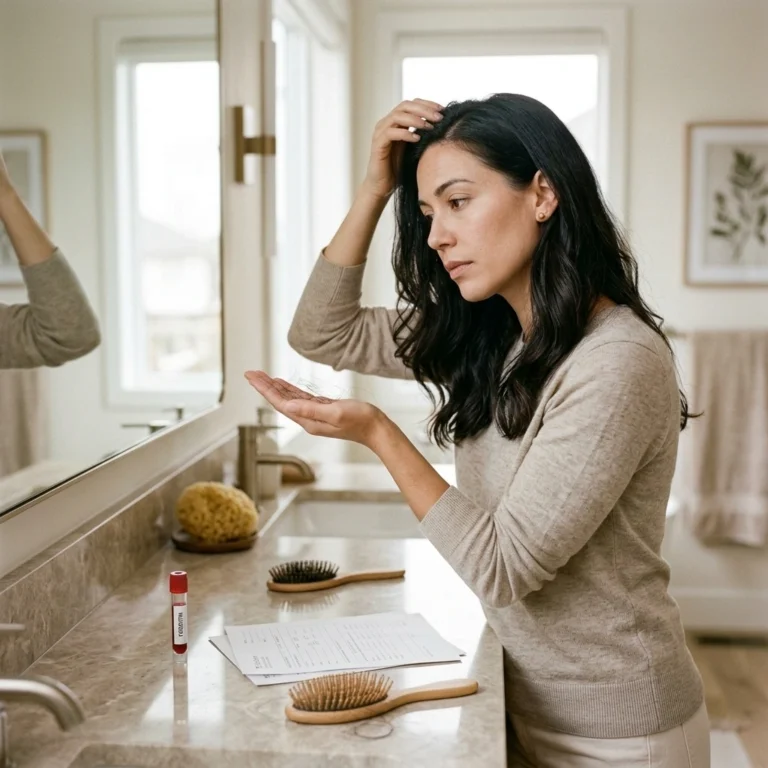
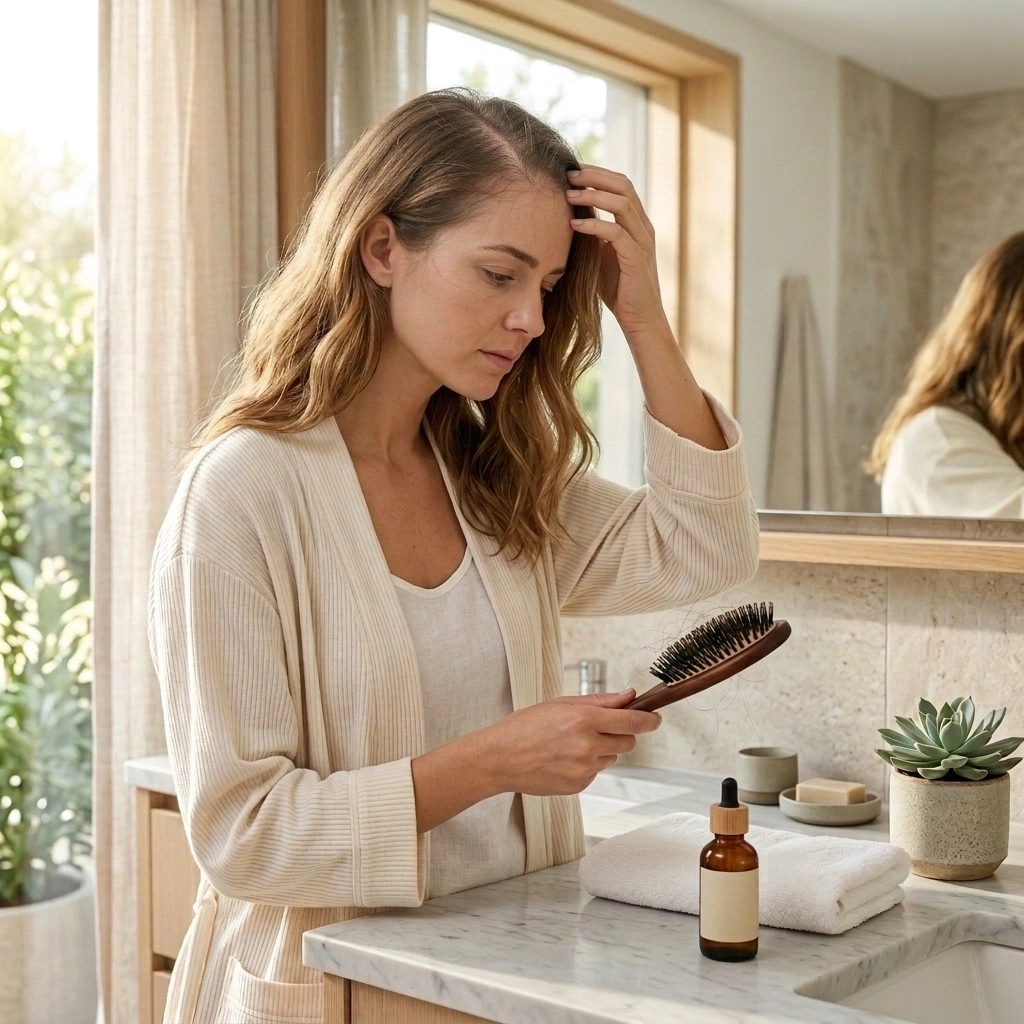
You wash your hair, and there are so many more strands tangled around your fingers than normal. You look a little wider in the mirror. If you have polycystic ovary syndrome, these small changes can feel unsettling—and you’re not imagining them.
PCOS is a hormonal disorder that affects how your ovaries work, and its effects go far beyond your monthly cycle. Thinning hair is one of the most emotionally devastating symptoms, but seldom receives the attention it deserves in a doctor’s office.
Something to hold onto: Not all women with PCOS experience hair loss. And when hair thins, the problem usually begins with your hormones — not hair. But that difference is a world of difference in how you treat it.
This guide takes you through why PCOS affects your hair, how to tell it apart from normal shedding, which treatments actually work, and when you should see a specialist.
What Is PCOS?
Understanding PCOS:
PCOS is a hormone disorder that affects the way the ovaries release eggs. The World Health Organization estimates that between 8 and 13% of women of reproductive age are affected, and that up to 70% of these cases go undiagnosed globally.
The name fools people. You don’t need to have actual cysts for the condition. Ultrasound “cysts” are actually small follicles that never matured enough to release an egg, explains the Cleveland Clinic. The problem begins with an imbalance of hormones, usually an overproduction of a type of hormone called androgens. Androgens are often called “male” hormones, but all women produce them.
Symptoms of PCOS
PCOS comes in many forms. Typical signs of infestation are:
- Irregular, skipped, or unpredictable periods
- Acne & Oily Skin
- Weight gain, usually in the middle
- Hirsutism (excessive facial or body hair)
- Difficulty conceiving
- Hair loss on the scalp
Some women hit almost all the boxes. Others see only one or two. That’s exactly why PCOS is so easy to miss.
Does PCOS Really Cause Hair Loss?
The Quick Answer
Yeah, it can do that. But the trigger is not the follicles giving up — it’s the hormones telling them what to do. Balance your hormones and your hair often gets a real chance to bounce back.
Why Hair Loss Occurs in PCOS
As the levels of androgen increase, the sensitive follicles on the scalp start to shrink; this process is known as miniaturisation. Each new strand that grows is thinner and weaker than the last, and the period of active growth is shorter. After months, this causes visible thinning on the top of the head. A review in the National Library of Medicine directly links this pattern to increased androgen activity in women with PCOS.
How Hormones Affect Your Hair
Understanding the Hair Growth Cycle
Each strand goes through a repeating cycle:
- Anagen- the phase of active growth, which can last for several years
- Catagen is a brief period of transition during which growth slows.
- Telogen – resting phase
- Shedding: New strands emerge while old ones fall off.
Most of your hair is in the growth phase most of the time. Hormone changes can throw that balance off, putting too many follicles to sleep too early.
The Role of Androgen
Your body turns some of your testosterone into a more powerful hormone, DHT (dihydrotestosterone). DHT attaches to receptors in the scalp’s follicles and gradually makes them smaller. Genetics plays a big role in this, which is why two women with almost exactly the same hormone levels can have completely different hair. According to the American Academy of Dermatology, this inherited sensitivity is one of the top reasons for female pattern hair loss.
What Does PCOS Hair Loss Look Like?

Common symptoms
- A growing part line
- Thinning at the crown
- Less fullness overall
- A ponytail that seems noticeably thinner
- More hair when washing or brushing.
Commonly Affected Areas
PCOS thinning is usually concentrated on the crown and the top of the scalp. Unlike male pattern baldness, you keep a lot of the hair on your front hairline. Many women describe the change as diffuse, spread out evenly, not falling out in patches.
Warning Signs: Early
The first signs are subtle. Strands begin to feel finer. More of your scalp is showing under the bright bathroom light. Regrowth is slower; your normal style has no body. These signs are easy to dismiss, but spotting them early gives you the best shot at saving your follicles.
PCOS Hair Loss vs Normal Hair Shedding
According to the American Academy of Dermatology, it’s perfectly normal to lose 50 to 100 hairs a day. Shedding can also be elevated after illness, stress, or seasonal changes – and then take care of itself.
PCOS thinning is a different story. It is progressive in nature, follows a recognisable pattern, and keeps progressing until the underlying cause is corrected. Rather than growing back at full thickness, each new strand tends to come in finer than the last.
Comparison Table
| Regular Hair Loss | PCOS Hair Loss |
|---|---|
| Temporary | Often unending |
| Regrows to full thickness | Regrowth may be slower or finer |
| Even over the scalp | Patterned, concentrated thinning |
| No hormonal triggers | Hormone-driven imbalance |
Can PCOS Cause Hair Loss Even If You Have Regular Periods?
This catches people unaware. PCOS has several phenotypes, or forms. Some women ovulate on schedule, but have elevated androgens running quietly in the background. Even if your cycle looks completely normal, the hidden excess of androgens can affect your hair. That’s a good reason to get properly evaluated rather than ruling out PCOS on your period alone.
Other Reasons Women with PCOS May Lose Hair
Hormones aren’t always the answer. Often several factors stack on top:
- Resistance to insulin. Many women with PCOS poorly process insulin, and this can serve to push levels of androgens even higher. As per the Mayo Clinic, insulin resistance is believed to be a central characteristic of the disease.
- Chronic inflammation. There’s also a lot of low-grade inflammation with PCOS, which may put extra strain on the follicles over time.
- Nutrient gaps. Low iron, vitamin D, zinc, or protein can all make shedding worse – and these deficits can go unnoticed more than you might think.
- Tension. Emotional stress can push extra follicles into the resting phase, leading to a temporary shedding called telogen effluvium. Living with PCOS is stressful in itself, and that can contribute to the cycle.
- Thyroid disorder. Thyroid disorders are common in women with PCOS and also contribute to their own thinning, so doctors routinely check thyroid function.
How Is PCOS Hair Loss Diagnosed?
Normally, it is a multi-step process to get answers:
- Medical history — your cycle, symptoms, and family health history
- Physical examination: looking for signs such as excess hair or acne
- Blood work – hormone levels, iron studies, thyroid panel and vitamin levels
- Scalp analysis – follicle health and density
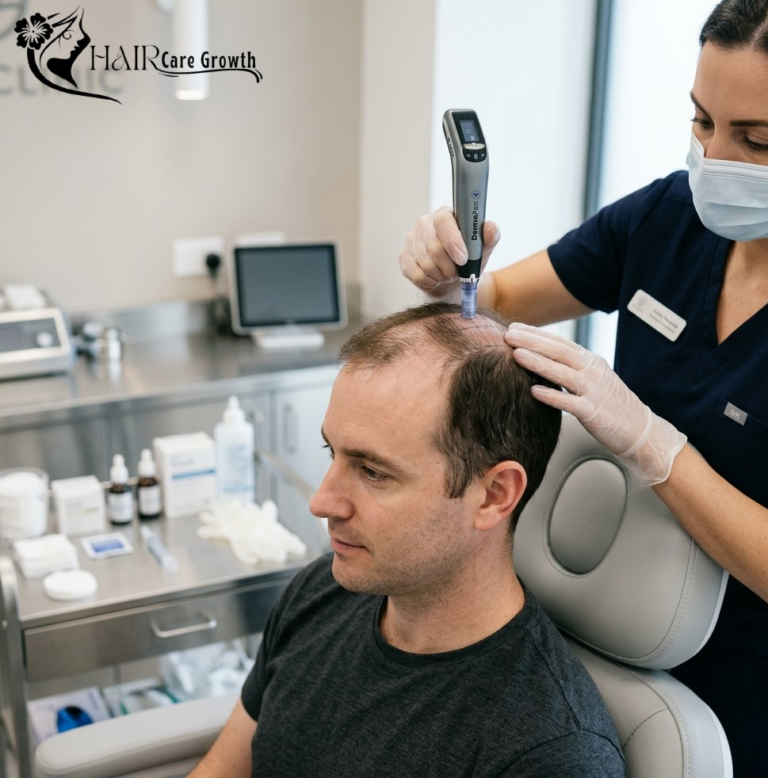
If this still isn’t clear, your dermatologist may do more testing, including a scalp biopsy, to rule out other causes of hair loss.
Can PCOS Hair Loss Be Reversed?
Yes, most of the time, especially if you take action early. Often, if the follicles have shrunk, but not died, they can recover when the hormones are brought under control. The catch is time. It is more difficult to fully recover from thinning the longer it is left untreated.
Your results depend on a few things – your age, your genetics, how well your hormones are managed, and how consistent you are with your treatment. No one sees change overnight, but steady effort pays off.
Medical Treatments for PCOS Hair Loss
Always seek medical advice before undertaking any of them. Here are the main choices:
| Treatment | How It Works | Good to Know |
|---|---|---|
| Minoxidil | Stimulates hair follicles and prolongs the hair growth phase | FDA-approved topical treatment. For results to continue, it must be used consistently. |
| Anti-androgens (e.g., spironolactone) | Blocks the effects of androgens on hair follicles | Prescription only. Not recommended during pregnancy. |
| Combined Oral Contraceptives | Lower circulating androgen levels | Can also help regulate menstrual cycles in people with PCOS. |
| Insulin Sensitizers (e.g., metformin) | Improve insulin resistance, which may help reduce androgen production | Most beneficial for people with insulin resistance or blood sugar issues. |
Your doctor may combine approaches, or may suggest other prescriptions, depending on your specific labs and goals.
Natural ways to help you grow healthier hair in PCOS
The best results are obtained by medical treatment together with good daily habits.
Eat a diet that is hair-friendly. Lean protein, healthy fats, foods strong in iron and zinc (like pumpkin seeds), and omega-3 fatty acids (like fish) should all be included in your diet. And make sure you eat loads of colourful vegetables.
Improve insulin sensitivity. Even balanced plates, a healthy weight and regular movement all help to keep shedding hormones steady.
Lower your stress load. Meditating, yoga, simple wind-down routines, and good sleep can reduce the levels of the stress hormones which can exacerbate hair loss.
Be kind to your hair. Avoid tight ponytails, harsh chemical treatments, heat styling, and use mild shampoos.
Vitamins and Nutrients That Could Promote Hair Health

- Iron – low levels are known as a shedding trigger
- Vitamin D – tied to healthy follicular cycling
- Zinc: aids in tissue development and repair
- Biotin is only useful if you are truly lacking in it.
- Protein – the building block for every strand. Omega-3s – promote a healthy scalp
One more caution: correct identified deficiencies under medical supervision. “Taking supplements you don’t need won’t grow hair, and in some cases, it can be harmful,” she stated.
Hair Care Tips While Managing PCOS
- Style for volume: A layered cut and side part can create the illusion of thicker hair.
- Select the appropriate shampoo. They’re sulfate-free and gentle, so they clean without stripping your scalp.
- Scalp health. Just keep it clean and give it a light massage for circulation.
- Protect from harm. Avoid tight styles, limit the use of hot tools, and don’t brush wet hair hard.
Lifestyle Changes That May Help Prevent Hair Loss
Small, repeatable choices matter:
- Weight control brings back hormonal balance.
- Better sleep helps you recover and lowers stress.
- Exercise alters your body’s response to insulin.
- Stable blood glucose avoids the androgen surges.
- There’s no quick fix here. Consistency beats any magic fix.
When Should You See a Doctor?
Signs You Should Not Dismiss
- Fast thinning
- Patches of baldness
- Shedding heavy suddenly
- Changes in your menstrual cycle
- Hair growth on the face
- Acne bad.
Who can help?
Begin with your primary care doctor. From there, depending on your symptoms, a gynaecologist, endocrinologist or dermatologist can dig deeper. If you have PCOS symptoms that carry on, the NHS recommends getting checked, as early treatment can improve outcomes.
Common Myths About PCOS Hair Loss
I will be bald from my hair loss. Female pattern thinning seldom results in complete baldness.
It’s only when you get to a certain age that you start losing hair. PCOS also can cause thinning hair in women in their teens and twenties.
Natural oils can heal it. Oils can be good for your scalp, but they won’t cure a hormone imbalance.
Cutting makes hair grow back thicker. Trimming is a change to the tip, not the root. The follicle gives us thickness.
Nothing to be done. There’s a lot you can do, especially with early, consistent treatment.
Frequently Asked Questions
Does PCOS hair loss come back?
Yes, frequently, particularly if treatment is initiated early and hormones are under control.
When will I feel good again?
Treatment is usually given regularly for three to six months, sometimes a little longer.
Can PCOS cause permanent hair loss?
Not every time. But if not treated, it’s more likely to be permanent.
Weight loss is going to help.
It can. Insulin and hormones often become balanced with weight loss.
Which hormone does this?
Androgens, especially DHT, are the main players.
Yes, PCOS can cause hair loss in teens.
Yes. PCOS thinning does not prevent age.
Best shampoo?
There’s no magic bottle. The best are a gentle sulfate-light shampoo and medical treatment.
Is it worse when you’re stressed?
Yes. Stress can also lead to more shedding than hormonal thinning alone.
Key Takeaways
- What causes hair loss in PCOS? The main cause of hair loss in PCOS is the hormonal imbalance, especially excess androgens.
- Early diagnosis and treatment can improve the chances of slowing down thinning and encouraging Regrowth.
- The best results usually come from a combination of medical care, good nutrition, healthy habits, and gentle hair care.
- It takes time to change. For months, there will be no visible difference.
Conclusion
It’s upsetting to watch your hair get thinner, but PCOS hair loss is not hopeless. With the right plan, most women can slow down hair loss and stimulate real hair growth. This solution is not a miracle serum. It’s about fixing the underlying hormonal imbalance and being consistent long enough to see results.
Don’t believe the hype and get a real assessment from a qualified professional. Your hair, your health, everything needs that good foundation.
Want to go on? For more expert-backed guides, check out haircaregrowth.com, and talk to a healthcare provider about creating a plan that’s right for you. The right knowledge and the right support give you the best hair.
Medical Disclaimer: This article is for informational purposes only and is not a substitute for professional medical advice, diagnosis, or treatment. Always consult a qualified healthcare provider about any medical condition or before starting any new treatment.