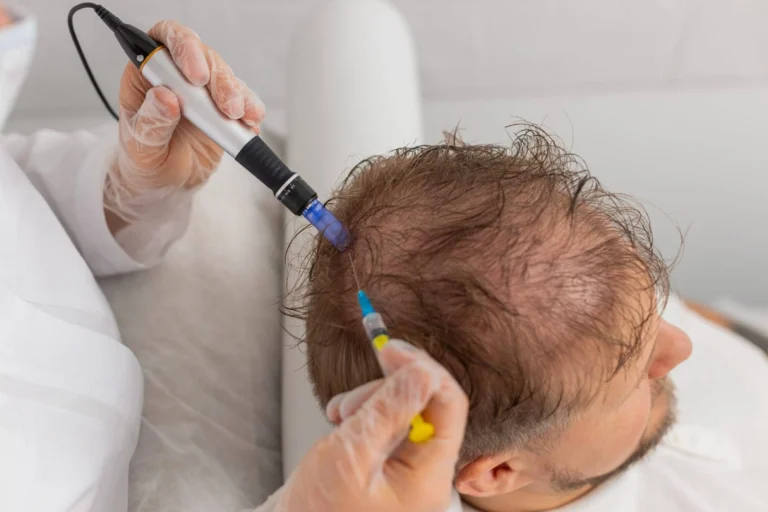
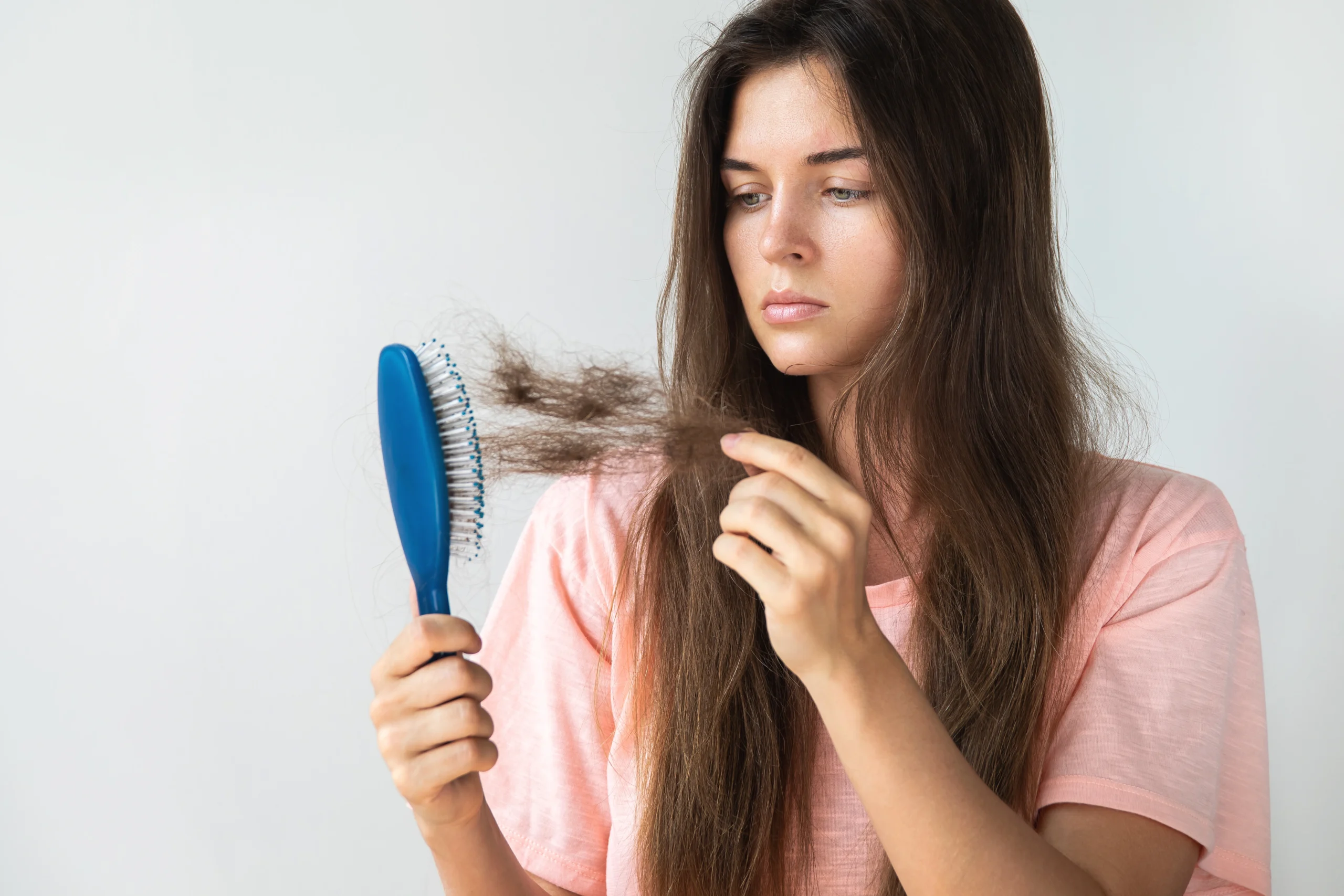
Short answer: Iron deficiency may be a factor in diffuse hair loss, often via a condition known as telogen effluvium. A ferritin blood test can tell you if you have enough stored iron, but ferritin alone cannot tell you the reason for your hair loss. It should be interpreted along with your symptoms, complete blood count, other iron studies, inflammation status, and physical exam by a healthcare professional.
Extra hair in the shower can make any blood test feel like an emergency. Low ferritin – or low-normal ferritin – makes it tempting to blame that one number for the entire diagnosis.
Very rarely is hair loss that simple.
It is important for your health as well as your hair. It is part of the protein haemoglobin, which carries oxygen in the red blood cells. It also aids the body in using calcium and phosphorus to build bones and teeth. Ferritin is one of the major proteins your body uses to store iron.
When iron stores are low, some people shed more hair. However, similar changes can be caused by inherited thinning, thyroid disease, illness, childbirth, medications, restrictive diets, and scalp conditions.
The objective of this guide is to answer one question: How should ferritin and related blood tests be used in someone with diffuse hair loss where iron deficiency is suspected?
There is no general “hair growth ferritin” target recommended in medical research.
What Is Iron Deficiency, Hair Loss?
Low iron stores associated with hair loss are popularly known as “iron deficiency hair loss.” This is not a diagnosis per se; one hair test or one ferritin check cannot confirm it.
Hair loss due to iron deficiency is usually diffuse. That is, hair loss occurs in many areas of the scalp, not from one well-defined bald spot.
You might see:
- More hair in the shower or on the comb.
- Ponytail (small)
- Scalp thinning
- A more visible midsection
- Low hair volume
- More flakes when you wash or style
Another diagnosis is telogen effluvium, a temporary change in the normal hair growth cycle.
Hair follicles move through growth, transition, rest, and shedding phases. A significant physical or emotional stressor can push more growing hairs into the resting phase earlier than expected. Those hairs do not necessarily fall immediately. The shedding of the hair may be noticed 2 or 3 months later.
That delay can make it difficult to connect the hair loss to a previous illness, surgery, nutritional problem, stressful event or other trigger. The Cleveland Clinic has a medically reviewed guide to telogen effluvium explaining this pattern and listing illness, childbirth, thyroid problems, restrictive diets, surgery and certain medications as possible triggers.
So low iron is one possible contributor, not a visual signature.
According to the American Academy of Dermatology, when taking the history and examining the patient, the scalp and hair should be examined, the timing and pattern considered, and blood tests or a scalp biopsy performed when indicated.
Iron Deficiency Is Not the Same as Iron-Deficiency Anemia
These terms are related, but they ARE NOT the same.
- Iron deficiency means that you do not have enough iron available in your body or stored in your body.
- Iron-deficiency anaemia is when the iron deficiency is significant enough to cause problems with haemoglobin or red blood cell production.
Your iron stores can be empty, and your haemoglobin can still be in the lab range.
Here’s the distinction, from MedlinePlus’ overview of iron tests: Not all people with low iron have anaemia. That’s why a full blood count doesn’t quite answer the question of whether you have enough iron stores.
What Does Iron-Related Hair Shedding Look Like?
There is no home test that will tell you that iron deficiency is causing your hair loss. But the pattern can provide helpful clues and help you describe the problem in a medical appointment.
| What you notice | What it may suggest | Best next step |
|---|---|---|
| Sudden shedding from across the scalp | Telogen effluvium caused by iron deficiency or another physical stressor | Review events from the previous few months and ask whether testing is appropriate |
| Gradual widening of the part or crown thinning | Pattern hair loss, possibly combined with another shedding trigger | See a dermatologist; ferritin cannot confirm or exclude pattern loss |
| Smooth, round bald spots | Alopecia areata or another focal hair-loss condition | Arrange a dermatology assessment |
| Short, snapped hairs and frayed ends | Breakage from heat, chemicals, friction, or tension | Improve hair handling and determine whether root shedding is also present |
| Redness, scaling, burning, pain, or pustules | Inflammatory or infectious scalp disease | Seek medical evaluation instead of treating it as a nutrient problem |
| Shedding with fatigue, breathlessness, pica, palpitations, or restless legs | Possible iron deficiency or anemia, among other conditions | Contact a healthcare professional for assessment |
Iron-deficiency anaemia can cause a range of symptoms including tiredness, headaches, paleness, breathlessness and a racing heart. The NHS guide to iron-deficiency anaemia has an overview of the symptoms that has been medically reviewed.
They’re clues, not evidence. Thyroid disorders, sleep disorders, heart or lung disease, nutritional deficiencies and a host of other medical problems can present with similar complaints.
Signs That May Point Away From Iron Deficiency
Shedding of iron is common and generally nonscarring. Such changes suggest that another diagnosis may be more likely:
- Receding hairline >
- A part in the middle that fans out wider and wider
- Totally smooth bald patches
- Various lengths of broken hair
- Hair loss with tight hairstyles
- Itching, burning, severe.
- Thick scaling or crusting
- Pus-filled blisters
- Shiny or scarred patches of scalp
- Loss of eyebrows and/or eyelashes
More than one condition can occur at the same time. Someone may have low iron stores and inherited pattern hair loss, for example. Treating the deficiency is still important, but it may not fully restore the lost density.
What Ferritin Measures—and What It Does Not
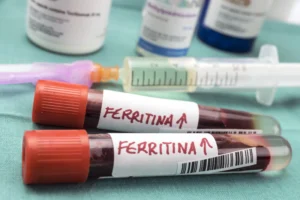
Ferritin is a protein that stores iron. A serum ferritin test measures the ferritin in a sample of blood and thus estimates the amount of iron stored in your body.
Low ferritin usually indicates depleted iron stores. MedlinePlus has information on the ferritin blood test and its use in determining low or excess iron.
Ferritin is useful but has a major limitation: it can be elevated in the setting of inflammation or illness.
Ferritin can also be elevated with some liver diseases and other medical problems. So a normal or high-looking result may be more difficult to interpret in the presence of inflammation.
The WHO’s ferritin guideline specifically considers the effect of inflammation and recommends that ferritin should be interpreted according to a person’s age and health status.
This results in two common errors:
- A low-normal ferritin level is the cause of hair loss.
- A normal or high ferritin result always indicates adequate iron stores.
Transferrin saturation and an inflammation marker may also be considered by a clinician depending on the circumstances.
Ferritin Is Not the Same as Serum Iron
Ferritin, serum iron, hemoglobin, and transferrin measure different parts of the body’s iron status.
| Test | What it helps assess | Why it cannot stand alone |
|---|---|---|
| Ferritin | Stored iron | Can rise with inflammation, infection, liver disease, and other conditions |
| Serum iron | Iron circulating in the blood at that moment | Can change with meals, supplements, timing, and illness |
| Transferrin or TIBC | The blood’s capacity to transport or bind iron | Must be interpreted with the rest of the iron-test pattern |
| Transferrin saturation | The percentage of iron-transport sites carrying iron | Can be affected by chronic disease and needs clinical interpretation |
| Hemoglobin and hematocrit | Whether anemia is present and how much blood consists of red cells | May remain within range during earlier iron depletion |
| MCV and MCH | Red blood cell size and hemoglobin content | Changes may appear after iron stores have already fallen |
| CRP or another inflammation marker | Whether inflammation may be affecting ferritin | Does not measure iron itself |
MedlinePlus has an overview of iron tests including serum iron, transferrin, total iron-binding capacity and ferritin.
Your clinician may not order all the tests listed in this table. Your choice should depend on your symptoms, medical history, and current results.
What Ferritin Level Is Low for Hair Loss?
This is the question most readers will want to have answered, and the one most in need of careful explanation.
There is no ferritin level that proves that it is iron that has caused hair loss or that regrowth will occur.
Laboratory reference ranges vary. Nor is the cut-off for the diagnosis of iron deficiency necessarily an ideal target for hair growth.
A 2025 JAMA review states that in adults without inflammatory disease, iron deficiency is usually diagnosed with ferritin <30 ng/mL or transferrin saturation <20%. The significance of determining and addressing the underlying cause of iron deficiency is also emphasised in the review. PubMed index: Yes
WHO guidance suggests different ferritin cut-off values by age, health status and inflammation. Its thresholds for apparently healthy adults are different from those commonly used in everyday clinical practice. WHO also allows a higher cutoff to indicate possible deficiency when infection or inflammation is present, although that recommendation is conditional and based on low-certainty evidence.
These differences are a good reminder that a number from a forum or social media post is not a diagnosis.
Always use the unit and reference interval printed on your laboratory report. Ferritin may be reported as ng/mL or micrograms per liter.
Is There an “Optimal” Ferritin Level for Hair Growth?
Some forms of nonscarring hair loss, especially in women, have been associated with lower ferritin. But it hasn’t established a single ferritin target that regrows hair in all individuals.
36 studies with 10,029 women were evaluated in a systematic review and meta-analysis. Ferritin was lower in the women with nonscarring alopecia than in women without hair loss (mean 28 vs 43 μg/l). But the authors also noted the current literature did not provide clear evidence of a cause-and-effect relationship. See abstract on PubMed.
An association is when we observe two things happening together more than we would expect. It does not prove that one caused the other in each participant.
It also does not show that raising ferritin to an arbitrary target will regrow everyone’s hair.
Instead of looking for one “perfect” number, ask three practical questions:
- Does the full blood test pattern look like iron deficiency?
- What caused the deficiency?
- Once the cause is treated, do the deficiency and hair loss improve?
Who May Benefit From Ferritin and Iron Testing?
Testing may be more useful with diffuse shedding and with symptoms or risk factors for iron deficiency.
The factors which may be considered in testing are:
- Heavy or long menstrual bleeding
- Pregnant, or has recently given birth
- Limited number of foods in diet
- Eating too little in general
- Regular blood donation
- Recent operation
- Suspected or known haemorrhage
- Celiac disease
- Bowel inflammatory disease
- Bariatric or gastrointestinal surgery
- Chronic digestive symptoms
- Decreased ability to exercise or fatigue
- Pica, such as a strong desire to chew ice
- Jelly legs
- Abnormal complete blood count.
The 2025 JAMA review suggests screening for people with anaemia, or symptoms of iron deficiency. It also recommends testing people with risk factors such as pregnancy, heavy menstrual bleeding or inflammatory bowel disease. PubMed review.
Testing everyone for any complaints of hair is not always useful.
Bleaching’s broken ends need different first considerations: a painful, scaly scalp and a steadily receding hairline. A dermatologist can order bloodwork. The decision is based on examination and history.
Children and Teenagers
Children and teens may develop iron deficiency due to rapid growth, limited variety of food, heavy menstrual bleeding, and digestive conditions.
In children, iron treatment should always be supervised by a paediatric health care professional. Do not give an adult dose of iron to a child or store iron products where children can reach them. Iron poisoning can occur if accidentally ingested.
Pregnancy and Postpartum Hair Loss
Pregnancy increases iron needs. Blood loss can occur at delivery.
Postpartum telogen effluvium is common, and may occur without iron deficiency. You can have them both.
Ongoing postpartum shedding should be investigated, not simply blamed on hormones or low iron. To learn more about the hormonal shedding pattern, see Hair Care Growth’s separate guide to postpartum hair loss.
Pregnant or nursing women should discuss iron products with health care providers.
Iron Deficiency and Hair Loss in Men
Absence of menstrual blood loss may result in iron deficiency being missed in men.
If a man has iron deficiency with no obvious cause, he should be investigated medically. It can be from GI blood loss, absorption issues, poor diet, or frequent blood donation.
The same care should be exercised with postmenopausal women. Iron deficiency should not be treated as a cosmetic hair problem without considering the cause.
Why Do Iron Stores Become Low?
There is iron deficiency. Next, we need to understand why it evolved.
Chronic haemorrhage
Iron deficiency can cause heavy periods.
Bleeding in the digestive tract may be slow and not apparent initially but can lead to iron deficiency. Possible causes include ulcers, gastrointestinal disease, and a variety of medications.
According to Mayo Clinic’s iron-deficiency summary, the main reasons for this condition are blood loss, low intake, poor absorption, and increased iron requirements.
Iron deficiency
Iron requirements may be increased in:
- Pregnancy
- Puberty
- Growth spurts
- Recovery after large blood loss
In a new stage of life, the body may not be able to subsist on its former diet.
Inadequate Dietary Intake
Iron comes from meat, seafood, poultry, legumes, fortified grains, nuts, seeds, tofu, and some vegetables.
Those who eat very little overall, or have a poorly planned restrictive diet, may not be getting enough iron.
There are two forms of dietary iron:
- Heme iron is in meat, seafood, and poultry.
- Iron-fortified foods and plant-based foods include nonheme iron.
The body takes in these forms differently. Food sources, absorption, deficiency hazards, and supplement safety are all covered in the NIH Office of Dietary Supplements iron fact sheet.
Reduced Iron Absorption
Some conditions can interfere with the absorption of iron in your body, including:
- Celiac disease
- Inflammatory bowel diseases
- Bariatric surgery
- Other GI surgeries
- Specific chronic inflammatory diseases
- Some medicines
In such cases, purchasing a stronger supplement may not be the solution to the real problem.
How Hair Loss Should Be Evaluated
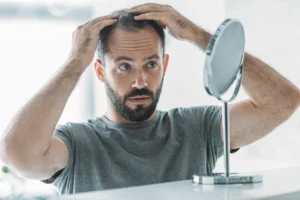
It is not enough to ask for a ferritin test in a good medical visit.
Consult a primary care clinician to have your iron levels checked and to investigate possible causes of blood loss or absorption problems. A dermatologist can tell the difference between shedding from the root versus breakage, pattern thinning, patchy alopecia, and scalp disease.
Your clinician may ask you:
- When did the shedding start?
- Did it come on suddenly or gradually?
- Were you sick or did you have a fever a few months ago?
- Had surgery or a baby?
- Have you lost weight fast?
- On a strict diet? Are you?
- Are your periods getting heavier?
- Give blood much?
- Any stomach trouble?
- Did you start or stop a medication?
- Does pattern hair loss run in your family?
- Do you have a painful, itchy, scaly, or inflamed scalp?
The physical exam may involve your scalp, hairline, eyebrows, nails and other areas of hair loss.
Your dermatologist may perform a gentle hair-pull test or examine the follicles with a dermatoscope. For suspected nutrient deficiency, disease, hormonal imbalance, or infection, blood tests or, less commonly, a scalp biopsy may be used to investigate, the AAD states. Review of AAD diagnostic process.
Which Blood Tests May Be Considered?
Depending on your symptoms, a clinician may order the following:
- Blood counts
- Ferritin
- Serum iron
- TIBC or Transferrin
- Transferrin saturation, CRP, or other marker of inflammation
- Thyroid-stimulating hormone
- Vitamin B12 or folic acid
- Further tests according to your history
Not everybody needs a big consult. Testing should be targeted, not just because a panel is popular on the web.
Do You Need to Fast Before a Ferritin Test?
You usually don’t have to fast before a ferritin test. However, serum iron studies are often ordered with timing and fasting instructions, as food and recent supplements can affect some of the measurements.
Follow the instructions of the ordering clinician or laboratory.
Tell them about any medications and supplements you are taking. Do not discontinue a prescribed product without the direction of the clinician managing it.
How Confirmed Iron Deficiency Is Treated
Treatment has two related goals:
- Treat iron deficiency
- Take care of or control the cause of low iron
If there is no treatment for heavy bleeding, poor absorption, or poor intake, the lab value may improve and then fall again.
| Treatment approach | When it may be appropriate | Main limitation |
|---|---|---|
| Dietary changes | Supporting balanced intake or preventing inadequate iron consumption | May not correct a significant deficiency quickly enough and cannot stop blood loss |
| Oral iron | Common first-line treatment for confirmed deficiency | Can cause digestive side effects and may not work well when absorption is impaired |
| Intravenous iron | Selected cases involving poor absorption, intolerance, ongoing loss, or certain chronic conditions | Requires medical administration and is not a routine hair-growth treatment |
| Hair oils, masks, or growth shampoos | Improving softness, lubrication, or breakage | Cannot replenish iron stores inside the body |
Mayo Clinic says iron-deficiency anaemia is typically treated with iron replacement while the source of the deficiency is sought. Its diagnosis and treatment guide describes other procedures that may be used to investigate gastrointestinal or menstrual blood loss.
Why This Article Does Not Recommend an Iron Dose
The what, how much, how often, and for how long to treat depends on:
- Degree of the deficiency
- Cause of deficiency
- Age
- Pregnancy status
- Medical conditions (other)
- Current medication
- Adverse effects
- Iron absorption capacity
- Treatment response
Iron supplements may cause constipation, nausea, diarrhea, abdominal discomfort, or dark stools. Iron also reacts with some medications, and an excess can damage organs.
The NIH Office of Dietary Supplements describes the risks of too much iron, common drug interactions, and considerations for different age groups.
This is why instructions such as “take iron until your ferritin reaches 70” are not responsible general advice. Treatment must be related to a confirmed medical need and a subsequent plan.
Can Iron-Rich Food Help?
Long-term iron intake can be helped with a well-balanced diet.
Good sources are:
- Meat, lean
- Fish and seafood, chicken, beans
- Lentils (pulse)
- Tofu, chickpeas
- Iron-fortified breads and cereals
- Pumpkin seeds
- Green leafy vegetables
Foods high in vitamin C may improve the absorption of nonheme iron, the plant-based iron.
Simple matches are:
- Tomato and lentils
- Beans, bell pepper
- Cereals, fortified, with berries
- Lemon juice, chickpeas
- Tofu and broccoli
In some cases, tea, coffee, calcium, and some medicines can prevent iron absorption. If you are being treated for a deficiency, ask a clinician or a registered dietitian how to time these foods and medicines.
Food may aid in treatment, but it can’t arrest bleeding or cure an absorption disorder. A significant deficiency may require physician-directed iron replacement.
What Hair Recovery May Look Like
Blood test values and visible hair density do not progress at the same rate.
Even if the iron deficiency or another event causing it is fixed, hair that has already entered the resting phase may be lost.
| Recovery stage | What may be happening | What to do |
|---|---|---|
| Evaluation | The hair-loss pattern and possible triggers are being identified | Bring a symptom timeline, medication list, and previous blood-test results |
| Early treatment | The body may begin responding, but visible shedding can continue | Follow the treatment plan rather than increasing iron for faster results |
| Following months | Shedding may begin to settle if the trigger has been corrected | Track the overall trend instead of counting hairs every day |
| Later recovery | Short new hairs may appear, while density improves more gradually | Continue follow-up and protect fragile hair from unnecessary damage |
According to Cleveland Clinic, uncomplicated telogen effluvium lasts three to six months, and if the trigger is removed, it may resolve in six to eight months. Its telogen effluvium guide also states there’s visible regrowth after the shedding phase.
These timelines are a general description of telogen effluvium. They are not a guarantee for every iron-deficient person, especially where another condition of hair loss exists.
Why Hair May Keep Shedding After Ferritin Improves
Subsequent hair loss may be due to:
- Slow hair growth cycle
- Chronic blood loss from menstrual or GI sources
- Iron not well absorbed
- Disparate treatment
- Thyroid Disorders
- Hair loss patterns
- Drug effects
- Another nutrition deficit
- Another scalp disease
- Recent illness or event of physical stress
If your ferritin rises and the thinning continues, reconsider the diagnosis. Repeatedly adding supplements may delay identification of the real problem.
How to Care for Fragile Hair During the Workup
Gentle hair care won’t cure low iron. It can, however, reduce breakage that could have been avoided while you wait for the hair cycle to recover.
- Shampoo mainly the scalp.
- Don’t shampoo and scrub the lengths of hair.
- Conditioner. Decrease friction.
- Work out any tangles from the ends up.
- If it’s suitable for your hair type, use a wide-tooth comb.
- Lower heat tool temperature and frequency.
- Avoid styles that pull or hurt.
- Give your hairline breaks from extensions and tight styles.
- Space out high-damage services like bleaching and relaxing.
- Monthly, take progress photos in the same lighting.
Try not to count every lost hair. Wash frequency, hair length, curl pattern, and styling habits affect how many shed hairs become visible at one time.
In most cases, daily counting is less useful than monthly photos of the part, temples, hairline, and crown.
For more general hair-fall and breakage tips, check out Hair Care Growth’s article on natural ways to control hair fall.
Common Ferritin and Hair-Loss Myths
Myth 1: Normal CBC excludes iron deficiency
Reality: Haemoglobin and red blood cell measurements can be in range in early iron depletion. If the clinical picture and past medical history support this, then ferritin and other iron studies may be indicated.
Myth 2: Low ferritin causes hair loss due to low iron
Fact. Low ferritin is an iron-related problem that needs to be addressed. It does not demonstrate that iron deficiency is the only cause of hair loss.
Other conditions can also be co-existent, such as pattern hair loss, thyroid disease, postpartum shedding, medication effects, and more.
Myth 3: Everyone has to have ferritin above the same number
Truth: No universal ferritin goal for hair regrowth has been identified by medical research.
Diagnostic cutoffs are laboratory- and clinical-context-dependent. A treatment goal should be guided by the overall health picture, not a number touted in a social media post.
Myth 4: Iron More = Faster Hair Growth
Reality: The more you take, the greater the risk of side effects and toxicity without more hair benefits.
Iron is an important mineral, but that doesn’t mean taking lots of iron is a harmless beauty treatment.
Myth 5: Hair Oil is an alternative to Iron Treatment
The fact is, topical products do not replenish iron stores in the body.
An oil or conditioner can add softness, reduce friction or limit breakage. These cosmetic benefits are independent of correction of a nutritional deficiency affecting the hair cycle.
Myth 6: High ferritin = high iron
Reality: Iron overload is one potential cause, but ferritin can be high due to inflammation, liver disease, infection and other medical conditions.
A high result should be interpreted according to transferrin saturation, medical history and other tests as appropriate. MedlinePlus says high ferritin has many reasons.
Evidence Summary: What We Know and What Remains Uncertain
| Question | Best current answer | Evidence confidence |
|---|---|---|
| Does ferritin help assess stored iron? | Yes; a low result usually supports depleted stores | Strong |
| Can iron deficiency occur without anemia? | Yes | Strong |
| Are lower ferritin levels associated with some nonscarring hair-loss conditions? | Yes, particularly in studies involving women | Moderate |
| Does low ferritin prove why one person is losing hair? | No | Strong |
| Is there one ferritin target guaranteed to regrow hair? | No universal target has been established | Strong |
| Will iron improve hair when iron status is already adequate? | A benefit is not established, while unnecessary supplementation carries risks | Moderate to strong |
| Can oils or shampoos correct iron-related shedding? | No; topical products cannot change internal iron stores | Strong |
The unvarnished truth is not as broad as many supplement ads would have you believe.
If iron deficiency has been confirmed, it should be treated for overall health. If iron deficiency is one of the triggers, then hair shedding can improve, but ferritin should not be thought of as a sole hair growth score.
When to See a Doctor or Dermatologist
Book an appointment if:
- Your hair loss progresses or worsens
- Your part is broadening
- Your ponytail feels much smaller
- You feel tired or tire more easily than normal with exercise
- You suffer heavy periods
- You’re on a limited diet
- You continue to have digestive symptoms
- You have had a baby, surgery or serious illness recently
- Your supplement regimen is not working.
In case of emergency, call:
- Sudden patchy hair loss
- Quick growth of bald patches
- Severe redness, pain in scalp, pus or heavy scaling
- Shiny or scarred patches of the scalp
- Loss of eyebrows or eyelashes
- Chest pain
- Fainting (syncope)
- Severe dyspnea
- Fast heart rate
- Bleeding from stool or bleeding for no known reason
- A child might have eaten iron by accident
The primary care clinician can start the iron workup and look for blood loss or absorption problems. A dermatologist is particularly helpful if the pattern is not clear, hair loss is progressing, or there is inflammation of the scalp.
Frequently Asked Questions
Low ferritin but no anaemia: Can you lose hair?
Iron stores can be depleted before the haemoglobin drops into the anaemic range. Yes. Other studies also found reduced ferritin levels in women with non-scarring hair loss.
Low ferritin, however, doesn’t prove that it’s the sole reason for shedding. The result must be interpreted with the hair-loss pattern, symptoms, medical history and other tests.
Does CBC Include Ferritin?
No. A complete blood count measures blood cells, haemoglobin, hematocrit, and associated red blood cell indices.
Ferritin is a different test. If iron deficiency is suspected, a CBC can be ordered.
What Ferritin Level Leads to Hair Loss?
There is no single ferritin level where people lose hair.
In some clinical settings, iron deficiency is defined as <30 ng/mL in adults without inflammation. Other guidelines and laboratories use different thresholds. None of these diagnostic cut-offs is a hair-regrowth goal for all.
How long until hair loss stops after starting iron?
There is no timetable.
You may notice some hair loss from the resting phase after treatment begins. Telogen effluvium usually takes months to develop and resolve, not days or weeks.
If the hair loss continues, ask for a review rather than increasing the dose of iron yourself.
Will Higher Ferritin Automatically Grow Hair Back?
No. Treating iron deficiency eliminates one possible trigger.
Regrowth also depends on treatment of the cause of the deficiency and the presence of another condition such as pattern hair loss, thyroid disease, medication-related shedding, or scalp inflammation.
Can Ferritin Be Normal When It’s Not?
Ferritin can also be high with inflammation or infection. Thus, a value which appears normal may be difficult to understand in an inflammatory condition.
For a clearer picture, the clinician may use transferrin saturation and an inflammatory marker.
Low End of Normal Ferritin – Should I Take Iron?
Don’t make your decision solely based on where the result lies within the printed reference range.
What is the full meaning of the iron-test pattern for you? Symptoms. Inflammation. Ongoing blood loss. Diet. Pregnancy status and other health conditions. All count.
Can Diet Alone Increase Ferritin?
This is dependent on the underlying cause and severity of the deficiency.
Iron-rich food can help to improve the long-term intake, but it can’t stop ongoing bleeding or fix an absorption problem. A confirmed deficiency may need to be replaced at the direction of the clinician.
Hair Loss & Ferritin
High ferritin is not specific for any one condition.
It can occur in iron overload, inflammation, infection, liver disease, and many other conditions. There may be other reasons for hair loss. The result should be interpreted with medical history and further testing.
Should All People With Hair Loss Take Iron?
Nope.
Iron should be used when there is a confirmed or clinically supported indication. If you take it without proper testing, you could experience side effects, get too much iron, and lose sight of what’s really causing your hair to thin out.
The Bottom Line
Ferritin is an important clue in diffuse hair shedding with symptoms or risk factors of iron deficiency. It’s not a diagnosis per se.
The best plan is the simplest plan:
- Observe the time shedding began.
- Think of anything that could have been a trigger in the last couple of months.
- Discuss the relevant testing with your physician.
- Ferritin should be interpreted along with the other iron test patterns.
- Investigate why the iron stores became low.
- Treat a confirmed deficiency under professional guidance.
- Give the hair cycle time to respond.
If another hair-loss condition is present, correcting iron deficiency may be only one part of the treatment plan.
Your next step: Write down when your shedding began and list any recent illness, pregnancy, surgery, dietary change, heavy bleeding, medication change, or digestive symptom. Bring that short history—and any previous blood-test results—to your primary care clinician or dermatologist.
A focused medical evaluation will tell you more than another unverified “hair-growth” supplement.
Medical disclaimer: This material is intended for general education and should not be used in place of a medical diagnosis or course of treatment. Do not start, stop, or change the dose of an iron supplement based on this information. Iron products can be particularly dangerous if a youngster unintentionally swallows them, and too much iron can be detrimental.
Written by Mian Hussain.