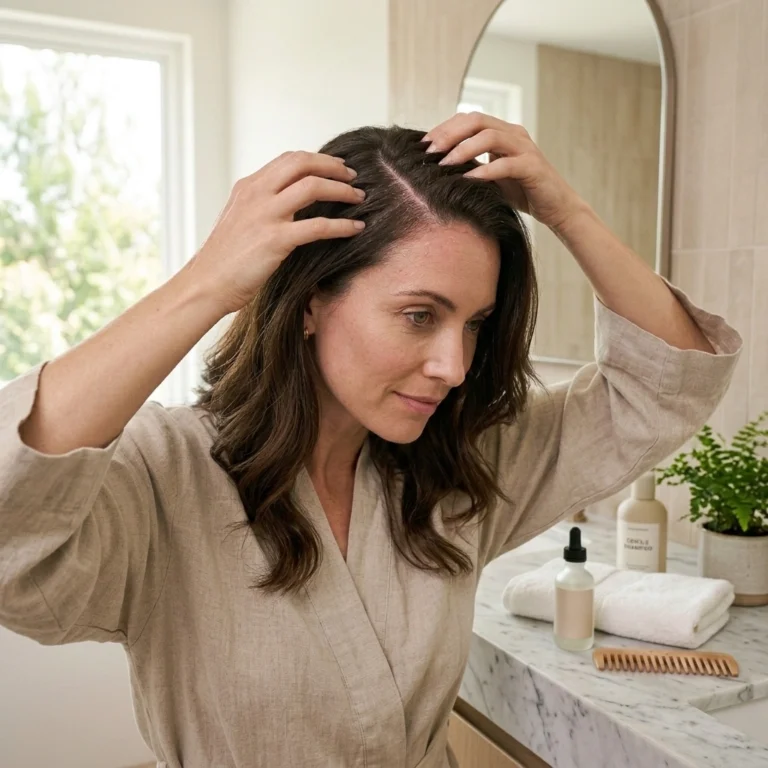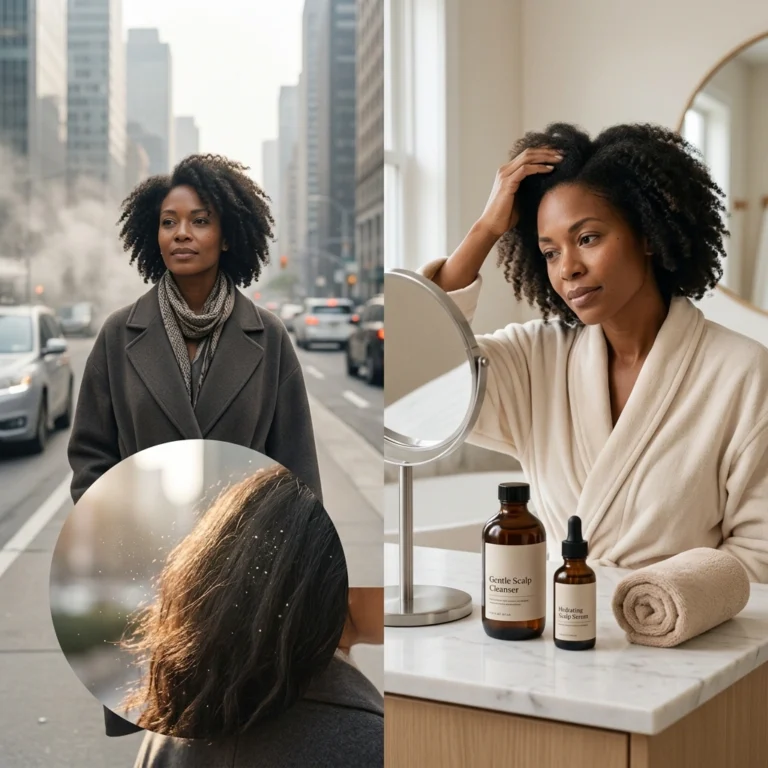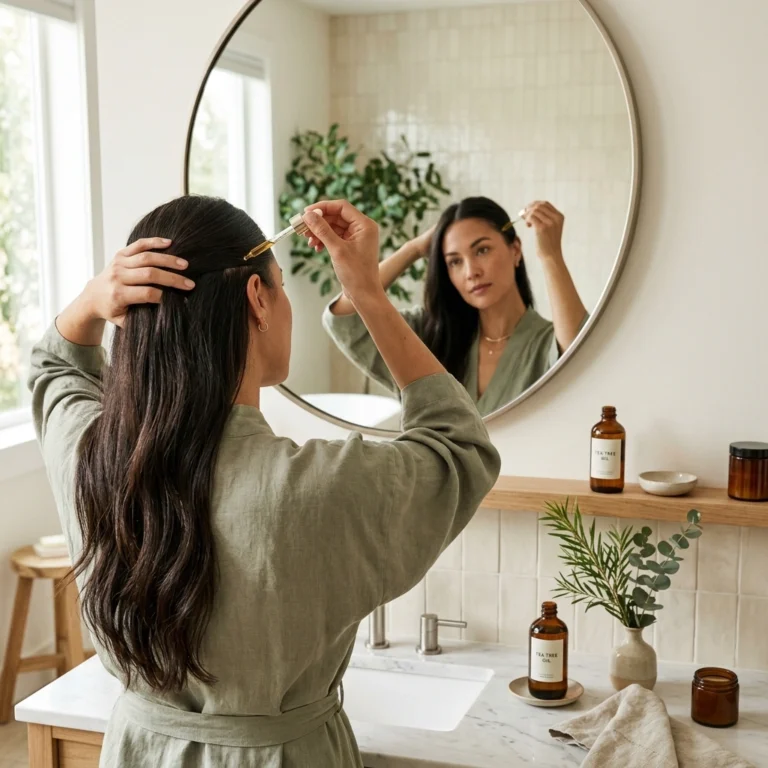
Your scalp is working behind the scenes every single day. It holds each strand of hair in place, keeps the skin on your head protected, and creates the environment where hair actually grows. When it’s working properly, you don’t even know it exists.
But when something goes wrong? It usually tells you—through itching you can’t ignore, flakes on your collar, a scalp that aches when you brush, or hair that suddenly starts coming out faster than it should.
A random itch or the occasional flake is nothing to worry about. What does deserve your attention is anything that lingers, keeps coming back, or gets steadily worse. Scalp problems don’t discriminate—they show up in adults, teenagers, and young children alike.
I’ve spent five years at Hair Care Growth researching scalp health, hair loss, and the science behind treatments that actually work versus those that are mostly marketing. I cross-check every claim against clinical guidelines and peer-reviewed studies before publishing. This article is built on that same standard.
You can identify danger symptoms early with the aid of this tutorial. It’s not meant to replace a professional diagnosis—it’s meant to give you the knowledge to take your scalp seriously and know when to act.
Here’s what you’ll learn:
- The signs of an unhealthy scalp to look out for
- What are those symptoms usually caused by?
- Kind, helpful things to do at home
- A simple guide to when you need professional help
What Does a Healthy Scalp Look and Feel Like?
If you know what your baseline is, you’ll be better able to look for warning signs. Changes are much easier to detect when you know what “healthy” feels like for you.
Symptoms of a Healthy Scalp
Mostly, you don’t see a healthy scalp during the day. It doesn’t beg for your attention. This is what that looks like in practice:
- Comfortable, no itch, burn, or tenderness ongoing
- A few loose cells here and there are normal, but a constant shower of white flakes is not normal.
- Even skin tone depending on your skin complexion—no unexplained redness, dark patches or discoloration
- No permanent sores, scabs, or sore lumps
- Moisture is well balanced, no greasy mid-day and tight and cracked after washing
- Regular wash, very little to no odor after
- Clean-feeling roots, free of thick waxy buildup around the follicles
It’s worth saying: everyone’s definition of “healthy” is a little different. Oil production varies, skin tone varies, and wash frequency varies. The important thing is what’s normal for you and when that changes.
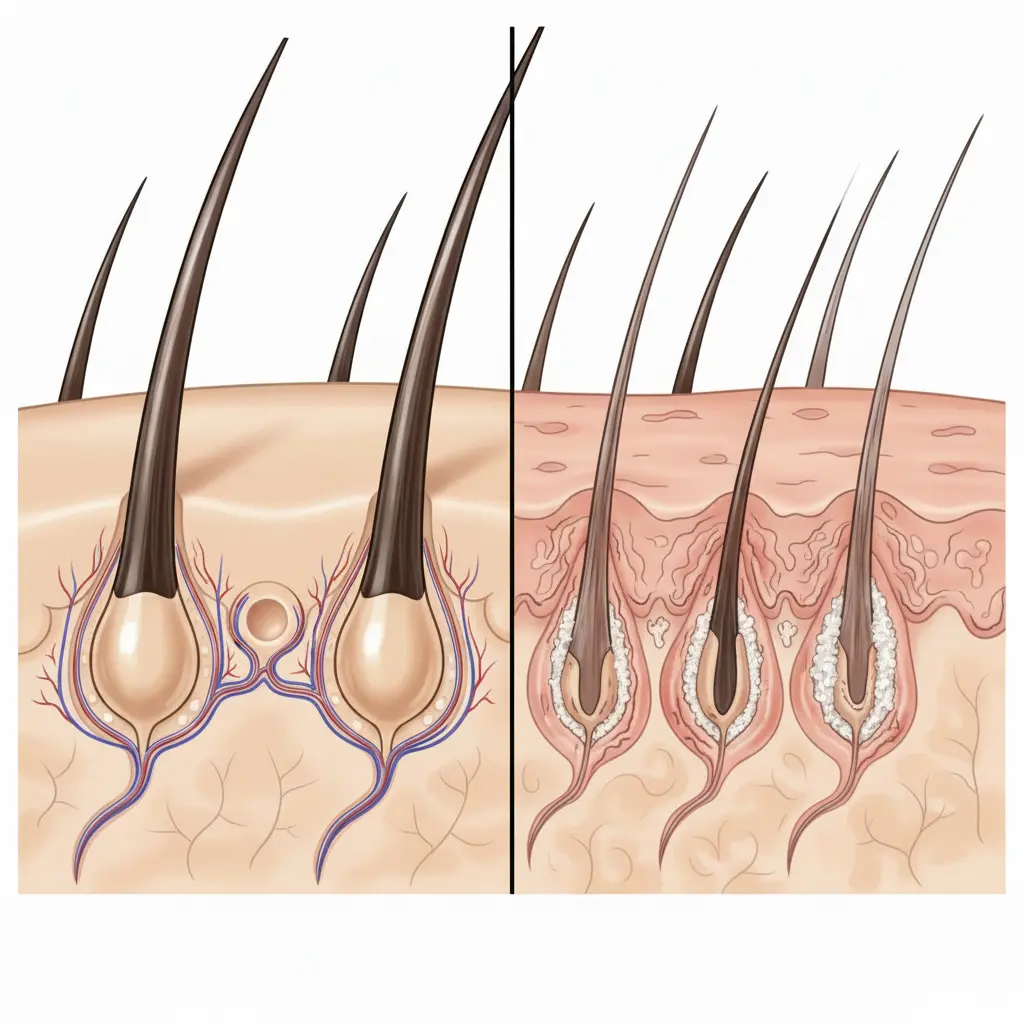
Healthy Scalp vs. Unhealthy Scalp
A side-by-side comparison often makes things click faster than paragraphs of description.
|
Healthy Scalp |
Potentially Unhealthy Scalp |
|---|---|
|
Comfortable and calm throughout the day |
Frequently itchy, sore, or burning |
|
Minimal flaking |
Persistent or heavy flakes |
|
Balanced oil—not greasy, not bone-dry |
Extremely oily or severely dry |
|
No recurring sores or bumps |
Scabs, pus-filled spots, or open areas |
|
Normal shedding (50–100 hairs daily) |
Sudden, patchy, or excessive hair loss |
|
Roots feel clean after washing |
Thick waxy residue even after shampooing |
If your scalp falls mostly in the left column, you’re doing well. Right column, several items? Find out more.
Why Hair Scalp Health Matters
Think of dirt as your head and the plant as hair growing out of your head. Good soil = better growth.
A healthy scalp is a well-fed, calm scalp that supports the skin around each hair follicle. But if that skin is inflamed, infected, or scratched constantly, hair is more prone to break off near the root. An irritated scalp, or one with buildup, is also harder to clean properly, and not cleaning can exacerbate the original problem.
The takeaway: scalp care is not another beauty category. It’s something you do to your hair every day.
12 Signs of an Unhealthy Scalp You Shouldn’t Ignore
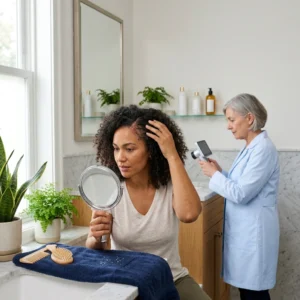
Look for these symptoms. A single mild symptom alone is not always a crisis. But a symptom that persists, worsens, or occurs with a number of other symptoms needs real attention.
1. Persistent itching of the scalp
Itching after a hard run, or after using a new shampoo, is normal. It’s the kind that lingers, that goes on for days, or is bad enough to wake you, that lets you know something is wrong.
You may itch all the time from:
- Dry skin
- Product irritation or an allergic reaction
- seborrheic dermatitis or dandruff
- Scalp psoriasis or eczema
- Head lice or fungal infection
Here’s the frustrating truth: scratching usually makes it worse. Your nails can break the skin, which opens the door to irritation and infection, and kicks off a stubborn itch-scratch cycle.
According to the American Academy of Dermatology (AAD), a chronic itchy scalp might have a variety of causes, which is why not everyone’s issue can be resolved by the same shampoo. If you notice swelling, sores you can see, hair loss, and itching, then that’s a much better sign to see somebody.
2. Excessive or Recurring Flaking
Not all flakes are created equal, and the type makes a difference:
- Little dry white flakes on your shoulder.
- Yellow or greasy scales on hair shaft
- Downy thick patches that don’t brush off easily
Many people apply the wrong fix because of the myth that “all flaking means dry scalp.” Dandruff, product build-up, seborrheic dermatitis, psoriasis, or eczema can all lead to flakes, and each requires a different approach.
The Cleveland Clinic notes that seborrheic dermatitis—one of the most common scalp conditions—produces greasy, yellowish scales and tends to flare and settle over time rather than clearing up for good. Treating it like simple dryness won’t help.
Whatever the cause, don’t scrape flakes off with your nails or a fine-tooth comb. That irritates the skin and can start a cycle of its own.
3. Ongoing Redness or Inflammation
Redness, tenderness, warmth, or visible irritation on the scalp are all signs of inflammation, your skin reacting to something it doesn’t like.
One thing to make explicit: redness is more difficult to see on medium and deeper skin tones. If you have darker skin, inflammation may look like:
- Purple or dark patches
- Skin patches that are different in color from the surrounding skin, like gray or ash
- Clear Swelling
- Even if the color looks normal, tenderness will be revealed by pressure.
Typical triggers are harsh product ingredients, tight hairstyles, chronic scratching, sunburn, skin conditions, and infection. Watch for any patch that remains warm, sore, or discolored for more than a few days.
4. A Burning, Stinging, or Painful Scalp
Here’s the thing: scalp pain is not normal for hair care. Burning, stinging, and aching are signals, not acceptable side effects.
Common causes are:
- Chemical relaxers or perms, particularly if left on too long
- Hair color allergy or irritation
- Tight braids, ponytails, extensions or long-term protective hairstyles
- Folliculitis (inflamed hair follicles)
- Product ingredient of contact dermatitis
If a product causes a strong burning sensation, rinse it off immediately with cool water—don’t wait to see if it subsides. The NHS says: Allergic reactions can become more severe. Seek emergency care if you have severe burning, a spreading rash, facial swelling or any trouble breathing. Do not wait.
5. Excessive Oiliness Shortly After Washing
Some scalp oil (sebum) is good and protective. The problem is the oil seems to come back within hours of washing, so your hair is greasy before the day is half over.
Signs output may be out of balance:
- Greasy roots within 24 hours of washing
- Hair stringy, clumpy
- Scalp feels sticky or waxy.
- Smell remains after washing.
What could send oil production into overdrive? Washing too frequently (which signals the skin to compensate by producing more sebum), not cleansing thoroughly enough, hormonal changes, heavy styling products, touching your scalp repeatedly throughout the day, and simply having naturally oilier skin. Usually it takes some honest trial and adjustment to get your balance.
6. Extreme Dryness or Tightness
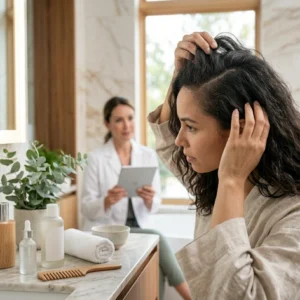
Dry scalps feel tight, rough, and uncomfortable and sometimes have a fine dusting of small dry flakes.
Causes:
- Cold or dry weather
- Hot water (can remove natural oils)
- Heavy sulfate shampoos
- Over-washing your hair for your hair type
- Low humidity indoors (especially in winter)
- Certain skin conditions such as eczema or psoriasis
One thing that confuses a lot of people is that dry scalp and dandruff are not the same. Dandruff is often associated with a type of yeast, Malassezia, that normally lives on the skin but can overgrow and cause irritation, the American Academy of Dermatology says. Usually produces larger, oilier flakes. A dry scalp will produce smaller, drier flakes and a feeling of tightness.
Also: Oil is not a cure-all for every dry scalp situation. Coating an already compromised scalp in heavy oil can soothe the surface temporarily, but it won’t fix dryness from an underlying condition—and it’s likely to add to buildup.
7. Product Buildup Around the Roots
Buildup occurs when buildup occurs faster than washing can remove it from the scalp. You will see:
- A sticky, greasy, or waxy coating at the bottom
- Dull and flat roots.
- A white coat of the scalp
- Hair that feels dirty immediately after washing
- Flake-like but not flake, small particles that cling to hairs
What causes the build-up? Dry shampoo (especially frequent use), gels, edge control products, heavy oils, butters, leave-in conditioners, and a natural build-up of sweat and dead skin cells. This layer traps oil and heat against your skin, which can cause itching, inflammation, and a scalp environment where bacteria and yeast can more easily flourish.
The cure is usually a deep but gentle cleansing, sometimes with an occasional clarifying shampoo.
8. Unpleasant or Persistent Scalp Odor
It’s perfectly normal to have a little scalp odor after a workout or on a sweltering day. It’s sweat and sebum, don’t worry.
What gets to you is the smell that lingers even after you have washed properly. That could mean:
- Sweat and oil trapped by product build-up
- Not washing out shampoo or conditioner thoroughly
- Hair or scalp remains wet for long periods
- Skin microbial overgrowth
- The smell is due to a scalp condition underneath
Habits that will help you in practice:
- After each wash, dry your scalp properly; don’t leave your damp hair wrapped up tight for hours
- Wash hats, scarves and pillowcases as well as combs and brushes regularly. They carry the same microbes
- Do not trap wet hair under caps or hoods right after washing.
If the odor doesn’t clear after improving your washing and drying routine, especially if it comes with itching, discharge, or sores, get it checked.
9. Scalp Bumps, Pimples, or Pus-Filled Spots
Small bumps on the scalp are usually caused by inflamed or plugged hair follicles. Sweat, friction, heavy or pore-clogging products, dirty hair tools, ingrown hairs, and folliculitis all contribute.
That’s folliculitis, which the Mayo Clinic defines as inflammation of hair follicles that results in small red bumps or whiteheads. Although fungi and other bacteria can cause it, Staphylococcus aureus is typically the culprit. Mild cases may clear up with improved hygiene, but others will require treatment.
One of the worst things you can do: Squeeze, pick, or pop bumps on the scalp. This can push the bacteria further down, increase inflammation, and lead to scarring. If it is spreading, painful, or recurrent despite good hygiene, see a dermatologist.
10. Bleeding areas, scabs, or sores
Open sores and scabs can be caused by persistent scratching, irritation, an infection, or a skin disease. Some are little and heal on their own. Others must be dealt with right away.
Warning signs to look for:
- A sore that will not heal in a week or two.
- Oozing, crusting, or discharge
- Pain getting worse, not better
- Spreading redness from the spot
- Scalp sore and fever
- Recurrent bleeding spots of unknown etiology
Avoid chemical treatments such as hair dye, relaxers, or bleach on broken or sore skin. Don’t pick at scabs. Burns or force infection further in. A medical professional should be consulted right away if a sore exhibits any of the warning signals mentioned above.
11. Sudden, Excessive, or Patchy Hair Loss
It is normal to shed. The average person sheds between fifty and one hundred hair strands every day, according to the American Academy of Dermatology. A few hairs in your pillow or drain is nothing to fuss about.
What to look closer at:
- Round or oval bald patches
- A piece that grows grows grows grows
- Receding hairlines.
- Good, broken hair growing close to visibly inflamed skin.
- Scales on scalp attached at root of hair loss
- Thinning after itching, pain, or soreness of the scalp
Hair loss has many possible causes—genetics, nutrition, hormones, stress, medications, and scalp conditions are all on that list—which means it usually takes a proper clinical evaluation to understand what’s actually happening. Obtain that evaluation without delay, especially if the loss is rapid and patchy, or if it is occurring in a child.
12. Changes in Scalp Texture or Color
It may not be itching or flaking, but a change in the way the skin itself looks or feels. Watch for:
- Skin thickened or calloused over an area
- Raised, ridged or rough patches
- Shiny skin like a scar
- New dark or light areas
- Thick scales, layered on an area
- Any new mole or growth, or a mole which is changing in size, shape or color, or bleeding
Checking your skin often leaves out the scalp equation – but it’s exposed to the sun all year round, especially at partings, and for those with thinning hair or shaved heads. The AAD recommends the scalp be included in regular skin checks. Any spot that changes, bleeds, or just looks different from the surrounding area deserves a professional’s eyes.
Other Symptoms That May Accompany an Unhealthy Scalp
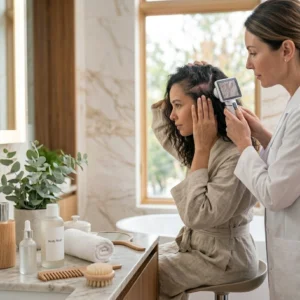
There are also minor symptoms which often accompany the twelve main signs of scalp trouble. Each one may seem minor on its own. And in unison they reaffirm the picture:
- Excess hair breakage, not on the tip but near the root
- Tenderness or pain on combing or styling
- New sensitivity to products you have used for years without a problem
- Hair always matted at the scalp
- Visible puffiness around affected areas
- Crumbs on back of ears or hairline
- Flaking that occurs on the eyebrows or next to the nose, common with seborrheic dermatitis
- Symptoms that worsen with stress, seasonal changes, or illness.
If you’re seeing several of these at once, slow down and look more closely at your scalp.
What Causes an Unhealthy Scalp?
Symptoms tell you what’s happening. The causes tell you why. And the why is where the real solutions start.
A Not So Consistent Or Suitable Cleansing Regime
Washing often removes natural oils and can lead to increased production. If you don’t wash enough, sweat, oil, and the build-up from products will occur. If you use the wrong shampoo for your scalp type, or don’t rinse it out properly, that presents its own set of problems. There’s no single right answer—but there is a right answer for your specific hair and scalp.
Harsh or Irritating Ingredients in Hair Products
Some ingredients just do not play well with sensitive scalp skin. Typical offenders are:
- Synthetic fragrances (among the most common causes of contact dermatitis)
- Some preservatives are formaldehyde-releasing agents.
- High concentration of harsh surfactants such as sodium lauryl sulfate (SLS)
- Chemical relaxers and bleaching products, especially when abused or overlapped
- Permanent and semi-permanent hair dyes which can cause sensitization in the long-term
- Undiluted essential oils such as lavender, tea tree, peppermint and others can directly burn or irritate the skin if they are not first diluted in a carrier oil.
A 2019 study in Dermatitis found that fragrance is one of the most common causes of allergic contact dermatitis, including on the scalp.
Product Buildup
Buildup is common enough to warrant a section on it. This is often due to product overuse, applying too much dry shampoo between washes, applying heavy oils or butters directly to the scalp, and not cleansing properly after long-term protective styles.
Tight Hairstyles, and Continuous Tension
Braids, cornrows, buns, high ponytails, weaves, extensions, and clip-in pieces all pull on the scalp. Some good. Sustained, heavy tension on the same areas, day after day, is not.
This pattern is well documented and is known as traction alopecia. “If the pulling continues, traction alopecia can become permanent,” according to the American Academy of Dermatology. “Traction alopecia starts out as soreness and little bumps along the hairline.” If your hair hurts when you have it done, that’s not a badge of honor; that’s a warning sign.
Heat and Chemical Damage
Heat and chemicals are powerful stuff. Misused, they can do real harm:
- Hot styling tools held close to the scalp can burn skin
- Hot shower water removes the protective barrier on the scalp.
- If products are left on longer than instructed, chemical burns can occur
- Applying relaxer over treated hair significantly increases burn risk
Chemical treatment instructions are not recommendations. They are the difference between a medical case and a treatment.
Lifestyle and Environmental Factors
Your scalp’s condition is affected more by your environment than most people think:
- Dry winter air or air-conditioned rooms
- Sun exposure on areas of thinning and/or parting lines
- Sweat from exercise, heat, or heavy physical work
- Pool chemicals: Chlorine is a scalp irritant and skin-drying.
- Chronic stress (see FAQ section)
- Puberty, pregnancy, the postpartum period, and menopause are examples of hormonal changes.
- Wearing dirty hats, helmets or headgear
- Sleeping with wet or damp hair, which creates a moist environment bacteria and yeast love
Many of them can be tailored once connected to your symptoms.
Common Scalp Conditions: A Brief Overview
There are a number of medical conditions of the scalp. This is background for you to see patterns, not a self-diagnosis.
- Dandruff – Fairly common. Related to overgrowth of the Malassezia yeast. Causes white or yellowish flakes
- Seborrheic dermatitis — A more inflamed form of dandruff. It tends to flare and settle down and can affect the face, too.
- Psoriasis (scalp) – thick, silvery scales and redness; often involves ears, neck
- Scalp eczema (atopic dermatitis) – Dry and itchy patches that ooze at times. Common in families with asthma and allergies
- An allergic or irritating response to a substance is known as contact dermatitis.
- Folliculitis — Inflamed hair follicles, often bacterial or fungal in origin; produces red bumps or pustules.
- Tinea capitis (scalp ringworm) — A fungal infection common in children; causes scaly patches and sometimes hair loss
- Head lice — Tiny insects that spread through direct head-to-head contact; cause intense itching
The critical point: these conditions can look remarkably similar. Two people with identical symptoms—itching and flaking—might have completely different underlying causes that need completely different treatments. This is exactly why self-diagnosing and treating without a proper diagnosis so often backfires.
Common Scalp Condition Comparison
Because similar symptoms often point to very different conditions, a comparison can be useful as a starting point—not a diagnostic tool.
|
Condition |
Typical Flake Type |
Associated Itch |
Typical Location |
Contagious? |
|---|---|---|---|---|
|
Dandruff |
White or yellow, oily |
Mild to moderate |
Entire scalp |
No |
|
Seborrheic dermatitis |
Yellow, greasy scales |
Moderate |
Scalp, eyebrows, nose folds |
No |
|
Scalp psoriasis |
Thick, silvery |
Moderate to intense |
Scalp, hairline, ears, nape |
No |
|
Scalp eczema |
Dry, fine |
Often intense |
Scalp, behind ears |
No |
|
Tinea capitis |
Scaly patches, broken hairs |
Variable |
Patchy areas |
Yes |
|
Head lice |
No flakes (lice eggs visible) |
Intense, especially nape |
Nape and behind ears |
Yes |
Always confirm with a professional before treating based on appearance alone.
Scalp Issue Timeline: When Symptoms Tend to Develop
Understanding how quickly something typically appears or changes can help you decide when to act.
|
Timeframe |
What It Might Indicate |
|---|---|
|
Symptoms appear within hours of using a new product |
Irritant or allergic contact dermatitis |
|
Itching develops 24–48 hours after product use |
Delayed allergic reaction |
|
Gradual flaking over weeks |
Dandruff or seborrheic dermatitis building |
|
Rapid hair shedding over 2–3 months |
Telogen effluvium (often stress- or illness-related) |
|
Patchy hair loss appearing over days to weeks |
Alopecia areata—warrants prompt evaluation |
|
Slowly spreading scaly patches in a child |
Tinea capitis—warrants prompt treatment |
|
Sore that doesn’t heal in 2–3 weeks |
Warrants professional evaluation without delay |
How to Check Your Scalp at Home
There’s no need to visit a dermatologist’s office to monitor your scalp regularly. Even a little time and attention goes a long way.
Soft Scalp Exam
Position yourself correctly:
- Use bright, natural-looking light to work in, as bathroom lighting is often too warm to show redness clearly.
- Part your hair into different sections, working methodically around the head.
- Use two mirrors to see the crown and nape, or ask a trusted family member or partner to help.
- Be sure to cover all areas including the hairline, crown, behind both ears, nape of the neck and any areas under braids, weaves or other protective styles.
The problems remain unnoticed the longest in those hidden areas – under extensions, at the nape, behind the ears.
Note What You Find
Your memory at a medical appointment is much less reliable than a simple written log. Record:
- First symptoms
- Rate of occurrence
- What you used before they came along
- Any recent changes in hairstyle or chemical treatment
- If the symptoms are spreading out.
- Presence of hair fall
- If other people in your home have similar symptoms (important for fungal infections and lice)
Take Progress Pics
Photos catch slow changes that your eye misses when you’re looking every day:
- Always use the same lighting, angle, and distance.
- Only photograph when it’s comfortable and appropriate to do so
- Review and compare images over several days or weeks
- Bring them to your dermatologist—they’re genuinely useful diagnostic aids
What to Do When You Notice Signs of an Unhealthy Scalp
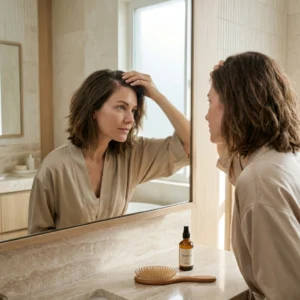
If you have seen something, here is a calm, step-by-step starting point.
Step 1: Streamline Your Routine Now
Too much is not preferred by the scalp; less is better:
- Stop using any product you started in the weeks before your symptoms began.
- Don’t layer on oils, gels, and sprays
- Use fragrance-free mild shampoo
- Bring back only one product at a time so you know what works and what doesn’t
2. Clean but Deep Soft
Technique is equally important as product choice:
- Shampoo directly on the scalp, not just the lengths of hair
- Use fingertips, not fingernails, in a circular motion
- Rinse more than you think you need to. Leftover product is a common hidden irritant.
- Adjust washing frequency according to your oil, sweat, and current hair type
- Be gentle on areas that are sore or inflamed; vigorous scrubbing will make them worse
Step 3: Cease Scratching and Picking
One of the toughest and most critical steps for many is:
- Keep your nails short
- For temporary itch relief, place a cool, damp cloth on the scalp.
- Do not comb or brush over active sores or bumps.
- If itching is preventing you from sleeping at night, that’s a threshold for professional care.
Step 4: Take a Break from Tight or Painful Hairstyles for Your Hair
Let your scalp rest well:
- Eliminate any style that causes pulling, pain, or bumps.
- Choose low tension, relaxed choices to recover
- Do not repeat a tight style over skin that’s already irritated or tender
- Let symptomatic areas recover fully and then style again
Step 5: Sanitize your tools and linens
Clean hair ruined by dirty tools:
- Wash combs and brushes at least weekly with warm water and soap.
- If you have active symptoms, change pillowcases 2-3 times/week.
- Wash and dry bonnets, scarves, hats, and wig liners often
- Do not share personal hair tools with anyone, especially with someone who has a scalp condition
- Check product labels for safe cleaning and disinfecting.
Step 6: Care for the Scalp During Healing
During healing:
- Do not use heat styling tools on affected areas
- Delay any coloring, bleaching, or chemical straightening until the scalp has fully recovered
- If the scalp is exposed, use a physical sun barrier (a hat or lightweight cloth) to avoid additional UV damage
- Dry the scalp properly after washing or swimming—towel-dry gently, then allow it to air dry fully before covering
Scalp-Care Mistakes That Make Things Worse
Sometimes relief is just stopping what is aggravating the problem, not adding something new. Here are the most common mistakes:
- Scraping flakes off with fingernails
- Picking scabs or popping pus-filled bumps
- Essential oils used directly on scalp
- Heavy oil, a cure-all for every itch and flake problem
- Rinsing off in boiling hot water
- Chemical treatments on broken, sore, or active irritated skin.
- Getting a painful protective style “because it’ll settle”
- Sharing combs, brushes, hats or towels, in particular those used by household members
- Long-term hair covering when wet
- Kick the tires on new products without finding out what’s really wrong
- Using adult medicated shampoos on children without professional advice
A couple of these will look familiar. Simply stopping them can bring meaningful improvement.
Who Is Most Likely to Develop Scalp Problems?
Some people are more prone to scalp issues than others. Knowing this helps with early prevention and smarter product choices.
|
Group |
Common Risk Factors |
|---|---|
|
Teens and young adults |
Hormonal surges affecting sebum production; frequent styling |
|
People with naturally dry or sensitive skin |
Lower baseline oil production; faster moisture loss |
|
People who wear protective styles frequently |
Buildup under styles; tension on follicles; less regular cleansing |
|
Athletes and heavy exercisers |
Increased sweat; more frequent washing needed |
|
People in cold or dry climates |
Environmental moisture loss; more barrier disruption |
|
Children |
Higher susceptibility to tinea capitis and lice |
|
People undergoing hormonal changes |
Pregnancy, postpartum, menopause, thyroid conditions |
|
People under chronic stress |
Stress hormones can trigger or worsen existing scalp conditions |
When Should You See a Dermatologist or Healthcare Professional?
Home care does a lot. But there are times when really an expert evaluation is needed — and to act early almost always means a quicker and easier fix.
If symptoms persist, make an appointment.
Schedule a visit if:
- Basic Care symptoms for 2-3 weeks
- Over-the-counter shampoos or treatments aren’t helping
- Itching interferes with sleep or daily activities
- Severe flaking, thick or spreading to face and ears
- The condition clears then keeps re-occurring
- With the scalp irritation, there is hair loss
- You can’t tell what is making this.
Dermatologists are specialists in skin, hair, and nails, so scalp is right up their alley.
Seek Prompt Medical Attention for These Signs
Some symptoms should not wait for a booked appointment:
- Visible rapid or patchy hair loss
- Severe pain, swelling or pulsation
- Foul-smelling, oozy or pus-like drainage from the scalp
- Chronic open sores
- Redness spreading beyond the original site
- Scalp sore or infection with fever
- Possible chemical burn
- A new or changing or bleeding mole or growth without injury
- Symptoms in the scalp of a baby or young child
- Signs a scalp condition is spreading to siblings or other members of the household
Special Considerations for Children and Families
Kids have more sensitive scalps, and in a family situation, scalp problems, especially contagious ones, can very quickly be passed from person to person.
Choose Age-Appropriate Products
- Choose products labeled for the child’s age group, when possible.
- Do not use adult medicated shampoos unless a healthcare professional recommends it for your child.
- Don’t look at any hair products.
- Follow label directions carefully for timing, application, and rinse-off.
Check for Contagious Conditions
Common, easily transmitted among children, are tinea capitis (ringworm of the scalp) and head lice. Head lice are almost exclusively spread through direct head-to-head contact, the NHS says. They do not jump or fly, but in classrooms and common home spaces the opportunity for contact is ever-present.
To contain spread:
- Check for the same symptoms in siblings and close contacts.
- Don’t share hats, brushes, combs, hair clips, pillowcases and towels
- Follow the advice of schools, childcare providers and health care professionals about when to start treatment and when it is okay to return
Make Scalp Checks a Calm Experience
How you do a scalp check will influence how a child responds to it :
- Tell the child what you are going to do before you begin.
- Gently detangle and part. Don’t rush
- If the child complains of pain, stop.
- Never blame poor hygiene or the child for a scalp problem. Lice, ringworm, and eczema occur in clean, healthy children all the time.
How to Maintain a Healthier Scalp Long-Term

Creating a scalp care routine doesn’t have to be complicated. “The best habits are the simple habits, repeated consistently.”
Make a Cleansing Schedule That Works For You
There’s not a one-size-fits-all washing frequency. Make yours on:
- Hair Type – Coily, Curly, wavy, or Straight Hair each have different needs.
- Oil production Some scalps are naturally oilier than others and need more frequent cleansing.
- Activity level – if you sweat most days heavily, you need to wash your scalp more regularly
- Product use – the heavier the products, the faster they build up and need a good cleanse
- Protective hairstyles – styles that last for weeks require a special cleansing regimen.
If you have fine, straight, oily hair, and work out every day, you will probably wash way more often than someone with dry, coily hair who wears braids for weeks at a time. Both routines can absolutely be healthy.
Choose Products That Suit Your Scalp Type
Generic “for all hair types” products are a good start, but not a long-term solution. Be specific.
- Select fragrance-free, sulfate-free products with calming ingredients like colloidal oatmeal or aloe vera for dry or sensitive scalps.
- Oily scalp: A gentle clarifying shampoo once or twice a week will help without stripping.
- Scalp prone to dandruff: Look for active ingredients like zinc pyrithione, selenium sulfide, or ketoconazole- clinically studied options the AAD mentions.
- Scalp sensitivity or reactivity: Try any new product on a small area of skin first. If a product continues to burn or sting, stop using it.
Don’t think that “natural” or “organic” is safe for your scalp. Plant-based ingredients can definitely be a trigger for allergies.
Style Rotate the Tension Points Gently
Hair tools and styles can damage your scalp more than you realize. A few habits make all the difference:
- Rotate your hairstyles so the same follicles aren’t under constant tension
- Loosen the hairline. This is almost always where traction damage begins.
- Work on the tangles from the ends of the hair toward the roots, not from the roots outwards.
- Don’t apply heat or chemicals to them. Keep them apart and always follow the timing instructions.
Keep Your Accessories and Tools Clean
We tend to overlook things that touch our scalp on a regular basis as irritants and sources of recontamination:
- Wash combs and brushes with soap and warm water at least weekly.
- Wash bonnets, scarves, pillowcases, and hats often, once a week at least
- Wig caps and extensions should be cleaned according to the manufacturer’s instructions.
- If a scalp condition exists, don’t share hair tools with household members
- See changes before they become uncontrollable
An early scalp problem is easier to treat:
- Look out for cyclical symptoms – stress, seasons or particular products can be triggers.
- Keep a simple diary of products used and any symptoms which followed
- Do a quick scalp check every few weeks – particularly under protective styles
- See a professional before inflammation, buildup, or shedding gets bad
The best long-term plan for the scalp is gentle but consistent care. You don’t need an elaborate routine; just a routine you actually keep.
Frequently Asked Questions About Unhealthy Scalp Symptoms
How do I know my scalp is healthy?
The most obvious warning signs are persistent itching, heavy or frequent flaking, redness, a burning feeling, sores, unexplained bumps, a persistent smell after washing, and sudden or patchy hair loss. One mild symptom isn’t always a cause for concern. If several of the symptoms are appearing together — or if any symptom is getting worse — your scalp needs closer attention.
Can an unhealthy scalp make you lose hair?
Yep. Inflammation, scratching, infection, tension from tight styles, and some scalp conditions can cause hair to fall out or break at the root. Some of this is temporary and will improve once the scalp has healed. But sudden, patchy, or rapid hair loss should always be evaluated professionally, since it can have causes that need specific treatment.
Is itchy scalp always dandruff?
No, and assuming that is why a lot of people end up with the wrong product. Itching can also be due to simple dryness or irritation from products, contact allergies, build-up, head lice, psoriasis, eczema, or folliculitis. But with such different causes, an anti-dandruff shampoo won’t cure all itchy scalps.
How often do you wash a bad scalp?
That depends on what the cause is, your hair type, how much oil you produce, your levels of activity, and any treatment plan you are following. The goal is to avoid two extremes: over-washing, which can strip and irritate, and letting buildup linger. If in doubt, a dermatologist can provide you with specific advice for your situation.
What does scalp buildup look like?
Yeah, and that’s where a lot of people screw up. Dead skin cells, oil, and dried product residue may flake off and look very similar to dandruff. The fix is another story: buildup typically goes away with good cleansing (sometimes even with a clarifying shampoo), while true dandruff usually requires a medicated active ingredient to treat the root cause.
Can scalp oils help an unhealthy scalp?
Sometimes but not always. Oils can in some cases help calm a dry scalp. Others, like those with seborrheic dermatitis or oily scalps, may experience more buildup and a more conducive environment for yeast overgrowth with the addition of more oil. Oil is not a cure-all for the scalp, so don’t assume that you should reach for it every time your scalp flakes or itches.
What Does Scalp Inflammation Feel Like?
Touching or styling your hair can feel like some combination of itching, tenderness, warmth, burning, stinging, or outright pain. The skin may also be red, darker than normal, or visibly swollen. Any sore or warm area that doesn’t get better in a few days should be seen by a medical provider.
When is scalp smell a problem?
It’s completely normal to have a little bit of scalp odor after a workout or a hot day. A good wash should sort it out, but if it doesn’t, especially if you have sores or discharge or a really strong itch or pain, then it is a problem. That mix requires a pro to evaluate.
Can stress influence the health of the scalp?
Yes. Stress, particularly if it is chronic, can increase oil production, worsen itching, and trigger or aggravate flare-ups of conditions such as seborrheic dermatitis. It can also cause a kind of diffuse hair loss called telogen effluvium. Stress is rarely the sole cause, but it’s a real factor—and managing it consistently tends to benefit scalp health alongside everything else.
How do I know whether a scalp problem is contagious?
Some causes—like head lice and tinea capitis—do spread from person to person. Not all do, like dandruff, psoriasis, or eczema. You generally cannot tell the difference by appearance alone, which is why professional confirmation matters before drawing conclusions, especially when children are involved, or multiple household members develop similar symptoms.
The Bottom Line
Your scalp is one of the most overlooked areas of skin care, and one of the most important. A loose flake or stray itch is normal. But if you’re suffering from ongoing itching, recurrent flaking, non-healing sores, unexplained hair loss, or a burning sensation on your scalp when using products that you’ve used for years, these are signs worth paying attention to.
The good news is that you can usually solve it early if you catch it early. Most mild problems will settle down with a simplified routine, gentle and thorough cleansing, a retreat from tight styles, and clean tools. That is exactly what dermatologists are for when they do not, or when symptoms are severe, spreading, or hair loss occurs.
Your hair comes from your scalp. One of the most sensible things you can do for your hair’s long-term health and look is to take care of that foundation.
Ready to Learn More?
If you found this guide helpful in learning more about your scalp, be sure to check out more research-backed hair and scalp content at Hair Care Growth. Whether you’re battling chronic flaking, thinning hair, or just want to get into a smarter routine, you’ll get practical, science-backed advice that’s free of hype.
Have a question about something you saw on your scalp? Knowledge is a great place to start, but always call a dermatologist first for anything that concerns you.
Medical Disclaimer: This material does not represent medical advice, diagnosis, or treatment; it is merely meant to be informative. Before beginning any treatment for scalp issues, always get advice from a licensed dermatologist or other healthcare professional. This is especially important for children, pregnant women, and those with long-term medical concerns.